The Eternal Significance of Krishna Janmashtami in Indian Spiritual Tradition
In the Indian spiritual tradition, Krishna is not worshipped only as a deity but revered as a guide, philosopher, protector, friend, and cosmic teacher. His life embodies joy and wisdom, courage and compassion, strategy and surrender. Therefore, Krishna Janmashtami Celebration in India becomes an annual opportunity to reconnect with these eternal principles.
In Kolkata, a city known for its deep devotional roots and cultural refinement, Krishna Janmashtami carries special emotional resonance. Among the many sacred observances in the city, the Krishna Janmashtami Puja at Nabatara Foundation has gradually emerged as a spiritually disciplined and deeply immersive devotional gathering. The celebration combines traditional Vedic rituals with heartfelt bhakti, offering participants not only ritual observance but spiritual transformation.
The Spiritual Context of Krishna’s Birth
According to sacred scriptures, Lord Krishna was born in Mathura at midnight during a time of oppression under King Kansa. His birth symbolised the restoration of dharma and the assurance that divine justice prevails even in the darkest moments. This sacred narrative continues to inspire millions during Krishna Janmashtami across India.
The midnight hour remains central to every authentic Krishna Janmashtami Celebration. It represents the emergence of divine light in the midst of darkness. At Nabatara Foundation Kolkata, this sacred timing is honoured with scriptural precision. The Krishna Janmashtami Puja continues through the evening until the exact midnight moment, when the birth of Lord Krishna is invoked through conch shells, mantra chanting, and collective prayer.
The observance is not symbolic alone. It becomes experiential. Devotees often describe feeling a surge of devotion and emotional release during the midnight arati, as if the ancient story unfolds within their own consciousness.
Krishna Janmashtami in the Cultural Landscape of Kolkata
Kolkata has long been recognised as a city of devotion, scholarship, and artistic expression. Festivals here are celebrated not only with enthusiasm but with intellectual and spiritual depth. Krishna Janmashtami in Kolkata reflects this heritage.
Large temples, including institutions such as ISKCON, organise grand public celebrations. Alongside these, more intimate devotional centres offer spiritually concentrated experiences. Nabatara Foundation belongs to this latter category, providing a Krishna Janmashtami Celebration Kolkata seekers appreciate for its sincerity and scriptural authenticity.
The Krishna Bhakti Gathering India witnesses in such spaces reflects a quiet intensity. Rather than spectacle, the focus is on mantra, meditation, havana ceremony, and disciplined ritual conduct. This approach resonates deeply with families and serious spiritual aspirants who wish to observe Krishna Janmashtami Puja in its traditional form.
Preparing the Sacred Space for Krishna Janmashtami Puja
The preparation for Krishna Janmashtami at Nabatara Foundation begins days in advance. Spiritual discipline precedes celebration. The temple space undergoes ritual cleansing. Sacred chants resonate continuously to elevate the vibration of the environment. Flowers, lamps, and traditional decorations are arranged thoughtfully to create an atmosphere of reverence.
Participants are encouraged to prepare internally as well. Many observe fasting, practice mantra chanting, and reflect upon Krishna’s teachings from the Bhagavad Gita. This spiritual preparation ensures that Krishna Janmashtami is not reduced to a social gathering but experienced as a sacred inward journey.
The careful alignment of outer ritual and inner readiness distinguishes this Krishna Janmashtami Puja Kolkata devotees seek each year. By the time evening arrives, both space and hearts are prepared for divine remembrance.
The Commencement of Krishna Janmashtami Celebration Kolkata
As sunset approaches, devotees begin arriving dressed in traditional attire. The atmosphere carries anticipation but remains serene. Incense fragrance fills the air, and devotional music plays softly in the background. The Krishna Janmashtami Celebration Kolkata participants experience at Nabatara begins with collective sankalp, a conscious intention to dedicate the evening to Lord Krishna.
The initial rituals include invocation of Lord Ganesha, purification mantras, and the formal welcoming of divine energy. Every mantra is pronounced carefully, maintaining Vedic intonation. Every offering—flowers, sandalwood paste, sacred water—is placed with devotion.
The Krishna Janmashtami Puja unfolds gradually, allowing participants to remain present rather than hurried. This unhurried pace cultivates depth, encouraging reflection and absorption.
Abhishek Ritual and Scriptural Precision
One of the most sacred segments of the Krishna Janmashtami Puja is the abhishek ceremony. The deity of Lord Krishna is ceremonially bathed with milk, honey, ghee, curd, and holy water while Vedic hymns are chanted. Each element symbolises purification, abundance, and divine grace.
The abhishek during Krishna Janmashtami is not merely ritualistic; it embodies surrender. Devotees mentally offer their ego, anxieties, and attachments as the sacred liquids flow over the deity. The chanting creates rhythmic resonance, drawing attention inward.
At Nabatara Foundation, this ritual is conducted under spiritual guidance, ensuring adherence to scriptural tradition. The authenticity of this Krishna Janmashtami Puja strengthens its spiritual credibility within Kolkata’s devotional landscape.
Janmashtami Havanna Ceremony and Sacred Fire Ritual
The Janmashtami Havanna Ceremony forms a powerful energetic core of the celebration. Sacred fire has long been regarded in Vedic tradition as a purifier and messenger between human and divine realms. During the havana ceremony, offerings of herbs, ghee, and grains are placed into the fire accompanied by mantra recitation.
As the flames rise, participants focus on inner purification. The Janmashtami Havanna Ceremony symbolises the conscious offering of negativity into divine fire. Anger, fear, jealousy, and ego are surrendered symbolically, creating psychological release.
In Kolkata’s fast-paced urban life, such sacred pauses are rare. The havan ritual during Krishna Janmashtami offers mental clarity and emotional grounding. Many devotees report a sense of calm and subtle energy shift during the ceremony.
The Janmashtami Havanna Ceremony also strengthens collective unity. When dozens of voices chant in synchrony, individual boundaries dissolve into shared devotion.
The Role of Bhakti in Krishna Janmashtami Celebration
Bhakti, or devotional love, lies at the heart of Krishna Janmashtami. Ritual precision alone cannot evoke transformation; devotion infuses ritual with life. During the Krishna Bhakti Gathering India celebrates each year, music becomes a vehicle for transcendence.
At Nabatara Foundation, devotional singing begins after the havan ritual. Bhajans dedicated to Lord Krishna are sung collectively. The repetition of divine names creates emotional upliftment and spiritual absorption.
Children participate by reciting shlokas, and elders share reflections on Krishna’s teachings. The Krishna Janmashtami Celebration Kolkata families attend becomes an intergenerational transmission of spiritual values.
Bhakti dissolves social distinctions. In the presence of collective chanting, professional identities and personal differences fade. What remains is shared devotion.
The Sacred Midnight Moment
As midnight approaches, anticipation builds. The birth hour of Lord Krishna holds deep scriptural significance. According to tradition, Krishna manifested at midnight under divine protection. Therefore, the midnight arati during Krishna Janmashtami carries immense spiritual weight.
At Nabatara Foundation, conch shells are blown precisely at midnight. Bells ring. Lamps are waved before the deity. Devotees fold their hands in silent prayer. The Krishna Janmashtami Celebration Kolkata witnesses in this moment becomes emotionally charged yet profoundly peaceful.
The silence that follows arati often feels timeless. For many, it becomes the highlight of the entire Krishna Janmashtami Puja experience.
Krishna’s Teachings and Modern Relevance
Krishna Janmashtami is not only about remembering a divine birth but about applying divine wisdom. The Bhagavad Gita, spoken by Lord Krishna, addresses dilemmas of duty, fear, attachment, and righteousness.
During the Krishna Janmashtami gathering at Nabatara, discourses explore how these teachings apply to contemporary challenges. In competitive urban environments like Kolkata and Mumbai, individuals face stress, ethical conflicts, and emotional instability. Krishna’s message of balanced action without attachment offers clarity.
Thus, the Krishna Janmashtami Celebration Kolkata seekers attend becomes instructional as well as devotional. It integrates philosophy with lived experience.
A Family-Oriented Spiritual Gathering
Krishna Janmashtami at Nabatara Foundation is intentionally family-inclusive. Spiritual education begins at home, and festivals create formative memories for children. Observing fasting, participating in puja, and witnessing havan rituals nurture respect for tradition.
Parents often express gratitude that their children can experience Krishna Janmashtami in a disciplined yet welcoming environment. The gathering fosters shared spiritual identity, strengthening familial bonds.
In an age dominated by digital distraction, such immersive devotional experiences provide grounding and continuity.
Upholding Devotional Authenticity in Contemporary India
Modern celebrations sometimes risk prioritising entertainment over spirituality. Nabatara Foundation consciously maintains devotional authenticity. The Krishna Janmashtami Puja here remains centred on scriptural ritual, disciplined chanting, and inner reflection.
This authenticity builds trust among participants searching for genuine Krishna Janmashtami Celebration Kolkata experiences. Over time, this sincerity has strengthened the foundation’s spiritual reputation beyond Kolkata, drawing devotees from other cities.
The emphasis remains on conscious living, not momentary excitement.
The Continuing Journey Beyond the Festival
When the lamps are finally extinguished and prasad is distributed, Krishna Janmashtami does not end. Its essence lingers in the hearts of participants. Devotees carry home renewed clarity and strengthened faith.
Each year, the Krishna Janmashtami Celebration at Nabatara Foundation deepens in meaning. Returning participants describe feeling spiritually anchored, emotionally balanced, and inwardly inspired long after the night concludes.
Krishna Janmashtami thus becomes not just an annual ritual but a recurring spiritual milestone—a reminder that divine guidance remains accessible, that devotion remains transformative, and that joy rooted in faith is timeless.
This sacred continuity ensures that Krishna Janmashtami Puja Kolkata devotees seek each year continues to grow not merely in attendance but in depth, sincerity, and spiritual impact.
The Historical Evolution of Krishna Janmashtami in India
Krishna Janmashtami has evolved across centuries, shaped by regional devotion, philosophical schools, and cultural expressions. While its core significance remains the celebration of the birth of Lord Krishna, the manner in which Krishna Janmashtami is observed varies across India. From the temple traditions of Mathura and Vrindavan to the Dahi Handi celebrations in Maharashtra and the devotional gatherings in West Bengal, Krishna Janmashtami reflects India’s spiritual diversity.
In ancient times, Krishna Janmashtami Puja was primarily observed within temple complexes and traditional households. The rituals were intimate, rooted in Vedic chanting and scriptural recitation. Over time, with the expansion of Bhakti movements across India, Krishna Janmashtami Celebration transformed into a public devotional expression. Saints, poets, and spiritual reformers emphasised bhakti as the most accessible path to divine connection, making Krishna Janmashtami a festival of collective devotion rather than isolated ritual.
In Bengal, the influence of Vaishnavism deepened the devotional expression of Krishna worship. The singing of kirtan, storytelling of Krishna’s leelas, and emotional surrender became central aspects of Krishna Janmashtami Celebration. Today, Kolkata continues this heritage, blending cultural artistry with devotional sincerity.
Within this landscape, Nabatara Foundation’s Krishna Janmashtami Puja in Kolkata aligns with scriptural authenticity while embracing the devotional warmth characteristic of Bengal’s spiritual culture. It stands as both continuation and refinement of centuries-old practice.
Krishna Janmashtami and the Philosophy of Dharma
Krishna Janmashtami is not only a celebration of divine birth but a reminder of dharma. Lord Krishna’s life, particularly his guidance in the Bhagavad Gita, underscores the importance of righteous action without attachment to results. This philosophical foundation gives Krishna Janmashtami lasting relevance.
In modern India, where professional pressures and ethical dilemmas challenge individuals daily, the teachings recalled during Krishna Janmashtami offer clarity. During the Krishna Janmashtami Celebration Kolkata devotees attend at Nabatara Foundation, discourses often explore how Krishna’s guidance applies to corporate stress, family responsibilities, and moral conflicts.
The Krishna Janmashtami Puja thus becomes a platform for spiritual education. Devotion merges with introspection. The Janmashtami Havanna Ceremony symbolises the burning away of confusion and ego, making space for clarity and courage.
By integrating philosophy with ritual, Nabatara ensures that Krishna Janmashtami Celebration in Kolkata is not reduced to symbolic observance but becomes a lived spiritual practice.
The Cultural Expression of Krishna Bhakti in West Bengal
West Bengal has long been a fertile ground for devotional movements. The emotional intensity of bhakti, expressed through music, poetry, and collective chanting, resonates deeply within Bengali spiritual culture. Krishna Janmashtami in Kolkata therefore carries both theological and artistic dimensions.
During the Krishna Bhakti Gathering India experiences at Nabatara Foundation, devotional singing becomes a transformative medium. Traditional bhajans and kirtans echo through the hall, encouraging participants to transcend intellectual barriers and connect emotionally.
Krishna Janmashtami Celebration Kolkata families attend often includes children performing devotional recitations. This integration of youth participation ensures continuity of tradition. Young minds witness the discipline of puja, the reverence of havana, and the collective power of chanting.
Such gatherings strengthen cultural identity while nurturing spiritual maturity. In a rapidly modernising urban environment, these devotional anchors preserve continuity between generations.
The Science and Spiritual Psychology of Fasting During Krishna Janmashtami
Fasting forms an essential component of Krishna Janmashtami. Observed traditionally until midnight, fasting is not merely ritualistic but carries physiological and psychological benefits. The discipline of fasting enhances self-control and cultivates mindfulness.
During Krishna Janmashtami Puja at Nabatara Foundation, participants are encouraged to observe fasting according to personal capacity. The act of abstaining from food symbolises detachment from sensory indulgence, aligning body and mind with devotional focus.
From a psychological perspective, fasting heightens awareness. It sharpens concentration during mantra chanting and deepens emotional sensitivity during midnight arati. The Krishna Janmashtami Celebration Kolkata devotees experience therefore becomes more immersive.
Fasting also reflects solidarity. When families fast together, it strengthens collective intention. The shared anticipation of midnight prasad becomes symbolic of shared spiritual reward.
Understanding the Spiritual Mechanics of the Janmashtami Havanna Ceremony
The Janmashtami Havanna Ceremony deserves deeper understanding beyond surface ritual. In Vedic tradition, fire is regarded as a transformative element. It consumes and purifies simultaneously. During the Krishna Janmashtami havan ceremony, sacred herbs and ghee are offered while specific mantras are recited.
The vibrational frequency of these mantras, combined with the elemental energy of fire, is believed to create an energetic cleansing effect. Participants focus on surrendering internal negativity into the flame. This conscious act of offering generates emotional release.
At Nabatara Foundation, the Janmashtami Havanna Ceremony is conducted with scriptural accuracy. Each mantra is articulated carefully. The fire is maintained with ritual discipline. Devotees participate actively, placing offerings into the sacred flame under guidance.
This collective engagement transforms the Krishna Janmashtami Celebration Kolkata hosts into a shared purification process. The ceremony becomes experiential rather than observational.
In contemporary urban life, such symbolic purification offers psychological relief. The ritual externalises inner burdens, enabling participants to return home lighter and more centred.
Krishna Janmashtami and Community Building in Modern India
Festivals play a critical role in community cohesion. Krishna Janmashtami Celebration India observes annually strengthens social bonds beyond religious identity. In multicultural cities like Kolkata, devotional gatherings foster unity across professional, linguistic, and generational boundaries.
At Nabatara Foundation, the Krishna Janmashtami Puja functions as a spiritual community hub. Participants reconnect with familiar faces each year. New seekers are welcomed warmly. Conversations after the midnight ceremony often revolve around shared insights and renewed commitments to spiritual discipline.
This sense of belonging addresses a growing urban challenge: isolation. In fast-paced metropolitan life, individuals often feel disconnected. The Krishna Bhakti Gathering India witnesses during Janmashtami counters this fragmentation.
Through collective chanting and ritual participation, community identity is reaffirmed. Devotees leave not only spiritually uplifted but socially connected.
The Emotional Landscape of Midnight Arati
Midnight during Krishna Janmashtami carries unparalleled emotional depth. The symbolic birth of Lord Krishna at the stroke of midnight represents divine arrival amidst darkness. The psychological symbolism resonates deeply.
As midnight approaches during the Krishna Janmashtami Celebration Kolkata participants attend at Nabatara, silence gradually intensifies. Conversations cease. Chanting softens. Attention converges on the deity.
When the conch shell sounds, it signals both historical remembrance and personal awakening. The waving of lamps before the deity symbolises illumination within the devotee’s consciousness. Many experience tears, gratitude, or profound stillness.
The midnight arati serves as culmination. It integrates fasting, chanting, havana, and reflection into a single transformative moment. In that sacred silence, Krishna Janmashtami transcends festival status and becomes spiritual revelation.
Integrating Krishna’s Teachings into Contemporary Professional Life
The modern Indian professional landscape is characterised by competition, deadlines, and constant digital engagement. Amid this intensity, Krishna’s teachings on detached action and inner stability offer practical guidance.
During the Krishna Janmashtami Puja Kolkata seekers attend at Nabatara Foundation, discourses often address workplace stress and ethical dilemmas. Krishna’s counsel to act with integrity while relinquishing attachment to outcomes provides clarity.
The Krishna Janmashtami Celebration Kolkata professionals participate in becomes an annual reset point. It reminds individuals that success without peace is hollow. It encourages balanced ambition rooted in values.
Such integration of ancient philosophy into modern context enhances the relevance of Krishna Janmashtami beyond ritual observance.
Devotion Beyond Ritual: The Inner Birth of Krishna
While Krishna Janmashtami commemorates a historical divine birth, its deeper symbolism concerns inner awakening. Spiritual teachers often emphasise that Krishna must be born within consciousness through devotion and self-awareness.
The rituals performed during Krishna Janmashtami Puja symbolise internal transformation. The abhishek reflects purification of ego. The havan represents surrender of negativity. The midnight arati signifies awakening of divine light.
At Nabatara Foundation, this interpretative dimension is woven into the Krishna Janmashtami Celebration Kolkata devotees experience. Participants are encouraged to reflect on what must be transformed within themselves.
This inward emphasis prevents ritual from becoming mechanical. It ensures that Krishna Janmashtami remains spiritually alive.
The Expanding Reach of Nabatara’s Krishna Janmashtami Celebration
Over the years, the Krishna Janmashtami Puja at Nabatara Foundation has attracted participants beyond Kolkata. Devotees from Mumbai, Prayagraj, and other cities increasingly seek structured and authentic Janmashtami observances.
The reputation of disciplined ritual conduct and spiritually charged havana ceremonies contributes to this growing reach. The Krishna Bhakti Gathering India witnesses here reflects seriousness rather than spectacle.
As awareness spreads, early registration becomes essential due to limited space. Despite expansion, the foundation consciously maintains intimacy to preserve spiritual depth.
This balance between growth and authenticity defines the identity of Krishna Janmashtami Celebration Kolkata at Nabatara.
The Role of Discipline in Sustaining Devotional Energy
Spiritual energy is sustained through discipline. Krishna Janmashtami Puja conducted without structure risks dilution. At Nabatara Foundation, adherence to scriptural timing, mantra precision, and ritual sequence ensures continuity.
Discipline does not restrict devotion; it channels it. The Janmashtami Havanna Ceremony follows prescribed methodology. The midnight arati aligns precisely with lunar calculations. Such precision enhances credibility and spiritual potency.
Participants often express appreciation for this structured approach. It distinguishes the celebration from casual or commercial events.
Krishna Janmashtami Celebration Kolkata seekers attend at Nabatara thus becomes a model of devotional discipline in contemporary urban India.
The Lingering Impact After the Festival
When Krishna Janmashtami concludes and devotees return home, the experience continues inwardly. The chants echo in memory. The glow of fire from the havana remains vivid. The midnight silence lingers.
Many participants integrate daily mantra practice inspired by the festival. Some deepen scriptural study. Others adopt more mindful living habits.
This continuing impact reflects the true success of Krishna Janmashtami Puja at Nabatara Foundation. A festival achieves purpose when it inspires sustained transformation.
Each year, the Krishna Janmashtami Celebration Kolkata hosts becomes not just an event but a spiritual milestone marking renewed commitment to devotion, clarity, and conscious living.
The Theological Symbolism Embedded in Krishna Janmashtami
Krishna Janmashtami carries multiple layers of theological symbolism that extend far beyond historical remembrance. In Vedic thought, divine incarnations occur whenever cosmic balance requires restoration. The birth of Krishna is therefore interpreted not merely as a physical event, but as a metaphysical intervention.
The darkness of midnight symbolises ignorance, confusion, and moral uncertainty. Krishna’s birth at that precise hour represents the emergence of consciousness within ignorance. This symbolism becomes central during the Krishna Janmashtami Celebration Kolkata devotees attend at Nabatara Foundation. The midnight arati is not treated as ritual alone; it is framed as an inner awakening.
The prison cell where Krishna was born symbolises the conditioned human mind bound by fear and ego. When devotees participate in Krishna Janmashtami Puja, especially during the Janmashtami Havanna Ceremony, they symbolically break internal chains through surrender and devotion.
This theological depth gives Krishna Janmashtami enduring relevance. It transforms a festival into spiritual philosophy enacted through ritual.
Krishna Janmashtami Across Different Regions of India
India celebrates Krishna Janmashtami in diverse yet interconnected ways. In Mathura and Vrindavan, elaborate temple rituals recreate scenes from Krishna’s life. In Maharashtra, Dahi Handi festivities highlight Krishna’s playful childhood. In Gujarat and Rajasthan, devotional music fills temples throughout the night. In South India, intricate rangoli patterns depict Krishna’s tiny footprints entering homes.
In West Bengal, Krishna Janmashtami resonates with devotional singing and philosophical discourse. Kolkata’s cultural landscape allows Janmashtami to blend scriptural study with emotional bhakti.
The Krishna Janmashtami Celebration Kolkata witnesses at Nabatara Foundation draws from this national diversity while maintaining disciplined ritual conduct. Unlike purely celebratory public festivals, the focus here remains on structured Krishna Janmashtami Puja and authentic Janmashtami Havanna Ceremony.
This positioning strengthens its identity within India’s broader devotional network.
The Role of Sound and Mantra During Krishna Janmashtami
Sound plays a transformative role in Krishna Janmashtami Celebration India observes annually. Vedic philosophy emphasises that the universe itself originates from sound vibration. Therefore, mantra chanting during Krishna Janmashtami Puja is considered a direct means of aligning with divine frequency.
At Nabatara Foundation, every mantra during the Janmashtami Havanna Ceremony is recited with measured clarity. The repetition of sacred names such as “Govinda†and “Madhava†gradually stabilises the mind. Devotees often report entering meditative states through rhythmic chanting.
The Krishna Bhakti Gathering India experiences here becomes acoustically immersive. Conch shells, bells, and collective singing create a vibrational field that transcends intellectual understanding.
In contemporary life dominated by digital noise, such sacred soundscapes offer psychological restoration. The Krishna Janmashtami Celebration Kolkata families attend becomes a sanctuary of harmonious resonance.
Devotional Aesthetics and Sacred Decoration
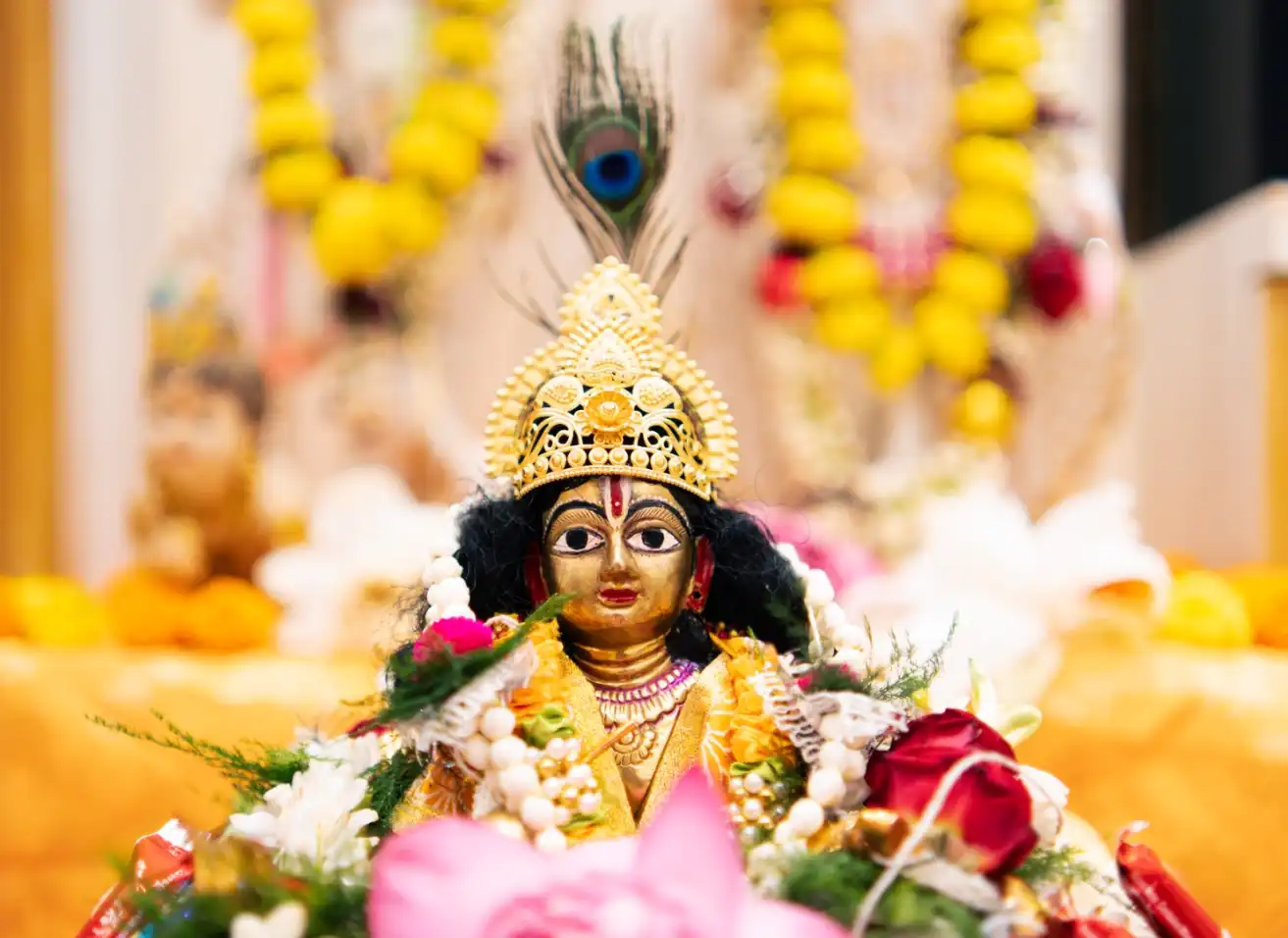
Visual aesthetics enhance devotional experience. During Krishna Janmashtami at Nabatara Foundation, the deity is adorned with traditional garments, floral garlands, and sacred ornaments. The altar is decorated with lamps and fresh blossoms symbolising purity and abundance.
Decoration is not superficial embellishment. It reflects reverence. In Vedic tradition, beauty is considered an offering. The carefully arranged environment elevates consciousness, preparing the mind for prayer.
Krishna Janmashtami Puja thus integrates sensory refinement with spiritual intent. The fragrance of incense, the glow of diyas, and the rhythm of chants converge to create holistic immersion.
For devotees searching for an authentic Krishna Janmashtami Celebration Kolkata experience, this integration of aesthetics and authenticity leaves lasting impression.
Women’s Participation in Krishna Janmashtami Celebration
Women have historically played vital roles in sustaining devotional traditions. During Krishna Janmashtami Celebration India celebrates annually, women often lead bhajans, prepare offerings, and organise fasting rituals within households.
At Nabatara Foundation, women actively participate in Krishna Janmashtami Puja and the Janmashtami Havanna Ceremony. Their involvement strengthens communal energy and preserves intergenerational knowledge transmission.
Mothers guiding children through fasting discipline, chanting, and ritual etiquette ensure continuity of spiritual culture. The Krishna Bhakti Gathering India observes here reflects inclusive participation rather than hierarchical separation.
Such collective engagement deepens the emotional resonance of Krishna Janmashtami Celebration Kolkata hosts each year.
The Psychological Transformation Experienced by Participants
Beyond theology and tradition, Krishna Janmashtami exerts measurable psychological influence. Ritual structure provides predictability, reducing anxiety. Collective chanting fosters belonging. Fasting enhances mindfulness. Fire rituals externalise internal tension.
Participants at the Krishna Janmashtami Puja Kolkata seekers attend at Nabatara frequently describe feeling emotionally lighter after the Janmashtami Havanna Ceremony. The symbolic surrender of worries into sacred fire creates cathartic release.
Midnight arati intensifies emotional experience, often evoking gratitude and introspection. These psychological shifts extend beyond the festival night. Devotees report improved focus, reduced stress, and renewed motivation in subsequent weeks.
Thus, Krishna Janmashtami Celebration Kolkata is not only spiritually enriching but psychologically stabilising.
Youth Engagement and the Future of Devotional Tradition
A major challenge in modern India is maintaining youth engagement with traditional spirituality. Digital culture competes aggressively with ritual discipline. Krishna Janmashtami provides a meaningful bridge.
At Nabatara Foundation, youth are encouraged to participate actively in Krishna Janmashtami Puja through shloka recitation, volunteering, and learning ritual significance. This inclusion fosters ownership rather than passive observation.
The Krishna Bhakti Gathering India nurtures at such centres helps young participants perceive devotion as strength rather than obligation. Exposure to structured Janmashtami Havanna Ceremony cultivates respect for sacred knowledge.
As these youth mature, they carry forward Krishna Janmashtami Celebration Kolkata traditions into future generations.
The Spiritual Ecology of Fire, Water, and Sound
Krishna Janmashtami Puja integrates multiple elemental symbols. Water used in abhishek represents purification. Fire in havana symbolises transformation. Sound through mantra chanting embodies vibration. Light from lamps signifies knowledge.
This integration creates a holistic spiritual ecology. During the Janmashtami Havanna Ceremony at Nabatara Foundation, participants witness interplay between flame and chant. The environment becomes energetically charged.
Such elemental symbolism reinforces psychological engagement. Humans respond instinctively to firelight and rhythmic sound. Krishna Janmashtami Celebration Kolkata thus engages primal sensory awareness, deepening devotional immersion.
The Ethical Message Embedded in Krishna’s Life
Krishna’s life narrative encompasses diplomacy, compassion, strategic intelligence, and unwavering commitment to dharma. During Krishna Janmashtami Puja at Nabatara, discourses frequently highlight ethical dimensions of his actions.
In professional environments where compromise often appears necessary, Krishna’s example of principled action without ego attachment becomes instructive. The Krishna Janmashtami Celebration Kolkata professionals attend transforms into ethical recalibration.
Devotion here is not escapism. It becomes empowerment rooted in moral clarity.
Krishna Janmashtami and the Concept of Divine Play
Another dimension explored during Krishna Janmashtami Celebration India observes annually is the concept of divine play, or leela. Krishna’s childhood stories emphasise joy, spontaneity, and divine intimacy.
This aspect balances the philosophical seriousness of the Bhagavad Gita. Devotees during Krishna Janmashtami Puja are reminded that spirituality includes celebration. Bhajans during the Krishna Bhakti Gathering India experiences at Nabatara often reflect playful devotion.
Such balance prevents rigidity. It encourages emotional warmth alongside disciplined ritual.
Expanding Devotional Awareness Beyond Kolkata
Although centred in Kolkata, Nabatara Foundation’s Krishna Janmashtami Celebration has drawn participants from Mumbai and Prayagraj. The reputation for authentic Janmashtami Havanna Ceremony and disciplined Krishna Janmashtami Puja attracts seekers seeking depth.
As awareness grows through digital platforms and word-of-mouth, the event strengthens its national recognition. Yet organisers remain committed to maintaining intimate spiritual atmosphere.
This careful expansion ensures Krishna Janmashtami Celebration Kolkata retains sincerity while gradually extending its influence across India.
Integrating Technology Without Losing Sanctity
Modern communication tools enable broader awareness of Krishna Janmashtami Puja events. However, technological presence is balanced carefully to preserve sanctity.
Photography and recording are regulated to prevent distraction. The emphasis remains on lived experience rather than digital broadcast. Krishna Janmashtami Celebration Kolkata thus maintains sacred integrity.
This thoughtful integration ensures contemporary accessibility without compromising devotional depth.
The Role of Leadership in Preserving Ritual Authenticity
Spiritual leadership plays a crucial role in sustaining ritual authenticity. At Nabatara Foundation, Krishna Janmashtami Puja is conducted under experienced guidance, ensuring scriptural adherence and spiritual discipline.
The Janmashtami Havanna Ceremony follows precise mantra sequence. The midnight arati aligns with lunar calculation. Such precision reinforces trust among participants.
Leadership rooted in humility rather than spectacle strengthens the credibility of Krishna Janmashtami Celebration Kolkata hosts annually.
The Economic Simplicity of Devotional Focus
Unlike commercial festivals that emphasise extravagance, Krishna Janmashtami at Nabatara Foundation focuses on simplicity. Offerings remain symbolic rather than excessive. Decoration enhances devotion rather than display.
This simplicity reflects Krishna’s own teachings on detachment. The Krishna Janmashtami Puja prioritises inner offering above material presentation.
Such focus appeals to devotees seeking authenticity over grandeur.
The Lingering Spiritual Resonance
After concluding the midnight rituals and distributing prasad, the gathering gradually disperses. Yet something subtle persists. Devotees carry home the rhythm of chants and memory of sacred flame.
In subsequent days, many integrate daily prayer inspired by Krishna Janmashtami Celebration Kolkata experience. The festival thus initiates continuity rather than conclusion.
The annual recurrence deepens spiritual identity. Each year builds upon previous experience, strengthening collective memory and devotional maturity.
The Enduring Power of Krishna Janmashtami
Krishna Janmashtami endures because it addresses universal human longing for guidance, love, and meaning. Its rituals engage body, mind, and emotion simultaneously. Its philosophy addresses ethical dilemmas and existential uncertainty.
At Nabatara Foundation Kolkata, the Krishna Janmashtami Celebration integrates theology, ritual precision, cultural warmth, and psychological transformation. The Krishna Janmashtami Puja and Janmashtami Havanna Ceremony stand as pillars of disciplined devotion within modern urban life.
As India continues to evolve economically and technologically, festivals like Krishna Janmashtami anchor society to timeless wisdom. In the sacred silence of midnight arati, devotees rediscover that divine presence remains accessible.
Each year, lamps are lit again. Mantras are chanted again. Fire rises again. And with every Krishna Janmashtami Celebration Kolkata hosts at Nabatara Foundation, hearts awaken once more to devotion, clarity, and enduring spiritual joy.
The Deeper Scriptural Foundations of Krishna Janmashtami
Krishna Janmashtami is rooted in multiple sacred texts that have shaped Hindu philosophy for centuries. The narratives of Lord Krishna’s birth and divine mission appear in the Bhagavata Purana, the Vishnu Purana, and the Mahabharata. These texts describe not only the miraculous circumstances of his birth but also the cosmic purpose behind his incarnation.
In these scriptures, the Earth itself is said to have appealed to the divine for relief from oppressive forces. The birth of Krishna was the response to that plea. This theological background adds profound gravity to Krishna Janmashtami Celebration India observes every year. It is not a seasonal ritual but a remembrance of divine intervention for the restoration of balance.
At Nabatara Foundation Kolkata, this scriptural context is woven into the Krishna Janmashtami Puja through recitation and discourse. The celebration does not isolate ritual from knowledge. Instead, it integrates theology with devotion so that participants understand why each step of the puja and Janmashtami Havanna Ceremony carries symbolic power.
By grounding the Krishna Janmashtami Celebration Kolkata hosts in scriptural literacy, the foundation strengthens both faith and understanding.
The Symbolism of Vasudeva’s Journey and Inner Liberation
One of the most powerful narratives associated with Krishna Janmashtami is Vasudeva carrying the newborn Krishna across the Yamuna River under divine protection. The prison doors opened, guards fell asleep, and the river parted to allow safe passage.
Spiritually interpreted, this story symbolises liberation from inner bondage. The prison represents mental limitation, fear, and ego. The river symbolises the flow of consciousness. The divine child symbolises awakened awareness.
During Krishna Janmashtami Puja at Nabatara Foundation, participants are encouraged to reflect on their own inner prisons. The Janmashtami Havanna Ceremony becomes an opportunity to release limiting beliefs into sacred fire. The midnight arati symbolises safe arrival into renewed consciousness.
This interpretive depth transforms Krishna Janmashtami Celebration Kolkata devotees attend into personal spiritual allegory rather than distant mythological memory.
The Role of Devotional Discipline in Urban Spiritual Life
Urban life in Kolkata, Mumbai, and other Indian cities moves at relentless pace. Professional obligations, digital engagement, and social responsibilities leave little space for introspection. Krishna Janmashtami provides a deliberate interruption.
At Nabatara Foundation, Krishna Janmashtami Puja is approached with structured discipline. Participants arrive prepared, often having observed fasting and reflection. The Janmashtami Havanna Ceremony is conducted without haste, allowing attention to remain focused.
This discipline counters urban fragmentation. It trains the mind to remain present. For many attendees, Krishna Janmashtami Celebration Kolkata becomes the rare night when silence feels natural rather than uncomfortable.
Such disciplined observance strengthens spiritual resilience throughout the year.
Intergenerational Transmission of Devotion
One of the most significant contributions of Krishna Janmashtami Celebration India observes annually is the preservation of tradition across generations. Children who witness puja, chanting, and havan rituals internalise sacred memory.
At Nabatara Foundation Kolkata, families attend together. Young participants observe elders offering flowers and reciting mantras. They learn the significance of midnight arati. They hear stories of Krishna’s courage and compassion.
This lived education cannot be replicated through textbooks alone. Krishna Janmashtami Puja thus becomes a cultural classroom. The Krishna Bhakti Gathering India experiences here ensures that devotion remains a shared family identity.
Over time, these children mature into adults who continue the tradition, ensuring continuity of Krishna Janmashtami Celebration Kolkata hosts year after year.
The Energetic Atmosphere of Collective Faith
Collective devotion generates powerful psychological and emotional influence. When individuals gather with unified intention, energy amplifies. The Krishna Bhakti Gathering India witnesses during Janmashtami is an example of this phenomenon.
At Nabatara Foundation, chanting during the Janmashtami Havanna Ceremony reverberates through the hall. The sound of dozens of voices reciting mantras simultaneously creates rhythmic synchronisation. This synchrony enhances emotional bonding and spiritual absorption.
Research in psychology suggests that collective ritual strengthens social cohesion and reduces feelings of isolation. Krishna Janmashtami Celebration Kolkata participants experience often produces a lingering sense of connectedness long after the event concludes.
Such collective faith strengthens both personal conviction and community identity.
The Ethical Leadership Model of Lord Krishna
Krishna’s life provides not only spiritual inspiration but also a model of leadership. He guided without domination, strategised without cruelty, and upheld dharma with compassion. During Krishna Janmashtami Puja at Nabatara Foundation, reflections often explore these leadership principles.
In corporate environments and public service roles, ethical dilemmas are common. Krishna’s example encourages decisive action balanced by empathy. The Krishna Janmashtami Celebration Kolkata professionals attend becomes a reminder that success without integrity is incomplete.
The Janmashtami Havanna Ceremony symbolises purification of ambition, aligning goals with values. Through devotion and reflection, participants renew commitment to ethical leadership.
This integration of spirituality and professional life deepens the relevance of Krishna Janmashtami in contemporary India.
The Emotional Spectrum of Devotion
Krishna bhakti encompasses a wide emotional spectrum—joy, surrender, gratitude, longing, and celebration. During Krishna Janmashtami Celebration Kolkata hosts at Nabatara Foundation, this spectrum becomes visible.
Some devotees chant with quiet concentration. Others sing bhajans with expressive enthusiasm. Some close their eyes during midnight arati, absorbed in silent prayer. Others weep softly in gratitude.
This diversity of expression reflects the inclusive nature of bhakti. Krishna Janmashtami Puja does not impose uniform emotional response. It allows authentic personal engagement within collective framework.
The Krishna Bhakti Gathering India observes annually thus becomes emotionally expansive rather than restrictive.
The Spiritual Ecology of Kolkata and Its Devotional Heritage
Kolkata’s spiritual heritage includes temples, monasteries, and philosophical institutions that have shaped Indian thought. The city’s cultural depth creates fertile ground for devotional festivals.
Krishna Janmashtami Celebration Kolkata therefore carries layered resonance. It intersects with literary tradition, musical heritage, and intellectual discourse. At Nabatara Foundation, this cultural richness enhances the Krishna Janmashtami Puja experience.
The Janmashtami Havanna Ceremony conducted here reflects continuity with ancient Vedic practices while resonating within contemporary metropolitan context.
By aligning tradition with urban culture, Nabatara strengthens Kolkata’s devotional identity.
Renewal Through Annual Repetition
Ritual repetition creates rhythm within spiritual life. Krishna Janmashtami returns annually, offering renewed opportunity for introspection. Each year, participants approach the festival from a different stage of personal journey.
Challenges faced during the year are symbolically offered into sacred fire during the Janmashtami Havanna Ceremony. Achievements are dedicated in gratitude. Intentions for future growth are formed during midnight prayer.
This cyclical renewal strengthens resilience. Krishna Janmashtami Celebration Kolkata thus functions as annual spiritual checkpoint, allowing devotees to assess alignment with dharma.
Over decades, such repeated observance shapes character and deepens devotion.
Devotion as Social Harmony
Beyond individual transformation, Krishna Janmashtami fosters social harmony. The Krishna Bhakti Gathering India celebrates dissolves barriers of profession, status, and age. Devotees sit together on the same floor, chant the same mantras, and share the same prasad.
This egalitarian participation reinforces humility. In a society often stratified by economic or social difference, Krishna Janmashtami Puja restores spiritual equality.
At Nabatara Foundation, simplicity of arrangement ensures focus remains on devotion rather than display. The Krishna Janmashtami Celebration Kolkata families attend thus becomes a model of shared sacred space.
The Subtle Continuation After Midnight
After midnight arati concludes and prasad is distributed, conversations resume quietly. Devotees greet one another with renewed warmth. Many remain seated for a few moments longer, absorbing silence.
The energy of the Janmashtami Havanna Ceremony lingers subtly. The fragrance of incense remains in the air. Lamps flicker gently before being extinguished.
This transitional period between ritual and departure carries quiet significance. It marks integration of spiritual experience into daily life.
Krishna Janmashtami Celebration Kolkata therefore concludes not abruptly but gradually, allowing reflection to settle.
The Enduring Promise of Krishna Janmashtami
Krishna Janmashtami endures because it speaks to universal human longing—for guidance in confusion, courage in adversity, and joy in devotion. Its rituals are ancient, yet its relevance is contemporary.
At Nabatara Foundation Kolkata, the Krishna Janmashtami Puja and Janmashtami Havanna Ceremony embody disciplined authenticity. The Krishna Bhakti Gathering India witnesses here reflects sincerity rather than spectacle.
Each year, as devotees gather again under the midnight sky, the sacred narrative repeats—not as repetition alone but as renewal. The birth of Krishna becomes reminder that divine presence remains accessible, that righteousness remains powerful, and that devotion remains transformative.
In the quiet after the final chant fades, participants carry home more than memory. They carry strengthened faith, clarified intention, and softened hearts.
And so, Krishna Janmashtami Celebration Kolkata at Nabatara Foundation continues—year after year—not merely as festival on the calendar, but as living current of devotion flowing steadily through modern India.
A Deep Dive into Kolkata’s Devotional Heritage and Vaishnav Influence on Krishna Janmashtami
Kolkata is often described as a city of intellect, literature, art, and revolution. Yet beneath its intellectual identity flows an equally powerful current of devotion. The spiritual landscape of Kolkata has been shaped for centuries by bhakti movements, temple traditions, philosophical discourse, and devotional music. To understand the depth of Krishna Janmashtami Celebration Kolkata hosts each year at Nabatara Foundation, one must first understand the devotional soil from which it emerges.
Krishna Janmashtami in Kolkata is not an imported celebration; it is an organic continuation of Bengal’s Vaishnav heritage. The city’s devotional character is deeply intertwined with the broader spiritual awakening that transformed Bengal through bhakti movements centuries ago. This historical and cultural inheritance gives Krishna Janmashtami Puja in Kolkata a unique emotional and philosophical intensity.
The Roots of Vaishnavism in Bengal
Vaishnavism, the tradition devoted to Lord Vishnu and his avatars, including Krishna, found fertile ground in Bengal. The devotional emphasis on love, surrender, and chanting resonated deeply with the Bengali temperament. Over time, Krishna bhakti became central to the region’s spiritual identity.
The Vaishnav influence in Bengal is characterised by emotional devotion expressed through kirtan, poetry, and community gatherings. Unlike purely ritualistic traditions, Bengali Vaishnavism emphasised direct emotional connection with Krishna. This devotional warmth remains visible during Krishna Janmashtami Celebration Kolkata observes today.
When devotees gather for Krishna Janmashtami Puja at Nabatara Foundation, they participate in a living tradition that has evolved over centuries. The chanting of divine names, the singing of bhajans, and the collective remembrance of Krishna’s leelas all reflect this enduring Vaishnav legacy.
The Cultural Atmosphere of Devotion in Kolkata
Kolkata’s neighbourhoods are dotted with temples, small shrines, and community halls where devotional singing and scriptural discourse continue year-round. The city’s spiritual calendar is filled with observances that blend ritual discipline with cultural expression.
Krishna Janmashtami Celebration Kolkata hosts annually benefits from this devotional atmosphere. Residents are accustomed to late-night arati, collective chanting, and sacred storytelling. Spiritual gatherings are not rare interruptions but familiar rhythms within urban life.
At Nabatara Foundation, this cultural familiarity allows Krishna Janmashtami Puja to unfold with natural participation. Devotees instinctively join in chants, maintain reverent silence during the Janmashtami Havanna Ceremony, and observe midnight rituals with deep focus. The city’s devotional conditioning enhances the spiritual intensity of the event.
The Influence of Bhakti Movements on Janmashtami Observance
The Bhakti movement reshaped Indian spirituality by making devotion accessible to all, regardless of caste or social status. In Bengal, this movement took especially vibrant form. Devotional singing in public spaces, heartfelt poetry dedicated to Krishna, and collective remembrance of divine love became central practices.
This inclusive spirit continues to shape Krishna Janmashtami Celebration Kolkata hosts. At Nabatara Foundation, participation in Krishna Janmashtami Puja is not restricted by social hierarchy. Families from diverse professional and cultural backgrounds sit together during the Janmashtami Havanna Ceremony.
The shared chanting of Krishna’s names dissolves social boundaries. In this way, Kolkata’s Vaishnav heritage reinforces the egalitarian ethos of Krishna Janmashtami Celebration India observes across regions.
Devotional Music and the Bengali Temperament
Music has always been integral to Bengali spirituality. The melodic cadence of kirtan aligns naturally with the Bengali language’s lyrical quality. During Krishna Janmashtami Celebration Kolkata, devotional music becomes emotional bridge between intellect and faith.
At Nabatara Foundation, bhajans during Krishna Janmashtami Puja are rendered with contemplative depth rather than theatrical volume. The emphasis remains on internalisation. Devotees close their eyes, allowing melody and mantra to guide them inward.
This musical heritage strengthens the Krishna Bhakti Gathering India witnesses here. The chanting feels organic rather than imposed. It reflects centuries of devotional artistry embedded within Kolkata’s cultural consciousness.
Temple Traditions and Urban Spiritual Continuity
Kolkata’s spiritual geography includes historic temples and devotional centres that have preserved Vaishnav rituals across generations. While modern infrastructure surrounds them, these sacred spaces maintain continuity with ancient practice.
Krishna Janmashtami Celebration Kolkata hosts annually draws inspiration from this continuity. The structured approach to Krishna Janmashtami Puja at Nabatara Foundation reflects respect for temple discipline. The Janmashtami Havanna Ceremony is conducted with scriptural precision, mirroring practices maintained in traditional Vaishnav institutions.
Yet the urban setting adds unique dimension. Participants often arrive directly from professional commitments, shifting from corporate environments into sacred atmosphere. This transition intensifies the sense of spiritual refuge.
The Emotional Depth of Bengali Devotion
Bengali devotional culture is known for emotional expressiveness balanced by philosophical inquiry. Devotees do not merely perform rituals; they feel them. Tears during midnight arati are not uncommon during Krishna Janmashtami Celebration Kolkata observes.
This emotional openness enhances the transformative potential of Krishna Janmashtami Puja. When participants engage wholeheartedly during the Janmashtami Havanna Ceremony, symbolic surrender becomes authentic release.
The blending of intellect and emotion, characteristic of Kolkata’s spiritual temperament, ensures that Krishna Janmashtami Celebration here remains both reflective and heartfelt.
Vaishnav Philosophy and Contemporary Kolkata
Vaishnav philosophy emphasises loving surrender to Krishna while fulfilling worldly responsibilities. This balance resonates deeply in Kolkata’s modern urban context. Professionals, students, and homemakers alike seek harmony between ambition and devotion.
During Krishna Janmashtami Puja at Nabatara Foundation, discourses often highlight this balance. The message aligns with Vaishnav teachings that encourage engagement with the world without losing spiritual centre.
Thus, Krishna Janmashtami Celebration Kolkata becomes practical spirituality. It affirms that devotion need not require withdrawal from modern life. Instead, it infuses daily activity with sacred awareness.
The Role of Community in Sustaining Devotion
Kolkata’s social fabric supports collective religious participation. Community-based celebrations reinforce shared identity. Krishna Janmashtami Celebration Kolkata thrives within this communal culture.
At Nabatara Foundation, the Krishna Bhakti Gathering India experiences reflects neighbourhood spirit combined with structured ritual. Participants greet one another annually, forming bonds that extend beyond festival night.
This community dimension strengthens continuity. Krishna Janmashtami Puja becomes anticipated reunion as well as sacred observance.
Urban Modernity and the Preservation of Tradition
As Kolkata continues to modernise, balancing heritage with innovation becomes essential. Krishna Janmashtami Celebration Kolkata exemplifies this balance. Modern communication tools may inform participants, yet ritual execution remains rooted in ancient Vedic discipline.
At Nabatara Foundation, the Janmashtami Havanna Ceremony retains traditional structure despite contemporary surroundings. This coexistence reassures devotees that spiritual authenticity remains intact.
Such preservation amid change reflects Kolkata’s broader identity—a city where intellectual modernity coexists with devotional depth.
The Future of Krishna Janmashtami in Kolkata
The Vaishnav influence that shaped Bengal centuries ago continues to inspire contemporary spiritual practice. Krishna Janmashtami Celebration Kolkata hosts each year carries forward this inheritance.
As younger generations participate in Krishna Janmashtami Puja and witness the Janmashtami Havanna Ceremony, they internalise tradition not as obligation but as living culture. The Krishna Bhakti Gathering India experiences here nurtures continuity through inclusion.
Kolkata’s devotional heritage ensures that Krishna Janmashtami will remain more than calendar observance. It will continue to be night of collective remembrance, philosophical reflection, and emotional renewal.
At Nabatara Foundation, this heritage finds structured expression. The Krishna Janmashtami Celebration Kolkata devotees attend stands as contemporary manifestation of centuries-old Vaishnav devotion—disciplined, heartfelt, and spiritually resonant.
In the glow of midnight lamps and the echo of sacred chants, Kolkata’s devotional past meets its present. And through Krishna Janmashtami Puja, that sacred continuity flows into the future.