The Sacred Fire of Ma Shakti Sadhana in West Bengal
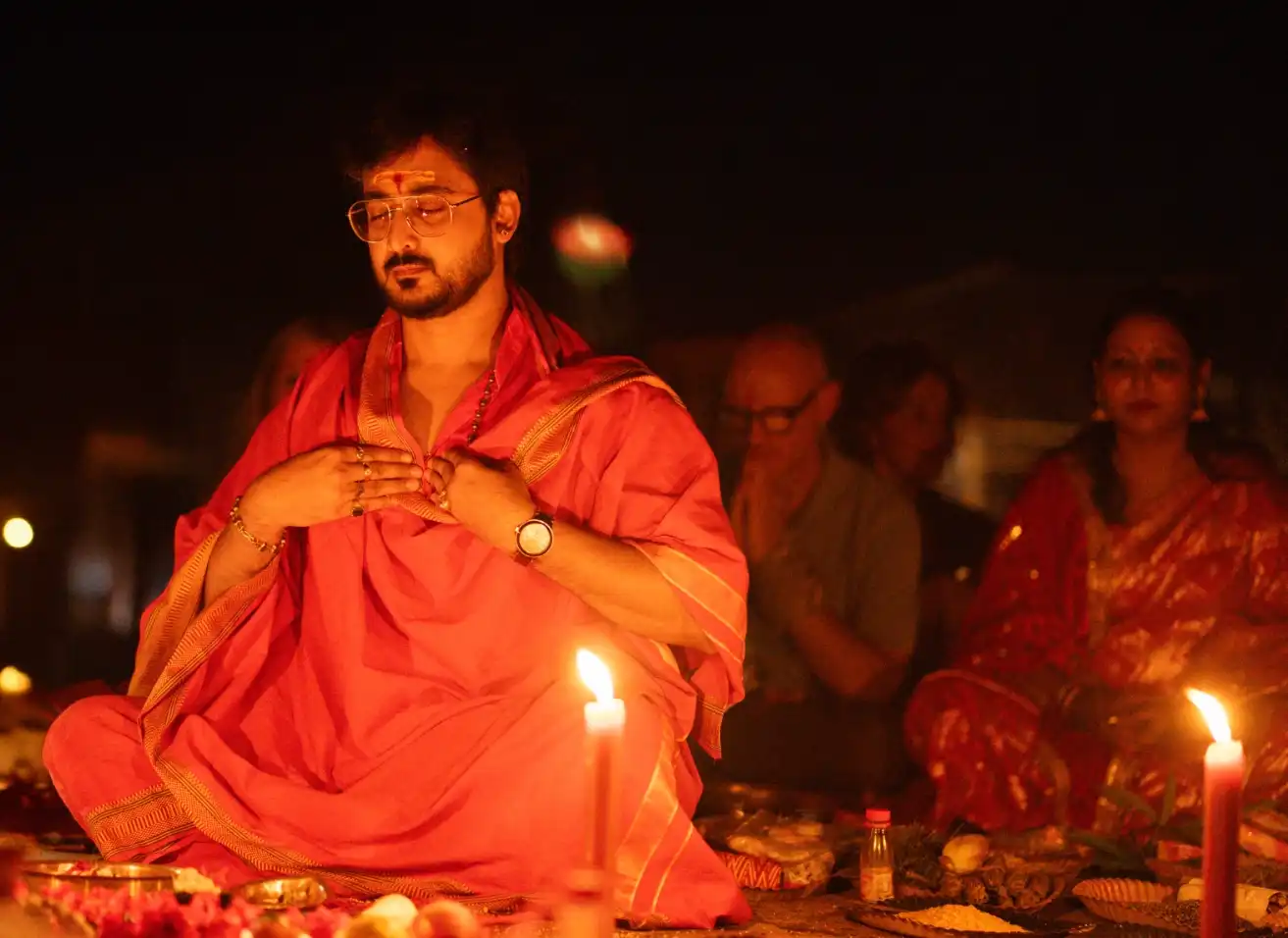
In December 2025, a rare and deeply transformative Ma Tara Puja and Havana was performed at the sacred cremation ground of Tarapith Mahasmashan under the spiritual guidance of Gaurav Tribedi. This was not a public spectacle, not a festival ritual, and not a tourism experience. It was a lineage-guided Tarapith Mahasmashan ritual rooted in authentic tantra discipline.
Students from France, Italy, Mumbai, and Bangalore gathered in Tarapith with a single intention — to immerse themselves in Ma Tara Sadhana in Tarapith, the living heart of Shakti worship in India. What unfolded over those sacred hours became a profound example of how Tantra Sadhana in Tarapith continues to breathe in the modern world.
This December 2025 Ma Tara Puja and Havana was not just a ritual event. It was a doorway into deep inner transformation, where the cremation ground became both teacher and mirror.
The Spiritual Significance of Tarapith in Shakti Tradition
To understand the magnitude of performing a Ma Tara Puja and Havana in Tarapith, one must first understand the spiritual identity of Tarapith itself.
Tarapith is one of the most revered Shakti Peethas in India. Devotees from across the country visit to seek blessings from Ma Tara, the fierce yet compassionate embodiment of Divine Mother. Unlike many temple towns where devotion remains devotional alone, Tarapith carries an additional dimension — it is a centre of Tantra Sadhana in Tarapith that has drawn seekers, sadhaks, and tantric practitioners for centuries.
The temple and the Mahasmashan together form a sacred polarity. The temple represents devotion. The cremation ground represents transcendence. When combined through Ma Tara Puja and Havana, they create a complete spiritual circuit — bhakti and tantra, surrender and power.
This is why searches for “Tara Puja West Bengal†or “Shakti Sadhana India†often lead serious seekers to Tarapith.
Why the Mahasmashan Holds Unique Power
The Mahasmashan of Tarapith is not symbolic mythology. It is a functioning cremation ground, a place where life’s impermanence is visible without decoration. In tantric philosophy, the cremation ground is considered one of the most potent fields for spiritual awakening.
Here, illusions fall away naturally. Ego cannot survive comfortably in a space that constantly reminds one of mortality. For this reason, performing a Tarapith Mahasmashan ritual requires preparation, humility, and guidance.
When the December 2025 Ma Tara Puja and Havana was conducted, participants were reminded that the Mahasmashan is not approached for mystical thrill. It is approached for truth.
In Shakti Sadhana, truth is purification.
The Lineage and Guidance Behind the Ritual
Under the direction of Gaurav Tribedi, the Ma Tara Puja and Havana was carried out with strict adherence to traditional tantric procedures. Every mantra was pronounced with discipline. Every offering was made with awareness. Every step was guided through lineage principles rather than modern reinterpretations.
In today’s spiritual landscape, many events are marketed as “tantric experiences.†However, authentic Ma Tara Sadhana Tarapith cannot be performed casually. It demands preparation in body, breath, and mind.
The December 2025 ritual reflected that authenticity.
Participants were not passive spectators. They were guided into alignment before stepping into the Mahasmashan. The sacred fire was not lit until internal steadiness was established.
This ensured that the Spiritual retreat in Tarapith remained rooted in tradition rather than spectacle.
Preparation for Ma Tara Puja and Havana
True Ma Tara Puja and Havana begins long before the fire is lit. Preparation is not only external ritual arrangement — it is internal purification.
Participants underwent:
- Mantra alignment practice
- Breath awareness discipline
- Silence observance
- Mental steadiness training
- Understanding of Mahasmashan symbolism
For students from Europe, this preparation was particularly important. While they had studied tantra philosophically, the living tradition of Tantra Sadhana in Tarapith required experiential grounding.
Students from Mumbai and Bangalore also approached the ritual with humility, acknowledging that Tarapith’s Mahasmashan carries a distinct energetic field unlike conventional temple worship.
By the time the group entered the cremation ground, the preparation had created a collective field of sincerity.
The Dawn of the December 2025 Ma Tara Puja and Havana
As dawn approached, Tarapith Mahasmashan carried an atmosphere of quiet intensity. The air felt dense yet calm. The cremation ground was neither frightening nor dramatic — it was honest.
The Ma Tara Puja and Havana unfolded in carefully structured phases.
First came invocation — inviting the presence of Ma Tara through disciplined mantra recitation. The vibration of the mantras in the cremation ground created a resonance that participants described as deeply grounding.
Then came establishment — setting the sacred fire space with proper tantric alignment.
Finally came the havana — offerings of ghee, herbs, flowers, and symbolic intentions placed into the rising flame.
Each offering represented surrender. Each mantra deepened focus.
This was not symbolic spirituality. It was direct engagement with Shakti Sadhana India at one of its most powerful sites.
Experiencing Ma Tara Sadhana in Tarapith
For many participants, the most profound realization during the Ma Tara Puja and Havana was the internal silence that emerged.
The cremation ground does not allow distraction. The fire demands presence. The mantra requires discipline. Together, they create an environment where superficial identity fades.
Students from France and Italy described the experience as both humbling and empowering. For them, this was not a cultural ritual but an initiation into authentic Ma Tara Sadhana Tarapith.
Participants from Mumbai and Bangalore shared that despite living in India, the depth of Mahasmashan-based tantra had remained distant until this retreat.
The ritual created a shared field where geography dissolved and sincerity remained.
Shakti Sadhana in India: A Living Tradition
India has long been the cradle of Shakti worship. Yet many traditions risk dilution in modern times. The December 2025 Ma Tara Puja and Havana served as a reminder that authentic Shakti Sadhana in India remains alive when practiced with discipline.
Tarapith is not merely a destination. It is a living current.
The Mahasmashan does not advertise itself. It calls those who are ready.
Performing Ma Tara Puja and Havana in this sacred ground reaffirmed that Tantra Sadhana in Tarapith is not about mystique — it is about transformation.
The Inner Meaning of the Fire Ritual
In tantra, fire represents awareness. When offerings are placed into the havana flame, practitioners symbolically offer their limitations into higher consciousness.
During the December 2025 Ma Tara Puja and Havana, participants were encouraged to internalize each offering. The ritual was not about external performance. It was about inner surrender.
The cremation ground amplified this symbolism. Just as physical bodies return to ash, ego identities dissolve in the presence of Shakti.
This is the true purpose of a Tarapith Mahasmashan ritual — awakening through confrontation with truth.
A Spiritual Retreat in Tarapith That Transcends Tourism
Many search for a “Spiritual retreat Tarapith†online. Yet authentic retreats in sacred spaces demand responsibility.
The December 2025 Ma Tara Puja and Havana was not commercialized spirituality. It was a carefully guided immersion into traditional Shakti practice.
Participants did not leave with dramatic promises. They left with clarity, steadiness, and a deeper understanding of Ma Tara’s transformative presence.
The experience reinforced why Tara Puja West Bengal continues to attract sincere seekers across generations.
The Continuing Impact
After the ritual concluded, silence filled the Mahasmashan. No applause. No announcements. Only stillness.
Participants remained in contemplation. The fire subsided physically, but its imprint remained internally.
The Ma Tara Puja and Havana at Tarapith Mahasmashan in December 2025 became more than an event. It became a milestone in each participant’s spiritual journey.
Transformation in tantra is rarely loud. It is steady. It is subtle. It is enduring.
The Ancient Roots of Ma Tara Worship in India
To truly understand the spiritual gravity of the December 2025 Ma Tara Puja and Havana, one must go beyond the event itself and enter the deeper current of Tara worship in the Indian tantric tradition.
Ma Tara is one of the Dasha Mahavidyas — the Ten Great Wisdom Goddesses of Tantra. Within Shakta philosophy, she represents the fierce compassion that rescues the seeker from ignorance. Unlike purely benevolent forms of the Divine Mother, Tara stands at the threshold between fear and freedom. She is often worshipped in cremation grounds, symbolic of her role as liberator from attachment and illusion.
In the context of Shakti Sadhana in India, Tara is not merely a mythological deity. She is considered a living force, a consciousness that responds to disciplined invocation. This is why Ma Tara Sadhana in Tarapith holds such unique significance. Tarapith is not simply a temple town dedicated to Tara; it is one of the rare places where her tantric dimension has been preserved through living lineage.
When the December 2025 Ma Tara Puja and Havana was performed at Tarapith Mahasmashan, it was rooted in this ancient stream of practice — not a modern adaptation, but a continuation of tradition.
Tarapith: Where Temple Devotion Meets Cremation Ground Tantra
Tarapith is often described as one of the most powerful Shakti Peethas in eastern India. Devotees visiting for Tara Puja in West Bengal typically experience the devotional aspect of the temple — offerings, darshan, prayers, and bhakti.
However, Tarapith carries a second dimension that distinguishes it from many other pilgrimage centers: the Mahasmashan.
Tarapith Mahasmashan has historically been associated with intense tantric practice. The cremation ground represents impermanence, ego dissolution, and spiritual confrontation. Within tantric philosophy, it is considered an advanced field of sadhana where distractions naturally fall away.
Performing a Tarapith Mahasmashan ritual such as the December 2025 Ma Tara Puja and Havana is therefore not an act of spectacle. It is an act of spiritual readiness.
Temple devotion softens the heart. Cremation ground sadhana sharpens awareness. Together, they create the full arc of Tantra Sadhana in Tarapith.
The Symbolism of the Cremation Ground in Tantra
For those unfamiliar with tantric philosophy, the idea of performing Ma Tara Puja and Havana in a cremation ground may appear intense or even unsettling. Yet within Shakta Tantra, the Mahasmashan holds profound spiritual symbolism.
The cremation ground represents the ultimate equality. Status dissolves. Identity dissolves. Possessions dissolve. What remains is pure awareness.
In this space, practitioners confront impermanence directly. Fear arises, and then dissolves. Attachment surfaces, and then weakens. Ego identities lose their grip.
This is why advanced Ma Tara Sadhana Tarapith often incorporates Mahasmashan-based practice. The environment itself becomes a teacher.
During the December 2025 Ma Tara Puja and Havana, participants were guided to reflect on this symbolism internally. The external fire mirrored the inner process of transformation. Just as offerings were placed into the havana flame, limiting beliefs were consciously surrendered.
The cremation ground did not feel morbid. It felt clarifying.
Historical Lineages of Tantra in Tarapith
Tarapith has been home to numerous tantric practitioners over centuries. Its Mahasmashan has witnessed disciplined sadhana long before modern spiritual tourism emerged.
The continuity of Tantra Sadhana in Tarapith rests on lineage transmission — guru to disciple, experience to experience. Without lineage guidance, cremation ground practice risks becoming symbolic rather than transformative.
The December 2025 Ma Tara Puja and Havana was conducted under the disciplined guidance of Gaurav Tribedi, ensuring that the ritual adhered to traditional tantric frameworks rather than diluted reinterpretations.
In contemporary India, many individuals search online for “authentic Shakti Sadhana India†or “real tantra in Tarapith.†What distinguishes authentic practice from imitation is adherence to discipline, mantra accuracy, ritual structure, and psychological preparedness.
The 2025 ritual reflected that integrity.
The Psychological Dimension of Ma Tara Sadhana
Modern seekers often approach spirituality intellectually. They read scriptures, attend workshops, and discuss philosophy. Yet tantra operates differently. It is experiential.
The December 2025 Ma Tara Puja and Havana created a psychological shift among participants because the Mahasmashan environment naturally disrupts superficial identity structures.
Fear of death, fear of loss, fear of uncertainty — these are universal psychological undercurrents. In a cremation ground, such fears surface gently but unmistakably. Rather than suppressing them, tantric practice integrates them.
Through disciplined mantra and havana, participants reported experiencing clarity where anxiety once resided. The ritual did not promise instant enlightenment. Instead, it created steady alignment.
This is why serious seekers searching for a Spiritual retreat in Tarapith often find that authentic cremation ground sadhana leaves a deeper imprint than conventional retreats.
International Seekers and the Globalization of Shakti Sadhana
The presence of students from France and Italy during the December 2025 Ma Tara Puja and Havana reflects a growing global interest in authentic Indian spiritual traditions.
However, globalization can also risk dilution. When practices are removed from context, they lose depth. The significance of performing Ma Tara Sadhana in Tarapith lies precisely in its geographical and energetic authenticity.
International participants described the experience as profoundly grounding. Many had encountered tantra through books or workshops in Europe. Yet participating in a Tarapith Mahasmashan ritual revealed a dimension that cannot be replicated outside its sacred geography.
The convergence of European and Indian seekers around the havana fire demonstrated that Shakti Sadhana in India continues to resonate globally — not as exotic mysticism, but as disciplined transformation.
The Role of Fire in Tantra
Fire is central to the Ma Tara Puja and Havana. In Vedic and tantric traditions alike, fire represents purification, illumination, and connection between the human and the divine.
In the context of Ma Tara Sadhana Tarapith, fire becomes more than symbolic. It becomes a catalyst. As offerings are placed into the flame, participants internalize surrender. The rising smoke carries intention beyond the visible realm.
During the December 2025 ritual, the havana flame rose steadily against the backdrop of the Mahasmashan. The contrast between ash and fire, stillness and mantra, created a powerful experiential field.
Participants later reflected that the most transformative aspect of the Ma Tara Puja and Havana was not external spectacle, but the inner quiet that followed each offering.
Fire purifies. Silence integrates.
Why Tarapith Remains Relevant in 2025
In an age of digital overload and constant stimulation, ancient spiritual centers such as Tarapith offer something radically different — confrontation with reality.
Many modern spiritual movements focus on positivity and affirmation. Tantra does not bypass difficulty. It faces impermanence directly. This is why Tantra Sadhana in Tarapith remains deeply relevant.
The December 2025 Ma Tara Puja and Havana demonstrated that Shakti worship is not confined to ritualistic tradition; it is a living pathway for psychological clarity and spiritual steadiness.
Search trends in India increasingly reflect interest in:
- Authentic tantra practices
- Cremation ground sadhana
- Tara Puja West Bengal
- Spiritual retreat Tarapith
- Shakti Sadhana India
Yet authenticity cannot be mass-produced. It requires discipline.
Tarapith Mahasmashan continues to attract those who are ready for depth rather than display.
The Subtle Aftermath of the Ritual
After the conclusion of the December 2025 Ma Tara Puja and Havana, the Mahasmashan returned to stillness. There were no dramatic conclusions. No public announcements. Only silence.
Participants remained seated for extended periods, integrating the experience internally. Many described a sensation of grounded clarity — a subtle but steady alignment.
The transformation was not theatrical. It was sustainable.
This is the hallmark of genuine Ma Tara Sadhana Tarapith — change that unfolds quietly but endures.
The Inner Mahasmashan: Continuing the Practice
Perhaps the most important teaching from the December 2025 ritual was this: the Mahasmashan is not only external.
Within tantric philosophy, the true cremation ground lies within consciousness. It is the space where ego identities are examined and released. The havana fire becomes an internal process of purification.
Participants were reminded that the real continuation of Ma Tara Puja and Havana happens in daily life — in moments of awareness, discipline, and surrender.
This understanding ensures that the Tarapith Mahasmashan ritual does not remain a memory but becomes a lived practice.
Ma Tara as Mahavidya: The Deeper Tantric Dimension
Within the Shakta tantric tradition, Ma Tara is revered as one of the Dasha Mahavidyas — the Ten Great Wisdom Goddesses who represent distinct pathways to spiritual awakening. While many devotees approach Tara through devotion and prayer, the tantric dimension of Ma Tara Sadhana in Tarapith reveals a more transformative current.
As Mahavidya, Tara is the force that carries the seeker across fear. She is often described as the one who rescues consciousness from ignorance and attachment. In cremation ground symbolism, she stands amidst impermanence not as destruction, but as liberation.
This is why performing Ma Tara Puja and Havana at Tarapith Mahasmashan holds such depth. The Mahasmashan is not merely a location; it is a symbolic extension of Tara’s domain. The environment itself mirrors her teaching — that truth arises when illusion dissolves.
During the December 2025 ritual, participants were reminded that Tara’s fierceness is compassion in disguise. The external fire of the havana reflected her transformative energy. The internal surrender reflected her grace.
Scriptural Echoes of Tara Worship
Though much of tantric knowledge has historically been transmitted orally through lineage, scriptural references to Tara appear across multiple Shakta and tantric texts. Tara is often depicted as both terrifying and nurturing — standing in cremation grounds, yet offering liberation.
In Shakti tradition, this dual symbolism is not contradictory. It is integral. The cremation ground represents the dissolution of ego. The motherly aspect represents protection during that dissolution.
This philosophical balance lies at the heart of authentic Tantra Sadhana in Tarapith. Devotees who visit the temple of Tarapith often experience the nurturing aspect of Ma Tara. Those who enter the Mahasmashan under guidance encounter her transformative dimension.
The December 2025 Ma Tara Puja and Havana unified both aspects — devotion and discipline, surrender and strength.
Mantra as Vibrational Science in Ma Tara Sadhana
In tantric practice, mantra is not poetry. It is vibrational technology. Each syllable carries energetic structure, and its precision matters.
Before the December 2025 Ma Tara Puja and Havana, participants underwent mantra alignment training. This ensured that the Tarapith Mahasmashan ritual unfolded with clarity rather than confusion. In cremation ground sadhana, energetic integrity is essential.
The repetition of Tara mantras within the Mahasmashan creates a resonance amplified by the environment itself. Participants described experiencing subtle shifts in breath rhythm and mental quietness during sustained chanting.
This is why Ma Tara Sadhana Tarapith cannot be reduced to external ritual alone. The true transformation occurs through disciplined mantra absorption.
In the context of Shakti Sadhana in India, mantra serves as both anchor and bridge — grounding awareness while connecting it to expanded consciousness.
Tarapith Compared to Other Shakti Peethas
India is home to numerous Shakti Peethas, each carrying unique spiritual identity. Yet Tarapith remains distinct because of its integration of temple devotion and cremation ground tantra.
In many pilgrimage centers, worship remains primarily devotional. In Tarapith, the Mahasmashan adds an advanced dimension. This dual structure allows seekers to engage both bhakti and tantra within the same sacred geography.
Those searching for “Tara Puja West Bengal†may initially encounter the devotional side of Tarapith. However, those seeking deeper Tantra Sadhana in Tarapith eventually discover the Mahasmashan tradition.
The December 2025 Ma Tara Puja and Havana reflected this integrated approach. Participants visited the temple with reverence, then entered the cremation ground with disciplined readiness. The combination created a complete spiritual arc.
This dual identity is why Tarapith continues to attract serious seekers from across India and internationally.
Psychological Transformation Through Cremation Ground Practice
Modern psychology often speaks of confronting fear as a pathway to growth. Tantric tradition has long embodied this principle.
The Mahasmashan environment naturally evokes contemplation of impermanence. Instead of avoiding this confrontation, Ma Tara Sadhana in Tarapith integrates it consciously.
During the December 2025 Ma Tara Puja and Havana, participants were guided to observe their internal responses without judgment. Some experienced subtle discomfort at first. Others felt unexpected calm. As the ritual progressed, these responses settled into clarity.
The cremation ground strips away superficial identity layers. What remains is awareness.
This psychological dimension is why authentic Spiritual retreat in Tarapith experiences often leave participants with grounded steadiness rather than emotional euphoria. The transformation is deep, not dramatic.
Discipline and Safety in Mahasmashan Sadhana
Cremation ground practice is often misunderstood due to sensationalized portrayals of tantra. In reality, authentic Tarapith Mahasmashan rituals require careful preparation and lineage guidance.
Under the direction of Gaurav Tribedi, the December 2025 Ma Tara Puja and Havana maintained strict procedural discipline. Participants were repeatedly reminded that humility is essential in the Mahasmashan.
Tantric practice is not rebellion. It is refinement.
The structured guidance ensured that the ritual unfolded with stability. Mantras were recited in correct sequence. Offerings were made with intention. Silence followed integration.
Such discipline differentiates authentic Shakti Sadhana India from theatrical imitation.
The Energy Field of Tarapith Mahasmashan
Sacred geography plays a crucial role in tantra. Certain locations hold cumulative vibrational imprints from centuries of practice.
Tarapith Mahasmashan is considered one such field. The repeated invocation of mantras over generations creates an energetic continuity that cannot be replicated artificially.
Participants in the December 2025 Ma Tara Puja and Havana often described the environment as charged yet peaceful. There was no external spectacle. Yet the atmosphere felt concentrated.
This subtle energetic density is why serious practitioners seek Ma Tara Sadhana Tarapith rather than generalized workshops elsewhere.
The land itself participates in the ritual.
Ma Tara Puja and Havana as Inner Initiation
The term initiation is often misunderstood. It does not necessarily imply dramatic vision or external ceremony. In tantra, initiation can be an internal shift in awareness.
For many participants, the December 2025 Ma Tara Puja and Havana functioned as a quiet initiation. The cremation ground context, combined with disciplined mantra and fire ritual, created a threshold experience.
After the ritual concluded, participants reported feeling aligned rather than overwhelmed. There was clarity rather than excitement.
This steadiness reflects authentic Tantra Sadhana in Tarapith — transformation that integrates gradually into daily life.
The Global Relevance of Shakti Sadhana Today
As the world navigates uncertainty, distraction, and rapid change, ancient traditions rooted in direct awareness gain renewed relevance.
Search interest in:
- Shakti Sadhana India
- Spiritual retreat Tarapith
- Authentic tantra India
- Ma Tara Puja and Havana
continues to rise among both Indian and international seekers.
However, authenticity remains the key differentiator. The December 2025 ritual demonstrated that traditional practices can remain accessible without losing depth.
Tarapith does not market itself loudly. Its power lies in continuity.
The Silence After the Fire
Perhaps the most transformative moment of the December 2025 Ma Tara Puja and Havana was not during the rising flames, but after.
When the havana concluded, silence filled the Mahasmashan. No one rushed to speak. The cremation ground seemed to absorb the ritual naturally.
Participants remained seated, integrating the experience internally. The outer fire had subsided, but an inner steadiness remained.
This silence carried the essence of Ma Tara Sadhana Tarapith — awareness beyond words.
Preparing for Ma Tara Puja and Havana in Tarapith
For seekers searching online for “How to perform Ma Tara Puja and Havana in Tarapith†or “Authentic Spiritual retreat Tarapith,†it is essential to understand that preparation begins internally long before arrival.
Tarapith is not a conventional pilgrimage town alone. While the temple welcomes thousands of devotees daily, the Mahasmashan demands a different mindset. Performing a Tarapith Mahasmashan ritual requires humility, steadiness, and proper guidance.
Preparation includes mental clarity, disciplined mantra practice, emotional stability, and a clear intention for sadhana. The cremation ground amplifies awareness. Without preparation, the experience can remain external. With preparation, it becomes transformative.
The December 2025 Ma Tara Puja and Havana reflected this principle clearly. Participants did not arrive casually. They arrived prepared.
Who Should Undertake Ma Tara Sadhana in Tarapith?
Not every seeker is immediately ready for cremation ground practice. Ma Tara Sadhana Tarapith is traditionally undertaken by individuals who have already cultivated basic spiritual discipline.
Those who benefit most from a Spiritual retreat in Tarapith include:
- Individuals seeking deep internal transformation rather than surface-level inspiration.
- Practitioners of mantra meditation who wish to deepen their practice.
- Seekers prepared to confront impermanence as part of spiritual growth.
- Students of tantra who value lineage-based guidance over sensationalism.
The December 2025 Ma Tara Puja and Havana brought together both Indian and international practitioners who approached the ritual with seriousness rather than curiosity.
Authenticity requires readiness.
Ethical Considerations in Tantra Sadhana in Tarapith
In modern times, tantra is often misrepresented through popular media. However, authentic Tantra Sadhana in Tarapith is rooted in discipline, respect, and sacred boundaries.
The Mahasmashan is an active cremation ground. It is not a stage. Ethical practice requires silence, reverence for the deceased, and alignment with local customs.
The December 2025 Ma Tara Puja and Havana was conducted with full awareness of these ethical considerations. Ritual space was established respectfully. Participants were guided to maintain silence and humility.
True Shakti Sadhana in India is never exploitative. It is grounded in responsibility.
When Is the Best Time for Ma Tara Puja and Havana?
Searches for “best time for Tara Puja West Bengal†or “auspicious dates for Ma Tara Sadhana Tarapith†are common.
Traditionally, certain lunar phases — especially Amavasya (new moon) — are considered powerful for Mahasmashan-based rituals. However, readiness of the practitioner is equally important.
The December 2025 Ma Tara Puja and Havana was conducted at a spiritually aligned time, ensuring both astrological support and internal preparedness of participants.
In tantric tradition, timing enhances potency, but discipline sustains it.
What to Expect During a Tarapith Mahasmashan Ritual
Many seekers approach Tarapith with curiosity about what actually happens during a cremation ground ritual.
A traditional Ma Tara Puja and Havana in the Mahasmashan generally includes invocation of Ma Tara, disciplined mantra recitation, structured fire offerings, silent contemplation, and internal integration.
It does not involve theatrical elements. It does not promise dramatic visions. Instead, it cultivates heightened awareness and grounded clarity.
Participants in the December 2025 ritual consistently described the experience as intense yet peaceful. The atmosphere of Tarapith Mahasmashan was honest, not sensational.
The fire illuminated the night. The mantra anchored the mind. The silence integrated the process.
Practical Guidance for Spiritual Retreat in Tarapith
For those planning a Spiritual retreat Tarapith, practical considerations matter alongside spiritual preparation.
Tarapith is located in the Birbhum district of West Bengal and is accessible by road and rail. Accommodation ranges from simple dharmashalas to modest hotels. However, those undertaking Ma Tara Sadhana in Tarapith should prioritize proximity to the temple and maintain a simple lifestyle during the stay.
Dietary discipline, early rising, and reduced digital distraction enhance the retreat experience. The December 2025 participants followed a simplified routine, ensuring their energy remained aligned with sadhana rather than distraction.
Spiritual transformation often requires environmental simplicity.
Integrating the Experience After Returning Home
One of the most overlooked aspects of Ma Tara Puja and Havana is integration after returning home.
A cremation ground ritual can create profound internal shifts. However, without integration, the impact may fade into memory.
Participants in the December 2025 ritual were encouraged to maintain daily mantra practice, periodic silence, and reflective awareness. This ensured that the Tarapith Mahasmashan ritual remained alive internally.
True Ma Tara Sadhana Tarapith does not end in Tarapith. It continues wherever awareness is maintained.
What is Ma Tara Puja and Havana?
Ma Tara Puja and Havana is a sacred tantric fire ritual dedicated to Goddess Tara, performed with disciplined mantra recitation and symbolic offerings into a consecrated fire. When conducted in Tarapith Mahasmashan, it gains intensified spiritual significance.
Why is Tarapith Mahasmashan important for Tantra Sadhana?
Tarapith Mahasmashan is historically associated with advanced tantric practice. The cremation ground environment symbolizes ego dissolution and spiritual confrontation, making it a powerful site for Ma Tara Sadhana.
Is cremation ground sadhana safe?
When performed under proper lineage guidance and with disciplined preparation, cremation ground sadhana is structured and safe. Authentic Tantra Sadhana in Tarapith emphasizes humility and psychological readiness.
Can beginners perform Ma Tara Sadhana in Tarapith?
Beginners may visit Tarapith for devotional worship. However, advanced Mahasmashan-based rituals such as Ma Tara Puja and Havana are recommended only under experienced guidance.
What makes Tara Puja in West Bengal unique?
Tara Puja West Bengal, especially in Tarapith, integrates temple devotion with cremation ground tantra. This dual dimension distinguishes it from many other Shakti Peethas in India.
Is Tarapith suitable for international spiritual seekers?
Yes. However, international seekers should approach with respect for Indian spiritual traditions and seek authentic guidance. The December 2025 Ma Tara Puja and Havana demonstrated how global participants can respectfully engage in Shakti Sadhana India.
How long should one stay for a Spiritual retreat in Tarapith?
A retreat may range from a few days to a week depending on preparation and intention. Consistency matters more than duration.
What is the purpose of havana in Ma Tara Sadhana?
Havana symbolizes internal purification. Offerings into the sacred fire represent surrender of limiting tendencies and alignment with divine awareness.
The Living Flame of Shakti
As this authority-level exploration of the December 2025 Ma Tara Puja and Havana unfolds, one truth becomes clear: Tarapith is not frozen in history. It is a living current of Shakti.
Tarapith continues to draw sincere seekers. The Mahasmashan continues to teach without speaking. The fire continues to purify without discrimination.
Authentic Ma Tara Sadhana Tarapith is not about intensity for its own sake. It is about clarity. It is about alignment. It is about awakening that integrates into daily life.
The December 2025 ritual stands as one chapter in a continuing lineage — a reminder that sacred traditions endure when practiced with sincerity.
The Metaphysics of Shakti: Understanding the Consciousness Behind Ma Tara
To fully grasp the transformative depth of Ma Tara Puja and Havana, one must move beyond ritual mechanics and enter the philosophical foundation of Shakti.
In Shakta Tantra, Shakti is not merely divine energy. She is consciousness in dynamic form. While Shiva represents pure awareness, Shakti represents the movement of that awareness into creation, transformation, and dissolution.
Ma Tara, as a Mahavidya, represents the phase of consciousness that liberates the seeker from fear. Her association with cremation grounds is not accidental. The cremation ground symbolizes dissolution — of identity, attachment, and illusion.
Thus, when Ma Tara Sadhana in Tarapith is performed within the Mahasmashan, it mirrors the cosmic process of dissolution and renewal.
The December 2025 Ma Tara Puja and Havana was therefore not only a devotional act. It was participation in a metaphysical principle — the burning of limitation in the fire of awareness.
The Inner Fire and the Outer Fire
In tantric symbolism, the external havana fire represents the internal fire of consciousness.
When participants offered ghee and sacred herbs into the havana during the Tarapith Mahasmashan ritual, they were not merely performing ritual gestures. Each offering symbolized a layer of ego being surrendered.
The outer flame consumes material offerings. The inner flame consumes ignorance.
This dual process is central to authentic Tantra Sadhana in Tarapith.
In the cremation ground, where physical bodies return to ash, the symbolism intensifies. Impermanence becomes visible. Awareness becomes unavoidable.
The December 2025 Ma Tara Puja and Havana thus functioned as both external ceremony and internal alchemy.
Why Tarapith Remains a Living Tantric Center
Many sacred places in India carry historical significance. Yet not all maintain active lineage-based practice.
Tarapith remains distinct because its temple devotion and cremation ground tantra continue simultaneously. The Mahasmashan has not become symbolic or abandoned. It remains active.
Tarapith Mahasmashan continues to serve its primary function while also holding tantric sadhana traditions.
This living continuity ensures that Shakti Sadhana in India remains experiential rather than historical.
The December 2025 Ma Tara Puja and Havana contributed to that living continuity — not as innovation, but as preservation.
The Role of Guru Guidance in Cremation Ground Sadhana
Cremation ground rituals require more than enthusiasm. They require structured guidance.
Under the leadership of Gaurav Tribedi, the Ma Tara Puja and Havana was conducted with clarity and adherence to lineage. This prevented dilution and ensured that the ritual remained aligned with classical tantric frameworks.
In the Indian spiritual context, guru guidance does not imply dependency. It ensures safety, structure, and psychological steadiness.
For seekers searching “authentic Tantra Sadhana in Tarapith,†the presence of disciplined guidance distinguishes genuine practice from performance.
Devotion and Discipline: The Dual Pillars of Tara Puja West Bengal
Many devotees approach Tara through love and prayer. Others approach through mantra and fire ritual.
In Tarapith, these two streams merge.
Devotion softens the ego. Discipline refines awareness.
The December 2025 Tara Puja in West Bengal embodied both dimensions. Participants visited the temple for darshan, grounding themselves in devotion. They then entered the Mahasmashan with discipline, grounding themselves in awareness.
This dual structure creates balance — emotion and clarity, surrender and steadiness.
Such integration is why Ma Tara Sadhana Tarapith continues to attract seekers from across India and abroad.
Advanced Philosophical Insight: The Cremation Ground as Mind
In deeper tantric philosophy, the Mahasmashan is symbolic of the human mind.
Thoughts arise and dissolve like flames. Identities form and burn away. Attachments accumulate and turn to ash.
Performing Ma Tara Puja and Havana in a cremation ground externalizes this inner process.
Participants in December 2025 were guided to recognize that the real Mahasmashan exists within consciousness. The external ritual is a mirror.
When the havana fire subsided, what remained was awareness — clear, silent, steady.
This is the essence of advanced Shakti Sadhana India.
What is the spiritual significance of Ma Tara Puja and Havana?
Ma Tara Puja and Havana symbolizes surrender, purification, and awakening through sacred fire ritual dedicated to Goddess Tara. When performed in Tarapith Mahasmashan, it carries intensified transformative symbolism.
Why is Tarapith considered powerful for Shakti Sadhana?
Tarapith integrates temple devotion with cremation ground tantra, making it one of the most spiritually charged centers for Ma Tara Sadhana in India.
Is Tarapith Mahasmashan open to visitors?
Yes, but it remains an active cremation ground. Visitors must maintain respect and silence. Advanced rituals should only be undertaken with proper guidance.
What is the difference between temple puja and Mahasmashan ritual?
Temple puja emphasizes devotion and blessings. A Tarapith Mahasmashan ritual emphasizes transformation through confrontation with impermanence and disciplined mantra practice.
Can international students participate in Ma Tara Sadhana Tarapith?
Yes, provided they approach with sincerity, preparation, and respect for Indian spiritual traditions. The December 2025 ritual included participants from Europe and Indian metropolitan cities.
How does Tantra Sadhana in Tarapith differ from modern tantra workshops?
Authentic Tantra Sadhana in Tarapith is lineage-based, mantra-centered, and rooted in sacred geography. It prioritizes discipline over theatrical elements.
What should one bring for a Spiritual retreat in Tarapith?
Simple clothing, disciplined mindset, mantra practice familiarity, and readiness for silence. External simplicity supports internal transformation.
Is Ma Tara associated with fear or protection?
Ma Tara represents protection through confrontation with fear. Her cremation ground symbolism reflects liberation rather than darkness.
Why perform havana during Tara Puja West Bengal?
Havana represents internal purification and surrender. The fire serves as a symbolic and energetic bridge between practitioner and divine Shakti.
The Enduring Flame of December 2025
The December 2025 Ma Tara Puja and Havana at Tarapith Mahasmashan stands as a reminder that ancient traditions endure not through advertisement, but through sincerity.
Participants returned to France, Italy, Mumbai, and Bangalore carrying not spectacle, but steadiness.
The cremation ground taught without words.
The fire purified without drama.
The mantra anchored without force.
Authentic Ma Tara Sadhana Tarapith remains a living current within Shakti Sadhana India — a current available to those who approach with humility and preparation.
Tarapith continues to whisper.
The Mahasmashan continues to teach.
The flame continues to burn.