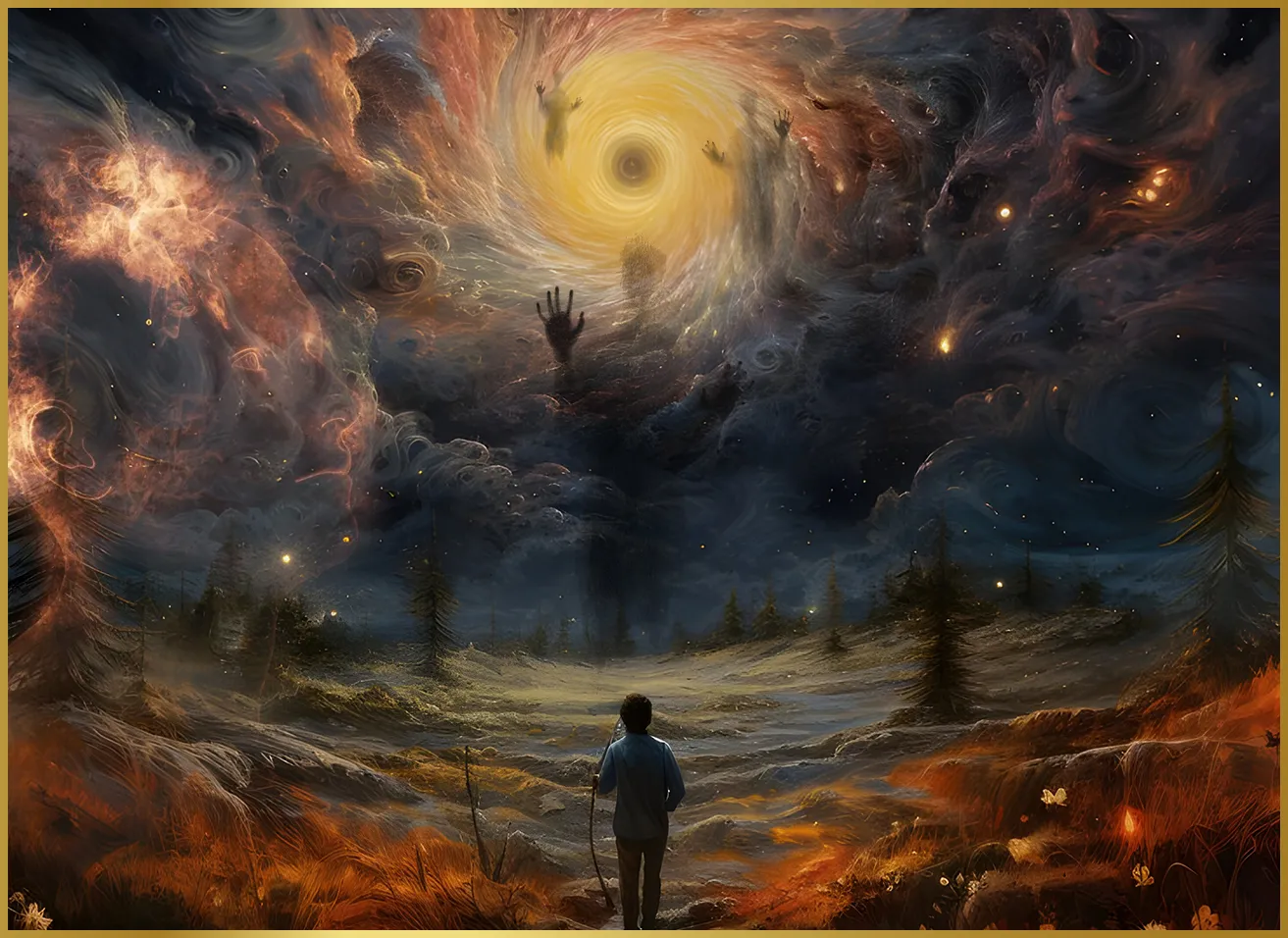
The Question That Never Dies: Do Ghosts Exist?
The question of whether ghosts exist has followed humanity across centuries, cultures, and belief systems. From ancient temples to modern cities, from whispered folklore to personal experiences shared in quiet conversations, the idea of unseen entities continues to intrigue, disturb, and fascinate people around the world. It is not just a question of belief; it is a question that sits at the intersection of spirituality, psychology, and human perception.
At Nabatara, where ancient knowledge meets deeper spiritual inquiry, this question is not dismissed lightly, nor is it sensationalized for fear or entertainment. Instead, it is explored with clarity, balance, and responsibility. The aim is not to convince you that ghosts exist or do not exist, but to guide you toward understanding what lies beneath the concept itself.
When people ask whether ghosts are real, they are often asking something much deeper. They are asking whether consciousness survives beyond the physical body. They are asking whether energy leaves an imprint. They are asking whether their fears are valid or imagined. And sometimes, they are asking because of an experience they cannot explain.
To answer this question meaningfully, one must move beyond simplistic yes or no answers. The truth, as understood in deeper spiritual traditions and explored at Nabatara, lies in layers.
Understanding the Concept of "Ghosts" Across Cultures
Every civilization has had its own interpretation of what we commonly call ghosts. In Indian spiritual traditions, the concept is far more nuanced than the Western idea of a floating apparition. Terms like "preta," "bhoota," and "atma" are used to describe different states of existence after death. These are not merely labels but represent specific conditions of consciousness and energy.
In many Vedic interpretations, what people refer to as ghosts are not necessarily malevolent beings wandering aimlessly. Instead, they are often understood as unsettled energies or consciousness that has not transitioned smoothly. This can happen due to sudden death, strong emotional attachments, unresolved desires, or lack of proper spiritual closure.
At Nabatara, these concepts are studied not as superstition but as part of a broader understanding of life, death, and the continuity of consciousness. The teachings emphasize that fear-based interpretations often distort the deeper truth. What is important is not the label "ghost," but the underlying principle of energy and its movement.
In contrast, modern Western culture often portrays ghosts as entities meant to scare or haunt. Movies and media have amplified this perception, turning a complex spiritual subject into a source of entertainment. This has contributed significantly to fear psychology, which we will explore later.
The Spiritual View: Energy Never Disappears
One of the fundamental principles in both science and spirituality is that energy cannot be destroyed; it can only change form. This idea is central to understanding the spiritual perspective on ghosts.
From a spiritual standpoint, human beings are not just physical bodies. They are composed of multiple layers, including the physical, mental, emotional, and energetic bodies. When the physical body ceases to function, the question arises: what happens to the rest?
At Nabatara Institute, students are introduced to the idea that consciousness and energy continue beyond physical death. However, this continuation does not automatically translate into what people imagine as ghosts. The transition depends on multiple factors, including the individual's state of mind, karmic patterns, and spiritual awareness.
In many cases, what people interpret as a ghostly presence may actually be an energy imprint rather than a conscious entity. This distinction is crucial and often misunderstood.
What Are Energy Imprints?
Energy imprints are one of the most important concepts when discussing whether ghosts exist. These are residual patterns of energy left behind in a space due to intense emotions, repeated actions, or significant events.
Imagine a place where a strong emotional experience occurred, such as grief, anger, or even deep devotion. According to spiritual traditions, such emotions can leave an energetic signature in that environment. Sensitive individuals may perceive these imprints as a presence.
This does not mean there is an actual entity or spirit present. Instead, it is similar to a recording that plays under certain conditions. The environment holds a memory, and under the right circumstances, that memory can be experienced.
At Nabatara, this concept is taught with clarity to prevent misunderstanding. Many people who believe they have encountered a ghost may have actually experienced an energy imprint. Without proper knowledge, the mind interprets this unfamiliar sensation as something supernatural or threatening.
Understanding energy imprints helps remove unnecessary fear and replaces it with awareness. It shifts the perspective from fear of the unknown to curiosity about how energy behaves.
The Role of Fear in Shaping Belief
Fear is one of the most powerful forces in shaping human perception. When it comes to ghosts, fear often plays a larger role than reality itself.
The human brain is wired to detect threats, even in ambiguous situations. In low light, unfamiliar environments, or moments of emotional vulnerability, the mind can create patterns that feel real but are not objectively present. This is known as pattern recognition bias.
At Nabatara, students learn that fear can amplify ordinary experiences into extraordinary ones. A sound in the night becomes a presence. A shadow becomes a figure. A sensation becomes a touch.
This does not mean that all experiences are imagined, but it highlights the importance of understanding the mind. Without this understanding, it becomes easy to misinterpret natural phenomena as supernatural.
Fear also has a cultural dimension. If someone grows up hearing stories about haunted places or spirits, their mind is more likely to interpret experiences through that lens. This is why ghost sightings vary significantly across cultures.
Why This Topic Matters in the Modern World
In today's fast-paced world, where technology dominates daily life, questions about ghosts and spirituality may seem outdated to some. However, the reality is quite the opposite. More people than ever are seeking answers about consciousness, energy, and the nature of existence.
The rise of anxiety, stress, and uncertainty has led many individuals to explore deeper questions. The idea of ghosts often becomes a gateway into these explorations. It opens the door to understanding not just what happens after death, but what it means to be alive.
At Nabatara, this curiosity is welcomed and guided. Instead of dismissing questions or promoting fear, the focus is on education, clarity, and transformation. The goal is to help individuals move from confusion to understanding, from fear to awareness.
Setting the Foundation for Truth
Before diving deeper into whether ghosts exist, it is important to establish a balanced approach. Extreme skepticism can close the door to meaningful exploration, while blind belief can lead to misunderstanding.
The path that Nabatara promotes is one of informed awareness. It encourages individuals to question, to learn, and to experience, but also to remain grounded. This balance is essential when dealing with subjects that involve both the mind and the unseen.
As we move forward in this blog, we will explore deeper layers of this topic, including the psychological mechanisms behind ghost experiences, the role of astrology and tantra, and how ancient wisdom can provide clarity in a modern context.
The aim is not to create fear or to prove a point, but to offer a perspective that is both thoughtful and transformative.
The Psychology Behind Ghost Experiences: When the Mind Becomes the Creator
The Invisible Architect: How the Human Mind Shapes Reality
To understand why so many people across the world believe they have encountered ghosts, we must first understand the nature of the human mind. The mind is not just a passive receiver of reality; it is an active creator. It interprets, filters, and sometimes even constructs experiences based on memory, conditioning, and emotional state.
At Nabatara, one of the core teachings is that perception is deeply influenced by inner awareness. What we see is not always what is objectively present but often what our mind is prepared to interpret. This becomes especially important when discussing ghost sightings or paranormal experiences.
When a person enters a dimly lit room already carrying fear or expectation, the brain begins to scan for patterns. A curtain moving in the wind may appear like a figure. A faint sound may feel like footsteps. These are not deliberate fabrications, but natural processes of the brain trying to make sense of incomplete information.
This phenomenon is known in psychology as pattern completion. The brain fills in gaps based on past experiences and cultural conditioning. If someone has grown up hearing stories about spirits or haunted places, their mind already has a framework ready. All it needs is a trigger.
Fear and Suggestion: The Power of Expectation
Fear is not just an emotion; it is a powerful amplifier. It heightens the senses, accelerates the heartbeat, and prepares the body for danger. While this response is useful in real threats, it can also distort perception when the threat is imagined.
In many cases, people who report ghost encounters are already in a heightened emotional state. This could be due to stress, loneliness, grief, or even curiosity mixed with fear. The mind, under such conditions, becomes more suggestible.
Suggestion plays a crucial role here. If someone is told that a place is haunted, their brain begins to look for evidence to support that idea. Even neutral stimuli start appearing unusual. This is why two people can stand in the same place, and only one feels a "presence."
At Nabatara, students are trained to observe their mental states carefully. They learn that awareness is the key to distinguishing between inner projections and external reality. Without this awareness, it becomes easy to mistake imagination for experience.
Sleep Paralysis: The Most Common "Ghost Encounter"
One of the most fascinating psychological explanations for ghost experiences is sleep paralysis. This is a state where a person is awake but unable to move, often accompanied by vivid hallucinations.
During sleep paralysis, the brain is partially in a dream state while the body remains immobile. This can create extremely realistic experiences, including the sensation of someone being present in the room, sitting on the chest, or even whispering.
Across cultures, this phenomenon has been interpreted differently. In some traditions, it is seen as a spirit attack. In others, it is described as a shadow entity or night demon. However, modern neuroscience explains it as a natural glitch between sleep stages.
What makes sleep paralysis so convincing is its intensity. The fear feels real, the presence feels real, and the inability to move adds to the helplessness. For someone who has never experienced it before, it can be deeply unsettling.
At Nabatara, such experiences are not dismissed but explained with clarity. Understanding the mechanism removes fear and replaces it with knowledge. When a person realizes that their mind can create such vivid experiences, it becomes easier to question other similar encounters.
The Role of Memory and Imagination
Memory is not a perfect recording of events. It is flexible, reconstructive, and influenced by emotions. Over time, memories can change, becoming more dramatic or detailed than they originally were.
When someone recalls a strange experience, their mind may unconsciously add elements that were not initially present. This process is known as memory reconstruction. It is not intentional lying; it is simply how the brain works.
Imagination also plays a significant role. Humans have a natural ability to visualize and create scenarios in their minds. This ability is essential for creativity, but it can also blur the line between imagination and perception.
At Nabatara, this interplay between memory and imagination is studied in the context of spiritual growth. Students are encouraged to develop clarity of thought so they can differentiate between what is truly experienced and what is internally generated.
Environmental Factors That Influence "Paranormal" Experiences
There are several physical factors that can create sensations often attributed to ghosts. These include sound frequencies, electromagnetic fields, and even air quality.
Low-frequency sound waves, known as infrasound, can cause feelings of unease, anxiety, and even the sensation of a presence. These sounds are not always consciously heard, but they affect the body and mind.
Similarly, fluctuations in electromagnetic fields can influence brain activity. Some studies suggest that certain electromagnetic conditions can create hallucination-like experiences. Old buildings, faulty wiring, and electronic devices can sometimes contribute to these effects.
Lighting also plays a role. Shadows, reflections, and low visibility can easily be misinterpreted by the brain. A simple shift in light can turn an ordinary object into something unfamiliar and unsettling.
At Nabatara, these factors are considered alongside spiritual explanations. The approach is not to deny science but to integrate it. True understanding comes from seeing the complete picture, not just one side of it.
Grief and the Desire to Connect
One of the most emotional reasons people believe in ghosts is the desire to reconnect with loved ones who have passed away. Grief can be a powerful force, creating a longing so strong that the mind seeks signs of presence.
It is not uncommon for individuals to feel that a departed loved one is nearby. They may sense their presence, hear their voice, or even see them in dreams or waking visions. These experiences can feel deeply real and comforting.
From a psychological perspective, this can be understood as a coping mechanism. The mind creates a sense of continuity to ease the pain of loss. From a spiritual perspective, it opens a different question about the nature of consciousness.
At Nabatara, such experiences are approached with sensitivity. They are neither dismissed as illusion nor blindly accepted as proof of spirits. Instead, individuals are guided to understand their emotions and explore their experiences with awareness.
Cultural Conditioning and Collective Belief
Beliefs about ghosts are heavily influenced by culture. In some societies, spirits are feared. In others, they are respected or even worshipped. These beliefs shape how individuals interpret their experiences.
For example, a shadow seen at night may be interpreted as a ghost in one culture, while in another, it may be seen as an ancestor or a protective presence. The experience itself may be similar, but the interpretation changes.
Media also plays a significant role. Movies, television, and stories often portray ghosts in dramatic and frightening ways. This creates a mental image that influences real-life perception.
At Nabatara, students are encouraged to move beyond cultural conditioning and seek deeper understanding. The goal is not to reject tradition but to see it clearly without distortion.
When the Mind and Energy Intersect
While psychology explains a large number of ghost experiences, it does not necessarily explain everything. There are instances where individuals report experiences that cannot be easily dismissed as imagination or environmental influence.
This is where the discussion begins to move toward the intersection of psychology and energy. The mind may be the interpreter, but what it interprets could sometimes be influenced by subtle energies.
At Nabatara, this intersection is explored with discipline and responsibility. Students learn that not every unexplained experience is supernatural, but not every experience can be reduced to psychology alone.
The key lies in developing awareness, sensitivity, and discernment.
Moving Beyond Fear Toward Understanding
The biggest challenge in discussing ghosts is not the lack of answers, but the presence of fear. Fear clouds judgment, distorts perception, and prevents meaningful exploration.
By understanding the psychological mechanisms behind ghost experiences, a large portion of this fear can be dissolved. What once seemed mysterious and threatening begins to make sense.
At Nabatara, the journey is always from fear to clarity. Knowledge is used as a tool to empower, not to intimidate. When individuals understand how their mind works, they gain control over their perceptions.
This does not mean that all experiences are dismissed, but it ensures that they are approached with balance.
Preparing for a Deeper Exploration
Now that we have explored the psychological foundations, the next step is to dive deeper into the spiritual and Vedic perspective. This includes understanding how ancient traditions interpret spirits, the role of karma, and the concept of subtle bodies.
The question "Do ghosts exist?" cannot be answered fully without exploring these dimensions. Psychology explains the mind, but spirituality explores consciousness.
The Vedic Perspective: Understanding Spirits Beyond Fear and Myth
Moving Beyond the Word "Ghost"
One of the biggest limitations in understanding this subject is the word "ghost" itself. It is a simplified, often fear-driven term that does not fully capture the depth of what ancient traditions describe.
In Vedic knowledge systems, which form the foundation of teachings at Nabatara, there is no single blanket term that equates to "ghost." Instead, there are multiple classifications, each describing a different state of consciousness after death. These classifications are not meant to frighten but to explain the journey of the soul in a structured and meaningful way.
When people ask, "Do ghosts exist?" what they are often referring to is whether there are entities or energies that exist beyond the physical body and can interact with the living. The Vedic answer is nuanced. It acknowledges the continuity of consciousness, but it also explains that not all post-death states are the same.
At Nabatara, this distinction is essential. Without it, the entire subject becomes either exaggerated or dismissed.
The Concept of Atma: The Eternal Consciousness
At the heart of Vedic philosophy lies the concept of the Atma, or the soul. The Atma is not something that is created or destroyed. It is eternal, beyond time and space, and untouched by physical changes.
When a person dies, the physical body ceases to function, but the Atma continues its journey. This journey is influenced by karma, desires, attachments, and spiritual awareness developed during life.
In its pure form, the Atma is not a ghost, nor does it wander aimlessly. It moves forward in its path of evolution. However, the transition from physical existence to the next state is not always smooth for every individual.
This is where other concepts come into play.
Preta: The State of Transition
One of the most important terms in Vedic understanding is "Preta." This refers to a transitional state after death, where the soul has not yet fully moved on to its next phase.
This state can arise due to several reasons. Sudden or unnatural death, intense emotional attachments, unfulfilled desires, or lack of proper spiritual rites can all contribute to this condition.
A Preta is not necessarily a harmful entity. It is more accurately described as a consciousness in transition, seeking resolution or movement. However, due to its unsettled nature, it may create disturbances that sensitive individuals perceive.
At Nabatara, students are taught that such states are not to be feared but understood. Fear arises from ignorance, while knowledge brings clarity. The idea is not to label something as dangerous but to understand its nature and purpose.
Bhoota: Energy Forms and Misinterpretation
Another commonly misunderstood term is "Bhoota." In many modern interpretations, it is equated directly with ghosts, but its meaning is broader.
Bhoota can refer to elemental energies or subtle forms that are not always tied to a specific individual consciousness. In some contexts, it represents energies that are influenced by the five elements—earth, water, fire, air, and space.
What people often interpret as a ghostly presence may sometimes be a Bhoota-like energy pattern rather than a conscious spirit. These energies can interact with environments and individuals in subtle ways, especially if a person is highly sensitive or emotionally open.
At Nabatara, this distinction is emphasized because it changes the entire approach. Instead of reacting with fear, one learns to observe, understand, and maintain balance.
The Role of Karma in Post-Death Experience
Karma plays a central role in determining what happens after death. It is not a system of punishment or reward but a law of cause and effect that governs the journey of consciousness.
Every action, thought, and intention creates an imprint. These imprints influence not only life experiences but also the transition after death. A person who has lived with awareness, balance, and spiritual understanding is more likely to experience a smoother transition.
On the other hand, intense attachments, unresolved emotions, or lack of awareness can create friction in this transition. This friction is often what leads to states that are later interpreted as ghostly existence.
At Nabatara, karma is not taught as a rigid doctrine but as a practical framework for understanding life and beyond. Students learn how their present actions shape not just their current reality but their entire journey.
Tantra and the Science of Subtle Energies
Tantra is often misunderstood in modern contexts, but in its authentic form, it is a profound science of energy and consciousness. It explores the interaction between the physical and subtle worlds in a structured and disciplined way.
Within Tantra, there is an understanding that different layers of existence coexist. These layers are not always visible, but they can be perceived and influenced through specific practices.
At Nabatara, where Tantra is taught with authenticity and responsibility, students are introduced to the idea that not all unseen phenomena are mystical or dangerous. Many are simply aspects of energy that operate beyond ordinary perception.
Tantric knowledge also emphasizes protection and balance. It does not encourage blind exploration or experimentation. Instead, it focuses on preparation, grounding, and guidance.
This is crucial when dealing with subjects like spirits or subtle entities. Without proper understanding, curiosity can turn into confusion. With the right knowledge, it becomes a path of growth.
Rituals and Their True Purpose
In many cultures, rituals are performed after death to ensure peace for the departed soul. While some may view these practices as mere tradition, they have deeper significance in Vedic understanding.
Rituals are designed to assist the transition of consciousness. They create a supportive environment for the soul to move forward, reducing the chances of it remaining in an unsettled state.
These practices also help the living process their grief and establish closure. The psychological and spiritual aspects work together, creating a sense of completion.
At Nabatara, rituals are not performed mechanically. They are understood, respected, and practiced with awareness. The focus is always on intention and understanding, rather than blind repetition.
Spiritual Sensitivity: Why Some People Experience More
Not everyone reports ghostly experiences, and this raises an important question. Why do some people feel or perceive these things more than others?
The answer often lies in sensitivity. Some individuals are naturally more attuned to subtle energies. This sensitivity can be influenced by emotional openness, mental state, and even spiritual practices.
However, sensitivity without understanding can lead to confusion. A person may perceive something subtle but interpret it incorrectly due to lack of knowledge.
At Nabatara, developing sensitivity is always accompanied by developing clarity. The goal is not just to perceive more but to understand what is being perceived.
The Thin Line Between Experience and Interpretation
One of the most important lessons in this subject is the difference between experience and interpretation. Two people can have the same experience but interpret it completely differently.
A sudden drop in temperature, a strange sensation, or an unexplained sound can be experienced by anyone. But how it is interpreted depends on the individual's beliefs, knowledge, and emotional state.
This is why the question "Do ghosts exist?" cannot be answered in isolation. It must be accompanied by the question, "What exactly are we experiencing?"
At Nabatara, this line of inquiry is central. Students are encouraged to question not just the experience but also their interpretation of it. This approach leads to deeper understanding and prevents unnecessary fear.
Aligning Ancient Wisdom with Modern Awareness
In today's world, there is often a gap between ancient knowledge and modern thinking. Subjects like spirits and subtle energies are either dismissed as superstition or exaggerated into fantasy.
Nabatara bridges this gap by presenting ancient wisdom in a way that is relevant and understandable. The aim is not to force belief but to offer insight.
By combining Vedic understanding with psychological awareness, a more complete picture emerges. It becomes possible to explore these topics without losing balance.
The Real Question Is Not About Ghosts
As we move deeper into this exploration, it becomes clear that the real question is not simply whether ghosts exist. The deeper question is about the nature of consciousness, energy, and human perception.
Ghosts, as commonly imagined, may or may not exist in the way people think. But the principles behind the idea—"energy, memory, consciousness, and perception"—are very real.
At Nabatara, the focus is always on these principles. By understanding them, individuals gain clarity not just about ghosts, but about life itself.
Preparing for the Next Layer of Truth
Now that we have explored the Vedic and spiritual framework, the next step is to bring everything together. This includes examining real-life experiences, understanding how different perspectives intersect, and addressing the question in a balanced, grounded way.
The goal is not to arrive at a dramatic conclusion but to reach a thoughtful understanding that removes fear and replaces it with awareness.
Real Experiences, Subtle Realities: Where Perception Meets Possibility
Why Personal Experiences Feel So Convincing
One of the strongest reasons the question "Do ghosts exist?" continues to persist is because of personal experiences. People across the world, from different cultures and backgrounds, report encounters that feel deeply real. These are not always dramatic or frightening. Sometimes they are subtle, quiet, and even comforting.
A person may feel a presence in an empty room. Someone may hear a voice calling their name when no one is there. Others may sense a sudden shift in energy in a particular place. These experiences are often described with certainty because they are felt, not imagined consciously.
At Nabatara, such experiences are approached with respect. Dismissing them outright would ignore the reality of human perception. At the same time, blindly validating every interpretation can lead to confusion. The focus is always on understanding what is being experienced and why.
The intensity of these experiences often comes from how the brain and body respond together. When the mind detects something unusual, the body reacts instantly. Heart rate increases, breathing changes, and awareness sharpens. This combination creates a memory that feels powerful and undeniable.
The Silent Power of Suggestion in Real-Life Settings
Many real-life experiences occur in environments that already carry a certain reputation. A house known to be "haunted," an old building with a history, or even a quiet rural location at night can influence perception before anything actually happens.
When a person enters such a space, their mind is already alert. Every sound becomes significant. Every shadow feels meaningful. This does not mean the experience is false, but it shows how expectation shapes perception.
There have been situations where multiple people in the same place report similar experiences. This often strengthens belief. However, when examined closely, these shared experiences can sometimes be traced back to a common suggestion or belief that influenced everyone present.
At Nabatara, this is explained as collective conditioning. When a group shares the same expectation, their interpretations begin to align. This does not invalidate the experience, but it highlights the role of the mind in shaping it.
Subtle Sensations That People Often Misinterpret
Not all experiences involve seeing or hearing something. In fact, many are based on sensations that are difficult to explain.
A sudden chill in the air, a feeling of being watched, or an unexplained heaviness in a room are commonly reported. These sensations can feel very real, and without understanding, they are often attributed to a supernatural presence.
However, such sensations can arise from multiple sources. Changes in temperature, air pressure, or even the body's internal state can create these feelings. Anxiety and heightened awareness can amplify them further.
At Nabatara, students learn to observe these sensations without immediately labeling them. This practice of observation creates distance between experience and interpretation, allowing clarity to emerge.
When Experiences Feel Personal
Some of the most powerful encounters are those that feel deeply personal. A person may feel that a loved one who has passed away is trying to communicate. They may dream of them vividly or sense their presence during emotional moments.
These experiences are often meaningful and comforting. They can provide a sense of connection and closure that is difficult to find otherwise.
From a psychological perspective, this can be understood as the mind's way of processing grief and maintaining emotional continuity. From a spiritual perspective, it raises deeper questions about the nature of connection and consciousness.
At Nabatara, such experiences are treated with sensitivity. The emphasis is not on proving or disproving them, but on helping individuals understand their emotional and spiritual context. What matters is not just the experience itself, but how it impacts the individual's state of mind and growth.
Places That "Feel Different"
There are locations where people consistently report unusual experiences. These places may feel heavy, unsettling, or energetically different. Even individuals who are not particularly sensitive may notice a change.
In some cases, this can be linked to environmental factors such as lighting, acoustics, or structural design. In other cases, it may relate to the history of the place and the emotions associated with it.
From a spiritual standpoint, such places may carry strong energy imprints. As discussed earlier, intense emotions and repeated actions can leave subtle traces in an environment. These traces can influence how people feel when they enter the space.
At Nabatara, this concept is explored without exaggeration. Not every unusual feeling indicates something supernatural. However, not every experience can be reduced to physical factors alone. The key lies in balanced observation.
The Role of Sensitivity and Awareness
Some individuals are naturally more receptive to subtle changes in their environment. They may notice shifts in mood, energy, or atmosphere more easily than others.
This sensitivity can sometimes lead to experiences that feel paranormal. However, sensitivity without understanding can create confusion. A person may perceive something subtle but interpret it through the lens of fear or belief.
At Nabatara, developing sensitivity is always paired with grounding and awareness. Students are guided to strengthen their mental clarity and emotional stability before exploring deeper aspects of perception.
This ensures that sensitivity becomes a strength rather than a source of fear.
When Fear Turns Experience Into Memory
Fear has a unique way of shaping memory. An experience that may have been neutral or mildly unusual can become intense and dramatic when recalled later.
For example, a simple sound in the night may be remembered as something far more significant. Over time, as the story is repeated, details may be added unconsciously, making the experience feel even more real.
This process is natural and happens to everyone. It is not about exaggeration but about how the mind reconstructs events.
At Nabatara, understanding this process helps individuals revisit their experiences with clarity. When fear is removed, the experience often appears very different from how it was initially perceived.
The Intersection of Energy and Human Perception
While many experiences can be explained through psychology and environment, there are moments that remain difficult to categorize. These are the experiences that keep the question alive.
In such cases, it is possible that subtle energies play a role. These energies may not be conscious entities, but they can still influence perception. The human mind, being sensitive and complex, interacts with these influences in ways that are not always fully understood.
At Nabatara, this intersection is explored carefully. The goal is not to label every unexplained event as spiritual but to remain open to possibilities while staying grounded in awareness.
This balanced approach prevents both blind belief and unnecessary dismissal.
What Should You Do If You Feel a "Presence"?
One of the most practical questions people ask is what they should do if they feel something unusual. The first and most important step is to remain calm.
Fear often amplifies the situation. When the mind becomes still, perception becomes clearer. Observing the experience without reacting immediately allows the mind to process it more accurately.
Simple grounding practices, such as focusing on breathing or becoming aware of the physical environment, can help bring stability. In many cases, the sensation passes once the mind settles.
At Nabatara, individuals are taught not to jump to conclusions. Instead of asking "What is this?" in a state of fear, they are encouraged to ask "What am I experiencing?" with awareness.
This shift in approach changes everything.
How Nabatara Guides Individuals Through Such Experiences
Nabatara does not promote fear-based narratives or dramatic interpretations. The focus is always on education, clarity, and transformation.
Through structured courses in astrology, tantra, and spiritual practices, individuals learn to understand both their inner world and the subtle aspects of existence. This knowledge creates confidence and removes unnecessary fear.
Students are guided step by step, ensuring that their experiences are understood in the right context. Whether it is a psychological phenomenon, an environmental factor, or a subtle energetic influence, the aim is always clarity.
This approach sets Nabatara apart as a space where ancient wisdom is not just preserved but applied responsibly in modern life.
Bringing Together Experience and Understanding
Real-life experiences are powerful, but they are only one part of the picture. Without understanding, they can lead to confusion or fear. With the right knowledge, they become opportunities for insight.
The question is not whether experiences are real. They are real to the person having them. The question is how they are interpreted and what meaning is given to them.
At Nabatara, the emphasis is always on this deeper layer of understanding. Experiences are not the end of the journey; they are the beginning of inquiry.
Moving Toward a Balanced Conclusion
We have now explored the psychological foundations, the spiritual framework, and the real-life experiences surrounding the idea of ghosts. Each perspective adds a layer of understanding, bringing us closer to a balanced view.
The final step is to bring all these elements together and address the question directly, without fear, exaggeration, or dismissal.
Do Ghosts Exist? A Balanced Truth Beyond Fear and Imagination
The Question Revisited With Clarity
After exploring the many layers of this subject, the question "Do ghosts exist?" no longer feels as simple as it once did. It is no longer just about whether something unseen is present in the dark. It has evolved into a deeper inquiry about consciousness, energy, perception, and the human mind.
At Nabatara, this question is not answered with extremes. It is not dismissed as superstition, nor is it exaggerated into something to be feared. Instead, it is understood as a doorway into deeper awareness.
If we strip away the fear, the stories, and the assumptions, what remains is a more refined understanding. There are experiences people have that feel real and powerful. There are psychological mechanisms that explain a large portion of these experiences. There are also spiritual frameworks that describe the continuity of consciousness beyond the physical body.
The truth lies not in choosing one explanation over the other, but in seeing how they connect.
What Is Real and What Is Misunderstood
A large number of what people call ghost experiences can be explained through the mind. Fear, suggestion, memory, and environmental influences create perceptions that feel external but originate internally. This does not make the experience fake; it simply means the source is within.
Another layer involves energy imprints. These are not conscious beings, but residual patterns left behind by intense emotions or repeated actions. Sensitive individuals may perceive these imprints as a presence, leading to the belief that something is there.
Then comes the spiritual dimension. Ancient Vedic knowledge acknowledges that consciousness continues beyond death. However, it also explains that not every post-death state results in what people imagine as a ghost. Most transitions happen naturally, guided by karma and spiritual evolution.
In rare cases, there may be unsettled states of consciousness, but these are not the dramatic, fear-driven entities often portrayed in popular culture.
At Nabatara, this layered understanding is what brings clarity. It removes the need to believe blindly or reject completely.
Why Fear Has Dominated This Topic
Fear has shaped the narrative around ghosts more than truth itself. Stories passed down through generations, amplified by media and imagination, have created a version of reality that is often far removed from actual understanding.
Fear thrives in the unknown. When something cannot be easily explained, the mind fills the gap with the most dramatic possibility. Over time, these interpretations become beliefs.
This is why many people feel uneasy in the dark, in silence, or in unfamiliar places. It is not always because something is there, but because the mind is trying to protect itself from uncertainty.
At Nabatara, one of the core teachings is to move beyond fear through awareness. When knowledge replaces assumption, the mind becomes steady. What once felt threatening begins to feel understandable.
The Deeper Truth About Consciousness
The most important realization that emerges from this exploration is that human beings are more than their physical bodies. Consciousness is not limited to what we can see or touch.
This does not mean that ghosts, as commonly imagined, are surrounding us. It means that existence itself is more layered than it appears.
The idea of spirits, when understood correctly, is not about fear. It is about continuity. It is about the journey of consciousness and the role of awareness in shaping that journey.
At Nabatara, this understanding forms the foundation of all teachings. Whether it is astrology, tantra, or meditation, the goal is always to help individuals connect with deeper aspects of themselves.
So, Do Ghosts Exist?
The most honest answer is this: what people call ghosts is often a mix of psychological experience, environmental influence, and subtle energy perception, with rare instances of unsettled consciousness.
The popular image of ghosts as conscious entities wandering to scare or harm is largely a creation of fear and storytelling. It does not reflect the depth of spiritual understanding found in ancient traditions.
What does exist is energy. What does exist is consciousness beyond the physical form. What does exist is the human mind's incredible ability to interpret, imagine, and sometimes misinterpret.
When these elements interact, the experience can feel like a ghost encounter.
At Nabatara, the focus is not on proving or disproving ghosts. It is about helping individuals understand themselves and the nature of reality more clearly.
Transforming Curiosity Into Awareness
For many people, curiosity about ghosts is the beginning of a much deeper journey. It starts with a question, but it often leads to self-discovery.
Why do certain places feel different? Why does the mind react the way it does? What happens after death? These questions go far beyond the idea of ghosts. They touch the core of human existence.
At Nabatara, this curiosity is nurtured with guidance and knowledge. Instead of leaving individuals in confusion, it provides them with tools to explore these questions in a grounded and meaningful way.
Courses in astrology, tantra, and spiritual practices are designed not just to inform but to transform. They help individuals develop clarity, balance, and a deeper connection with themselves.
The Importance of Right Knowledge
In a world where information is easily available but not always accurate, having the right guidance becomes essential. Subjects like ghosts and spirituality are often surrounded by misinformation, exaggeration, and fear-based narratives.
Without proper understanding, curiosity can lead to confusion. With the right knowledge, it becomes a path of growth.
Nabatara stands as a space where ancient wisdom is preserved with authenticity and shared with responsibility. The teachings are not diluted, nor are they presented in a way that creates unnecessary fear.
This balance is what allows individuals from around the world to approach these topics with confidence.
A Modern Approach to Ancient Truths
The strength of Nabatara lies in its ability to bridge the gap between ancient knowledge and modern understanding. It recognizes that today's seekers are not just looking for answers but for clarity that fits into their lives.
By combining spiritual teachings with psychological awareness, Nabatara offers a perspective that is both deep and practical. It allows individuals to explore profound subjects without losing their grounding.
This approach makes complex topics like ghosts accessible without oversimplifying them.
Walking the Path of Awareness
The journey from fear to understanding is not just about answering one question. It is about changing the way we see the world and ourselves.
When fear is replaced by awareness, the unknown becomes less intimidating. When knowledge replaces assumption, the mind becomes steady.
At Nabatara, this transformation is at the heart of everything. It is not about giving answers but about guiding individuals to discover their own understanding.
Final Reflection
The idea of ghosts will likely continue to exist as long as humans are curious about the unknown. It is a question that connects science, psychology, and spirituality in a unique way.
But perhaps the real purpose of this question is not to find a definitive answer. Perhaps it is to encourage deeper inquiry, to push us beyond surface-level understanding, and to explore the nature of reality itself.
When approached with balance, this question becomes less about fear and more about awareness.
And in that awareness lies the true answer.
Begin Your Journey With Nabatara
If this exploration has sparked your curiosity, it may be the right time to go deeper. Understanding subjects like energy, consciousness, astrology, and tantra requires more than casual reading. It requires guidance, structure, and authentic knowledge.
Nabatara Institute offers a path for those who seek clarity, not confusion. With carefully designed courses and teachings rooted in tradition, it provides a space where learning becomes transformation.
Whether you are a seeker, a student, or someone looking for deeper meaning, Nabatara welcomes you to begin your journey.
Because true knowledge is not just about knowing—it is about becoming.
🔷 Why You Can Trust This Insight: Authentic Knowledge Rooted in Experience and Tradition
When exploring subjects like ghosts, spirits, and unseen energies, it becomes essential to rely on knowledge that is not only informative but also responsible and deeply rooted in authentic traditions. In today's digital world, where information is easily accessible but not always accurate, distinguishing between fear-driven narratives and genuine spiritual understanding is more important than ever.
At Nabatara, the approach to such topics is guided by years of dedicated study, practical experience, and a strong foundation in ancient Vedic sciences. This is not a space where ideas are built on speculation or popular trends. Instead, every concept shared is drawn from structured learning, disciplined practice, and time-tested spiritual frameworks.
Nabatara Foundation, a registered not-for-profit organization under Section 8 of the Companies Act, 2013, stands as a credible institution committed to preserving and sharing authentic spiritual knowledge. Through the Nabatara Institute of Astrology, learners from across the world are introduced to deeper aspects of astrology, tantra, vastu, and spiritual sciences in a way that is both traditional and relevant to modern life.
The teachings presented in this blog are influenced by the guidance and vision of Gaurav Tribedi, founder and principal of Nabatara Institute. With over two decades of dedicated involvement in astrology, tantra shastra, and spiritual disciplines, his work reflects a rare combination of experiential wisdom and structured knowledge. As a Tantra Avishikta and a disciple within the revered Shankaracharya lineage, his understanding is not limited to theory but extends into lived spiritual practice.
What sets this perspective apart is its balance. Rather than promoting fear or making exaggerated claims, the focus remains on clarity, awareness, and responsible interpretation. Subjects like ghosts and spirits are approached with a blend of psychological insight and spiritual depth, ensuring that readers receive a well-rounded understanding rather than one-sided narratives.
Experience plays a vital role in this process. Over the years, Nabatara has guided countless individuals—students, seekers, and professionals—who come with questions about unexplained experiences, spiritual curiosity, or a desire for deeper knowledge. These real-world interactions provide valuable insight into how people perceive and interpret such phenomena, allowing the teachings to remain grounded and practical.
At the same time, expertise ensures that this guidance is accurate and meaningful. Every concept is aligned with established principles of Vedic knowledge systems, where subjects like consciousness, energy, and post-death states have been studied in depth for centuries. This continuity of knowledge adds a layer of authenticity that cannot be replicated through surface-level information.
Authoritativeness comes from the institution itself. Nabatara is not just a platform for content; it is a recognized center for spiritual education, offering structured courses that empower individuals to explore these subjects with confidence. Its growing global presence reflects the trust it has built among learners seeking genuine knowledge.
Trustworthiness is perhaps the most important aspect. In a domain often filled with sensationalism, Nabatara maintains a commitment to honesty and responsibility. The aim is never to create fear or dependency but to provide clarity that allows individuals to think, understand, and grow independently.
This blog, like all teachings at Nabatara, is written with that intention. It does not ask you to believe blindly, nor does it dismiss your curiosity. Instead, it invites you to explore, question, and understand—guided by knowledge that is both ancient and relevant.
Because when it comes to subjects as profound as consciousness and unseen realities, true authority is not built on claims. It is built on experience, discipline, and a genuine commitment to truth.