





Vedic Astrology, Tantra, Numerology & Vastu Courses Online Across India and Worldwide, Offline in Kolkata.
Join structured live courses, practical workshops and guided programs in Vedic Astrology, Tantra Shastra, Numerology and Vastu. Learn online from anywhere in India or abroad, or enquire about offline learning opportunities at our Kolkata institute. Apply Now for your preferred course.





Welcome to Nabatara
Join live online classes across India and worldwide, or study offline at our Kolkata Institute—apply for admission today!
 5000
+
5000
+
Successful Students
Welcome to the Nabatara Institute.
We offer structured learning in Vedic Astrology, Tantra Shastra, Numerology, and Vastu Shastra for learners who want to study India’s traditional knowledge systems with context, guidance, and practical application. Through live online classes, planned learning pathways, workshops, and offline opportunities in Kolkata, the institute supports students from across India as well as learners joining from outside the country.
Whether you are completely new to astrology, already practicing basic chart interpretation, interested in Tantra Shastra as a serious field of study, or looking for a structured numerology or Vastu course, the right starting point depends on your purpose, previous knowledge, preferred format, and available time. Nabatara’s role is to make that choice clearer and to help you understand what each program includes before you apply.
Our approach combines traditional concepts with a clearly explained learning process. Instead of presenting spiritual education as a collection of dramatic promises, the course experience should help learners understand terminology, methods, ethical boundaries, practice requirements, and the limits of what a certificate or course completion can represent. Students can ask about the syllabus, schedule, fees, faculty, learning platform, assessment method, and admission process before enrolling.
If you are searching for a Vedic astrology course online in India, an astrology institute in Kolkata, a structured Tantra course in India, a numerology course online, or Vastu Shastra training with online access, explore the relevant pathway below and contact the admissions team for current details.
Apply for Admission or Explore Our Courses to find the learning pathway that suits you.
Choose the Right Course Pathway
Nabatara offers four principal areas of study: Vedic Astrology, Tantra Shastra, Numerology, and Vastu Shastra. Each subject has its own vocabulary, methods, and learning curve, so every program should make the level, curriculum, class format, and expected commitment easy to understand. Clear information helps you choose a program that matches your experience.
Before applying, consider four questions:
- What do you want to learn: foundational concepts, practical analysis, consultation skills, personal study, or a longer learning pathway?
- Would live online classes, offline classes in Kolkata, a short workshop, or a longer program suit you best?
- What previous knowledge, if any, is expected?
- What will you receive at the end: learning support, assessment, feedback, a certificate of completion, or another documented outcome?
The admissions team can help you compare the available options and identify a suitable starting point.
Vedic Astrology Courses Online and in Kolkata
Vedic Astrology is one of Nabatara’s core study areas. A well-designed Vedic astrology course should take learners from essential concepts to supervised application in a logical sequence. Beginners may need an introduction to the zodiac, signs, houses, planets, nakshatras, and chart structure before moving into interpretation. More experienced learners may be ready for topics such as divisional charts, planetary periods, transits, timing methods, and case-based practice.
Nabatara’s Vedic Astrology programs can support beginners, intermediate learners, and students seeking more advanced study. Before enrolling, review the level, duration, live-session schedule, assessment structure, and faculty details. If a program includes a diploma or another institute-issued credential, the information should explain that credential accurately and should not imply that it is a statutory university degree unless an authorized university or regulator confirms that status.
A practical astrology course should not be limited to memorising definitions. Learners benefit from guided examples, chart-reading exercises, opportunities to ask questions, and clear explanations of how different factors are considered together. Topics may include birth chart structure, planetary relationships, houses, signs, nakshatras, dasha and transit concepts, divisional charts, traditional remedial frameworks, and the ethics of communicating interpretations.
Whether you are looking for astrology classes for beginners, an online Vedic astrology course in India, or practical training in birth chart reading and predictive astrology, Nabatara offers structured learning paths for different levels of experience. Each program is designed to help you understand the subject step by step, with clear guidance on the syllabus, class format, expected commitment, and support available throughout your learning journey.
What You May Study in a Vedic Astrology Program
Depending on the selected level, the curriculum may cover:
- Foundations of Jyotisha and the structure of a Vedic birth chart
- Signs, houses, planets, nakshatras, and basic chart synthesis
- Ascendant and house-based interpretation
- Planetary strengths, relationships, and common interpretive principles
- Dasha and transit concepts for timing discussions
- Divisional charts and their traditional uses
- Practice with sample charts and documented case exercises
- Traditional approaches to remedies, with appropriate limitations and responsibility
- How to communicate an interpretation clearly without creating fear or certainty about health, legal, financial, or other high-impact decisions
- A progression from guided exercises to independent practice, where applicable
The published program information should identify which of these topics are included. Nabatara should not promise that a learner will become an expert, predict events with precision, or build a guaranteed career. Instead, it should explain the learning opportunity, support available, and next step clearly.
Explore Vedic Astrology Courses
Tantra Shastra Courses with Context, Ethics, and Guidance
Tantra Shastra is a subject that requires especially careful communication. People may use the word “Tantra” to describe different traditions, practices, and expectations. Nabatara should define the scope of its program, explain what is taught and what is not taught, and make the learning environment, supervision, and safety expectations clear.
Nabatara can position its Tantra education for serious learners who want to study traditional concepts, mantra, yantra, ritual context, philosophy, and related practices in a structured setting. The program information should avoid sensational promises and should not make a learner believe that a short course can provide unrestricted authority to perform every form of ritual. If the curriculum includes specific subjects such as Mahavidya traditions, mantra pronunciation, yantra concepts, or guided Sadhana, each topic should be described only when it is genuinely part of the course and taught under appropriate supervision.
Many learners looking for an authentic Tantra course in India want to understand the tradition, teaching approach, and boundaries before they enroll. Nabatara can build confidence by explaining the curriculum, faculty background, learning format, terminology, ethical expectations, and student guidance. The word “authentic” should be supported by a clear description of how the subject is approached and how students are expected to prepare and practice.
Online Tantra study also needs clear boundaries. Before enrolling, students should know whether sessions are live, whether attendance is required, which practices require direct guidance, how questions are handled, and whether the program is educational rather than a promise of spiritual or personal outcomes. International learners should also be able to understand the time zone, language, technical requirements, and admission process.
Learners exploring "What is Tantra Shastra?" benefit from a clear introduction before choosing a program. Explaining the difference between Tantra Shastra, Tantra Yoga, ritual services, and general spiritual wellness helps applicants understand whether the subject matches their interests.
A strong Tantra pathway can include:
- Introduction to the meaning and scope of Tantra Shastra
- Historical, philosophical, and cultural context, as appropriate to the program
- Mantra, yantra, and ritual terminology explained responsibly
- Pronunciation, preparation, and practice guidance where included
- Clear supervision and safety expectations
- Ethical conduct, consent, privacy, and respect for individual beliefs
- A description of class format, duration, assessment, and learner support
- A transparent statement about the nature of any certificate issued
Numerology Courses Online and in Kolkata
Nabatara’s numerology courses are designed for learners who want a structured introduction to numerical systems and their traditional interpretive uses. The learning information should be easy to understand for beginners and aspiring practitioners. Rather than promising that numbers guarantee success, the program can explain calculation methods, interpretation frameworks, practice examples, and responsible communication.
Depending on the syllabus, learners may study Pythagorean, Vedic, or other numerology systems. The program information should identify which systems are taught and should explain their differences. If the program covers name analysis, business or brand names, mobile numbers, or vehicle numbers, explain how these topics are taught and whether they are part of the core syllabus or an optional module.
Learners have different reasons for choosing numerology. Some want a flexible numerology course online in India, some are interested in name correction, and others prefer to attend a numerology course in Kolkata. Anyone considering certification should also understand exactly what the certificate represents. Nabatara can serve these needs by explaining the format, syllabus, practice opportunities, and certificate wording before enrollment.
For a confident admission decision, students should be able to see the course level, delivery mode, live-session information, faculty, syllabus, fees, assessment and certificate wording. If Nabatara issues a certificate of completion, describe it clearly. Do not suggest that the certificate gives legal or universal authority to practise unless an identifiable authority confirms that claim.
A practical numerology learning pathway may include:
- Number systems and the terminology used in the selected method
- Calculation steps and worked examples
- Name and date-based analysis, where included
- Business or brand-name analysis, where included
- Mobile and vehicle number analysis, where included
- Practice exercises and feedback
- Ethical communication and avoiding absolute promises
- Guidance on further study and consultation boundaries
Vastu Shastra Courses for Homes, Offices and Plots
Vastu Shastra education attracts both personal learners and people interested in applying traditional principles to homes, flats, offices and plots. Nabatara can serve this audience by explaining the learning pathway and by separating education from consultation services.
A Vastu course may introduce the relationship between direction, layout, space, proportion and traditional concepts. If the syllabus includes remedial Vastu or non-demolition approaches, the page should describe those methods carefully and explain that practical property decisions may also require architects, engineers, building professionals or other qualified experts. Vastu guidance should not be presented as a replacement for structural, safety, legal or technical advice.
Learners may be interested in Vastu course fees and syllabus, a Vastu Shastra course online in India, a Vastu course in Kolkata or guidance for a home, flat, office or plot. Nabatara can make these choices easier by explaining the education pathway separately from its consultation services, with clear information about the syllabus, format, fees and next step.
Before enrolling in Vastu Shastra training, students should be able to understand:
- The level of the course and expected prior knowledge
- Live online and offline Kolkata options, if currently available
- The syllabus and tools used for learning
- Whether learners study plans, directions, layouts or case examples
- What “remedial” or “non-demolition” means in the institute’s approach
- Assessment and certificate details
- The difference between learning Vastu and requesting a consultation
- How to apply and how to ask for current fees and schedule information
Online Learning Across India and Worldwide
Live online learning allows students to join Nabatara from different parts of India and from other countries. It is especially useful for working professionals, learners who cannot travel to Kolkata and international students who want access to an India-based course without relocating.
Online learning should be described in practical terms. Prospective students need to know whether classes are live or recorded, the approximate class frequency, session duration, language, platform, attendance expectations, technical requirements, access to recordings, assessment process and how questions are answered. These details are more useful than repeated claims about being the best.
International learners should also see the time-zone arrangement, admission steps, payment options available to them, communication language, support contact and any limitations on course access from their country. If overseas learners are welcome but the current schedule is designed for Indian Standard Time, state this clearly and offer an enquiry route for alternative arrangements.
Online education should not be described as identical to offline education unless the institute can support that statement. A better approach is to explain what both formats share—curriculum, faculty or learning objectives—and what may differ, such as classroom interaction, local schedules, practical sessions and access to facilities.
The online pathway is suitable for learners looking for an online Vedic Astrology course in India, an authentic Tantra course online, a numerology course online or an online Vastu course. Each subject should have clear information about its own syllabus and admission process so that learners can make a confident choice.
Offline Learning at the Kolkata Institute
For learners who prefer face-to-face education, Nabatara provides offline learning opportunities in Kolkata, subject to the current course schedule and availability. The Kolkata pathway should publish the institute address, nearby landmark, class days, timings, contact details, photographs, accessibility information and the programs that are genuinely available in person.
Local learners should be able to find practical information about an astrology institute in Kolkata, astrology classes in Kolkata, a numerology course, Tantra learning or Vastu study. Nabatara should provide a map, directions, verified opening hours, classroom images, local reviews where permitted, upcoming batch information and a clear admission process.
Learners should be able to compare online and offline options without confusion. Some may want weekday evening classes, while others may want weekend sessions or a short workshop. The admissions team should confirm current schedules rather than displaying old events or dates that may no longer apply.
Learn More About Nabatara Institute
A Structured Learning Approach for Beginners and Serious Learners
Traditional subjects become easier to study when concepts are introduced in a logical order. Nabatara can support learners by showing a pathway from orientation to practice. A beginner may first need terminology, examples and guided exercises. An intermediate learner may need more chart work, case discussion or specialised modules. A prospective practitioner may need a clearer understanding of communication, documentation, ethics and the limits of advisory work.
The recommended learning journey is:
1. Orientation and subject selection
Start by understanding the subject, course level, format, schedule and expected commitment. A short consultation with admissions can help a learner decide between Vedic Astrology, Tantra Shastra, Numerology, Vastu or a combined pathway.
2. Foundational concepts
Build a working vocabulary. In astrology, this may include signs, houses, planets and chart structure. In numerology, it may include the selected calculation system. In Vastu, it may include directions, layout and traditional terminology. In Tantra Shastra, it may include scope, context and ethical preparation.
3. Guided practice
Use examples, exercises, demonstrations and questions to apply concepts. The exact practice format depends on the course. The program information should state what learners will actually do rather than promising a vague transformation.
4. Feedback and assessment
Explain whether the program includes assignments, tests, chart exercises, case discussions, attendance requirements or another assessment method. This information helps students decide whether the course is suitable for them.
5. Continued study
A course can be the beginning of further learning. Students may continue to advanced modules, workshops, consultations or independent study. No course should promise guaranteed professional success, income or client outcomes.
Guidance from Experienced Mentors
Students often choose a traditional education program partly because they value access to a mentor. Nabatara can present its faculty and mentor information with specific, verifiable details: names, teaching responsibilities, relevant experience, areas of expertise, publications or public work, and the programs in which each person participates.
Transparent Course Information Before You Apply
Choosing a course is easier when the important details are visible. Before applying, prospective students should be able to find or request:
- Course name and level
- Learning objectives
- Detailed syllabus
- Course duration and class frequency
- Online or offline format
- Language of instruction
- Faculty or mentor information
- Eligibility and prior knowledge requirements
- Assessment and attendance expectations
- Certificate wording and issuing organisation
- Current course fee and what it includes
- Payment schedule and refund or cancellation policy
- Technical requirements for online classes
- Kolkata venue and schedule for offline classes
- Student-support contact
- Application and admission steps
Who Can Learn at Nabatara?
Nabatara’s programs may be relevant to several learner groups, subject to the eligibility and schedule of each course:
- Beginners who want a guided introduction to Vedic Astrology, Tantra Shastra, Numerology or Vastu
- Working professionals who need live online classes outside traditional daytime hours
- Learners in India who cannot travel to Kolkata
- International learners interested in studying India’s traditional knowledge systems online
- Practitioners who want a focused workshop in birth-chart reading, predictive methods, numerology or Vastu
- Spiritual seekers who want to study Tantra Shastra with context and ethical guidance
- Students considering a longer institute-led learning pathway
- People exploring whether a traditional subject is personally suitable before committing to an advanced program
The best course depends on the learner’s purpose. Someone interested in understanding their own chart may need a beginner course, while someone considering advisory work may need deeper study, practice and clear ethical boundaries. Admissions should help applicants choose realistically instead of directing every visitor to the most advanced or most expensive option.
Astrology, Numerology, Tantra and Vastu as Areas of Study
Nabatara’s subject areas share an interest in traditional knowledge, but they are not identical. Vedic Astrology focuses on the study and interpretation of a birth chart within the selected Jyotisha framework. Numerology studies numbers through particular calculation and interpretation systems. Vastu Shastra concerns traditional principles related to space, direction and layout. Tantra Shastra includes philosophical, ritual and practice-based traditions that require careful definition and supervision.
A learner may be interested in more than one subject, but combined claims should remain specific. For example, the homepage can explain that Nabatara offers several related study areas. It should not imply that one short course covers every subject in depth or that studying one automatically qualifies a learner to practise another.
Keeping these subjects distinct also makes the learning journey clearer. The homepage introduces the four areas of study, while each program can explain its own syllabus, format, support and admission steps in greater detail.
Find the Right Nabatara Course for Your Goals
Choosing the right program is the first step towards a productive learning experience. Nabatara’s admissions team can help you compare Vedic Astrology, Tantra Shastra, Numerology and Vastu pathways according to your current knowledge, preferred learning format and intended outcome.
Choose Vedic Astrology if you want to study charts and traditional interpretation
A Vedic Astrology course may be the right starting point if you are interested in signs, houses, planets, nakshatras, birth charts, dasha and transit concepts, or traditional approaches to chart interpretation. Beginners should start with a foundation-level program, while learners with previous experience may prefer practical predictive astrology, birth-chart reading or an advanced pathway.
Before you apply, ask about the course level, syllabus, live class schedule, guided practice, assessment and faculty support. If your goal is to understand your own chart, a beginner class may be sufficient. If you are considering further study or advisory work, you may need a longer pathway with more practice and clear communication guidelines.
Explore Vedic Astrology Courses
Choose Tantra Shastra if you want structured study of a traditional spiritual discipline
A Tantra Shastra course may suit serious learners who want to study traditional concepts, philosophy, mantra, yantra, ritual context or related practices within a defined educational framework. Because the subject is often misunderstood, review the course scope carefully. Ask what is taught, what is not taught, what supervision is available and what preparation is expected.
Nabatara should provide clear information about the tradition or framework used, the role of the teacher, practice boundaries, safety, attendance and learner support. Avoid choosing a program only because it uses words such as “powerful,” “secret,” “authentic” or “transformational.” A clear curriculum and responsible guidance are more useful indicators of fit.
Choose Numerology if you want to learn calculation and interpretation systems
A numerology course may suit beginners, aspiring practitioners and learners interested in name analysis, date-based methods, business or brand names, mobile numbers or other selected applications. Confirm which system or systems are included, how practice is taught and whether name correction is a core module or a separate workshop.
If you are searching for a numerology course online in India or a numerology course in Kolkata, compare the delivery mode, live interaction, syllabus, class timing, assessment and certificate wording before you apply. A course can teach a method; it should not promise guaranteed success, income or personal outcomes.
Choose Vastu if you want to study traditional principles of space and direction
A Vastu Shastra course may be appropriate if you want to understand traditional principles related to homes, flats, offices, plots, directions, layouts and selected remedial approaches. Ask whether the course includes plan analysis, case examples, drawing or measurement requirements and practical feedback.
If you are interested in a professional application, remember that Vastu learning does not replace architectural, engineering, legal, structural or safety advice. A responsible program should explain the difference between a Vastu course and an online Vastu consultation.
What You Receive Before You Enrol
A well-informed admission decision starts with complete course information. Before making a payment, prospective students should be able to review or request the following:
- The exact course name and level
- A current syllabus or module list
- Course duration and class frequency
- Live online, recorded or offline delivery details
- Language of instruction
- Faculty or mentor information
- Eligibility and prior-knowledge requirements
- Attendance, assignment and assessment expectations
- Certificate wording and issuing organisation
- Current fee, inclusions and payment schedule
- Refund, cancellation and transfer policy
- Online platform and technical requirements
- Kolkata venue, schedule and access information for offline classes
- Academic and administrative support contacts
- The application, confirmation and onboarding process
This information helps applicants compare programs based on fit rather than on exaggerated claims. It also helps the admissions team receive better enquiries from people who understand the course and are ready to take the next step.
If a fee or schedule changes by batch, the admissions page should display the date of the current information. If a certificate is issued by Nabatara, describe it as an institute-issued certificate of completion unless a separate, documented authority confirms another status.
Online or Offline: Select the Format That Fits Your Life
Live online classes for learners across India and worldwide
Online learning is suitable for students who live outside Kolkata, work full time, have family responsibilities or are joining from another country. Live sessions allow learners to participate from home while asking questions and following a structured timetable. Before applying, confirm the time zone, language, class platform, recording access, attendance requirements, technical needs and support process.
Online learning is available only where the relevant course and batch are scheduled for it. The admissions team can confirm the next start date and whether the timetable is suitable for your location. International learners should also confirm payment options and any country-specific practical requirements before enrolment.
Offline learning at the Kolkata institute
Offline classes may be a better fit for learners who value face-to-face interaction, classroom discussion and a local learning environment. Availability depends on the current course and batch. Contact admissions for the venue, class days, timing, transport information, eligibility and fees.
The online and offline formats may share learning objectives while differing in timetable, classroom interaction and practical arrangements. Ask the admissions team which elements are common to both formats and which are specific to the selected batch.
Workshops for focused learning
A workshop can be useful when you want to explore one subject before committing to a longer program. Examples may include beginner astrology, birth-chart reading, practical predictive methods, name correction numerology or a Vastu topic. Confirm the workshop duration, syllabus, outcome, assessment and whether the workshop fee can be credited towards a longer course, if applicable.
A Simple Admission Process
Nabatara can make the path from interest to enrolment straightforward:
Step 1: Tell us what you want to learn
Use the admission form or contact channel to share your preferred subject: Vedic Astrology, Tantra Shastra, Numerology, Vastu or another available program. Mention whether you are a beginner and whether you prefer online learning or offline classes in Kolkata.
Step 2: Receive the current course information
The admissions team should provide the relevant syllabus, duration, batch schedule, eligibility, format, fee, payment terms and certificate information. If you are choosing between two programs, request a comparison rather than applying to a course that may not match your level.
Step 3: Discuss your learning goals
Explain whether you want foundational knowledge, personal study, practical exercises, a focused workshop or a longer learning pathway. This helps the team recommend a realistic option and identify any prerequisites.
Step 4: Confirm the details before payment
Review the course name, batch date, class format, fee, inclusions, refund or cancellation terms and support contact. Ask questions while the decision is still open. Keep the official confirmation for your records.
Step 5: Complete enrolment and prepare to learn
Once your admission is confirmed, follow the onboarding instructions. Online learners should check the platform, device, internet connection and class time. Offline learners should confirm the Kolkata venue and arrival instructions.
Why Learners Should Choose a Clear, Guided Pathway
Traditional subjects can feel complex when information is scattered across videos, social posts and disconnected articles. A structured course gives learners a sequence: first understand the terms, then observe examples, practise with guidance, receive feedback and decide whether to continue to a more advanced level.
Nabatara aims to make this pathway understandable for both Indian and international learners. A clear admissions experience gives you the curriculum, faculty information, session format, available support and next steps you need before deciding.
For a beginner, clarity may mean knowing whether any previous knowledge is required. For an intermediate learner, it may mean seeing the practical topics, case discussions or advanced modules. For an international learner, it may mean knowing the time zone, language and online platform. For a Kolkata learner, it may mean seeing the venue, schedule and local contact information.
Build Knowledge with Responsible Practice
Nabatara’s courses should present traditional subjects with respect for the learner’s autonomy and real-world responsibilities. Astrology, numerology, Tantra Shastra and Vastu may be meaningful areas of study, but course content should not create fear or guarantee health, financial, relationship or career outcomes.
A responsible student pathway includes:
- Clear definitions instead of sensational language
- Guidance on what the selected method can and cannot establish
- Respect for privacy when discussing birth data or personal information
- Consent and appropriate boundaries in teaching and practice
- A distinction between education, spiritual guidance and professional services
- Referral to qualified professionals for medical, legal, financial, construction or mental-health matters where appropriate
- Honest information about the course certificate and its limitations
This approach helps serious learners identify Nabatara as a thoughtful education provider. It also reduces uncertainty for parents, working professionals, international students and applicants who want to understand exactly what they are joining.
Begin Your Learning Journey with Nabatara
If you are looking for a Vedic Astrology course online in India, an astrology institute in Kolkata, a structured Tantra course in India, an online numerology course or Vastu Shastra training, Nabatara can help you compare the available learning pathways.
Choose the subject that matches your interest, select online learning across India and worldwide or enquire about offline study at the Kolkata institute, and request the current course information before applying. The right decision should be based on the curriculum, teaching format, faculty, support, assessment, fees and clearly stated certificate information.
Tell the admissions team whether you are a beginner, what subject you want to study, whether you prefer online or offline learning, your location and what type of course duration suits you. You can then receive the current details for the relevant batch and make an informed decision.
Apply for Admission Today or Contact Nabatara Institute to discuss your learning goals.

Online Courses
Our online courses provide a flexible and accessible learning.

Offline Courses
Our offline courses offer a hands-on learning experience.
Free Numerology Calculator
Discover your numerological profile with our advanced calculator featuring both Chaldean and Pythagorean systems. Get instant insights into your personality, life path, and compatibility.

Enter Your Details
Comprehensive Courses That Transform Lives
At Nabatara, we offer government-affiliated and globally recognized programs.
Master the art of prediction with our comprehensive Vedic Astrology curriculum. Learn from basics to advanced techniques.
Discover the hidden power of numbers. Master name correction, mobile numerology, and logo vibration analysis to build a confident, client-ready professional practice.
Learn authentic Tantra Sadhana and Mantra chanting from Guru Gaurav Tribedi. A pure, spiritual path to empowerment.
Become a Certified Vastu Consultant. Learn remedial Vastu to correct defects without demolition for homes and offices.
Short-term specialized courses for quick learning. Perfect for upgrading your skills in specific topics like Medical Astrology.
Learn from anywhere in the world. Live interactive classes and notes. Same syllabus and certificate as offline courses.




Why Choose Nabatara ?
Best Astrology & Tantra Institute in Kolkata, India
At Nabatara, we are committed to providing authentic, high-quality education in Astrology, Numerology, Vastu, Tantra, Yoga, and Meditation. Our courses are designed to help you understand the principles of these ancient practices and apply them to your daily life.
What Nabatara Offers?
-
Study real Astrology, Numerology, Vastu, Tantra, Yoga & Meditation.
-
Learn directly from spiritual teacher Gaurav Tribedi.
-
Students from many countries join our online & offline courses.
-
A government-registered institute offering credible spiritual education.
-
Real case studies, rituals, and step-by-step guidance.
-
On completion of the course, you will receive a certificate from Nabatara.


Govt. Recognition

Live Online Classes

Practical Sessions

Certificates & Awards

24×7 Support

Global Seminars
Client-06

Client-06

Client-06

Client-06

Client-06

Client-06

Best Astrologer in Kolkata
Why Choose Gaurav Tribedi for Vedic Astrology And Tantra Guidance?
In today's fast-paced world, people often seek clarity, purpose, and direction when making important decisions related to career, relationships, health, education, finances, and spiritual growth. Vedic Astrology has guided individuals for thousands of years by helping them understand planetary influences, karmic patterns, and life's opportunities through the wisdom of ancient Indian scriptures. However, the value of astrological guidance depends not only on the science itself but also on the knowledge, integrity, and experience of the practitioner. Choosing the right mentor is therefore one of the most important decisions for anyone seeking authentic spiritual guidance or professional astrological education.
Gaurav Tribedi, Founder of Nabatara Institute of Astrology, has dedicated his journey to preserving the authentic principles of Vedic Astrology while making this timeless knowledge accessible to modern learners, researchers, and spiritual seekers. His philosophy extends beyond horoscope predictions by focusing on self-awareness, practical wisdom, ethical guidance, and spiritual transformation rooted in India's ancient traditions. Whether you are looking to master astrology professionally, explore ancient sciences, or receive meaningful astrological guidance, Nabatara Institute offers a structured learning environment designed for both beginners and advanced practitioners.
Students searching for the best astrology institute, comprehensive astrology courses Kolkata, or a trusted astrology institute India will find an educational approach that combines traditional knowledge with practical application. In addition to astrology, learners can expand their understanding through specialized programs in Numerology, Vastu Shastra, Occult Science, Spiritual Sadhana, Yoga, Meditation, and traditional Indian knowledge systems.
Begin your journey by exploring our professional astrology courses and spiritual education programs designed to help students develop authentic knowledge and lifelong spiritual wisdom.
Authentic Vedic Astrology Rooted in Ancient Indian Wisdom
Vedic Astrology, also known as Jyotish Shastra, is one of India's oldest spiritual sciences. It is far more comprehensive than generalized horoscope readings or entertainment-based astrology. Built upon the wisdom of the Vedas and refined through centuries of scholarly interpretation, Vedic Astrology combines planetary positions, Nakshatras, Dashas, Bhavas, Yogas, and numerous classical principles to provide a detailed understanding of an individual's karmic journey and life potential.
Gaurav Tribedi believes astrology should never be reduced to superstition or fear-based predictions. Instead, it should serve as a guiding light that empowers individuals to understand themselves more deeply, recognize opportunities, overcome challenges, and make informed decisions with confidence and wisdom. Every horoscope reflects unique karmic influences that deserve thoughtful analysis rather than generalized assumptions.
This philosophy forms the foundation of every educational program offered at Nabatara Institute. Students enrolled in our astrology courses Kolkata receive systematic instruction that develops analytical thinking, scriptural understanding, ethical consultation practices, and practical horoscope interpretation. Rather than memorizing isolated rules, learners understand how different planetary influences work together to create meaningful insights.
If you aspire to become a professional astrologer or deepen your spiritual knowledge, you can enroll in our Vedic Astrology course and begin learning authentic Jyotish Shastra through a structured curriculum.
Preserving Ancient Wisdom Through Modern Spiritual Education
One of the defining characteristics of Gaurav Tribedi's work is his commitment to preserving India's ancient spiritual sciences while presenting them through a structured and accessible educational framework suitable for today's learners. Traditional disciplines such as Astrology, Numerology, Vastu Shastra, Tantra, Yoga, Meditation, and Occult Science are often misunderstood or oversimplified. Through systematic teaching and practical demonstrations, these profound sciences become easier to understand without compromising their authenticity.
At Nabatara Institute, students are encouraged to study astrology as both a spiritual science and an intellectual discipline. Every concept is introduced progressively, allowing beginners to establish a strong foundation before advancing toward complex topics such as divisional charts, planetary combinations, predictive techniques, remedial measures, and advanced horoscope analysis.
This balanced educational methodology has contributed to the institute's growing reputation among learners searching for a trusted astrology institute India that combines traditional wisdom with practical learning and ethical teaching.
Comprehensive Learning Beyond Astrology
Nabatara Institute believes that spiritual education becomes more meaningful when multiple branches of ancient Indian wisdom are studied together. Rather than limiting education to astrology alone, students are encouraged to explore complementary disciplines that provide a holistic understanding of human life, consciousness, and spiritual development.
- Numerology for understanding the influence of numbers on personality, career, relationships, and life purpose.
- Vastu Shastra for creating balanced homes, workplaces, and harmonious living environments.
- Occult Science for exploring India's traditional mystical knowledge systems.
- Spiritual Sadhana for cultivating inner discipline, meditation, and self-realization.
- Yoga and Meditation for improving physical, mental, emotional, and spiritual well-being.
Explore our complete range of Numerology, Vastu Shastra, Yoga, Meditation, and Spiritual Science courses designed to help learners develop both practical knowledge and spiritual awareness.
A Holistic Approach That Extends Beyond Horoscope Reading
While horoscope interpretation remains an essential aspect of Vedic Astrology, true spiritual guidance often requires a broader understanding of multiple ancient sciences. Gaurav Tribedi integrates complementary disciplines that work together to support physical, emotional, intellectual, and spiritual growth.
Students interested in expanding their knowledge can pursue a comprehensive Numerology Course that explains the deeper significance of numbers in personality analysis, career planning, relationships, life cycles, and spiritual evolution. Numerology complements astrology by offering additional perspectives that help individuals understand recurring life patterns and personal vibrations.
Similarly, learners can join structured Vastu Shastra Classes that introduce the traditional principles governing architectural harmony, directional energy, environmental balance, and spatial design. Rather than encouraging myths or misconceptions, these classes focus on the philosophical foundations and practical applications of Vastu in modern homes and workplaces.
Those seeking advanced spiritual knowledge may also explore a traditional Tantra Sadhana Course, where authentic teachings emphasize disciplined practice, meditation, mantra, self-transformation, and responsible spiritual development rooted in India's sacred traditions.
You can join our Spiritual Sadhana, Tantra, and Vastu Shastra programs to gain a deeper understanding of India's timeless spiritual sciences under experienced guidance.
Learning with Purpose Instead of Predictions
Many people approach astrology expecting exact predictions about the future. However, Gaurav Tribedi encourages a more meaningful and empowering perspective. Instead of creating dependency on predictions, his guidance focuses on helping individuals understand their strengths, identify opportunities, recognize challenges, and make conscious decisions based on greater self-awareness.
This educational philosophy transforms astrology from a source of curiosity into a practical system for personal development, responsible decision-making, and lifelong spiritual growth. Whether you are seeking guidance during a challenging phase of life, pursuing spiritual wisdom, or preparing for a professional career in astrology, the emphasis remains on authentic knowledge, ethical practice, and continuous learning.
Through disciplined education, practical application, and respect for India's timeless spiritual heritage, Gaurav Tribedi and Nabatara Institute continue to inspire students searching for the best astrology institute, high-quality astrology courses Kolkata, a respected astrology institute India, a professional Numerology Course, authentic Vastu Shastra Classes, and a traditional Tantra Sadhana Course that preserves the true essence of ancient wisdom.
Take the next step toward spiritual growth and professional excellence by joining Nabatara Institute of Astrology and discover authentic education in Vedic Astrology, Numerology, Vastu Shastra, Occult Science, Yoga, Meditation, and Spiritual Sadhana.
A Structured Learning Methodology That Builds True Astrological Expertise
One of the defining strengths of Gaurav Tribedi is his commitment to transforming the study of Vedic Astrology into a structured educational journey rather than a collection of isolated theories. Many aspiring astrologers begin learning through scattered online resources, social media content, or simplified books that often leave significant gaps in their understanding. Without systematic guidance, students may memorize planetary meanings but struggle to interpret an actual horoscope with confidence and accuracy.
At Nabatara Institute of Astrology, every program is carefully designed to help learners establish a strong foundation before progressing to advanced concepts. The curriculum follows a logical sequence that introduces the principles of Jyotish Shastra step by step, allowing students to connect traditional knowledge with practical horoscope interpretation. This structured methodology enables beginners, enthusiasts, and experienced learners to develop analytical skills while understanding the philosophical depth of India's ancient astrological tradition.
Instead of relying solely on memorization, students learn to understand the deeper reasoning behind planetary combinations, Nakshatras, Bhavas, Dashas, Yogas, divisional charts, and predictive techniques. This educational philosophy reflects the institute's dedication to preserving authentic Vedic Astrology while making it relevant for modern learners seeking professional knowledge.
Individuals searching for comprehensive astrology courses Kolkata or a trusted astrology institute India can enroll in our Vedic Astrology courses to gain practical knowledge through a systematic, mentor-guided learning experience.
Practical Horoscope Analysis with Real-Life Applications
Astrology becomes truly valuable when theoretical knowledge is applied effectively to real-life situations. Understanding the symbolism of planets is only the beginning. The true expertise of an astrologer lies in interpreting how multiple planetary influences interact within an individual's birth chart to provide meaningful guidance.
Under the guidance of Gaurav Tribedi, students develop practical horoscope interpretation skills through carefully designed learning exercises, chart discussions, and analytical case studies. Learners study planetary strengths, house significations, planetary aspects, conjunctions, divisional charts, Dashas, transits, and Yogas as interconnected elements rather than isolated rules.
This practical learning approach enables students to appreciate astrology as a comprehensive analytical science instead of merely a predictive tool. As learners gain confidence, they become capable of identifying karmic patterns, evaluating planetary influences, and providing thoughtful guidance rooted in classical principles and ethical practice.
Whether your objective is personal self-discovery or building a professional career in astrology, you can begin your professional astrology education at Nabatara Institute through practical, experience-oriented training.
Personalized Guidance for Every Student's Learning Journey
Every learner begins their spiritual and educational journey with unique goals, experiences, and aspirations. Some students seek personal understanding of their birth chart, while others wish to become professional astrologers, teachers, spiritual counsellors, or researchers of ancient Indian sciences.
Recognizing these diverse learning objectives, Gaurav Tribedi emphasizes personalized mentorship throughout every stage of education. Students are encouraged to ask questions, engage in discussions, explore scriptural concepts independently, and gradually develop confidence in their analytical abilities.
This supportive learning environment helps students overcome common challenges while strengthening their practical interpretation skills. Through continuous guidance and structured education, learners build a deeper appreciation for the principles of Vedic Astrology and its application in modern life.
For those searching for the best astrology institute, this mentorship-driven educational philosophy creates a meaningful learning experience that extends beyond traditional classroom teaching.
Discover the Science and Spiritual Significance of Numerology
Alongside astrology, Nabatara Institute offers a comprehensive Numerology Course designed to help students understand the profound relationship between numbers, personality traits, life cycles, career opportunities, relationships, and spiritual development.
Numerology has been practiced for centuries across various civilizations and continues to provide valuable insights into personal growth and self-awareness. Rather than replacing astrology, numerology complements it by offering additional perspectives on life patterns, personal vibrations, and individual potential.
Students learn how birth numbers, destiny numbers, name vibrations, recurring numerical influences, and life path calculations contribute to understanding different aspects of human life. Through practical examples and structured lessons, learners develop the ability to integrate numerological analysis with broader spiritual guidance.
Expand your knowledge by joining our professional Numerology course and discover how ancient numerical wisdom complements the principles of Vedic Astrology.
Understand the Ancient Science of Vastu Shastra
Vastu Shastra teaches that the spaces where people live and work influence physical comfort, emotional well-being, productivity, and overall harmony. While contemporary architecture often emphasizes aesthetics and functionality, Vastu focuses on balancing directional energy, natural elements, spatial planning, and environmental harmony.
The Vastu Shastra Classes at Nabatara Institute introduce students to classical Indian architectural principles through systematic learning. Participants study topics including site selection, directional influences, room placement, elemental balance, energy flow, and practical methods for creating harmonious residential and commercial environments.
Rather than promoting myths or unrealistic expectations, these classes explain the philosophical foundations behind Vastu while demonstrating its practical relevance in today's homes, offices, educational institutions, and workplaces. Students gain a balanced understanding of traditional architectural wisdom that can be applied thoughtfully and responsibly.
Enhance your understanding of sacred architecture by joining our Vastu Shastra classes and learn how ancient principles can support modern living.
Explore the Authentic Path of Tantra Sadhana
Among India's oldest spiritual traditions, Tantra remains one of the most profound yet frequently misunderstood disciplines. Popular misconceptions often overshadow its true philosophical depth, disciplined practices, and transformative spiritual teachings.
The Tantra Sadhana Course offered at Nabatara Institute introduces students to authentic Tantric philosophy with respect for its sacred heritage. Under the guidance of Gaurav Tribedi, learners explore traditional concepts emphasizing meditation, mantra, disciplined spiritual practice, inner transformation, self-awareness, and responsible spiritual development.
Rather than presenting Tantra through sensational interpretations, the course encourages a respectful understanding of its philosophical foundations and practical applications for sincere spiritual seekers. Students learn within an educational environment that values ethical conduct, scriptural authenticity, and disciplined learning.
Begin your spiritual journey by joining our traditional Tantra Sadhana program and experience one of India's most respected spiritual traditions through authentic guidance.
An Integrated Approach to Ancient Indian Knowledge Systems
One of the distinguishing characteristics of Nabatara Institute is its commitment to integrating multiple branches of India's ancient wisdom into a comprehensive educational experience. Rather than studying astrology, numerology, Vastu Shastra, Tantra, Yoga, Meditation, and Occult Science as isolated disciplines, students learn how these interconnected sciences collectively contribute to personal development and spiritual understanding.
This multidisciplinary approach enables learners to develop broader analytical skills while appreciating the interconnected nature of traditional Indian knowledge systems. As students progress through different programs, they gain valuable insights into how planetary influences, numerical vibrations, environmental harmony, spiritual discipline, and conscious living complement one another.
Whether your goal is professional education, personal transformation, or spiritual exploration, Nabatara Institute provides an environment where authentic knowledge is preserved, practiced, and shared with future generations through structured education and continuous mentorship.
Explore our complete range of Astrology, Numerology, Vastu Shastra, Occult Science, Yoga, Meditation, and Spiritual Sadhana courses to begin your journey toward holistic knowledge rooted in India's timeless spiritual heritage.
Why Students, Spiritual Seekers, and Professionals Choose Gaurav Tribedi
Choosing the right mentor for Vedic Astrology is about far more than learning how to interpret a horoscope. It involves finding a teacher who values authenticity, encourages continuous learning, and inspires students to apply ancient wisdom responsibly in modern life. Gaurav Tribedi, Founder of Nabatara Institute of Astrology, has dedicated himself to preserving India's timeless spiritual sciences while making them accessible through structured education, practical application, and ethical guidance.
Students join Nabatara Institute with diverse aspirations. Some wish to understand their birth chart and life's purpose, while others aspire to become professional astrologers, spiritual counsellors, educators, researchers, or lifelong students of ancient Indian knowledge systems. Regardless of their experience, every learner is welcomed into an educational environment that emphasizes discipline, analytical thinking, scriptural understanding, and responsible consultation practices.
Rather than relying on shortcuts or generalized predictions, students are encouraged to develop independent thinking, practical horoscope interpretation skills, and a deeper appreciation for the philosophical foundations of Vedic Astrology. This balanced approach enables learners to build confidence while applying traditional wisdom with clarity, integrity, and compassion.
If you are searching for the best astrology institute to begin your spiritual journey or professional education, you can explore our comprehensive Vedic Astrology courses designed for learners at every stage.
Preserving India's Ancient Spiritual Heritage Through Authentic Education
India has gifted the world some of its most profound knowledge systems, including Vedic Astrology, Yoga, Meditation, Ayurveda, Tantra, Vastu Shastra, Numerology, and other sacred sciences that continue to inspire millions of people worldwide. Preserving this remarkable heritage requires more than simply repeating traditional concepts. It demands authentic education, responsible teaching, continuous research, and unwavering respect for classical wisdom.
Through Nabatara Institute of Astrology, Gaurav Tribedi has created a learning platform where these ancient sciences are presented in a structured and accessible manner while remaining faithful to their traditional roots. Students are encouraged to appreciate astrology not merely as a predictive system but as a profound science of self-awareness, conscious living, karmic understanding, and spiritual evolution.
This educational philosophy helps learners understand that astrology is a lifelong discipline requiring patience, observation, ethical responsibility, and continuous study. It is this commitment to preserving India's spiritual legacy that has contributed to the growing recognition of Nabatara Institute among learners searching for a trusted astrology institute India.
Discover authentic spiritual education by joining Nabatara Institute of Astrology and experience traditional learning guided by timeless Vedic wisdom.
Professional Astrology Education for Modern Learners
The increasing interest in astrology has inspired many individuals to pursue it as a professional field of study. However, developing genuine expertise requires disciplined education, practical experience, and a thorough understanding of classical texts. Reading horoscope columns or watching short online videos cannot replace structured learning guided by experienced mentors.
The astrology courses Kolkata offered at Nabatara Institute are designed to provide systematic training in planetary analysis, birth chart interpretation, divisional charts, planetary periods, Yogas, predictive principles, remedial philosophies, and ethical consultation practices. Students gradually progress from foundational concepts to advanced analytical techniques through carefully organized lessons and practical learning exercises.
Beyond astrology, learners have the opportunity to broaden their knowledge through a comprehensive Numerology Course, traditional Vastu Shastra Classes, authentic Tantra Sadhana Course, Occult Science studies, Yoga, Meditation, and other spiritual disciplines. This integrated educational approach allows students to develop a holistic understanding of India's interconnected knowledge systems while preparing for meaningful personal and professional growth.
Begin your learning journey today by enrolling in our Astrology, Numerology, Vastu Shastra, and Spiritual Science courses taught through a structured curriculum designed for long-term success.
Learning Beyond the Classroom
True education continues long after formal lessons have ended. At Nabatara Institute, learning is viewed as an ongoing journey of personal growth, spiritual exploration, and intellectual development. Students are encouraged to continue practicing horoscope analysis, studying classical scriptures, participating in meaningful discussions, and refining their interpretative abilities through regular observation and disciplined practice.
This culture of lifelong learning enables aspiring astrologers to deepen their understanding while remaining humble enough to recognize that mastery develops through patience, dedication, and continuous study. Rather than seeking instant expertise, students cultivate the habits of thoughtful analysis, careful research, and responsible consultation that define successful practitioners of Vedic Astrology.
Those who wish to continue expanding their knowledge can explore advanced astrology programs and spiritual learning opportunities designed to support lifelong education and personal transformation.
An Ethical Approach to Astrology and Spiritual Guidance
Ethics form the foundation of every authentic spiritual discipline. Because astrology often influences important life decisions, practitioners have a responsibility to communicate insights with honesty, compassion, and integrity. Gaurav Tribedi believes that astrology should empower individuals rather than create fear, dependency, or unrealistic expectations.
Students are trained to present astrological observations responsibly while encouraging clients to make thoughtful decisions based on greater self-awareness and personal responsibility. Rather than offering exaggerated promises or sensational predictions, consultations should help individuals recognize opportunities, understand challenges, and navigate life with confidence and wisdom.
This ethical philosophy reflects the broader mission of Nabatara Institute—to preserve the dignity, authenticity, and credibility of ancient Indian spiritual sciences while ensuring they continue to benefit future generations through responsible education.
Learn authentic consultation practices by joining our professional Vedic Astrology training programs and develop the confidence to guide others with integrity and wisdom.
Combining Ancient Tradition with Modern Education
Although deeply rooted in classical Indian wisdom, Nabatara Institute recognizes the importance of presenting traditional knowledge in a manner that is accessible, engaging, and relevant for today's learners. Ancient concepts are taught through structured lessons, practical examples, analytical discussions, and progressive learning methods that simplify complex topics without compromising authenticity.
This balanced educational approach enables students from diverse academic and professional backgrounds to confidently study Vedic Astrology, Numerology, Vastu Shastra, Occult Science, Spiritual Sadhana, Yoga, and Meditation. Whether the goal is personal enrichment, spiritual exploration, or professional development, learners receive comprehensive guidance that combines traditional principles with modern educational practices.
As interest in India's ancient sciences continues to grow both nationally and internationally, this thoughtful educational model has strengthened the reputation of Nabatara Institute among those searching for the best astrology institute offering authentic and comprehensive spiritual education.
Begin Your Journey with Authentic Vedic Wisdom
Every birth chart reflects a unique journey, and every individual possesses the potential to develop greater self-awareness through authentic spiritual knowledge. Whether you seek clarity about your life's direction, wish to deepen your understanding of Vedic Astrology, or aspire to build a meaningful career in ancient Indian sciences, learning from an experienced mentor can create lasting transformation.
Through Nabatara Institute of Astrology, Gaurav Tribedi continues to share the timeless wisdom of India's sacred traditions with students, researchers, professionals, and spiritual seekers who value authentic education, disciplined learning, and ethical practice. Supported by comprehensive astrology courses Kolkata, a structured Numerology Course, practical Vastu Shastra Classes, an authentic Tantra Sadhana Course, and specialized programs in Occult Science, Yoga, Meditation, Puja Practices, and Spiritual Sadhana, the institute provides a complete platform for holistic spiritual education.
Rather than focusing on quick predictions, the emphasis remains on cultivating wisdom, knowledge, analytical thinking, and lifelong personal growth. By preserving India's ancient heritage while embracing structured education, Nabatara Institute invites every learner to embark on a meaningful journey of self-discovery, spiritual understanding, and professional excellence.
Take the next step toward mastering India's timeless spiritual sciences by enrolling in our Vedic Astrology courses, joining our Numerology and Vastu Shastra programs, or beginning your Spiritual Sadhana, Yoga, Meditation, and Puja Practices journey with guidance from Nabatara Institute of Astrology.
Our Best Services
Trusted Spiritual Expertise, Proven Results

Discover life insights through accurate, traditional Vedic chart interpretation and guidance.
Balance life patterns through precise, meaningful numerology-based corrections and guidance.
Experience guided sacred rituals that awaken inner strength, positivity and spiritual clarity.
Create balanced living spaces that support harmony, growth, and daily well-being.
Discover trusted spiritual products designed to support growth, healing, and clarity.
Know Your Zodiac Sign
Get to know your zodiac sign and learn about your personality traits.














Testimonials
What People Say About Us
Best tantra shastra and numerology courses with real rituals, personal mentoring, and authentic teachings that helped me build confidence professionally globally today.

Abhilasha Roy
I joined Nabatara Institute's astrology course online and gained deep practical knowledge, spiritual clarity, and global certification under expert guidance worldwide trust.

Beatriz Higuerey
Nabatara offers vastu shastra, astrology, and meditation courses blending ancient wisdom with modern learning, perfect for students and professionals worldwide seeking growth.

Sharmi Ghoshroy
Learning astrology and tantra at Nabatara transformed my life, career, and spiritual path through structured online classes and expert guidance globally trusted.

Swagata Chaudhuri
Nabatara Institute provides the best online astrology, numerology, and vastu courses with practical case studies and supportive global learning community for seekers.

Sushanta Dev
From beginner to professional, Nabatara's certified astrology and tantra programs offer authentic knowledge, spiritual growth, and worldwide career opportunities for global learners.

Aryana Pal
our team
Our Best Guides & Instructors


Professor
Priyanka Ghosh

yoga & meditation guide
Sandrine Vigot

yoga instructor
Beatriz Higuerey

Professor
Reena Dugar
Nabatara Foundation - Save The Soul
Nabatara Foundation, with the support of our dedicated volunteers, brings relief and empowerment to communities worldwide. Under Gaurav Tribedi’s guidance, we focus on service, upliftment, and human welfare. Together, we can nurture hope and create a better tomorrow.


Star Achievement Awards
Honouring real achievers with global recognition, lasting credibility, and meaningful impact.

Nabatara Excellence Award
Priyanka Ghosh

Star Excellence Award
Swagata Chaudhuri

Best Achievers Award
Dr. Pamela Paldas

Star Achievement Award
Swarnali Mita Sarkar

Global Astrologer Excellence Award
Mou Chakraborty

Spiritual Healer Award
Dr. Pooja Kesarwani
Latest Blogs & Updates
Where Ancient Wisdom Meets Conscious Understanding.


Trataka Meditation: Candle Gazing to Boost Focus & Intuition
Trataka meditation is an ancient candle-gazing practice that turns scattered tho...

Vigyan Bhairav Tantra: Shiva's 112 Meditation Secrets Revealed
In a world of constant noise and inner restlessness, true seekers crave unshakea...

Guided Meditation for Anxiety Relief and Inner Peace
In a world flooded with chaos and digital overstimulation, anxiety quietly attac...

7 Chakras Explained: Gaurav Tribedi Tantra Healing India
There is a deeper exhaustion haunting today's seekers—one that rest, success, ...

Kundalini Awakening Signs & Spiritual Emergency Support
When the dormant serpent energy at the base of the spine awakens, life can feel ...

Navagraha Shanti Puja Vedic Astrology Balance Planets Destiny
Life often feels like a puzzle where effort doesn't match results—plans fail, ...

Science Behind Havan and Yagya: Fire Ritual Purification
In a world drowning in noise, anxiety, and digital overload, your soul is quietl...

Vedic Remedies for Black Magic and Negative Energy
Do you feel drained, unsettled at home, or trapped in constant fear of unseen fo...

How to Start a Daily Tantra Sadhana Practice for Beginners
The modern soul, surrounded by comfort yet haunted by inner emptiness, longs for...
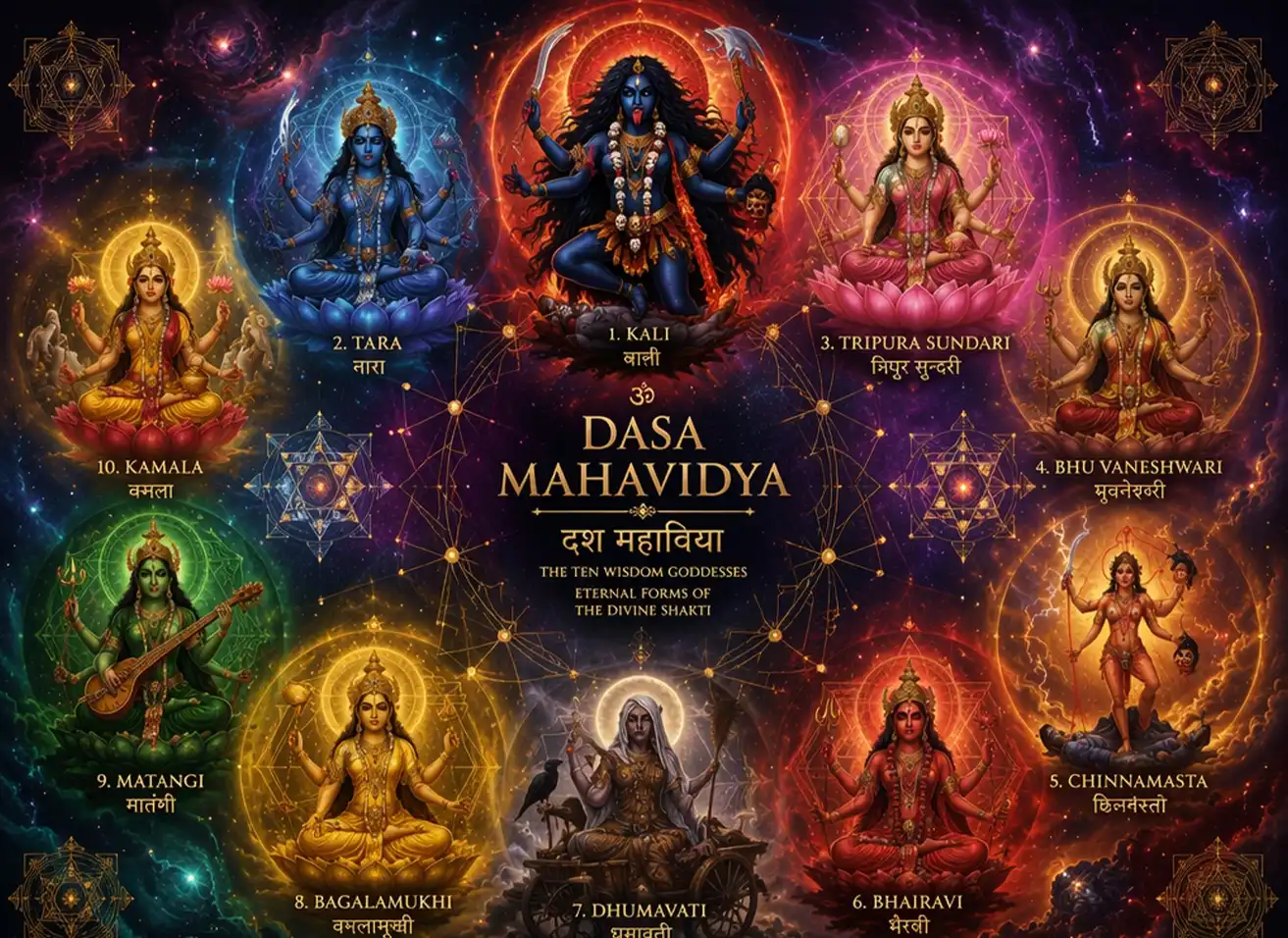
Dasa Mahavidya Tantra in India with Gaurav Tribedi
In an age of anxiety and distraction, your soul is starving for something real. ...
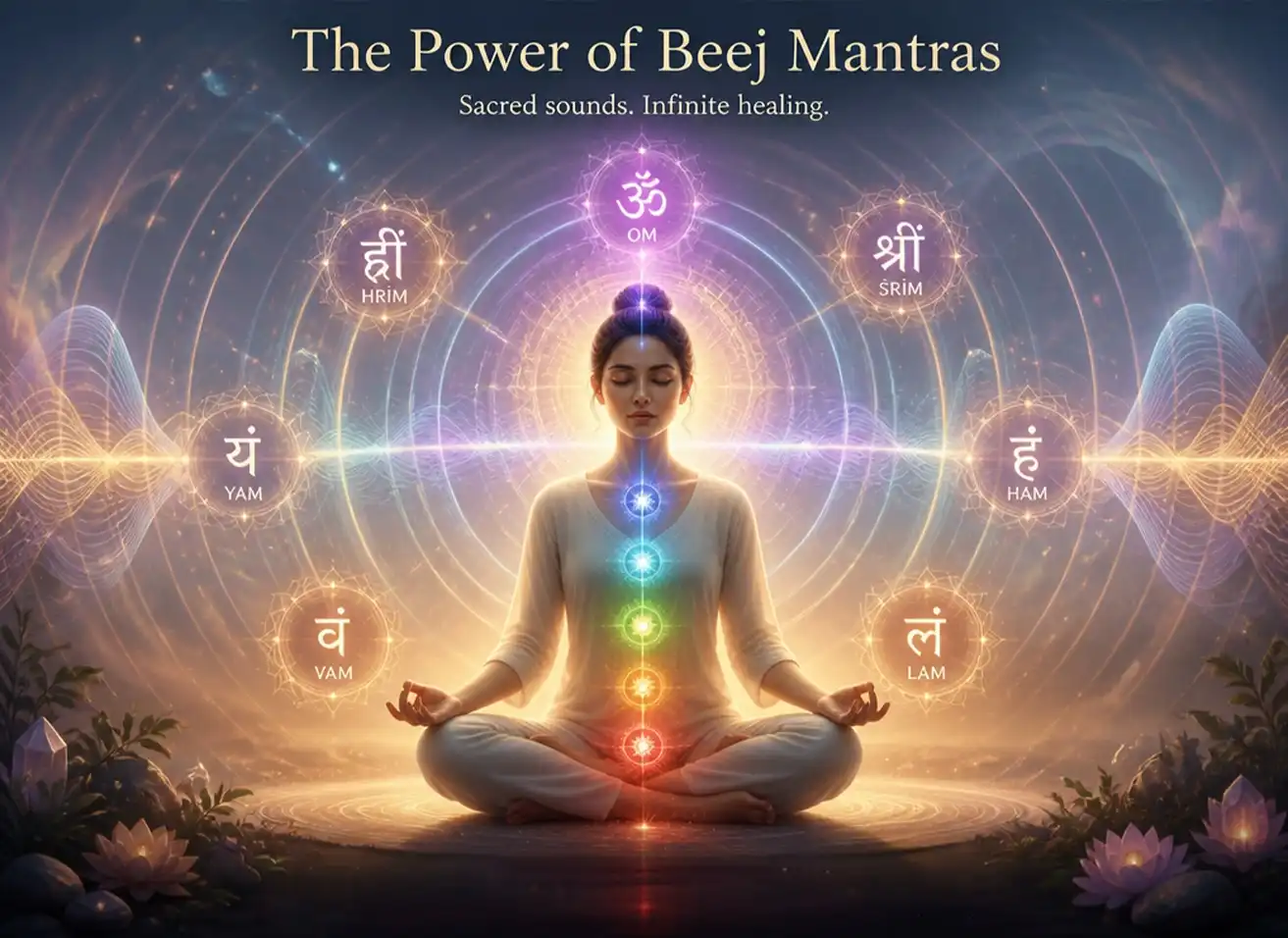
Beej Mantras Healing: Vedic Sound Therapy India Guide
In a world crowded with stress, distraction, and emotional overload, Beej Mantra...

Authentic Tantra Course in India for Spiritual Awakening
In a world flooded with myths and fear around Tantra, this transformative path o...
Frequently Asked Questions
Curious About Nabatara Institute?
Learn Why We Are India’s Best Astrology & Tantra Institute
At Nabatara Institute of Astrology, we don’t just teach astrology and numerology—we offer a government-recognized, globally trusted path to mastering the occult sciences. As an ISO 9001:2015 certified, Section 8 non-profit institute, our courses carry strong academic credibility and spiritual authenticity. Our curriculum blends ancient Vedic wisdom with modern, practical application so you learn real predictive techniques, remedies, and consulting skills—not just theory. Every student is guided by experienced gurus and professional faculty through live classes, practical case studies, and structured mentorship. Whether you join for Astrology, Numerology, Vastu, Tantra, Yoga, or Meditation, you receive lifelong guidance, ethical training, and a certificate respected across India and abroad, helping you transform both your career and your spiritual journey.
For many first-time learners, the best starting point is the subject that matches your genuine curiosity and the kind of practice you hope to build. Vedic Astrology suits people drawn to birth charts, timing, and traditional interpretive methods. Numerology may feel approachable if you enjoy working with names, dates, and symbolic patterns. Vastu Shastra is a natural choice for learners interested in how spaces, directions, and environments are considered in traditional practice. Tantra Shastra requires thoughtful engagement with its philosophy, disciplines, and cultural context, so a conversation with admissions can help you understand the course before enrolling. Yoga and Meditation may be a comfortable beginning for someone seeking structured learning around breath, awareness, and personal practice, without assuming a background in occult studies. Nabatara describes learning options across these areas, with course levels and formats varying by subject. There is no universal first choice, and outcomes depend on your study, reflection, and responsible use of what you learn. Review the relevant course page, compare the syllabus and time commitment, and then contact admissions for the latest brochure and guidance before applying. A beginner does not have to master every subject at once; choosing one clear foundation often makes study more enjoyable and consistent. Keep your decision practical, and let a conversation with the institute resolve any uncertainty.
Nabatara Institute offers education in several traditional and spiritual disciplines. Its course information covers Vedic Astrology, Numerology, Vastu Shastra, and Tantra Shastra, with Diploma, Master, and PhD levels described for applicable subjects. The institute also presents yoga and meditation education for learners interested in spiritual wellness and disciplined personal practice. Alongside courses, Nabatara describes related services, including Vedic Horoscope, Numerology Consultation, Vastu Consultation, and Tantra Puja or Havana. These services are different from academic-style learning: a consultation or ritual request is not the same as enrolling in a structured course. Course pages describe online or live-online learning in addition to offline possibilities, and English, Hindi, and Bengali are mentioned on key pages. Exact modules, delivery options, schedules, fees, and current availability can change by programme, so it is sensible to treat the relevant course page and latest brochure as the final reference. If you are comparing spiritual and occult sciences, begin with the subject that fits your purpose, then request the current syllabus and speak with admissions before submitting an application. You can also ask whether a course is designed for personal learning, consultation-orientated practice, or deeper academic progression, since those aims call for different expectations. The admissions team can explain the current pathway and help you start with realistic expectations.
Begin by writing down what you want from the learning experience, rather than choosing a title because it sounds impressive. If you want to interpret birth charts, explore Vedic Astrology; if symbolic number work interests you, consider numerology. Learners focused on traditional space principles may prefer Vastu Shastra, while Tantra Shastra calls for careful interest in its philosophy and practices. Yoga and Meditation may suit a goal centred on awareness, breath, and regular personal discipline. Next, consider your starting point, language preference, preferred format, and realistic weekly availability. Nabatara describes Diploma, Master, and PhD levels for applicable subjects, so the right level may depend on how deeply you want to study and whether you are beginning or continuing prior learning. Compare the syllabus, teaching format, assessment or completion details, and support available rather than relying only on course names. Ask which schedule is currently offered and whether online, live-online, or Kolkata-based offline study fits your routine. Request the latest brochure and discuss your goals with Nabatara admissions before choosing. It can help to choose a course you can practise regularly, because steady engagement is usually more useful than enrolling in several subjects at the same time. Your first enquiry can be exploratory and does not need to settle every long-term plan.
Yes, Nabatara’s course information is presented for learners who may be starting from different levels, and you do not need to assume that previous experience is required simply because a subject sounds specialised. A complete beginner can start by understanding the foundations, vocabulary, traditions, and responsible boundaries of the chosen discipline. The most suitable route still depends on the specific programme. Vedic Astrology, Numerology, Vastu Shastra, Tantra Shastra, and Yoga and Meditation have different concepts and learning expectations, while Diploma, Master, and PhD options may represent different depths of study where offered. Tantra in particular deserves a careful introductory conversation so you understand what the course covers and whether its approach suits you. Nabatara describes online and offline, or live-online, learning in key course information, with English, Hindi, and Bengali mentioned on relevant pages. Before applying, ask admissions about prerequisites, syllabus sequence, practice expectations, language, schedule, and how beginners are supported. Read the current course page, request the latest brochure, and book a consultation if you would like help selecting a comfortable first step. Starting with an introductory level can also give you a clearer sense of whether the subject, teaching style, and practice routine feel right before considering advanced study. Ask for an honest explanation of the pathway.
Nabatara courses can be considered by people at different stages of life, including working professionals, students, homemakers, and retired learners. The important question is not your job title or age; it is whether the course format, study time, language, and subject match your circumstances. A professional may value online or live-online learning, while someone in Kolkata may prefer to ask about offline availability. A student might choose a foundational Diploma, and a retired learner may enjoy a slower, reflective path, but these are possibilities rather than fixed rules. Nabatara describes Diploma, Master, and PhD levels for applicable disciplines, so admissions can explain which level is appropriate for your experience and goals. Course pages mention Vedic Astrology, Numerology, Vastu Shastra, Tantra Shastra, and Yoga and Meditation, with details varying by program. Do not assume a schedule or eligibility requirement that is not published. Share your availability, preferred language, previous study, and learning format with the admissions team. Request the latest brochure or message Nabatara on WhatsApp to identify a realistic option before applying. A flexible learning plan is especially valuable when responsibilities change, so ask about attendance, lesson access, and support before committing. Your life experience can enrich reflection, but it does not replace checking the official requirements.
Admission requirements can vary by discipline, level, format, and the current intake, so applicants should confirm them directly rather than relying on a general assumption. Nabatara’s course information covers astrology, numerology, Vastu, and Tantra, and describes Diploma, Master, and PhD levels where applicable. Yoga and Meditation is also offered as an area of education, but its current entry details should be checked with admissions. The public course information available for these subjects does not establish one universal rule covering every applicant, such as a particular qualification, age limit, or prior experience requirement. That means a beginner should ask specifically what is needed for the chosen program, whether documents are requested, how the learning language is handled, and whether the stated level is suitable. You should also confirm the current syllabus, schedule, delivery method, fee, payment process, and completion or certificate details before paying. Nabatara mentions website forms, WhatsApp, phone, email, and brochure routes for enquiries. Send the admissions team your preferred subject and background, and request the latest official requirements before submitting an application. If a program has a specific document or screening step, admissions should tell you exactly what to prepare and when it is due. Confirm every detail in writing so your application is complete and expectations remain clear.
Nabatara’s course information describes online or live-online learning as well as offline possibilities, so students may have more than one way to participate. The exact choice depends on the subject, level, current intake, and what the institute is offering at the time you apply. If you are based outside Kolkata or need flexibility around work and family, ask whether the specific course is currently available online and how classes, materials, practice, interaction, and support are handled. If you want classroom learning, Nabatara’s listed address is 375 PK Guha Road, Dum Dum, Kolkata, West Bengal 700028; confirm the current offline schedule and any attendance expectations before travelling. English, Hindi, and Bengali are mentioned on key course pages, but language availability can differ across programs and batches. Do not assume that every course, level, or timetable is offered in both formats. Compare the learning experience, not only convenience: consider live teaching, recordings if any, feedback, study resources, and time-zone fit. View the relevant course page, then request the latest brochure or contact admissions to confirm your preferred format. If you need to travel, ask about the location, class timing, attendance, and any arrangements for study materials in advance. A quick confirmation can prevent an otherwise suitable course from becoming impractical.
Start by visiting the Nabatara course page for the subject you want to study and reading the current description carefully. Select the relevant enquiry or application route, complete the requested information accurately, and keep your contact details available so admissions can respond. Nabatara describes several ways to begin, including website forms, WhatsApp, phone, email, and brochure links. You can use the first enquiry to explain your preferred discipline, learning format, language, prior background, and realistic study time. Before making a payment or finalising a place, ask the admissions team to confirm the current syllabus, level, schedule, fee, payment terms, eligibility details, and course delivery. These details may vary by program and intake, and not every requirement is established in general course information. If you are unsure whether to choose Vedic Astrology, Numerology, Vastu Shastra, Tantra Shastra, or Yoga and Meditation, request guidance rather than applying to a course that does not fit your goals. Keep a copy of your enquiry and any official response for reference. A practical next step is to request the latest brochure through Nabatara’s website or WhatsApp, then submit the application after reviewing it. If the form does not answer a question, leave the application incomplete only long enough to clarify it; accurate information helps admissions recommend the right route. Ask for confirmation once your details have been received.
You can speak with Nabatara before choosing a course by using the contact routes described on its website: an enquiry form, WhatsApp, phone, email, or a brochure request. A short conversation can help you avoid choosing only from a course title. Tell the team which subject interests you, whether you are a beginner, how much time you can study, your preferred language, and whether you need online, live-online, or offline learning in Kolkata. Ask focused questions about the syllabus, level, teaching format, current intake, schedule, fees, payment process, prerequisites, and completion or certificate details. If you are considering Tantra Shastra or another specialised subject, ask what the course covers and what responsible participation involves. Nabatara describes Diploma, Master, and PhD levels for applicable areas, but the suitable entry point should be confirmed for your circumstances. Admissions can also clarify whether a published detail applies to the current batch, because fees and schedules may change. Avoid treating general website information as a personal recommendation or a guarantee of outcomes. Request the latest brochure, save the official reply, and book a consultation or send a WhatsApp message before submitting your application. You can prepare a short list of questions before contacting the team, which makes the conversation focused and easier to revisit. There is no need to rush a decision before you understand the current offering.
When comparing a spiritual science course in India, look beyond a prominent title, a low advertised fee, or a promise of dramatic results. First compare the subject and syllabus: does it teach the foundations and methods you actually want to learn? Then check the course level, duration, learning format, language, teacher information, practice or assessment approach, learner support, and what completion documentation is provided. Confirm whether the stated details apply to the current intake and whether online, live-online, or offline study is genuinely available for your chosen program. Fees should be compared only after checking what is included, because a headline price may not answer questions about materials, consultations, instalments, or other charges. Also review the institute’s contactability, published policies, and clarity about responsible use. Nabatara describes education in Vedic Astrology, Numerology, Vastu Shastra, Tantra Shastra, and Yoga and Meditation, with Diploma, Master, and PhD levels for applicable subjects. It also describes Section 8 registration and ISO 9001:2015; verify current credential details and their meaning directly with the institute rather than assuming equivalence or guaranteed recognition. Request the latest brochure and speak with admissions before deciding. A thoughtful comparison protects your time and helps you choose learning that is useful, transparent, and appropriate for your aims. Let the official brochure and a direct admissions conversation guide the final decision.
There is no single Vedic astrology course that is best for every learner. The right choice depends on your starting point, preferred language, learning format, practice goals, and the depth you want to reach. Nabatara’s astrology education is designed to take learners through a structured path, with Diploma, Master, and PhD levels described on its course pages. That can make the institute worth considering if you want to begin with foundations and continue toward more advanced study rather than choose a short introductory workshop. Course information also describes online and live-online learning, while Nabatara’s key pages mention English, Hindi, and Bengali. Beginners should look for clear teaching, opportunities to practise chart interpretation, and transparent information about support, assessments, certificates, fees, and schedules. Aspiring practitioners should also ask how much of the programme is devoted to ethical consultation and applied interpretation. Nabatara describes its astrology courses and certificate routes, but current details can change, so compare the latest syllabus and brochure before enrolling. A helpful next step is to request the current astrology brochure from admissions, explain your experience level, and ask which course stage best matches your goals. Consider also whether you want a broad foundation or a practitioner-focused route, since that distinction can shape the most useful level and learning format for you.
Nabatara’s Vedic astrology classes are presented as a progression from essential concepts toward practical and predictive study. Depending on the course level, learners can expect the programme to build familiarity with astrology’s foundational framework before moving into chart interpretation and the reasoning used in predictions. The course pathway is described through Diploma, Master, and PhD levels, allowing students to consider a depth of study that fits their aims. It is sensible to confirm the exact module list because the published outline and delivery details may vary by level and intake. Before joining, ask whether the latest syllabus covers the specific areas you want, such as reading a birth chart, analysing a horoscope, understanding timing techniques, and practising interpretations with guidance. Nabatara’s pages describe online and live-online learning, and English, Hindi, and Bengali are mentioned on key course pages. That may help learners choose a comfortable format and language, but current availability should be verified with admissions. If you are comparing options, request the latest astrology brochure and ask for a clear outline of lessons, practice expectations, certificate terms, and support available at your selected level. A conversation with admissions can help you separate confirmed syllabus content from topics that may depend on the selected level or intake.
Yes, Nabatara describes online and live-online options for its astrology education, making it possible to study without attending every lesson at a physical classroom. The phrase live astrology course online should still be understood accurately: the precise timetable, platform, class frequency, recording policy, and interaction arrangements need confirmation for the current intake. A strong enquiry should ask whether classes are conducted live, how students ask questions, how practice work is reviewed, and who to contact when they need academic or administrative help. Nabatara’s course pages also mention English, Hindi, and Bengali for key programmes, although the language available for a particular batch should be checked before admission. The institute describes Diploma, Master, and PhD pathways, so online learners can ask which level is suitable for their previous knowledge and intended use of astrology. Learning remotely can offer convenience, while regular practice and participation remain important for developing confidence in chart interpretation. For the most reliable answer, contact Nabatara through its website or WhatsApp and request the latest online-class schedule, syllabus, support details, fees, and certificate information before you apply. You can also ask how missed sessions are handled, since reliable participation matters when learning a subject that develops through repeated interpretation.
Nabatara describes three astrology study levels: Diploma, Master, and PhD. The course pages indicate a progression from foundational learning to deeper and more advanced study, but the exact subjects, assessments, teaching hours, and project requirements should be confirmed for the current programme. In practical terms, a Diploma may suit a learner building core knowledge, while a Master level may be appropriate for someone seeking greater depth; the PhD label should be discussed directly with admissions so you understand the programme’s scope and the meaning of its certificate. Do not assume that any course title has the same academic equivalence as a university qualification. Ask for the current brochure, syllabus, duration, delivery mode, language options, assessment method, and completion requirements in writing. Nabatara’s key pages describe online or live-online learning, and English, Hindi, and Bengali are mentioned for relevant courses. That gives prospective students useful format and language questions to raise before enrolling. A gentle next step is to tell admissions your background and goal, then ask which of the three levels is the most suitable and what evidence of completion is provided. That conversation can prevent confusion about titles and help you select a programme for learning rather than assumptions about status.
Nabatara’s published astrology pathway describes a Diploma lasting about three months, a Master level lasting about six months, and a PhD level lasting about one year. These are useful guideposts, not a substitute for confirming the current intake details. Completion time can also depend on the selected level, class format, attendance expectations, assignments, assessments, and any institute-specific requirements. If you are starting from the beginning, ask admissions whether the Diploma is the recommended entry point and whether its three-month duration reflects calendar time or scheduled teaching time. If you already have prior study, ask whether a different level is appropriate rather than choosing by duration alone. Nabatara describes online and offline or live-online learning, so delivery may affect how you plan your study week. The course pages also mention English, Hindi, and Bengali for key programmes; confirm the language and timetable available in your batch. Before making a decision, request the latest brochure and ask for the start date, class schedule, attendance rules, assessment timeline, and certificate requirements. That simple check will help you choose a realistic route toward your astrology learning goal. Planning around the published duration is easier when you know whether holidays or assessment dates alter the teaching calendar.
Nabatara’s address is 375 PK Guha Road, Dum Dum, Kolkata, West Bengal 700028, and its course information describes an astrology course in Kolkata alongside online or live-online learning options. This gives prospective students a choice between attending in person, where available, and studying remotely. The exact classroom schedule, batch dates, seat availability, teaching language, and facilities should be confirmed with admissions because these details can change between intakes. Online students should also ask about live participation, recordings, assignments, and academic support. Nabatara’s key course pages mention English, Hindi, and Bengali, but you should verify which language is offered for the specific Kolkata or online batch you are considering. The institute describes Diploma, Master, and PhD astrology pathways, with durations shown as approximately three months, six months, and one year respectively. Those programme details should also be reconfirmed before you plan travel or make payment. If you live nearby, you can contact Nabatara to ask about a campus visit and the next classroom intake. Otherwise, request the latest brochure through the website or WhatsApp and compare the in-person and online arrangements before applying. A short comparison with your travel time, internet access, and weekly availability can make the final choice more practical.
Nabatara presents its astrology education as a structured course pathway with completion certificates associated with the programme you undertake. However, the exact certificate wording, issuing body, assessment basis, and any credential description should be confirmed from the current official course information. A certificate can document completion of an institute programme, but you should not assume it is equivalent to a university degree, government licence, or a particular professional accreditation unless Nabatara and the relevant authority state that clearly. Before enrolling, ask whether you must complete attendance requirements, assignments, examinations, projects, or other assessments to receive the certificate. Also confirm whether the certificate is issued for the Diploma, Master, and PhD levels separately and whether online and classroom learners receive the same documentation. Nabatara’s pages describe astrology courses delivered online, offline, or live online, with English, Hindi, and Bengali mentioned on key pages. Ask admissions for a sample or written description of the completion certificate if that detail matters to your plans. The most useful next step is to request the latest brochure and have the admissions team explain exactly what you receive after successfully completing your selected astrology course. Written confirmation is especially useful if you plan to mention the qualification in a professional profile or portfolio.
Nabatara’s key astrology course pages have shown a starting price of about ₹15,000, but fees can change by level, format, intake, language, and any included services. Treat that figure as an indication rather than a final quote, and request the latest fee schedule before paying. Eligibility should also be confirmed directly. The available course information supports asking admissions which level suits your previous study, whether beginners may apply, and whether any documents, language ability, attendance, or assessment conditions apply. Do not rely on an assumed rule when the official brochure can clarify it. A typical admission enquiry can begin through Nabatara’s website form, WhatsApp, phone, email, or brochure link. Tell the team whether you want online, live-online, or classroom learning, then ask for the current syllabus, start date, total fee, payment schedule, certificate terms, and cancellation or transfer conditions. Nabatara describes Diploma, Master, and PhD astrology routes, so include your experience and intended goal when asking for placement advice. Your next step is simple: request a written quote and eligibility checklist from admissions, review the latest details carefully, and apply only after the programme matches your expectations. Ask whether taxes or optional materials are included, so the amount you budget reflects the complete expected cost.
Nabatara’s astrology pathway is intended to help learners study foundations and move toward practical interpretation, while the exact depth depends on the level and syllabus selected. Birth-chart reading and horoscope analysis are sensible topics to ask about when comparing the programme. You should also request clarity on how much guided practice is included, whether learners work through example charts, how interpretations are discussed, and whether predictive methods are taught as part of your chosen course. Nabatara describes Diploma, Master, and PhD levels, so the amount of advanced study may differ between them. Avoid assuming that a course title alone guarantees mastery, professional readiness, or a particular result; progress comes through study, ethical practice, feedback, and continued learning. The institute’s key pages mention online and live-online formats and English, Hindi, and Bengali on relevant course pages. Confirm the current language, class schedule, assessment process, and support arrangements before joining. If predictive astrology is your main interest, tell admissions that specifically and ask them to identify the relevant syllabus sections. Request the latest brochure, then book a consultation or WhatsApp the institute so you can choose a course with realistic expectations. Regular independent practice between classes can make the learning experience more useful and help you identify questions for your teacher.
To apply for Nabatara’s Vedic astrology course with certificate, begin by choosing the level and format that fit your background and schedule. Nabatara describes Diploma, Master, and PhD astrology pathways, as well as online, live-online, and offline learning routes. Because fees, eligibility, batch dates, languages, and certificate conditions can change, ask admissions for the latest brochure before submitting an application or making payment. You can start the enquiry through the website form, WhatsApp, phone, email, or a brochure link. Include your previous astrology study, preferred learning mode, preferred language, and the outcome you hope to achieve. Then ask the team to confirm the recommended level, current syllabus, total fee, payment steps, start date, attendance or assessment requirements, and the exact completion certificate provided. A certificate should be understood according to the institute’s current description; do not assume it has university equivalence or guarantees work, income, or consultation results. Once the admissions team has answered your questions and you are comfortable with the terms, follow the official application instructions. A practical next step is to contact Nabatara on WhatsApp and request the current Vedic astrology course brochure with certificate details. Keep the brochure and admissions replies for your records, particularly if the course start date or fee changes before enrolment.
The best numerology course in India is the one that gives you a clear foundation, guided practice, ethical direction, and room to progress at your own pace. Nabatara’s numerology training is designed for learners who are curious beginners as well as students who hope to develop professional consultation skills. The curriculum can introduce the meaning of numbers, core calculations, chart interpretation, and the practical reasoning used when discussing personal, professional, or business questions. It is also helpful to choose training that explains more than one tradition and encourages students to test their understanding through examples rather than memorising isolated meanings. Nabatara describes Diploma, Master, and PhD-level pathways, with online and offline or live-online learning options mentioned in its course information. Teaching languages noted on key pages include English, Hindi, and Bengali. Because the right level depends on your background, goals, preferred language, and available time, admissions can help you identify the most suitable starting point. Fees, current schedules, eligibility, and certificate details should be confirmed before enrolment. Explore the numerology course page, request the latest brochure, or message Nabatara on WhatsApp for a friendly course discussion. Compare teaching depth, practical work, student support, and progression before choosing your starting point.
Nabatara numerology classes are intended to help students understand different numerology traditions instead of treating every system as interchangeable. Course information refers to Vedic, Pythagorean, and Chaldean approaches, allowing learners to compare how each tradition uses numbers, letters, calculations, and interpretation. A thoughtful student can therefore learn where methods overlap, where their principles differ, and how to choose an appropriate framework for a particular reading. Lessons may connect foundational theory with practical exercises such as working through names, dates, numbers, and sample charts, while encouraging careful, responsible communication with clients. The purpose is not to make absolute promises about a person’s future. Rather, numerology can be studied as a symbolic interpretive practice that supports reflection, questioning, and structured consultation. The depth and sequence of each topic can vary by programme level, so students should review the current syllabus before applying. Nabatara describes Diploma, Master, and PhD options, and key course pages mention English, Hindi, and Bengali instruction. If you want to compare the methods before choosing a level, view the detailed course outline or request the latest brochure. The admissions team can also explain whether a particular batch includes the practical topics you want to study. This comparison supports learning.
Nabatara’s numerology training includes Vedic numerology in the traditions described on its course information, and the programme is presented as more than a purely theoretical introduction. Students can expect to explore the significance of numbers and the calculation methods used to interpret them, with practical application forming an important part of learning. Depending on the current syllabus and level, practice may include examining names, dates, personal numbers, and sample cases so that learners become more comfortable explaining an analysis in a clear and respectful way. Name and number work should be approached thoughtfully: a responsible practitioner explains the method, acknowledges interpretation, protects client privacy, and avoids presenting numerology as a guarantee of events or outcomes. Nabatara describes Diploma, Master, and PhD-level options, so the amount of practical work may differ between programmes. The dedicated course page or latest brochure is the best place to confirm whether a specific intake covers the exact name-analysis topics you want, including any approach to corrections or consultation practice. You can begin by viewing the Vedic numerology course details, then contact admissions by website form or WhatsApp. They can help you choose a suitable level, learning format, language, and current batch before you apply confidently.
Yes, Nabatara describes online and live-online learning options for its numerology education, making it possible to study without relocating to Kolkata. This can be useful for learners in other Indian cities and for international students who want structured guidance while continuing with work, family, or existing studies. Online learning may include teacher-led explanation, demonstrations, questions, assignments, and opportunities to practise interpretation; the exact delivery, class timings, recordings, and interaction format should be confirmed for the intake you are considering. Global access does not mean every time zone or technical arrangement is automatically supported, so share your location and availability with admissions before enrolling. Nabatara’s key course pages mention instruction in English, Hindi, and Bengali, but the available language and batch schedule may vary. The institute also describes Diploma, Master, and PhD-level pathways, allowing students to discuss progression rather than choosing a programme blindly. Current fees, eligibility, certificate information, and start dates can change, so rely on the official course page or latest brochure instead of an older online reference. To take the next step, review the online numerology course details and send Nabatara a WhatsApp message with your country, preferred language, and suitable study hours. The admissions team can explain the most practical option for you.
Online numerology classes can suit working professionals and international students when the programme’s schedule, teaching format, and expectations fit their routine. Nabatara describes online or live-online numerology learning, so you can ask whether the next batch offers timings that work across your time zone, whether attendance is live, and whether recordings or alternative support are available. A structured course can make study easier to sustain by combining guided lessons with practice between sessions. Professionals may also appreciate learning in stages, beginning with a foundation before deciding whether advanced training supports their longer-term plans. International students should confirm the teaching language, payment process, technical requirements, holidays, and any time-sensitive attendance expectations directly with admissions. Nabatara notes English, Hindi, and Bengali on key course pages, although the language offered for a particular batch should be verified. The institute describes Diploma, Master, and PhD-level pathways, but the right choice depends on your prior knowledge and intended use of the training. No course should promise guaranteed income, employment, or supernatural results; useful education should build understanding and responsible practice. Before enrolling, request the current brochure and ask for the full schedule, fees, syllabus, and certificate details. A WhatsApp conversation with admissions is a simple way to begin.
Nabatara describes three numerology training stages: a Diploma of about three months, a Master programme of about six months, and a PhD programme of about one year. These labels indicate different levels of study, but the precise syllabus, entry expectations, teaching schedule, assessment approach, and certificate wording should be confirmed with the institute before you choose. A Diploma may be a sensible starting point for someone building foundational knowledge, while a longer Master pathway may provide more room for advanced interpretation and practice. The PhD-level option is described as the most extended route, yet prospective students should ask admissions what the programme specifically covers and what academic or practical work it requires. It is important not to assume that these titles carry the same meaning as an accredited university degree or an equivalent qualification elsewhere. Verify the current credential details and how the certificate may be used in your own context. Nabatara’s course information also mentions online and offline or live-online learning, with English, Hindi, and Bengali noted on key pages. Your goals, previous study, preferred format, and available time should guide the decision. Compare the latest course outlines, then request the brochure or book a consultation with admissions for a clear recommendation before applying.
Nabatara’s numerology course information has shown a starting fee of about ₹10,000 on a key course page, but fees, offers, batches, and inclusions can change. The institute describes Diploma, Master, and PhD pathways of approximately three months, six months, and one year respectively. Those durations are useful guides, not a substitute for confirming the current intake. Eligibility may depend on the programme level and the applicant’s background; because a complete current requirement was not clearly established, ask admissions rather than assuming that a particular qualification is or is not needed. Certificate details also deserve careful verification. Nabatara describes certificates and references its Section 8 registration and ISO 9001:2015 information on site pages, but students should confirm the exact certificate title, issuing body, course completion requirements, and how the credential is regarded for their intended purpose. A course certificate should not automatically be treated as a university degree, statutory licence, or guaranteed professional recognition. Before paying, request the latest brochure with the full fee, payment terms, schedule, syllabus, eligibility, assessment, and certificate information in writing. You can use the website enquiry form, WhatsApp, phone, or email to ask focused questions. The admissions team can then help you select the appropriate level with current, rather than historic, details.
Students interested in name correction, mobile numerology, or business and logo numerology should ask Nabatara whether those subjects are included in the specific numerology syllabus they plan to join. The institute presents numerology as a practical field of study, and learning can involve applying number-based methods to names, dates, and real-world examples. However, the exact coverage may differ between Diploma, Master, and PhD-level programmes, so it would be unwise to assume that every topic appears in every course. A strong learning experience should explain the calculations and interpretive framework behind an exercise, not simply provide a list of “lucky” changes. Students should also learn to discuss suggestions carefully, respect personal and commercial context, protect information, and avoid promising guaranteed success, profit, health outcomes, or protection from difficulties. For business or logo work, ask whether the course includes case studies, consultation practice, or guidance on communicating with clients and teams. Nabatara’s key pages describe online and offline or live-online options and mention English, Hindi, and Bengali teaching. Review the current outline and request the latest brochure before enrolling. If one of these applications is your main goal, send admissions a WhatsApp message naming the exact topic. They can confirm its availability, level, duration, and current fee.
If you are looking for numerology classes near you in Kolkata, Nabatara’s listed address is 375 PK Guha Road, Dum Dum, Kolkata, West Bengal 700028. Contact the institute before travelling so you can confirm whether an in-person batch is currently running, its schedule, available language, and the correct office or classroom arrangements. Nabatara also describes online and live-online learning, which can be a practical alternative if you live outside Kolkata, have a demanding routine, or prefer to study from home. When comparing the two formats, ask about live attendance, recordings, practice support, teacher interaction, technical requirements, and time-zone suitability. Course pages mention English, Hindi, and Bengali on key programmes, though the language offered in a particular batch should be checked. The institute describes Diploma, Master, and PhD-level numerology options, so you can discuss the right starting point rather than choosing only by location. Fees, durations, eligibility, and certificate details should be confirmed through the current official page or brochure. You can enquire through the website, WhatsApp, phone, or email and explain whether you prefer classroom learning or online study. Request the latest schedule first; admissions can then guide you toward a suitable Kolkata batch or online option before you decide.
To apply for Nabatara’s numerology course, begin by reviewing the current course page and deciding which level and format match your goals. Nabatara describes Diploma, Master, and PhD pathways, as well as online and offline or live-online learning, so it is worth confirming the right programme before submitting details. Use the website application or enquiry form, or contact the institute through WhatsApp, phone, or email. You may also request the latest brochure so you can review the syllabus, schedule, teaching language, eligibility, fees, payment terms, assessment, and certificate information in one place. Before making a payment, ask admissions to confirm the next start date, available seats, class timings, and whether the subjects you care about—such as name analysis, mobile numerology, or business applications—are included in your chosen level. Keep your questions specific and ask for current information, since fees and schedules can change. If you are applying from outside Kolkata, mention your country and time zone; if you prefer classroom learning, confirm the Dum Dum address and in-person arrangements. Nabatara lists 375 PK Guha Road, Dum Dum, Kolkata, West Bengal 700028. Once admissions clarifies the details, follow the official application and payment instructions. A WhatsApp message requesting the brochure is a gentle, practical first step.
Nabatara’s Vastu course is intended to give beginners a structured starting point while helping aspiring consultants develop a practical foundation. The learning journey focuses on understanding Vastu Shastra, reading a space thoughtfully, and connecting principles with real consultation questions rather than relying on isolated tips. This approach can help learners build confidence without presenting Vastu as a substitute for technical property advice. Depending on the level and current curriculum, students may explore directions, layouts, entrances, rooms, land considerations, and ways of discussing observations with a client clearly and responsibly. The course is also relevant to learners who want a deeper personal understanding of homes, workspaces, or spiritual environments. Nabatara describes Vastu education in online and offline or live-online formats, with English, Hindi, and Bengali mentioned on key course information. Exact modules, teaching hours, assignments, and support can vary, so the latest brochure is the best source before enrolling. A certificate option may be available according to the selected programme, but current details should be confirmed with admissions. If you are completely new, ask which level is recommended; if you already advise others, request the syllabus and assessment details. View the Vastu course page or message Nabatara on WhatsApp to receive the current module outline and choose a suitable starting point.
A Vastu Shastra course generally helps students learn how to look at land and built spaces systematically. At Nabatara, the Vastu programme is presented as training for understanding Vastu principles and developing consultation knowledge, so learners can expect the syllabus to address questions such as orientation, directions, plot configuration, entrances, room placement, and the relationship between a site and its intended use. Students may also learn how to gather site information before offering an interpretation. Space analysis should be approached as a method of careful observation and interpretation, not as a promise that one rule will fit every property. The exact treatment of plot shapes, measurements, floor plans, sectors, or case examples depends on the current course level and teaching plan. Nabatara lists Diploma, Master, and PhD pathways for Vastu where applicable, with durations described as three months, six months, and one year respectively; confirm the current Vastu syllabus before relying on those details. Students who want to work with homes, offices, or other properties should ask whether plans and practical exercises are included. To understand the depth of land and space analysis, request the latest brochure and speak with admissions. You can then compare the module list with your goals before applying for Vastu training.
Nabatara describes Vastu learning through online and offline or live-online formats, so students who cannot attend the Kolkata location may have a remote study route. Whether a particular batch includes scheduled live classes, recordings, question sessions, assignments, or direct faculty support should be confirmed for the intake you are considering. Course delivery can change by level and cohort, and it is better to ask for the current timetable than assume that every online option works the same way. A useful enquiry should cover class frequency, time zone, platform, language, attendance expectations, access to study material, and how students submit questions or receive feedback. Nabatara mentions English, Hindi, and Bengali on key course pages, but language availability for a specific Vastu batch still needs confirmation. Online study can be a practical way to learn from home, while an offline option may suit students who prefer an in-person setting in Kolkata. Before paying or submitting an application, request the latest brochure and ask admissions to explain exactly what student support is included. If the format meets your needs, you can proceed through the website form or WhatsApp. Start by viewing the Vastu course information and asking for the next live-online batch details.
Nabatara presents online and live-online learning options for Vastu, which may make the programme accessible to students living outside Kolkata, elsewhere in India, or abroad. Availability is not the same as a guaranteed schedule for every location, however. International students should confirm the current batch, time zone, teaching language, payment process, attendance expectations, and whether recordings or alternate arrangements are provided. Students in India may also want to check whether the online classes are live, recorded, or a combination, and how questions are handled between sessions. Nabatara’s key course information mentions English, Hindi, and Bengali, although the language offered for a specific Vastu intake should be verified with admissions. The right choice depends on your routine and learning preference: online study can reduce travel, while offline classes in Kolkata may feel more direct for learners who value a physical classroom. Ask for the latest brochure before making assumptions about dates, fees, support, or certificate arrangements. If you are abroad, include your country and preferred time zone in your first message so the team can give a useful answer. To explore the route, open Nabatara’s Vastu course page and contact admissions through the website or WhatsApp for the next suitable online option.
Nabatara’s course information describes three Vastu study levels where applicable: Diploma, Master, and PhD. The durations shown for these levels are approximately three months, six months, and one year respectively. These details should be treated as a guide until admissions confirms the current Vastu intake, because programme names, schedules, learning format, and requirements can change. The current course information may not establish a single eligibility rule for every level, so do not assume that a prior degree, professional experience, or earlier Nabatara course is required. Ask admissions which level fits your background and whether there are any language, attendance, assessment, or document requirements. Nabatara also describes certificate-based study and presents certificates among its education information, but the exact certificate title, issuing arrangement, assessment basis, and how it may be used should be verified directly. A course certificate should not be presented as equivalent to a government licence, regulated professional accreditation, or guaranteed employment unless the official documentation clearly says so. Request the latest brochure for the full structure, including modules, start dates, fees, and completion conditions. Once you know the eligibility and certificate details, you can make an informed choice. Contact Nabatara through its application form or WhatsApp to confirm the level and current admission process.
Nabatara’s Vastu course pages have shown a starting price of about ₹15,000, but a starting figure is not the same as the final fee for every level, format, batch, or student. Treat the amount as indicative and confirm the current price with the official Vastu course page or admissions team before making a payment. Ask for a written breakdown covering tuition, study materials, live or recorded access, assessments, mentoring, certificate charges, taxes if applicable, and any optional consultation or advanced-training components. The current course information does not verify one complete inclusion list, so it would be unsafe to promise that every item is bundled into the advertised starting price. You should also confirm the payment schedule, refund or transfer terms, and whether online and offline formats are priced differently. If you are comparing Diploma, Master, and PhD pathways, request the fee for each rather than assuming that duration alone determines the cost. Nabatara’s Vastu education is described in online and offline or live-online formats, and English, Hindi, and Bengali are mentioned on key course pages; confirm the exact arrangement for your chosen intake. For a clear decision, request the latest brochure and ask admissions to quote the complete payable amount. You can begin through the Vastu course page or send a WhatsApp enquiry.
Vastu principles can be applied to different kinds of spaces, but the exact scope of Nabatara’s current Vastu curriculum should be confirmed rather than assumed. A student interested in residential work may want foundations for reading homes and living arrangements. Someone targeting commercial or industrial projects should ask whether the syllabus includes offices, shops, factories, site planning, or business-use layouts. Learners drawn to spiritual environments should separately confirm whether temples, meditation spaces, puja areas, or other spiritual settings are included and at what depth. Nabatara offers Vastu education and related spiritual-wellness services, but Nabatara’s published course information does not establish that every one of these property categories is covered in every batch. That makes the brochure and admissions conversation important. Ask for the module list, sample case topics, practical exercises, and the level at which each application area is introduced. You can also explain your intended use—personal learning, consultation practice, architecture-related study, or spiritual-space understanding—so the team can suggest a suitable pathway without promising outcomes. The programme should support responsible interpretation rather than replace architectural, engineering, legal, safety, or planning advice. To check whether the course matches your ambition, request the latest Vastu syllabus and discuss your preferred property type with admissions. Then view the available course level and apply when the scope is clear.
If non-demolition remedies are important to you, ask Nabatara to confirm whether they are included in the current Vastu syllabus and which course level covers them. Nabatara’s published course information confirms Vastu education, but it does not provide a complete public module list establishing every remedy or consultation method. A responsible programme should help learners distinguish observation from certainty, explain recommendations in plain language, respect a client’s budget and circumstances, and avoid creating fear or pressure. It should also make clear that Vastu guidance does not replace structural, electrical, fire-safety, legal, planning, medical, or mental-health advice. Non-demolition approaches may be discussed as ways of working within an existing space, but students should ask what the teaching actually covers rather than assume that a particular technique is endorsed. During your enquiry, request the latest syllabus, examples of practical assignments, guidance on client communication, and any boundaries the institute expects future consultants to follow. Nabatara’s course may suit learners seeking a spiritual or traditional framework, provided expectations remain realistic and recommendations are offered ethically. No course can guarantee financial, health, relationship, or supernatural outcomes, and consultation should never be presented that way. For clarity before enrolment, contact admissions with the words “non-demolition remedies and responsible consultation” and request a written answer. You can then review the Vastu course page and decide whether to apply.
Nabatara’s listed address is 375 PK Guha Road, Dum Dum, Kolkata, West Bengal 700028, so students seeking Vastu classes near Kolkata can ask whether the next course is held at that location and whether seats, dates, and classroom attendance are currently available. Do not rely on an old schedule; request the latest brochure or speak with admissions before travelling. If you live elsewhere in India or abroad, Nabatara also describes online and live-online learning, which may be more convenient. Compare the two formats by asking about live timings, recordings, language, study materials, assignments, feedback, student support, fees, and certificate arrangements. Nabatara mentions English, Hindi, and Bengali on key course pages, but confirm the language for your chosen batch. Your decision should reflect how you learn best, your time zone, travel limits, and whether you need a classroom environment. It is also sensible to confirm the course level, duration, syllabus, and the total payable amount before applying. A local class is not automatically better, and online training is not automatically less complete; the current delivery plan matters more than the label. To take the next step, use the website enquiry route or WhatsApp and state your city, preferred format, language, and learning goal. Admissions can then point you to the most suitable Vastu option.
To apply for Nabatara’s Vastu Shastra course, begin with the official Vastu course page and review the current level, format, duration, syllabus, fee, and certificate information. Because these details can change by intake, contact admissions before paying or submitting final documents. Tell the team whether you are a beginner, have previous Vastu study, want a Diploma, Master, or PhD pathway where applicable, and prefer online, live-online, or offline learning. Include your location and preferred language so they can explain the practical arrangements. Nabatara lists website forms, WhatsApp, phone, email, and brochure links as application or enquiry routes. Use one of those official channels to request the latest brochure and ask for the complete admission steps, eligibility, start date, class schedule, payment instructions, and any required documents. Nabatara’s published information does not establish one universal eligibility checklist, so avoid assuming that a qualification or experience is necessary until admissions confirms it. Also ask for a written fee breakdown and clarification of what the certificate represents. Once your questions are answered, complete the application form and follow the institute’s instructions for confirmation. Keep a copy of your enquiry and payment receipt for your records. For the simplest next step, send Nabatara a WhatsApp message saying you want to apply for the current Vastu course and request the official application link and brochure.
There is no single best Tantra course in India for every learner. The right choice depends on your purpose, previous study, preferred language, learning format, and expectations about spiritual practice. A responsible beginner-friendly programme should explain Tantra as a disciplined tradition rather than reducing it to mystery, fear, quick results, or sensational promises. Serious practitioners may also look for a clear progression, teacher access, ethical guidance, and enough structure to study consistently. Nabatara offers Tantra Shastra education with online and offline or live-online learning described across its course information. Its broader programme framework refers to Diploma, Master, and PhD levels where applicable, allowing learners to ask about an appropriate starting point instead of choosing by title alone. Because course content, faculty availability, language options, fees, and current schedules can change, compare the dedicated Tantra course page with the latest brochure before enrolling. Ask admissions what is taught, how classes are delivered, what practice guidance is included, and what completion documentation is issued. This approach helps you choose training that feels grounded and suitable for your experience. Start by viewing Nabatara’s Tantra course information or request a current brochure from the admissions team. A good programme should leave room for questions and reflection, not pressure you to accept beliefs or practices you do not understand.
Nabatara’s Tantra Shastra education is intended to place spiritual practice within a structured learning path, rather than presenting isolated techniques or dramatic promises. In a course of this kind, Sadhana generally refers to sustained, intentional practice supported by consistency, self-observation, respect for tradition, and appropriate guidance. Mantra science may involve learning how mantras are understood, pronounced, contemplated, and used within a disciplined practice context; it should not be presented as a guaranteed shortcut to wealth, healing, control, or supernatural outcomes. Spiritual discipline also includes regular study, ethical conduct, patience, boundaries, and knowing when a practice requires teacher supervision. Nabatara describes Tantra education alongside related areas such as Vedic Astrology, Numerology, Vastu, Yoga, and Meditation, but the exact Tantra modules and sequence should be confirmed from the dedicated course syllabus. Ask whether the current programme covers foundational concepts, mantra practice, ritual context, meditation, safety, and assessment, and whether instruction is suitable for your background. A clear answer is more useful than a vague promise. To understand the learning experience before deciding, request the latest Tantra brochure or speak with Nabatara admissions about the Sadhana and mantra components. Good teaching should welcome questions and explain practice in a way that supports discernment, not dependence on the teacher.
Nabatara describes online and offline or live-online learning options across its course information, and English, Hindi, and Bengali are mentioned on key course pages. That makes it reasonable to ask about an online Tantra course and the language in which a particular cohort will actually be taught. However, the available information does not establish that every Tantra batch offers live classes in all three languages, nor does it confirm that every intake follows the same timetable or teaching format. Live availability can depend on the current faculty, batch size, location, and admissions cycle. Before paying or submitting an application, ask Nabatara to confirm whether the next Tantra Shastra cohort is live online, which language or languages are available, whether recordings or study materials are provided, and how students communicate with the teacher between sessions. Also confirm the course duration, attendance expectations, practical guidance, assessment method, and completion certificate details. These questions help you choose a format you can follow consistently, especially when spiritual study benefits from regularity and clear supervision. View the online course information, then request the latest brochure or contact admissions to verify the next cohort’s delivery mode and language options. This confirmation is especially helpful if you are balancing study with work, family responsibilities, or travel across time zones.
The Diploma, Master, and PhD labels generally indicate different levels of depth and duration, but the exact structure of Nabatara’s Tantra pathway should be confirmed with the dedicated course page and current admissions material. Nabatara’s broader course information describes a Diploma level as approximately three months, a Master level as approximately six months, and a PhD level as approximately one year for applicable subjects. These durations should not be treated as a guarantee that every Tantra intake uses identical content, assessment, or eligibility rules. In practical terms, a Diploma may suit someone seeking a structured introduction; a Master programme may allow more extended study and practice; and a PhD-labelled programme may involve the most advanced or research-oriented engagement. The label alone does not establish government equivalence, university recognition, professional licensing, or guaranteed career outcomes. Ask what prior knowledge is expected, whether progression is sequential, how learning is assessed, and what certificate or documentation is issued at each level. Admissions can also explain whether online and offline formats follow the same curriculum. If you are unsure where to begin, request Nabatara’s latest Tantra brochure and ask the team to recommend a level based on your background and goals. The most suitable level is the one whose expectations you can meet consistently, not necessarily the one with the most advanced name.
Nabatara’s broader Tantra course framework describes three possible levels: a Diploma of about three months, a Master of about six months, and a PhD of about one year, where those levels apply to the current programme. Treat these as published course-pattern information rather than a promise about every upcoming Tantra batch, because durations, delivery formats, and schedules can change. The available course information does not clearly establish one universal eligibility rule for Tantra study. A prospective student should therefore ask admissions whether beginners are accepted, whether previous study is expected for advanced levels, what language proficiency is needed, and whether any age, attendance, identification, or document requirements apply. It is also sensible to discuss your purpose openly: personal spiritual study, traditional knowledge, meditation, ritual literacy, or a more academic interest may point toward different preparation. Responsible training should make boundaries and teacher guidance clear, and it should never require you to accept fear-based claims or guaranteed results. Before applying, confirm the exact duration and eligibility for your chosen level in the current brochure. A simple next step is to contact Nabatara admissions through the website or WhatsApp and ask for the latest Tantra programme requirements in writing. Clear requirements also help you prepare realistically instead of relying on assumptions gathered from unrelated Tantra programmes or social media.
Nabatara’s site describes certificates among its educational offerings, but the available information does not clearly confirm the exact certificate title, issuing details, or completion requirements for every Tantra Shastra intake. You should therefore avoid assuming that enrolment automatically leads to a particular credential. Ask admissions what document is awarded after successful completion, whether it is issued for the Diploma, Master, or PhD level, what attendance or assessment conditions apply, and whether the certificate records the study mode, language, duration, or course subject. It is equally important to distinguish a course-completion certificate from a university degree, statutory licence, regulated professional qualification, or accreditation equivalence. Nabatara describes its organisational registration and ISO-related information on site, but those descriptions should be verified against the current official pages and should not be interpreted as a promise of external academic recognition. A careful admissions conversation can clarify exactly what the certificate represents and how the institute recommends describing it publicly or professionally. Before making a decision, request the latest brochure and ask to see the current certification wording or completion policy. That small check helps you choose with confidence and keeps expectations realistic. Knowing this in advance lets you present the qualification accurately and prevents misunderstandings about what the training permits you to do.
Tantra course fees, syllabus, schedule, and admission steps should be confirmed from Nabatara’s dedicated Tantra page or latest brochure because these details may change by level, format, language, and intake. An online-course hub has mentioned a starting price around ₹15,000, but the dedicated Tantra page is the authority and does not clearly publish a fixed fee in the available information. Treat that figure as an indication only, not a final quotation. Ask admissions for the complete fee, payment schedule, inclusions, any taxes or materials, refund terms, and whether online and offline options differ. Request the current syllabus as well, including modules, practice guidance, assessment, class timings, attendance expectations, and teacher interaction. The usual admission route is to choose the programme, request or review the brochure, confirm eligibility and cohort details, then submit the website application or contact Nabatara through WhatsApp, phone, or email. Do not send payment until the institute confirms the current batch, total charges, and official payment route. A direct conversation is the safest way to resolve changing details. Start by requesting Nabatara’s latest Tantra brochure and a written fee and schedule confirmation from admissions. Written confirmation also gives you a practical reference if details change between an initial enquiry and the final admission offer.
Topics such as Kundalini awakening, chakra meditation, Dasa Mahavidya, and spiritual protection are associated with different strands of Tantra, but their presence, depth, and teaching method must be confirmed in Nabatara’s current Tantra syllabus. The available information does not support promising that the course includes all four topics, or that it produces a particular spiritual experience. If these subjects matter to you, ask for the module titles, learning outcomes, required preparation, teacher guidance, and boundaries around personal practice. A responsible programme should distinguish traditional descriptions from guaranteed claims, encourage gradual and informed study, and make clear when an exercise should not be attempted without supervision. Spiritual education should also respect personal choice, cultural context, consent, and ordinary wellbeing; it should never replace medical or mental-health care or pressure a student through fear. Ask whether the course is primarily theoretical, meditative, ritual-oriented, or a combination, and how online students receive support. This gives you a more accurate picture than relying on promotional keywords alone. Before enrolling, request the latest syllabus from Nabatara admissions and ask them specifically whether Kundalini, chakras, Dasa Mahavidya, and protection practices are included in your intended level. Clear scope protects students from mistaking an introductory mention for intensive instruction or from practising advanced material without adequate support.
Learning Tantra responsibly begins with choosing education that values context, discipline, consent, and clear limits over fear or exaggerated promises. Look for a transparent syllabus, identifiable teachers, realistic learning outcomes, and an explanation of how practices are taught and supervised. Be cautious when anyone guarantees wealth, healing, romance, instant awakening, control over other people, supernatural protection, or employment. Ask what is traditional teaching, what is interpretation, and what is simply a marketing claim. You should also be free to ask questions about costs, boundaries, privacy, attendance, assessment, and what happens if a practice feels uncomfortable. Nabatara presents Tantra Shastra as part of a wider spiritual and educational offering; the current dedicated course page and admissions team should clarify the actual modules, format, and support available. A sound course will not demand unquestioning belief, encourage harmful conduct, or tell students to replace qualified medical or mental-health advice with ritual. Take time to compare the brochure with your goals and speak directly with the institute before paying. If Nabatara’s approach feels appropriately grounded, request a consultation or the latest Tantra brochure so you can make an informed, pressure-free decision. Your own judgement matters: take a pause if a provider uses urgency, secrecy, intimidation, or extraordinary claims to secure payment.
To apply for Nabatara’s Tantra Shastra course, begin by reviewing the dedicated course information and deciding which level or learning format you want to explore. Because current fees, schedules, eligibility, language availability, and certification details can change, request the latest brochure before submitting payment or finalising enrolment. Contact Nabatara through the website form, WhatsApp, phone, or email and ask admissions to confirm the next intake, online or offline delivery, class language, total fee, syllabus, attendance expectations, assessment, and completion documentation. If you are considering a Master or PhD-level programme, ask whether previous study or additional documents are required; the available information does not establish one universal eligibility rule. Once the team answers your questions, complete the official application route they provide and keep the confirmation, fee details, and communication for your records. Use only the institute’s verified payment instructions, and be wary of unofficial promises about guaranteed spiritual or professional outcomes. Nabatara’s listed address is 375 PK Guha Road, Dum Dum, Kolkata, West Bengal 700028, if you prefer to ask about in-person guidance. Your next step is simple: request the current Tantra brochure and speak with admissions before applying. Admissions can also explain whether an initial conversation or counselling call is available before you commit to a particular level.
Nabatara’s learning options cover Vedic Astrology, Numerology, Vastu Shastra, Tantra Shastra, and Yoga and Meditation. The course pages describe online learning for several of these subjects, with live online teaching available for students who cannot attend in person. Nabatara also offers offline classes in Kolkata, subject to the course, batch, and current intake. Availability can change by programme, language, and teaching schedule, so it is best not to assume that every subject runs in both formats at all times. If you prefer classroom interaction, ask admissions about the next Kolkata batch, location details, attendance expectations, and whether practical work is included. If you live elsewhere, ask which programmes can be completed fully online and how live sessions are arranged. You can compare the relevant course pages, then request the latest brochure for the clearest format and syllabus information. A short conversation with admissions can also help match your goals—professional study, personal learning, or spiritual practice—to a suitable level. Start by viewing the course you are considering or sending Nabatara a WhatsApp enquiry about online and offline availability. Keep your questions practical and specific so the team can give you an answer that reflects the current intake rather than a general description.
Nabatara describes live online learning for students who cannot attend classes in Kolkata, making it possible to study from another city or country. The exact experience depends on the programme and batch: admissions should confirm the live-session platform, class times, time-zone arrangements, lesson resources, attendance expectations, and whether any recordings or additional support are provided. Students outside India should also ask about international payment methods, currency conversion, enrolment documents, and any practical activities that may need local planning. The core subjects available through online course pages include areas such as Vedic Astrology, Numerology, Vastu Shastra, and Tantra Shastra, while availability should be checked for each intake rather than assumed. A reliable connection and a quiet place to participate will usually make live learning more comfortable, but Nabatara should confirm the technical requirements officially. Before applying, share your location and preferred study time with the admissions team so they can explain whether the next batch suits your schedule. Request the latest brochure or contact Nabatara on WhatsApp for the current online structure and application route. If your time zone makes attendance difficult, mention it early; admissions can explain the available options before you commit to a batch. That conversation is worthwhile before paying.
Nabatara’s key course pages mention teaching or learning support in English, Hindi, and Bengali. That makes the institute relevant for learners who are more comfortable studying spiritual sciences in one of these languages. However, language availability may differ by subject, teacher, batch, study materials, and online or Kolkata classroom format. It is therefore wise to treat the language statement as a strong starting point, not as a promise that every course is offered in all three languages in every intake. When you enquire, specify the exact programme—such as Astrology, Numerology, Vastu, Tantra, or Yoga and Meditation—and your preferred language. Ask whether lectures, notes, assessments, consultations, and student support use the same language throughout. If you understand more than one language, mentioning that may help admissions suggest the most suitable batch. The latest brochure should also clarify the teaching format and any language-related arrangements for students outside Kolkata. For a confident choice, view the relevant course page and message Nabatara with your subject, location, and preferred language. Admissions can then confirm the current batch before you submit an application or request a consultation. This simple check helps you choose a course where the teaching language and support arrangement feel comfortable from the beginning.
Published Nabatara pages have shown starting prices of about ₹15,000 for Astrology, ₹10,000 for Numerology, and ₹15,000 for Vastu. A Tantra course hub has mentioned a starting price around ₹15,000, but the dedicated Tantra course page does not clearly publish a fixed fee, so confirm that amount directly. Yoga and Meditation pricing was not verified in the available course information. These figures should be treated as observed starting points, not guaranteed current totals: fees can vary with level, format, batch, language, inclusions, or updated policies. Diploma, Master, and PhD study may also carry different prices. Before budgeting, ask admissions for the current fee, payment schedule, applicable taxes or charges, refund terms, and whether online and Kolkata options are priced differently. The latest official course page and brochure are safer references than an older quotation or informal message. Tell Nabatara which subject, level, location, and learning format you want, and ask for a written fee confirmation. You can begin by viewing the course page or requesting the latest brochure through the website or WhatsApp. Written confirmation is especially helpful when you are comparing several subjects or planning your study budget in advance. It also gives you a sensible reference for later questions.
Course fees are programme-specific, and the available public information does not establish one universal list of inclusions for every subject or level. Before enrolling, ask Nabatara to confirm exactly what your fee covers: teaching sessions, syllabus and study materials, practical guidance, assessments, student support, examination arrangements, certificate processing, and any additional resources. Do not assume that every item is included unless it appears in the current written quotation or brochure. Online and offline fees may be the same for some batches or different for others, but the verified course information does not provide a single rule. Differences could depend on programme, duration, teacher, facilities, learning format, or intake, so admissions should confirm rather than students relying on comparisons from an older page. Request the total payable amount, instalment options, refund or transfer conditions, and any separate charges before making payment. If you are comparing formats, give admissions the same subject and level for both online and Kolkata study so the answer is meaningful. A practical next step is to request a course-specific fee sheet and brochure from Nabatara by website form or WhatsApp. A clear written breakdown also makes it easier to compare alternatives without overlooking a separate charge or completion requirement.
Nabatara’s core course pages describe Diploma study as three months, Master study as six months, and PhD study as one year for Astrology, Numerology, Vastu, and Tantra where those levels apply. These are programme descriptions, not a guarantee that every subject, format, or intake follows an identical schedule. Short-term programmes may also be available, but a single verified duration for them was not established. The current timetable can depend on live-session frequency, holidays, assessment dates, practical requirements, and whether you choose online or offline learning. When comparing courses, ask admissions to confirm the start date, class frequency, expected weekly commitment, assessment timeline, completion date, and any attendance or extension policy. You should also clarify what “PhD” means within the institute’s own course structure and how the associated certificate is described; do not infer an external academic equivalence without official confirmation. If you need a faster introduction, ask whether a short-term option matches your goal before selecting a longer level. View the relevant course page, then request the latest brochure and batch schedule from Nabatara before applying. Having those details in writing helps you plan realistically and prevents an attractive headline duration from creating the wrong expectation. Ask before reserving time.
Nabatara’s public course information does not provide one universal eligibility rule for every spiritual science programme. In practice, suitability may depend on the subject, level, language, learning format, prior study, and the current batch requirements, but those details should be confirmed rather than guessed. You do not need to decide that a Diploma, Master, PhD, or short-term course is right solely from its title. Tell admissions your educational background, previous exposure to Astrology, Numerology, Vastu, Tantra, Yoga, or Meditation, your preferred language, and whether you want online or Kolkata classes. They can explain any prerequisites, documents, age or experience expectations, assessment arrangements, and whether beginners are accepted for the specific course you are considering. If your interest is personal learning rather than professional practice, say so; the guidance can then focus on the most suitable scope without promising an income or career outcome. International applicants should also ask about identity documents, payment, and time-zone arrangements. The safest next step is to request the latest brochure and a written eligibility confirmation for one named programme. You can send those details to Nabatara through the website, WhatsApp, phone, or email before applying. Clear communication at this stage helps both you and the institute decide whether the programme is an appropriate fit.
Nabatara’s website and course information describe certificates being associated with course completion, but the exact certificate title, issuing details, assessment requirements, and wording can vary by programme and level. The site also describes Nabatara as Section 8 registered and ISO 9001:2015, yet students should verify the current registration and quality details directly and should not assume these statements mean automatic equivalence to a university degree, government licence, or professional accreditation. Before enrolling, ask admissions what document is issued after completing the specific Astrology, Numerology, Vastu, Tantra, or Yoga and Meditation course; whether attendance, assignments, examinations, or practical work are required; and whether online and offline learners receive the same document. It is also sensible to ask how the Diploma, Master, and PhD labels are defined within Nabatara’s own structure, especially if you need a credential for a particular professional or academic purpose. Request a sample certificate or written description if that matters to your decision, and check the current brochure for completion conditions. For accurate guidance, contact Nabatara admissions with the programme and level you want, then apply only after the credential details are clear. Keeping this distinction clear protects your expectations and helps you choose a course for the learning value it actually offers.
If you are searching for Nabatara courses near you in Kolkata, the institute’s listed address is 375 PK Guha Road, Dum Dum, Kolkata, West Bengal 700028. Before travelling, contact the institute to confirm that the address is current, the course you want is running offline, and the relevant batch has classroom availability. A visit may be useful for discussing the syllabus, learning format, language, fees, eligibility, and certificate details, but an in-person visit should not be treated as a substitute for written confirmation. Ask whether an appointment is needed, whom to meet, and what documents or questions to bring. If you are outside Kolkata, you can first compare the online option and ask whether live online classes are available for your subject and level. Search results or map listings can become outdated, so use Nabatara’s official website, phone, email, or WhatsApp to verify directions and visiting arrangements before setting out. Share the exact course you are considering so staff can direct you to the right team. The practical next step is to message Nabatara for the current Kolkata class location and a suitable consultation or campus-visit time. This is useful whether you are a local learner planning a classroom visit or someone comparing Kolkata study with online learning.
To obtain the latest brochure, batch schedule, fee details, and application link, contact Nabatara through its official website forms, WhatsApp, phone, email, or the brochure links provided on relevant course pages. Make your request specific: name the subject, level, preferred language, online or Kolkata format, and your location. Ask admissions to send the current syllabus, start date, class timings, duration, eligibility, total fee, payment terms, certificate description, and application steps together. This reduces the risk of relying on an old price, an unavailable batch, or a schedule that does not suit your time zone. You can also ask whether the next intake is open, whether seats or places are limited, and which documents are needed; do not submit payment until the official details are clear. If you are comparing Astrology, Numerology, Vastu, Tantra, or Yoga and Meditation, request separate information for each programme because fees and structures may differ. Save the written response so you can review it before applying. The easiest next step is to use Nabatara’s website enquiry route or WhatsApp and write If you have a deadline, include it in the message so admissions can tell you whether the current or next intake is realistic.
A Vedic astrology consultation with Nabatara is designed to help you explore your birth chart in a thoughtful, practical conversation. The astrologer may review planetary positions, houses, signs, and relevant timing indicators, then relate those elements to the questions you bring—such as career direction, relationships, marriage, family matters, or longer-term planning. The exact depth depends on the service or plan you choose, so it is sensible to confirm the current inclusions before booking. A helpful consultation should give you space to explain your situation, ask focused questions, and understand what the chart is being used to discuss. Astrology should be treated as a reflective guidance tool, not as a promise of a particular event, income level, relationship outcome, or medical result. Nabatara also offers Vedic horoscope services, and a written report may be available with selected options; ask the admissions or consultation team what you will receive and when. To prepare, share accurate birth details and a short list of priorities. If you are unsure which option fits, request the latest brochure or speak with Nabatara before paying. You can begin by viewing the current Vedic Horoscope plans and requesting a consultation through the website or WhatsApp. You remain in control of which questions you ask and which decisions you make.
An online astrology consultation usually begins when you choose a service, submit the booking form, and provide your contact details and birth information. Nabatara’s booking routes include website forms, WhatsApp, phone, email, and brochure links, so you can use the channel that feels easiest. Before payment, confirm the current plan, fee, consultation format, expected turnaround, and whether the service includes a live conversation, a written report, or both. After the team confirms your request, an astrologer can work from the details you supplied and discuss the themes or questions you identified. Depending on the selected service, guidance may be shared during an online conversation or through a report, but the exact delivery method should be confirmed directly with Nabatara. Keep your phone or email available in case the team needs to clarify a detail or arrange a suitable time. For the most useful experience, send precise birth information and focused questions rather than trying to cover every concern at once. Online access can make the service convenient for people outside Kolkata, while the same confirmation step helps avoid misunderstandings about timing or inclusions. Review the current Vedic Horoscope offering, then contact Nabatara through the website or WhatsApp to complete your booking.
The right astrology consultation plan depends less on a label and more on the kind of guidance you want. A focused question about work may call for a shorter, targeted reading, while relationship or marriage concerns may need enough time to discuss two people’s details and the context behind the question. If you are seeking broader, long-term guidance, ask whether a more comprehensive Vedic horoscope or birth-chart analysis is appropriate. Nabatara’s observed Vedic Horoscope plans include ₹2,501, ₹5,001, ₹7,501, and ₹10,001. These prices and inclusions should be reconfirmed on the official page because plans can change. The lowest option may suit someone wanting an initial or limited review, but do not assume what is included from price alone. Ask whether each plan covers a live consultation, written analysis, follow-up questions, timing guidance, or any other feature you consider important. For marriage or relationship questions, have both people’s accurate birth information available and explain the decision you are trying to understand. For career questions, note your current role, transition, or goal. Nabatara’s astrologer or admissions team can help match your needs with the current service. Request the latest brochure or WhatsApp the team before selecting a plan. That conversation can also clarify whether one consultation is enough.
Nabatara’s Vedic horoscope and birth-chart analysis services are intended to interpret your chart in relation to the questions and life areas you want to explore. A reading may discuss planetary placements, houses, signs, and timing indicators, then connect those chart features with themes such as career, relationships, marriage, family, or personal decision-making. The precise contents depend on the plan, so confirm the current scope before you book. Observed Vedic Horoscope plans are priced at ₹2,501, ₹5,001, ₹7,501, and ₹10,001. Treat these as reference prices rather than a permanent fee schedule, and ask Nabatara to verify the latest amount, format, duration, and deliverables. Some options may be more focused, while others may allow a broader review or provide a more detailed report. Do not assume that every plan includes the same number of questions, a follow-up call, or a written document. Accurate birth date, birth time, and birthplace are important for a meaningful chart calculation. You should also list the main topics you want addressed, so the consultation remains relevant and easy to follow. Astrology offers perspective rather than guaranteed predictions or outcomes. To understand exactly what you will receive, view the current Vedic Horoscope page and request the latest brochure or speak with Nabatara’s consultation team.
Nabatara’s Vedic Horoscope pages have shown consultation plans of ₹2,501, ₹5,001, ₹7,501, and ₹10,001. These observed prices are useful starting points, but they are not a substitute for checking the current official page. Fees, plan names, availability, delivery format, and inclusions can change, so confirm the amount before making payment. The difference between plans should be understood through what is delivered, not simply through the price. Ask whether a plan includes birth-chart analysis, a live online conversation, a written report, a defined number of questions, timing guidance, or follow-up support. A smaller plan may be suitable for one focused concern, while a higher plan may offer a broader review; Nabatara’s team can explain the current distinction. No plan should be understood as a guarantee of a job, marriage, financial result, or other specific outcome. When requesting details, tell the team whether your priority is career, relationships, marriage, or long-term guidance. Also ask about the expected turnaround and any information needed for calculation. That simple check helps you compare options fairly and choose with confidence. For the most accurate and current answer, open the Vedic Horoscope service page or request the latest brochure. You can also contact Nabatara by WhatsApp, phone, or email before booking.
Yes. You can enquire about a Vedic astrology consultation from outside Kolkata, and Nabatara describes online learning and service routes alongside its Kolkata presence. Its listed address is 375 PK Guha Road, Dum Dum, Kolkata, West Bengal 700028, but you do not need to assume that an in-person visit is required. Ask the consultation team whether the current service is available online for your location and which communication method they use. The booking process should be confirmed directly: provide your contact details and accurate birth information, select or discuss a plan, and verify the fee, time zone, consultation format, report delivery, and payment instructions. People outside India should additionally ask about accepted payment methods, currency conversion, international contact timing, and any applicable charges. These practical details can vary and are not safely inferred from a domestic price displayed on a page. A remote consultation can be convenient, but clear expectations matter. Confirm whether guidance is delivered through a live call, written report, or both, and keep your questions concise. Astrology is reflective guidance, not a promise of a particular result, and it should not replace professional medical, legal, or financial advice when those are needed. To check availability for your country, message Nabatara through the website, WhatsApp, phone, or email and request the current service details.
Before booking an online astrology consultation, prepare your full name, date of birth, exact or best-known birth time, and birthplace. The birth time matters because chart calculations can change when it is inaccurate, so tell the team if the time is approximate rather than presenting it as certain. If you are asking about a partner or prospective spouse, gather that person’s details as well, with their knowledge and permission. Next, write down the two or three questions you most want to discuss. For career guidance, note your current work, a possible change, and the decision you are weighing. For relationships or marriage, explain the situation briefly and identify what you need clarity about. You can also mention your preferred language, time zone, and whether you are seeking a conversation, a written report, or both; Nabatara should confirm what the selected plan provides. Keep your booking contact details accurate and save any confirmation from the website, WhatsApp, phone, or email. Before paying, verify the current fee, plan inclusions, delivery method, expected timing, and cancellation or rescheduling terms if relevant. A consultation offers perspective, not guaranteed outcomes. Once your information is ready, request the latest Vedic Horoscope brochure or contact Nabatara to confirm the most suitable option.
A responsible astrologer should make the service understandable before you commit. Start by checking whether the provider explains the consultation format, current fee, expected deliverables, and the information required for a chart. Look for clear answers rather than pressure, exaggerated promises, or claims of guaranteed income, marriage, health, or supernatural results. It is also reasonable to ask who will conduct the reading, how your personal details are handled, and whether you receive a report, a live discussion, or both. If you are searching for an astrologer in Kolkata, Nabatara’s listed address is 375 PK Guha Road, Dum Dum, Kolkata, West Bengal 700028. If you are searching for an astrologer near me elsewhere, ask whether an online consultation is currently available. Nabatara’s observed Vedic Horoscope plans include ₹2,501, ₹5,001, ₹7,501, and ₹10,001, but reconfirm prices and inclusions on the official page because current details may change. A transparent conversation about your goals helps you choose well. Ask what plan suits one focused question versus a broader birth-chart review, and clarify timing before payment. You can compare the current service information, request the latest brochure, and speak with Nabatara through WhatsApp, phone, or email before booking. A clear answer is part of a responsible buying decision.
Nabatara offers Vedic horoscope and astrology consultation services that may be relevant to marriage compatibility and relationship guidance. A consultation can provide a structured discussion of the birth details and chart factors connected with two people, alongside the relationship questions you bring. The exact analysis, report format, consultation time, and follow-up options depend on the current plan, so ask Nabatara to confirm what is included rather than assuming every horoscope package covers compatibility. For a compatibility enquiry, prepare both people’s names, birth dates, birth times, and birthplaces as accurately as possible. Explain whether you are considering marriage, working through a current concern, or seeking broader relationship perspective. Clear context helps keep the reading focused, while honest disclosure that a birth time is uncertain prevents false precision. Please share another person’s information respectfully and with appropriate permission. Astrology can be used as a reflective way to discuss patterns, communication, expectations, and timing; it cannot guarantee compatibility, marriage, reconciliation, or a particular future. Important relationship decisions should also include direct conversation and, where useful, qualified professional support. Nabatara’s observed Vedic Horoscope plans range from ₹2,501 to ₹10,001, subject to confirmation. Contact the team for the latest inclusions, then request the plan that best matches your questions through the website or WhatsApp.
To request an astrology consultation, begin with the question you want help exploring: career, relationships, marriage, or a broader birth-chart review. Visit Nabatara’s current Vedic Horoscope or consultation page, review the available service descriptions, and note the plan format, fee, delivery method, and expected timing. If anything is unclear, do not guess. Send a message through the website form, WhatsApp, phone, or email and ask the team to recommend the appropriate option. Nabatara’s observed Vedic Horoscope prices are ₹2,501, ₹5,001, ₹7,501, and ₹10,001, but these figures and their inclusions must be reconfirmed before payment. Ask whether the chosen plan includes a live consultation, written report, specific question limit, follow-up, or compatibility analysis. Tell the team your location and time zone if you are booking online, and provide accurate birth date, time, and birthplace details when requested. A good choice is one whose scope matches your actual need, not automatically the most expensive package. One focused concern may need less breadth than long-term guidance or a two-person compatibility enquiry. Remember that astrology offers perspective, not guaranteed outcomes or professional medical, legal, or financial advice. Request the latest brochure or speak with Nabatara’s consultation team, then complete the booking once the details are clear.
A professional numerology consultation is a structured conversation about the questions you want to explore through numerology, rather than a one-size-fits-all prediction. Nabatara can first clarify your purpose, such as personal direction, a name review, business decisions, or understanding a number pattern. The consultant can then explain which details are needed, what the selected plan covers, and how the interpretation will be presented. Depending on the service requested, you may be asked for accurate birth information, your current name, proposed names, or relevant business details. Share only what is necessary and ask how your information will be handled. It is also sensible to treat numerology as reflective guidance, not a substitute for legal, financial, medical, or professional advice. Nabatara lists several Numerology Consultation options, but inclusions, format, timing, and current pricing should be confirmed before payment because service details can change. A useful consultation should leave you with clear themes, practical questions to consider, and an opportunity to ask follow-up questions—not promises of guaranteed outcomes. To choose a suitable starting point, review the latest consultation page or request the current brochure from admissions. You can also contact Nabatara through its website or WhatsApp and describe what you hope to understand.
Yes, these are reasonable subjects to raise when requesting numerology guidance, but the exact scope should be confirmed with Nabatara before booking. A consultation may be framed around an individual name, a proposed name, a mobile number, a company name, a logo, or a broader brand identity. For a business request, explain whether you are naming a new venture, reviewing an existing company, or considering a rebrand. For a personal request, distinguish between your legal name, professional name, and any proposed spelling so there is no confusion. A logo review may also require the actual design, colours, wording, and intended audience; do not assume every consultation plan includes visual or brand analysis. Nabatara’s consultation team can tell you which service or plan is appropriate, what materials are needed, and whether multiple questions require a complete consultation. Guidance should support thoughtful decisions, not promise market success, income, popularity, or a guaranteed result. Before sending confidential business information, ask about the consultation process and privacy. To move forward, submit your question through the website, WhatsApp, phone, or email and request the latest numerology brochure. Mention the name, number, company, logo, or brand issue you want reviewed so admissions can direct you accurately.
To book a numerologist near you in Kolkata, you can start with Nabatara’s website enquiry or booking route and describe the kind of guidance you need. Nabatara’s listed address is 375 PK Guha Road, Dum Dum, Kolkata, West Bengal 700028, so you can ask admissions whether an in-person appointment is currently available there. If travelling is inconvenient, request an online consultation and confirm the available format, time, language, documents, and payment steps before you pay. Nabatara’s course pages mention English, Hindi, and Bengali, but the consultation team should confirm the language options for your specific appointment. Keep your request focused: explain whether you need personal, name, mobile-number, business, or brand-related guidance, and ask which plan matches that purpose. You can use the website form, WhatsApp, phone, email, or a brochure link to begin. Do not rely on an old screenshot or third-party listing for availability, fees, or timing. Ask for the current consultation details and a written confirmation of the next step. Also ask whether follow-up questions are included in the selected consultation package. The observed Numerology Consultation plans include ₹6,001, ₹9,001, ₹12,001, and ₹25,001, but Nabatara should reconfirm current prices and inclusions. Send your enquiry today and let admissions help arrange the most suitable route.
Nabatara’s personal, business, and complete numerology plans are best understood as different levels of focus, but the exact inclusions should be checked against the latest official consultation page or brochure. A personal plan would typically centre on an individual’s questions and relevant name or birth details. A business plan would usually focus on a company, venture, business name, mobile number, logo, or brand decision. A complete plan may be intended for people who want a broader review combining several personal and business questions. These descriptions are practical ways to explain the likely distinction; they should not be treated as a promise about Nabatara’s current package contents. Before selecting one, write down your goals, list the names or numbers involved, and ask whether each item receives separate attention. Also confirm the consultation format, expected turnaround, follow-up access, information required, and whether any change recommendations are included. Nabatara lists Numerology Consultation options with observed prices of ₹6,001, ₹9,001, ₹12,001, and ₹25,001, although fees and plan names may change. No plan can guarantee income, business growth, relationship outcomes, or a particular future. For a confident choice, request the current brochure through the website or WhatsApp and ask admissions to match your needs to the right plan.
A professional Vastu consultation should begin with the property and the decision you need help making. For a home, office, business, or other space, the consultant may need the address, floor plan, orientation, room uses, photographs, and a clear description of your concerns. Nabatara can confirm which of these materials are required and whether the consultation is conducted online, in person, or through a combination of both. The discussion should distinguish observations from recommendations, explain priorities in understandable language, and identify practical options that fit the property rather than offering a generic checklist. If construction, purchase, renovation, tenancy, or business operations are involved, say so at the outset because the useful scope may differ. Ask whether the service includes a written assessment, a call, follow-up questions, or only guidance during an appointment; these details are not clearly fixed on the public Vastu Consultation information available here. Fees and duration should also be confirmed with the admissions or consultation team before payment. Vastu should be treated as a traditional advisory practice, not a guarantee of health, wealth, safety, or business success. To start, send Nabatara a short description of the property and request the latest Vastu Consultation brochure, process, and booking instructions.
You can ask Nabatara for an online Vastu consultation for a home, office, business, or property outside India, but confirm availability and the practical requirements before booking. A remote review may be possible when you can share a readable floor plan, the property’s location and orientation, photographs, room uses, and specific questions. The consultant should tell you how directions must be measured, which files are acceptable, and whether a live video call or a written review is offered. International clients should also confirm time-zone coordination, currency, payment method, communication language, and any limits on follow-up support. Do not assume that an online appointment automatically covers every building type or every country. Nabatara’s public Vastu Consultation information does not clearly establish a universal overseas package, fixed duration, or fixed fee, so the consultation team is the right source for current terms. You can use the website form, WhatsApp, phone, email, or a brochure request to explain your location and property type. Vastu guidance is traditional advice and should not replace engineering, legal, architectural, safety, or financial professionals. If you are planning a purchase or renovation, seek those specialists alongside any Vastu input. Request an online assessment from Nabatara and ask admissions to confirm whether your property can be handled remotely.
To find a trusted Vastu consultant near you in Kolkata, begin by checking the consultant’s actual service details rather than relying only on claims or search rankings. Nabatara lists its address as 375 PK Guha Road, Dum Dum, Kolkata, West Bengal 700028, which gives you a practical starting point for asking about current in-person consultation availability. Contact admissions and explain whether your need concerns a residence, office, shop, business premises, purchase, renovation, or an existing difficulty. Ask what information is required, how the property will be assessed, whether recommendations are written or verbal, and how follow-up questions are handled. You should also request the current fee, expected duration, language options, and booking confirmation before sharing sensitive documents or making payment. Nabatara describes Vastu Consultation as one of its services, but the public information available here does not clearly publish a fixed price or duration. That uncertainty is a reason to ask for the latest official details, not to guess. A responsible consultation should avoid guaranteed wealth, health, employment, or supernatural claims and should not replace qualified architects, engineers, legal advisers, or safety professionals. To take the next step, send Nabatara your property type and Kolkata location through the website, WhatsApp, phone, or email, then request the latest Vastu brochure and appointment options.
Nabatara provides Vastu Consultation, but the publicly available details do not establish that every consultation automatically includes non-demolition remedies. If preserving the structure matters to you, say so clearly when you enquire and ask whether the consultant can recommend options that avoid breaking walls, relocating major fixtures, or undertaking expensive construction. Share the property type, floor plan, direction, room functions, photographs, and the concern you want addressed. Then ask which suggestions are observational, which are optional, and which require an architect, engineer, electrician, plumber, landlord, or local authority. This helps keep the process practical and prevents a traditional consultation from being mistaken for a building-safety assessment. A non-demolition approach may involve changes to use, placement, routine, or other reversible arrangements, but you should not assume that a particular remedy will be suitable until Nabatara reviews your property. No consultation should promise guaranteed health, prosperity, business growth, or protection from every difficulty. Nabatara’s Vastu Consultation page does not clearly publish a fixed fee or duration in the information available here, so confirm those details and the scope of follow-up before payment. Request a consultation specifically marked “non-demolition preferred” through the website or WhatsApp. Admissions can then tell you whether the current team and service format can accommodate that request.
Fees and booking details can change, so confirm the current information with Nabatara’s official consultation page or admissions team before paying. Observed Numerology Consultation plans are ₹6,001, ₹9,001, ₹12,001, and ₹25,001, but these figures and their inclusions should be reconfirmed. The public Vastu Consultation information does not clearly publish a fixed fee or duration, so request a tailored quote or the latest brochure rather than relying on an old listing. To book, use the website form, WhatsApp, phone, email, or the relevant booking link. In your first message, state whether you need numerology or Vastu, describe your main question, and say whether you prefer online or in-person guidance. For numerology, be ready to explain the person, name, mobile number, company, logo, brand, or broader issue involved; admissions can confirm which details are actually necessary. For Vastu, prepare the property address or location, floor plan, orientation, photographs, room uses, and your specific concerns, while removing information that is not needed. Also ask about language, appointment format, payment method, expected timing, written recommendations, follow-up, cancellation terms, and privacy. Do not send a payment until the service scope and recipient are clear. A concise enquiry helps Nabatara recommend the right route; request the latest official brochure to begin.
The best way to request the right service is to describe your goal before choosing a plan. Start by deciding whether your question concerns an individual, name, mobile number, company, logo, brand, home, office, business, or property. Note what decision you are facing, what outcome you hope to understand, and whether you need a focused question or a broader review. Then contact Nabatara through its website form, WhatsApp, phone, email, or brochure route and ask admissions to recommend the current numerology or Vastu option. For numerology, mention the relevant personal or business subject and ask what information is required. For Vastu, identify the property type, location, orientation if known, floor plan availability, and whether you prefer online, in-person, or a non-demolition approach. Ask for the latest fee, scope, format, timing, language, follow-up arrangements, and payment instructions. Nabatara’s observed numerology plans range from ₹6,001 to ₹25,001, but current prices and inclusions need confirmation. Vastu fees and duration are not clearly fixed in the available public information, so do not guess. A suitable consultation should clarify options without promising guaranteed income, health, relationships, construction outcomes, or supernatural results. If you are making a legal, financial, architectural, engineering, medical, or safety decision, consult the relevant qualified professional as well. Send a short, specific enquiry and request the latest brochure before booking.
Nabatara describes its Tantra Puja and Havana services as guided spiritual rituals arranged around a client’s stated concern, intention, or life circumstance. Depending on the request, the service may include an initial discussion, guidance on the appropriate puja or havan, preparation instructions, mantra-based worship, offerings, fire ritual elements where applicable, and a report or explanation of what was performed. The exact scope is not identical for every request: a personal prayer, a home-focused Vastu Shanti Havana, and a larger family or devotional ceremony can require different preparations and arrangements. Nabatara also lists Tantrik guidance and related spiritual-wellness services, but the team should explain what is suitable before you proceed. Ritual services should be understood as spiritual or cultural practices, not as guaranteed solutions, medical treatment, legal advice, or a promise of a particular outcome. Current inclusions, timing, participant requirements, location or remote arrangements, and any materials supplied can vary, so confirm them with the official service page or admissions team. If you already know the puja you are considering, share your intention and preferred date through Nabatara’s service request route or WhatsApp, then ask for the latest details before paying. A clear consultation can help you choose a respectful and well-understood service.
Nabatara’s published service information indicates that Tantra-related puja and Havana requests can be discussed through online channels, making it possible to enquire even when you are outside Kolkata. The practical arrangement depends on the ritual, the purpose of the request, the people involved, and whether the service is performed at Nabatara’s location, another agreed place, or remotely. Remote participation may involve collecting your details, confirming the intended puja, sharing preparation guidance, arranging the service with the practitioner, and communicating any follow-up information. It should not be assumed that every ceremony, offering, material, or timing works in exactly the same way online. Nabatara’s address is 375 PK Guha Road, Dum Dum, Kolkata, West Bengal 700028, but clients elsewhere should ask specifically how the remote service is conducted and what they need to do locally. The official Tantra Puja and Havana information should be treated as the authority for current availability, conditions, and charges; older pages or general online references may not reflect the latest process. Nabatara also offers contact routes including website forms, WhatsApp, phone, email, and brochure links. Send a concise request with your location, preferred language, purpose, and desired date, then wait for the team to confirm feasibility, inclusions, and payment steps before making arrangements.
Nabatara presents Tantra-related support for several kinds of intentions, while the appropriate service should be decided after understanding your circumstances rather than selected from a promise or fear. Personal requests may involve devotional puja, spiritual consultation, or guidance connected with a stated concern. Family needs can be discussed as household or relationship-related intentions, with the exact ritual confirmed by the team. Home-focused requests may include Vastu Shanti Havana or other Vastu-linked spiritual services. Business or workplace intentions can also be raised for consideration, although no ritual should be presented as a guaranteed route to profit, employment, protection, or success. Spiritual and devotional requests may include named pujas such as Maa Tara, MahaGanapati, Mangalik, or other ceremonies when Nabatara confirms availability. Nabatara’s broader offerings include Vedic Astrology, Numerology, Vastu Shastra, Tantra Shastra, Yoga and Meditation education, along with consultations and related services. That range can help you ask for a more suitable conversation if your need does not fit one named ritual. Be ready to explain the purpose, location, participants, preferred timing, and any relevant tradition or language preference. The team can then clarify whether it offers the requested service, what preparation is needed, and what is included. Begin by submitting a service enquiry or contacting Nabatara on WhatsApp, and request the latest brochure or written confirmation before you book.
These names describe different ritual forms or devotional focuses, but their exact method, purpose, and suitability should be confirmed with Nabatara rather than inferred from a title alone. Tantra Puja is a broader term for a guided ritual within a Tantrik or devotional framework. A Havan, or Havana, generally centres on offerings into a consecrated fire, with mantras and preparations chosen for the stated intention. Rudrabhishek is associated with devotional worship of Lord Shiva, commonly involving ritual bathing or offerings, while Graha Puja is generally considered in relation to planetary influences within a traditional astrological framework. Mahavidya Puja refers to worship connected with the ten Mahavidya forms in Shakta traditions; the appropriate form, method, and occasion can vary. These descriptions are educational, not a promise that a ceremony will change a person’s fate or produce a guaranteed result. A named ritual may not be appropriate for every request, and the required materials, participants, timing, location, remote process, and fee can differ. Nabatara may also advise a consultation before confirming a service, especially when a client is unsure which option fits. Explain your intention in ordinary language and ask the team to describe the proposed ritual, its scope, and your responsibilities. You can start by requesting a consultation or the latest Tantra service brochure through Nabatara’s official contact route.
Nabatara’s Tantra service information includes named ceremonies such as Maa Tara Puja, MahaGanapati Puja, Mangalik Puja, and Vastu Shanti Havana, so you may submit a request for one of these services. Availability, suitability, ritual format, location, preparation, and current pricing should be confirmed individually rather than assumed from a general list. Maa Tara and MahaGanapati requests are devotional ceremonies associated with distinct traditions and intentions. Mangalik Puja is commonly discussed in relation to Mangalik or Mars-related astrological concerns, while Vastu Shanti Havana is generally connected with harmony or purification intentions for a home or space. Those broad descriptions do not replace a personal explanation from the practitioner, and no service should be treated as a guaranteed cure, protection, financial result, or outcome. When enquiring, mention the exact puja, your purpose, where you are located, who will participate, and whether you need an online or in-person arrangement. Ask whether Nabatara recommends a preliminary astrology, Vastu, or Tantra consultation, and clarify any materials, dates, duration, reporting, and follow-up included. The dedicated Tantra service page and admissions or service team should be used to verify the latest details, because prices and arrangements can change. A simple first step is to message Nabatara through WhatsApp or the website request form with the ceremony name and your preferred date, then ask for written confirmation before payment.
Nabatara’s online Tantrik or Tantra consultation process begins with understanding what you are seeking and deciding whether a consultation or a specific ritual is appropriate. You can contact the team through a website form, WhatsApp, phone, email, or a brochure link and explain your concern in clear, non-dramatic language. The team may then ask for practical details such as your name, location, preferred language, relevant dates, the people or place involved, and whether you are seeking guidance, a puja, a Havana, or another spiritual service. If a ritual is proposed, confirm what it includes, how it will be conducted online, whether you need to prepare anything, how communication will work, and what follow-up you can expect. Nabatara’s wider educational and consultation work includes Tantra Shastra, Vedic Astrology, Numerology, and Vastu, so the team may help distinguish among these routes rather than treating every situation as a Tantra matter. A consultation is an opportunity to ask questions and understand the practitioner’s approach; it is not a promise of supernatural results, medical improvement, guaranteed protection, or financial success. Current fees, appointment availability, duration, and payment instructions are not uniform across all services and should be confirmed directly. To begin, request the latest brochure or send a short WhatsApp enquiry describing your need, location, and preferred time, then proceed only after you understand the proposed service.
Nabatara’s approach should be understood as spiritual guidance offered with clarity, consent, and respect for the client’s circumstances, not as a reason to intensify fear. Responsible guidance explains what a ritual or consultation is intended to involve, what the client must provide or prepare, and what remains uncertain. It should leave room for questions and should not rely on claims of guaranteed supernatural results, unavoidable curses, instant wealth, certain relationship outcomes, or threats that pressure someone into paying quickly. Nabatara’s Tantra-related services can be considered devotional or traditional practices, but they should not replace medical care, mental-health support, legal advice, financial planning, or emergency help. A practitioner may discuss an astrological, Vastu, or spiritual interpretation, while the client remains free to accept, question, or decline a recommendation. Ask for the service scope, total charges, timing, materials, cancellation or adjustment terms, and follow-up before making a payment. Also be cautious with any request for secrecy, escalating fees, or urgent promises that are not clearly explained on the official page. Nabatara describes its broader work in spiritual education and consultation; current credential and service details should still be verified directly. If you are unsure, request a written explanation or the latest brochure and compare it with your own comfort level. A calm WhatsApp or admissions conversation is a sensible next step before booking any Tantra service.
The Tantra Puja and Havana page has displayed service plans observed at ₹35,000, ₹90,001, ₹150,001, and ₹225,001. It has also displayed a ₹5,001 service-request registration fee described as adjustable against final consultation charges. These figures should be treated as published observations to reconfirm, not as a permanent quotation: the dedicated Tantra page and Nabatara’s service team are the authority for current prices, inclusions, taxes if applicable, availability, and payment terms. Do not assume that a plan’s title alone explains the ritual, number of participants, materials, location, remote arrangements, duration, or follow-up. A sensible payment process is to submit the request, share your purpose and practical details, receive confirmation of the proposed service and current total, ask how the registration amount will be adjusted, and then follow the official payment instructions. Request a receipt or written acknowledgement and retain the consultation or booking reference. If the team recommends a different ritual or changes the scope, ask for the revised amount before authorising payment. Nabatara may update plans, so older screenshots, third-party listings, or general Tantra pages should not override the current dedicated service information. The registration amount should also not be confused with a guarantee of results or automatic acceptance of every request. To verify everything safely, contact Nabatara through its official website form, WhatsApp, phone, or email and request the latest brochure or written quotation before proceeding.
Look for a practitioner or institute that explains its services plainly, identifies a real contact route, answers practical questions, and avoids fear-based pressure. Responsible Tantrik Vidya or Tantra guidance should make clear whether you are booking education, consultation, puja, Havana, or another service. It should describe what is included, who performs the work, how online or local arrangements operate, what you must prepare, and how current charges are confirmed. Be cautious of guaranteed results, threats about curses, claims of certain wealth or relationship outcomes, demands for escalating payments, or advice that tells you to abandon medical, mental-health, legal, or financial support. “Near me” search results can be incomplete or outdated, so check the provider’s official page, address, direct contact details, and recent written confirmation rather than relying on a directory headline. For online services, ask where the practitioner is based, how your information is handled, what participation is required, and what happens if the proposed ritual is not suitable. Nabatara lists an address in Dum Dum, Kolkata, and offers website, WhatsApp, phone, email, and brochure routes; still verify current service and credential details directly. Ask for a calm explanation of the recommended ritual and compare it with your own comfort level. A useful next step is to send Nabatara a specific enquiry and request the latest brochure, scope, and price in writing before booking.
You can request a Tantra Puja, Havana, or related spiritual service through Nabatara’s website forms, WhatsApp, phone, email, or brochure links. The institute’s listed address is 375 PK Guha Road, Dum Dum, Kolkata, West Bengal 700028, which may be useful if you are considering an in-person conversation. If you are outside Kolkata, say so at the beginning and ask whether the requested service can be arranged remotely, what participation is needed, and how the ritual will be coordinated. Your first message can include the service you are considering, your broad intention, location, preferred language, preferred date, and whether you want a consultation before booking. Avoid sending more personal information than the team needs at the enquiry stage. Before paying, ask for the current service plan, exact inclusions, materials or preparation, timing, remote or in-person format, follow-up, and the total amount. The dedicated Tantra Puja page should be checked for the latest plan and registration-fee information, because published prices and arrangements may change. Nabatara’s observed service plans and registration terms therefore need direct reconfirmation. A service request is not a guarantee of a particular spiritual, health, relationship, business, or financial outcome, and you should proceed only when the explanation feels clear and respectful. Start by submitting the official request form or sending a concise WhatsApp message, then ask the admissions or service team to confirm the next step in writing.
Yes. Nabatara identifies Yoga and Meditation education among its learning areas, so people can explore a structured path rather than relying only on occasional inspirational content. The right starting point depends on your previous practice, what you hope to learn, and whether you want personal development, disciplined study, or a broader spiritual-wellness perspective. Beginners may benefit from an introductory route that explains fundamental concepts and builds confidence gradually. Experienced learners may prefer to ask about advanced content, practice expectations, or how Yoga and Meditation connect with Nabatara’s Tantra Shastra offerings. Because course names, modules, schedules, delivery formats, and entry expectations can change, do not assume that every level is available in every intake. Ask admissions for the latest syllabus and brochure, and describe your experience honestly so they can suggest an appropriate option. Yoga and meditation can support reflection and wellbeing, but Nabatara should not be treated as a substitute for qualified medical or mental-health care. If you are ready to explore, view the current Yoga and Meditation course information or message Nabatara for a beginner-friendly recommendation. A short conversation can help you choose a path that feels respectful, realistic, and comfortable for your goals. This also gives you space to ask questions before committing.
Nabatara presents Tantra Shastra, Yoga and Meditation, and related spiritual-wellness services as distinct areas of learning and guidance. The exact contents of a Tantra Yoga or meditation program should be confirmed from the current course page or brochure, because the verified public information does not establish one fixed syllabus for every wellness offering. Depending on the selected program, you may want to ask whether it is primarily theoretical, practice-oriented, consultation-based, or a combination; how much guided instruction is provided; what language is used; and whether attendance is online, offline, or live online. It is also sensible to ask how the program approaches personal boundaries, consent, cultural context, and responsible practice. A reputable learning conversation should leave room for questions rather than promising supernatural, medical, or guaranteed personal outcomes. If you are seeking a ritual or service rather than formal study, explain that clearly, since Nabatara also lists Tantra Puja/Havana and other spiritual services separately from education. Request the latest brochure and syllabus before enrolling, then compare the learning goals with your own expectations. You can begin by viewing the relevant Tantra or Yoga information and sending admissions a short note about what you want to understand or practice. Clear expectations make the decision more comfortable.
You can ask Nabatara whether its current Tantra Shastra and Yoga and Meditation offerings include Kundalini Tantra Yoga, chakra meditation, or energy-awareness practices. Those subjects are not confirmed as a universal, fixed module in the verified information available here, so it would be misleading to promise that every term or technique appears in every program. Traditions also use these words differently: one teacher may emphasise philosophy and symbolism, while another may focus on meditation, breath, disciplined practice, or personal reflection. Before joining, request the current syllabus and ask exactly what is taught, what is guided, what is self-directed, and what experience is expected. Also ask how instructors handle emotional intensity, physical limitations, personal boundaries, and questions about wellbeing. Spiritual education should be approached thoughtfully; no course should be presented as guaranteeing supernatural results or replacing medical or mental-health support. Nabatara’s broader educational areas include Tantra Shastra and Yoga and Meditation, and its course information mentions online and offline or live-online learning in relevant contexts, but the delivery of these specific practices needs confirmation. If this is the direction you want to explore, send admissions the three terms you care about and request a suitable course recommendation or consultation before paying any fee.
Nabatara’s course information describes online and offline or live-online learning in relevant educational contexts, and the institute lists its Kolkata address as 375 PK Guha Road, Dum Dum, Kolkata, West Bengal 700028. That makes it reasonable to ask about both remote participation and in-person options. However, the verified information does not establish that every Yoga and Meditation class is offered in both formats, on a particular day, or at a particular location. Availability may depend on the current intake, teacher, program, language, and class size. Before making travel or scheduling plans, ask admissions to confirm whether the wellness program you want is online, live online, classroom-based, or blended; whether sessions are live or recorded; and what time zone and attendance expectations apply. If you are in Kolkata, request the exact venue and current timetable rather than relying only on the general institute address. If you are elsewhere, ask whether international or out-of-city learners can join the same cohort. The latest brochure should also clarify fees, syllabus, eligibility, and registration steps. You can start by viewing Nabatara’s Yoga and Meditation information, then contact the admissions team through the website, WhatsApp, phone, or email to confirm the format that suits you. Confirm this before making arrangements.
Start by deciding whether you want a formal course, regular guided practice, a personal consultation, or a spiritual service. Those are different needs, and a nearby listing may not explain the teaching level, language, schedule, or boundaries clearly. If Nabatara is convenient for you, its listed address is 375 PK Guha Road, Dum Dum, Kolkata, West Bengal 700028. Contact the institute before visiting and ask whether the current Yoga, Meditation, or Tantra offering is held there, whether it is suitable for your experience level, and whether an online or live-online alternative is available. If you are outside Kolkata, ask whether learners from your location can join remotely and whether timings work in your time zone. You can also compare nearby options by checking the instructor’s background, course outline, total cost, cancellation terms, and what “Tantra” means in that particular program. Be cautious with promises of guaranteed healing, supernatural results, instant transformation, or guaranteed income. A considerate provider should welcome informed questions and explain what the program does and does not cover. For a practical next step, send Nabatara your city, preferred language, prior experience, and desired topic through WhatsApp or the website form. Admissions can then direct you to the closest confirmed route instead of asking you to guess from a search result.
The terms overlap in everyday conversation, but they do not necessarily describe the same learning path. General yoga commonly refers to practices that may include posture, breath, concentration, philosophy, and meditation, with emphasis varying by teacher. Tantra Yoga is usually connected with tantric philosophical and contemplative frameworks, although the meaning differs across traditions and schools. Kundalini practice often refers to work with focused attention, breath, subtle-energy language, and inner awareness; it should be taught carefully and should not be treated as a promise of supernatural power. Tantra meditation may place meditation within a tantric worldview, using symbolism, visualisation, mantra, or other methods depending on the instructor. These are broad descriptions, not a guarantee of Nabatara’s curriculum. Nabatara identifies Yoga and Meditation and Tantra Shastra as educational areas, but you should request the current syllabus to learn which concepts and practices a particular course actually includes. A consultation is different again: it is generally guidance for your situation, not the same as enrolling in a structured course. If you are unsure, tell admissions your goals, experience, preferred language, and comfort level. Ask them to compare the available options plainly, then review the brochure before booking a course or consultation. The names alone cannot establish course content.
They may be, but suitability should be confirmed against the specific program rather than assumed. Nabatara’s broader course information mentions online and offline or live-online learning, and English, Hindi, and Bengali are mentioned on key course pages. Those details may make remote study or language selection easier for some learners, including people outside Kolkata. Still, the verified information does not confirm a single beginner policy, evening timetable, international-student process, or identical support structure for every Yoga, Meditation, Tantra, or wellness offering. Beginners should ask whether prior experience is required and how instruction is paced. Working professionals should request the current class days, session times, attendance expectations, and whether recordings or make-up arrangements exist. International students should confirm time-zone compatibility, teaching language, payment options, and any documentation needed before registration. Share any relevant physical, emotional, or accessibility consideration privately with admissions and seek appropriate professional advice where necessary; spiritual education should not replace medical or mental-health care. The best next step is to request the latest brochure and explain your location, schedule, experience, language preference, and learning goal. Nabatara’s admissions team can then tell you whether the current format is a realistic fit, instead of leaving you to infer eligibility from a general homepage description.
Choose according to the outcome you want from the next step. A yoga course is usually the better question when you want a structured learning journey connected with yoga concepts or practice. A meditation program may suit you if your priority is learning a consistent contemplative approach and understanding how to practise it responsibly. A Tantra course is worth considering when you want to study Tantra Shastra in a more organised educational setting, and you should ask for its exact scope because “Tantra” can mean different things across traditions. A spiritual consultation is different: it is generally a focused conversation or guidance service rather than a multi-week or multi-month curriculum. Nabatara lists Yoga and Meditation education, Tantra Shastra education, and related consultation and ritual services, but the precise format, syllabus, duration, and fee for a wellness option should be confirmed before booking. Start by writing down your goal, current experience, preferred language, available time, and whether you want learning or individual guidance. Then send those details to admissions and ask for one or two suitable recommendations, including what each option does not cover. Review the latest brochure before paying. If you remain uncertain, book a clearly described introductory consultation rather than enrolling in a course whose purpose is not yet clear.
The current fee, timetable, eligibility, and admission process for Nabatara’s Yoga, Meditation, Kundalini, and broader wellness programs should be confirmed directly with the institute. Yoga and Meditation pricing was not verified in the available information, and a general starting price from another subject should not be treated as a quote for wellness education. Likewise, a course page for Astrology, Numerology, Vastu, or Tantra does not automatically establish the schedule or eligibility for a Yoga program. Ask for the latest brochure or official course page and request four specific details: total fee and what it includes, next start date and session timings, prior experience or eligibility requirements, and the exact steps for applying, paying, and receiving confirmation. Also clarify whether the program is online, offline in Kolkata, or live online; which language is used; and whether any materials or attendance requirements apply. Nabatara’s listed routes include website forms, WhatsApp, phone, email, and brochure links, so you can choose the most convenient channel. Keep a written copy of the quoted details and verify that they match the official confirmation before making payment. A useful next step is to message admissions with your preferred program, location, language, and availability, then request the current wellness brochure and a complete fee breakdown.
You can begin through Nabatara’s website forms, WhatsApp, phone, email, or brochure links. In your first message, state whether you are asking about a Yoga or Meditation course, a Tantra-related learning path, Kundalini or chakra topics, a consultation, or another spiritual-wellness service. Include your city or country, preferred language, previous experience, online or in-person preference, and a realistic availability window. That information helps admissions answer the right question instead of sending a generic course list. If you plan to visit, Nabatara lists its address as 375 PK Guha Road, Dum Dum, Kolkata, West Bengal 700028; confirm the current office or class availability before travelling. Ask the team to verify the latest syllabus, fee, schedule, eligibility, format, and instructor details, especially for specialised terms such as Kundalini Tantra Yoga or chakra meditation. The available information does not confirm that every requested practice is a separate course, so written clarification is worthwhile. Approach spiritual guidance with care: no provider should promise guaranteed supernatural, medical, mental-health, or financial outcomes, and a consultation is not a substitute for qualified professional care. A gentle next step is to request the latest wellness brochure or book an introductory conversation through the official contact route that suits you best.