The Silent Search for Wealth and Peace in Modern Life
In today's world, people are not just chasing money; they are searching for stability, clarity, and a sense of inner balance that money alone cannot provide. You will find individuals who are financially successful yet mentally restless, while others live simple lives but radiate peace and fulfillment. This contrast raises an important question: what truly governs wealth and peace in life?
Ancient Indian sciences have always maintained that life is not random. The patterns we experience, whether prosperity or struggle, are deeply connected to karmic imprints, planetary influences, and subtle energies that operate beyond our immediate understanding. Among these ancient sciences, one system stands out for its simplicity and practical nature: Lal Kitab.
At Nabatara, where traditional wisdom is not just preserved but deeply practiced, Lal Kitab is seen not merely as a set of remedies but as a bridge between destiny and conscious action. It does not promise miracles overnight, but it offers something far more powerful—"alignment."
What is Lal Kitab? A Unique System Within Astrology
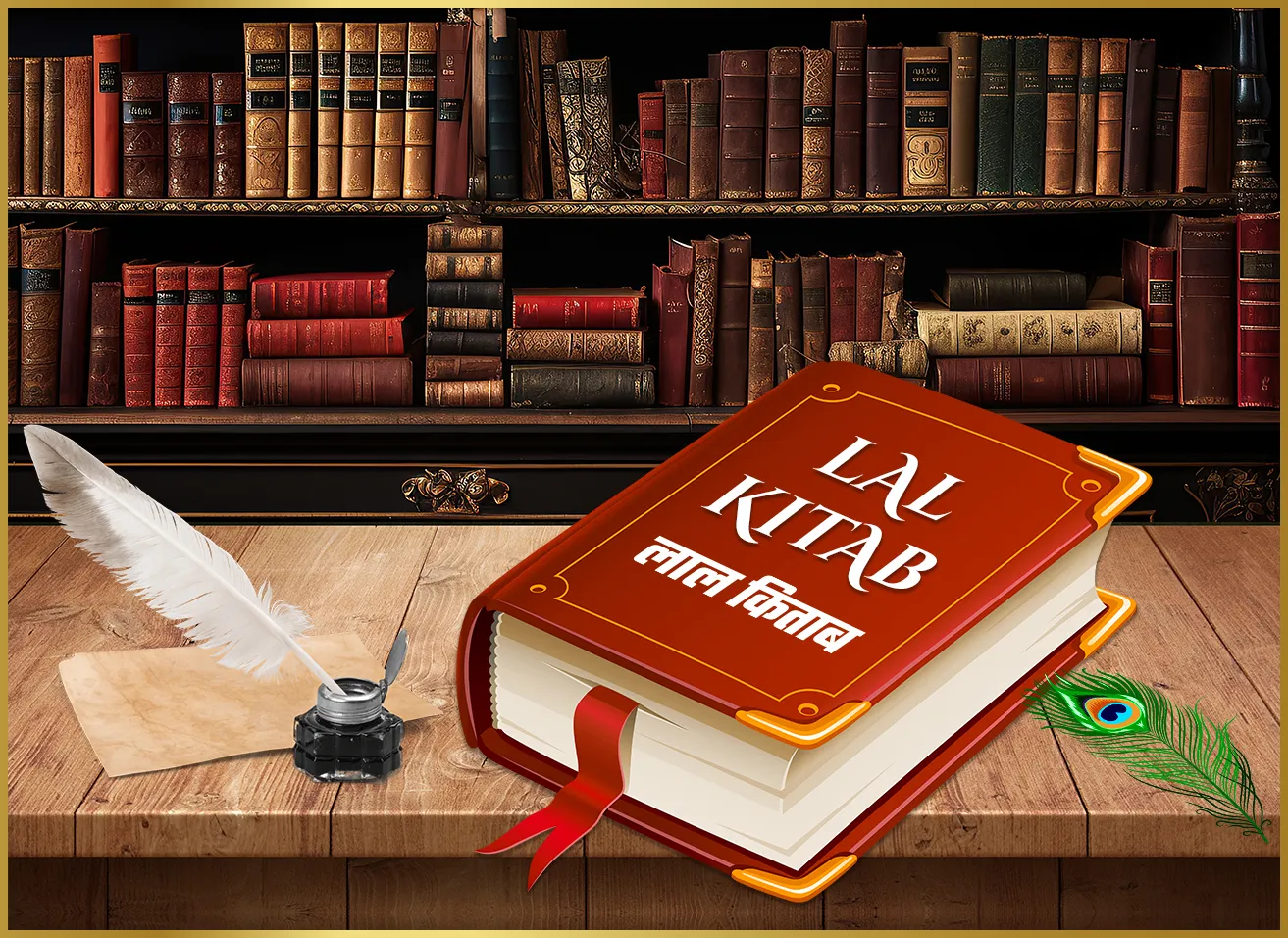
Lal Kitab, literally meaning the "Red Book," is a distinctive branch of astrology that differs significantly from classical Vedic astrology. While traditional astrology often relies heavily on complex calculations, divisional charts, and elaborate rituals, Lal Kitab takes a surprisingly direct approach.
It focuses on practical remedies that anyone can perform without needing extensive knowledge of astrology. These remedies are not about expensive rituals or rare materials. Instead, they involve simple everyday actions—feeding animals, maintaining cleanliness, offering water, or following certain behavioral disciplines.
What makes Lal Kitab unique is its emphasis on karma correction. It operates on the belief that planetary afflictions are not punishments but signals of imbalance created by past actions. Rather than trying to "fight" planets, Lal Kitab teaches how to harmonize with them.
At Nabatara Institute of Astrology, this philosophy is deeply aligned with the broader vision of spiritual growth. The goal is not just to solve problems temporarily but to guide individuals toward a more conscious and balanced way of living.
The Origins of Lal Kitab: Mystery and Tradition
The origins of Lal Kitab are surrounded by a certain mystique, which only adds to its allure. The texts associated with Lal Kitab began appearing in the early 20th century, primarily attributed to Pandit Roop Chand Joshi. However, many scholars believe that its roots go much deeper, possibly linked to ancient Persian and Vedic traditions.
Unlike classical Sanskrit-based astrology texts, Lal Kitab was written in a blend of Urdu and Hindi, making it more accessible to the common person. This shift in language was not accidental. It reflected a conscious effort to bring astrological knowledge out of scholarly circles and into everyday life.
The structure of Lal Kitab is also unconventional. It does not strictly follow the classical planetary rulerships or house interpretations. Instead, it introduces its own system of understanding planetary placements and their effects.
At Nabatara, this uniqueness is respected and studied in depth. Students are not just taught the remedies but also the underlying logic that connects actions with outcomes. This deeper understanding is what transforms Lal Kitab from a set of instructions into a living science.
Why Lal Kitab Remedies Feel Different
If you have ever explored astrology before, you might have come across recommendations like wearing gemstones, performing elaborate rituals, or conducting costly ceremonies. While these methods have their place, they are not always accessible to everyone.
Lal Kitab takes a different path. Its remedies are grounded in simplicity. For example, instead of prescribing a gemstone for a weak planet, Lal Kitab might suggest feeding a specific animal or maintaining a particular habit.
At first glance, these remedies may seem too simple to be effective. But their power lies in symbolism and energy alignment. Every action in Lal Kitab is designed to correct a specific imbalance in the subtle energy field.
At Nabatara, this is explained as a form of conscious living. When you perform a remedy, you are not just doing an action; you are participating in a process of transformation. Over time, these small actions begin to reshape your inner and outer reality.
Do Lal Kitab Remedies Work for Everyone?
This is perhaps the most common question people ask. The honest answer is both simple and nuanced.
Lal Kitab remedies are designed to be universally accessible, but their effectiveness depends on sincerity, consistency, and understanding. They are not quick fixes or shortcuts. They are tools for alignment.
If someone performs a remedy mechanically, without awareness or belief, the results may be limited. However, when the same remedy is performed with intention and discipline, it can create noticeable shifts.
At Nabatara, students are taught that remedies are not magic spells. They are practices that help you become more aligned with natural laws. The more aligned you are, the more smoothly life begins to flow.
The Philosophy Behind Lal Kitab Remedies
To truly understand Lal Kitab, one must go beyond the surface level. The remedies are not random actions; they are deeply symbolic.
For instance, feeding animals is not just about charity. It represents humility and the acknowledgment of interconnectedness. Offering water is not just a ritual; it symbolizes flow, purification, and emotional balance.
Every remedy carries a deeper message. It encourages the individual to correct not just external circumstances but internal patterns.
This is where Lal Kitab beautifully connects with the teachings at Nabatara. The institute emphasizes that true transformation begins within. External actions are simply reflections of internal shifts.
Wealth and Peace: Two Sides of the Same Coin
Most people approach Lal Kitab with a specific goal—usually wealth, career growth, or problem-solving. While these are valid aspirations, Lal Kitab gently redirects the focus.
It teaches that wealth without peace is incomplete, and peace without stability can be fragile. The true goal is balance.
At Nabatara, this balance is seen as the foundation of a meaningful life. The courses and teachings are designed to help individuals achieve both material success and inner harmony.
Lal Kitab remedies, when practiced correctly, support this dual goal. They do not just aim to increase income or remove obstacles. They aim to create a life where success and peace coexist naturally.
The Role of Discipline in Lal Kitab Practice
One of the most overlooked aspects of Lal Kitab is discipline. The remedies are simple, but they require consistency.
Skipping practices, performing them irregularly, or treating them casually reduces their effectiveness. This is because Lal Kitab operates on the principle of sustained energy alignment.
At Nabatara, students are guided to develop this discipline gradually. The focus is not on forcing routines but on cultivating awareness and commitment.
Over time, what starts as a remedy becomes a habit, and what begins as a habit becomes a way of life.
A Gentle Introduction to What Comes Next
In the upcoming sections, we will explore specific Lal Kitab remedies for wealth and peace in detail. These will not just be listed as instructions but explained with their deeper meanings and practical applications.
You will begin to see how small changes in daily life can create significant shifts over time. More importantly, you will understand why these remedies work and how to integrate them into your life naturally.
At Nabatara, this journey is not just about learning astrology. It is about discovering a new way of living—one that is aligned, aware, and deeply fulfilling.
Lal Kitab Remedies for Wealth: Simple Actions That Shift Financial Energy
Why Wealth Gets Blocked Even When Efforts Are Strong
There are moments in life when everything seems to be done correctly. A person works hard, plans carefully, and still finds that money does not stay, opportunities slip away, or growth feels delayed. In such situations, modern logic often falls short of providing answers.
According to Lal Kitab, wealth is not only the result of effort. It is also deeply connected to planetary balance and karmic flow. When certain planets are afflicted or misaligned in a person's chart, financial instability can appear in subtle ways. It may not always look like loss; sometimes it appears as stagnation, repeated obstacles, or an inability to retain wealth.
At Nabatara, this idea is explained with clarity. Wealth is seen as a form of energy, and like any energy, it must flow freely. When there are blockages in this flow, external efforts alone may not be enough. This is where Lal Kitab remedies become powerful, because they work on restoring that flow rather than forcing outcomes.
The Core Principle Behind Wealth Remedies in Lal Kitab
Lal Kitab does not treat wealth as something to be "attracted" through desire alone. Instead, it focuses on removing the subtle imbalances that prevent wealth from entering and staying in one's life.
Each remedy is connected to a specific planetary influence. For example, issues related to income may be linked to the Sun or Jupiter, while problems with savings may relate to Saturn or Rahu. However, Lal Kitab does not always require deep chart analysis before suggesting remedies. Many of its practices are universal because they correct common imbalances found in modern lifestyles.
At Nabatara Institute of Astrology, students are taught that these remedies are not shortcuts. They are corrections. When performed with sincerity, they gradually align a person's energy with prosperity.
Feeding Animals: A Gateway to Financial Flow
One of the most well-known Lal Kitab remedies involves feeding animals. At first, this may appear unrelated to wealth, but its impact is deeply symbolic.
Feeding cows, dogs, birds, or other animals is believed to balance planetary influences connected to generosity, responsibility, and compassion. These qualities are directly linked to financial stability in Lal Kitab philosophy.
When a person regularly feeds animals, they unconsciously dissolve ego-driven tendencies that often block abundance. It creates a sense of humility and connection with life beyond personal gain.
At Nabatara, this remedy is explained as an act of energetic exchange. When you give without expectation, you open channels through which abundance can return in unexpected ways. Over time, this simple act begins to shift not only external circumstances but also the mindset around money.
Keeping the Entrance Clean: Inviting Prosperity
Another powerful yet often overlooked remedy is maintaining cleanliness at the entrance of the home. According to Lal Kitab, the main entrance is not just a physical doorway; it is an energetic gateway through which opportunities enter.
Clutter, dirt, or neglect at this point can symbolically block the entry of wealth and positive energy. By keeping this space clean and inviting, a person creates an environment that supports growth and prosperity.
At Nabatara, this practice is connected to the principle of awareness. Cleanliness is not just about appearance; it reflects the state of mind. A clean entrance often corresponds with clarity in thought and intention, both of which are essential for financial success.
Avoiding Borrowed Items: Breaking the Cycle of Dependency
Lal Kitab strongly advises against the habit of frequently borrowing items, especially money or personal belongings. This is based on the idea that borrowing creates subtle energetic dependencies that can weaken financial independence.
When a person becomes accustomed to borrowing, it reinforces a mindset of lack. Over time, this mindset can manifest as repeated financial struggles.
Instead, Lal Kitab encourages self-reliance and mindful use of resources. Even small steps toward independence can create significant shifts in financial stability.
At Nabatara, this concept is expanded further. Students are guided to understand that true wealth begins with self-sufficiency. Remedies are not just about external actions but about cultivating an inner sense of completeness.
Offering Water to the Sun: Strengthening Financial Authority
One of the most traditional Lal Kitab remedies for wealth involves offering water to the rising sun. This practice is associated with strengthening the Sun, which represents authority, confidence, and leadership.
A strong sun in one's life often translates into better decision-making, recognition, and career growth. These factors naturally contribute to financial improvement.
The act itself is simple. It involves offering water while facing the sun in the early morning. However, the deeper significance lies in acknowledging the source of energy and aligning oneself with it.
At Nabatara, this remedy is taught as a form of daily discipline. It is not just about the ritual but about starting the day with awareness and gratitude. Over time, this practice can enhance clarity and direction, which are essential for financial success.
Respecting Elders and Teachers: Unlocking Jupiter's Blessings
In Lal Kitab, Jupiter is closely associated with wisdom, guidance, and expansion. When Jupiter is strong, it supports growth in all areas of life, including wealth.
One of the simplest ways to strengthen Jupiter is by showing respect to elders, teachers, and mentors. This is not limited to formal gestures; it includes genuine appreciation and willingness to learn.
When a person honors wisdom, they naturally attract opportunities for growth. This is because they become more receptive to guidance and learning.
At Nabatara, this principle is deeply embedded in the learning environment. Students are encouraged to approach knowledge with humility. This attitude not only enhances learning but also creates a foundation for long-term success.
Avoiding Negative Speech: Protecting Financial Energy
Lal Kitab places significant emphasis on speech. Words are seen as carriers of energy, and negative speech can create disturbances in one's environment.
Complaining, criticizing, or speaking harshly can weaken the positive energy required for wealth. Over time, this can manifest as financial instability or missed opportunities.
By cultivating positive and mindful speech, a person creates an atmosphere that supports growth and harmony.
At Nabatara, this is explained as a form of inner discipline. Controlling speech is not about suppression but about awareness. When words are aligned with positivity and clarity, they reinforce the energy needed for success.
The Hidden Connection Between Karma and Wealth
One of the most profound teachings of Lal Kitab is the connection between karma and financial flow. Wealth is not just earned; it is also influenced by past actions.
When there are unresolved karmic imbalances, they can appear as financial challenges. Lal Kitab remedies act as tools to balance these imprints through conscious actions.
At Nabatara, this idea is explored in depth. Students learn that every action has a ripple effect. By choosing actions that align with harmony and balance, they can gradually transform their circumstances.
Why Simplicity Makes Lal Kitab So Powerful
In a world where solutions are often complicated, the simplicity of Lal Kitab stands out. Its remedies do not require special conditions or extensive preparation. They can be integrated into daily life with ease.
This simplicity is not a limitation; it is a strength. It ensures that the remedies are accessible to everyone, regardless of background or resources.
At Nabatara, this accessibility is seen as a key factor in transformation. When practices are simple, they are more likely to be followed consistently. And consistency is what creates lasting change.
Preparing for the Next Step in the Journey
As you begin to understand Lal Kitab remedies for wealth, it becomes clear that they are not just about money. They are about alignment, awareness, and conscious living.
In the next part, we will explore Lal Kitab remedies for peace. While wealth addresses external stability, peace addresses the inner world. Together, they create a life that is not only successful but also fulfilling.
At Nabatara, this balance is the ultimate goal. The teachings are designed to guide individuals toward a state where prosperity and peace exist together, creating a life of true abundance.
Lal Kitab Remedies for Peace: Restoring Inner Balance in a Noisy World
Why Peace Feels So Difficult to Maintain Today
Even in moments when everything appears stable on the outside, many people quietly struggle within. The mind feels restless, sleep becomes disturbed, relationships turn fragile, and a subtle dissatisfaction lingers without any clear reason. This inner turbulence is often dismissed as stress or overthinking, but traditional sciences like Lal Kitab see it from a deeper lens.
According to Lal Kitab, peace is not accidental. It is a result of balanced planetary influences and harmonious inner energy. When certain planets like the Moon, Mercury, or Rahu become disturbed, they can create emotional instability, confusion, anxiety, or unexplained fear.
At Nabatara, this understanding forms the foundation of spiritual learning. Peace is not something to be chased; it is something that naturally arises when inner and outer energies are aligned. Lal Kitab remedies are designed to gently restore that alignment.
The Real Meaning of Peace in Lal Kitab
In modern language, peace is often associated with silence or the absence of problems. But Lal Kitab defines peace in a much deeper way. It is not about escaping challenges; it is about maintaining stability even in the presence of challenges.
A person who is truly at peace does not lose clarity in difficult situations. Their decisions are not driven by fear or confusion. Instead, they operate from a space of awareness and balance.
At Nabatara, students are guided to understand that peace is a state of strength, not weakness. It is the foundation upon which all other aspects of life, including wealth and relationships, are built.
The Moon and the Mind: Understanding Emotional Disturbance
In Lal Kitab, the Moon plays a crucial role in determining mental and emotional well-being. When the moon is weak or afflicted, it can lead to restlessness, mood swings, and lack of focus.
Many of the remedies for peace are directly or indirectly aimed at balancing the Moon. These remedies are simple, but their effects can be profound when practiced consistently.
At Nabatara, this connection is explained in a way that bridges traditional wisdom with modern understanding. The moon is not just a celestial body; it represents the mind itself. By stabilizing the moon, one begins to stabilize thoughts and emotions.
Keeping Silver or Water Nearby: Calming the Mind
One of the most well-known Lal Kitab remedies for peace involves keeping a piece of silver or a container of water near the bedside while sleeping. This practice is associated with calming the Moon's energy.
Water symbolizes emotional flow, while silver is believed to have a soothing effect on the mind. Together, they create an environment that supports restful sleep and emotional balance.
At Nabatara, this remedy is explained beyond symbolism. It is seen as a way of creating a conscious connection with elements that influence the mind. Over time, such practices can reduce anxiety and improve mental clarity.
Avoiding Clutter: Creating Space for Peace
Clutter is not just a physical issue; it is an energetic one. Lal Kitab emphasizes the importance of maintaining order in one's surroundings, especially in living and sleeping spaces.
A cluttered environment can lead to a cluttered mind. It creates subtle disturbances that affect concentration, mood, and overall well-being.
By keeping spaces clean and organized, a person allows energy to flow freely. This simple act can have a surprisingly strong impact on inner peace.
At Nabatara, this principle is integrated into daily practice. Students are encouraged to observe how their environment influences their state of mind. This awareness becomes the first step toward transformation.
Feeding Birds: Lightness and Emotional Release
Feeding birds is another powerful Lal Kitab remedy for peace. Birds are associated with freedom and lightness, qualities that are often missing when the mind feels burdened.
When a person feeds birds regularly, it symbolically represents the release of emotional weight. It creates a connection with nature and introduces a sense of calm and openness.
At Nabatara, this remedy is taught as a form of emotional cleansing. It is not just about the act itself but about the intention behind it. When performed with awareness, it can gradually lighten the mental load carried by an individual.
Respecting Mother and Feminine Energy
In Lal Kitab, the mother and feminine energy are closely linked to the Moon. Disrespect, neglect, or unresolved issues related to this aspect can disturb mental peace.
Showing respect, care, and gratitude toward one's mother or maternal figures is considered a powerful remedy. It helps in balancing emotional energies and restoring harmony.
At Nabatara, this teaching is approached with sensitivity and depth. Students are guided to understand the emotional patterns they carry and how these patterns influence their current state of mind. Healing these connections often leads to a noticeable improvement in inner peace.
Avoiding Late-Night Overstimulation
While not always explicitly stated in traditional texts, the principles of Lal Kitab align with the idea of maintaining a balanced routine. Late-night overstimulation, whether through excessive screen time or mental activity, can disturb the natural rhythm of the mind.
A disturbed routine often weakens the Moon's influence, leading to restlessness and lack of clarity.
At Nabatara, this is explained in the context of modern life. Students are encouraged to create routines that support mental calmness, especially during the night. Simple changes in daily habits can significantly enhance the effectiveness of Lal Kitab remedies.
Lighting a Diya: Bringing Stability to the Mind
Lighting a diya, especially in the evening, is a simple yet powerful practice. In Lal Kitab, this act is associated with bringing light into darkness, both externally and internally.
The flame represents focus and stability. Observing it, even for a few moments, can help calm the mind and reduce scattered thoughts.
At Nabatara, this practice is often integrated into meditation routines. It serves as a bridge between ritual and awareness, helping individuals connect with a deeper sense of stillness.
The Role of Speech and Thought in Inner Peace
Just as negative speech affects wealth, it also plays a significant role in mental peace. Constant complaining, overthinking, or engaging in negative conversations can disturb the mind.
Lal Kitab encourages mindful communication and conscious thinking. By observing one's thoughts and words, a person can gradually reduce internal noise.
At Nabatara, this is taught as a foundational practice. Awareness of thought patterns is the first step toward mastering them. When thoughts become clearer, peace naturally follows.
Why These Remedies Work on a Deeper Level
At a surface level, Lal Kitab remedies may appear symbolic. But their effectiveness lies in their ability to influence both the conscious and subconscious mind.
Each remedy introduces a small but meaningful shift in behavior. Over time, these shifts accumulate, leading to noticeable changes in emotional stability and mental clarity.
At Nabatara, this process is explained as a journey rather than a quick solution. True peace is not achieved overnight. It is cultivated through consistent practice and awareness.
Preparing for the Final Integration
As we move forward, it becomes clear that Lal Kitab remedies are not isolated practices. They are interconnected tools that address different aspects of life.
Wealth and peace are not separate goals. They are parts of a larger whole. When both are balanced, life begins to feel more aligned and purposeful.
In the next part, we will bring these elements together. We will explore how Lal Kitab remedies can be integrated into daily life in a natural and sustainable way, along with deeper insights that connect these practices to spiritual growth.
At Nabatara, this integration is where true transformation happens. It is not just about learning remedies but about living them.
Living Lal Kitab: How to Apply These Remedies in Daily Life for Real Transformation
Why Most People Fail Even After Knowing the Remedies
There is a common pattern seen among those who explore Lal Kitab. They read about remedies, feel hopeful, try a few practices for a short time, and then slowly drift away when results are not immediately visible. This is not because Lal Kitab does not work, but because its essence is often misunderstood.
Lal Kitab is not a system of quick fixes. It is a system of alignment. The remedies are not designed to override destiny instantly but to gradually reshape the flow of energy that influences life.
At Nabatara, this distinction is made very clear. Students are taught that remedies are not isolated actions. They are part of a larger discipline that requires patience, awareness, and consistency. Without these elements, even the most powerful remedies lose their impact.
The Right Way to Begin Lal Kitab Practice
Starting Lal Kitab does not require a perfect horoscope analysis or a long list of instructions. In fact, the most effective approach is often the simplest one.
One should begin with a few remedies that feel natural and manageable. For example, feeding animals, maintaining cleanliness, or offering water to the Sun can be easily incorporated into daily life. The goal is not to do everything at once but to build a rhythm.
At Nabatara, beginners are guided to start small and stay consistent. This approach prevents overwhelm and allows the remedies to become a natural part of daily living rather than a burden.
Consistency Over Intensity: The Real Secret
Many people believe that doing more remedies will bring faster results. Lal Kitab suggests the opposite. It values consistency over intensity.
Performing a simple remedy every day with sincerity is far more effective than performing multiple remedies irregularly. This is because Lal Kitab works on the principle of sustained energy alignment.
When an action is repeated regularly, it begins to influence deeper layers of the mind and energy field. Over time, this creates lasting change.
At Nabatara, this principle is emphasized in every course. Transformation is not about doing more; it is about doing what matters with full awareness.
Understanding the Timing of Results
One of the biggest challenges in any spiritual practice is patience. In a world driven by instant results, it can be difficult to trust a process that unfolds gradually.
Lal Kitab remedies do not always produce immediate visible outcomes. Sometimes the changes are subtle at first. A person may notice improved clarity, reduced stress, or better decision-making before any financial or external changes occur.
These internal shifts are not insignificant. They are the foundation upon which external success is built.
At Nabatara, students are encouraged to observe these subtle changes. Recognizing progress at the inner level helps maintain motivation and strengthens belief in the process.
The Role of Intention in Every Remedy
A remedy performed without intention is like a seed planted without care. It may grow, but its potential remains limited.
In Lal Kitab, intention plays a crucial role. The same action can produce different results depending on the awareness with which it is performed.
For instance, feeding an animal mechanically is very different from doing it with a sense of gratitude and connection. The latter creates a deeper impact because it aligns both action and emotion.
At Nabatara, this understanding is integrated into every practice. Students are guided to bring mindfulness into even the simplest actions. This transforms remedies into powerful tools for inner and outer change.
Creating a Daily Flow of Practices
One of the most effective ways to integrate Lal Kitab into life is to create a simple daily flow. This does not require strict schedules or complex routines. It is about weaving small practices into existing habits.
A person might begin the day by offering water to the Sun, maintain cleanliness throughout the day, feed birds or animals in the evening, and spend a few moments in quiet reflection at night.
These actions, when combined, create a balanced rhythm. They address different aspects of life—physical, emotional, and spiritual.
At Nabatara, this approach is taught as a way of living rather than a set of tasks. The aim is to make these practices feel natural and effortless.
The Deeper Philosophy: Karma, Responsibility, and Awareness
Lal Kitab is often seen as a remedy-based system, but at its core, it is deeply philosophical. It teaches that life is shaped by karma, and every action contributes to future outcomes.
The remedies are not meant to escape karma but to balance it. They encourage individuals to take responsibility for their actions and make conscious choices.
This perspective shifts the focus from blaming external circumstances to understanding one's role in shaping life.
At Nabatara, this philosophy is explored in depth. Students are encouraged to reflect on their patterns, habits, and decisions. This self-awareness becomes the key to transformation.
Why Simplicity is the Ultimate Power
In a world filled with complexity, simplicity often goes unnoticed. Yet, it is simplicity that makes Lal Kitab so effective.
Its remedies do not require special conditions, expensive materials, or advanced knowledge. They can be practiced by anyone, anywhere.
This accessibility ensures that the teachings are not limited to a select few. They become a part of everyday life.
At Nabatara, this simplicity is seen as a strength rather than a limitation. It allows individuals to focus on consistency and awareness without being distracted by unnecessary complications.
Blending Lal Kitab with Modern Life
One of the most important aspects of Lal Kitab is its adaptability. While its roots are ancient, its practices can be easily integrated into modern lifestyles.
Whether someone is a student, a professional, or a homemaker, the remedies can be adjusted to fit their routine. This flexibility ensures that the practice remains relevant and sustainable.
At Nabatara, this integration is a key focus. The teachings are presented in a way that respects tradition while addressing the realities of contemporary life.
The Emotional Shift That Changes Everything
As Lal Kitab remedies become a part of daily life, a subtle shift begins to occur. The focus moves from external results to internal growth.
A person becomes more aware of their thoughts, actions, and reactions. They begin to respond to situations with greater clarity and calmness.
This emotional stability has a direct impact on all areas of life, including relationships, career, and finances.
At Nabatara, this shift is seen as the true goal of any spiritual practice. External success is important, but it is the inner transformation that makes it meaningful.
Preparing for the Final Understanding
By now, it becomes clear that Lal Kitab is not just about remedies. It is about a way of living that brings balance, awareness, and alignment.
In the final part, we will bring everything together. We will explore the deeper spiritual meaning of Lal Kitab remedies and how they connect to higher consciousness and long-term transformation.
We will also understand why learning these sciences in a structured way, such as through Nabatara, can accelerate growth and provide clarity that self-learning often cannot.
Beyond Remedies: The Spiritual Depth of Lal Kitab and the Path to True Transformation
When Remedies Become a Way of Life
As one moves deeper into Lal Kitab, something subtle yet powerful begins to change. What initially started as a set of remedies slowly transforms into a way of living. The focus shifts from "fixing problems" to "understanding life."
This is where Lal Kitab reveals its true depth. It is not just a collection of practical solutions for wealth and peace. It is a system that quietly guides an individual toward awareness, responsibility, and inner evolution.
At Nabatara, this transition is considered the most important milestone. Anyone can follow instructions for a short time, but true transformation begins when those actions become a natural extension of one's thinking and being.
The Hidden Spiritual Intelligence Behind Lal Kitab
On the surface, Lal Kitab remedies may appear simple, almost too simple to carry deep meaning. But beneath that simplicity lies a profound spiritual intelligence.
Every remedy is designed to influence not just external circumstances but also internal patterns. Feeding animals, maintaining cleanliness, offering water, or practicing discipline—these are not random acts. They are subtle tools that reshape behavior, perception, and energy.
Over time, these actions begin to dissolve ego, reduce negativity, and create a sense of harmony with the world.
At Nabatara, this understanding is explored in a structured and meaningful way. Students are guided to see beyond the action and connect with the intention behind it. This is what turns practice into realization.
From Wealth and Peace to Awareness and Alignment
Most people approach Lal Kitab with specific goals. They seek financial stability, mental peace, or solutions to ongoing challenges. While these goals are valid, they represent only the starting point.
As the practice deepens, a broader understanding begins to emerge. Wealth is no longer seen as just money but as a state of flow and stability. Peace is no longer just the absence of stress but a state of clarity and strength.
This shift in perspective changes everything. Life is no longer driven by fear or desire alone. It becomes guided by awareness.
At Nabatara, this journey is carefully nurtured. The teachings are designed to help individuals move from problem-solving to self-discovery and eventually to self-mastery.
Why Self-Learning Has Its Limits
In today's digital age, information is easily available. Anyone can read about Lal Kitab remedies, watch videos, or explore different interpretations. While this accessibility is valuable, it also comes with limitations.
Without proper guidance, it is easy to misunderstand the purpose of remedies or apply them incorrectly. More importantly, self-learning often focuses only on the "what" and "how," while missing the deeper "why."
This gap can slow down progress and create confusion.
At Nabatara, structured learning bridges this gap. The teachings are not just about memorizing remedies but about understanding their logic, context, and application. This clarity allows students to practice with confidence and achieve more meaningful results.
The Importance of Authentic Guidance
Lal Kitab, like all spiritual sciences, carries a depth that cannot always be captured through text alone. It requires interpretation, experience, and insight.
Authentic guidance helps in navigating this depth. It provides clarity when doubts arise and direction when the path feels uncertain.
Under the guidance of Gaurav Tribedi, Nabatara has created a learning environment that balances tradition with practical understanding. With over two decades of experience in astrology, tantra, and spiritual disciplines, his approach brings both depth and accessibility to the teachings.
His emphasis has always been on transformation rather than mere knowledge. This philosophy resonates strongly with the essence of Lal Kitab.
The Role of Discipline in Spiritual Growth
One of the most consistent themes across Lal Kitab and the teachings at Nabatara is discipline. Not the rigid kind that feels forced, but a natural discipline that arises from understanding.
When a person truly understands the value of a practice, consistency becomes effortless. It is no longer a task but a choice.
This discipline creates stability. It allows the mind to settle, the body to align, and the energy to flow smoothly.
Over time, this stability becomes the foundation for growth in all areas of life.
The Subtle Transformation That Changes Destiny
Lal Kitab does not promise to change destiny overnight. Instead, it works on something far more powerful—it changes the individual.
When thoughts become clearer, actions become more conscious. When actions become more conscious, outcomes begin to shift.
This process may appear gradual, but its impact is lasting. It creates a form of transformation that is not dependent on external conditions.
At Nabatara, this is seen as the ultimate goal. The aim is not just to solve problems but to empower individuals to navigate life with clarity and confidence.
Why Lal Kitab Still Matters in Today's World
In a time where life moves at an overwhelming pace, the simplicity of Lal Kitab offers a sense of grounding. It reminds us that not all solutions need to be complex.
Sometimes, the most effective changes come from the smallest actions. A moment of awareness, a simple act of kindness, or a consistent habit can create ripples that extend far beyond what we can see.
This relevance is what keeps Lal Kitab alive even today. It adapts effortlessly to modern life while retaining its traditional essence.
At Nabatara, this balance is at the heart of every program. The focus is on making ancient wisdom practical, relatable, and effective for today's generation.
A Path for Seekers, Learners, and Practitioners
Whether someone approaches Lal Kitab as a curious seeker, a serious student, or a practicing astrologer, it offers something valuable at every stage.
For beginners, it provides simple tools to improve daily life. For learners, it opens doors to deeper understanding. For practitioners, it becomes a powerful system for guiding others.
At Nabatara, this journey is supported at every level. The courses are designed to cater to different needs, ensuring that each individual can grow at their own pace.
This inclusivity makes the learning experience both meaningful and accessible.
The Invitation to Begin Your Journey
Every journey begins with a single step. In the case of Lal Kitab, that step can be as simple as adopting one small practice.
Over time, that single step can lead to a series of changes that transform not just circumstances but the entire perspective of life.
For those who wish to go beyond surface-level understanding, structured learning can provide the clarity and direction needed to move forward with confidence.
Nabatara offers that space. A place where knowledge is not just shared but lived, where ancient wisdom meets modern understanding, and where individuals are guided toward a more balanced and fulfilling life.
Closing Thoughts: Wealth, Peace, and the Journey Within
Lal Kitab teaches us something very simple yet profound. Life is not just about achieving more; it is about becoming more aware.
Wealth and peace are not separate goals. They are reflections of how aligned we are with ourselves and the world around us.
Through simple actions, consistent practice, and deeper understanding, it is possible to create a life that feels both successful and meaningful.
At Nabatara, this journey is not just taught—it is experienced. And for those who are ready to take that step, the path is always open.
🛕 About Nabatara Institute of Astrology: A Trusted Name in Spiritual Education
In a time where information is widely available but authentic guidance is rare, the importance of learning from a credible and experienced institution becomes essential. Nabatara Foundation, a registered not-for-profit organization under Section 8 of the Companies Act, 2013, stands as a dedicated center for preserving and sharing the depth of ancient spiritual sciences in a structured and meaningful way.
The Nabatara Institute of Astrology was founded with a clear vision—to make traditional knowledge systems like astrology, Lal Kitab, tantra, vastu, and spiritual sadhana accessible to individuals across the world without losing their authenticity. Every course and teaching is designed with a balance of classical wisdom and practical application, ensuring that learners not only gain knowledge but also understand how to apply it in real life.
At the core of Nabatara's teachings is the guidance of Gaurav Tribedi, whose journey in astrology and spiritual disciplines spans over two decades. His deep involvement in Tantra Shastra and his connection to a respected spiritual lineage bring a level of authenticity and depth that is rarely found in modern learning platforms. His approach focuses on transformation through understanding, rather than surface-level learning.
What sets Nabatara apart is its commitment to genuine education. The institute does not promote blind belief or exaggerated claims. Instead, it encourages learners to explore, understand, and experience these sciences with clarity and responsibility. This approach builds not only knowledge but also trust and confidence in the learning process.
The teachings at Nabatara are structured to support learners at every stage, whether they are beginners seeking clarity or advanced students aiming to deepen their practice. The emphasis is always on creating a strong foundation, because true mastery in any spiritual science begins with correct understanding.
In the context of Lal Kitab, this becomes especially important. While remedies may appear simple, their correct interpretation and application require insight and experience. Learning under proper guidance ensures that these practices are not misunderstood or misapplied.
Nabatara's growing recognition among students and spiritual seekers globally reflects its commitment to authenticity and quality education. The institute continues to serve as a reliable platform for those who wish to explore astrology and related sciences in a disciplined and meaningful way.
For anyone seeking not just information but true understanding, Nabatara offers a space where ancient knowledge is preserved with integrity and shared with purpose.