The Silent Power That Ancient India Preserved
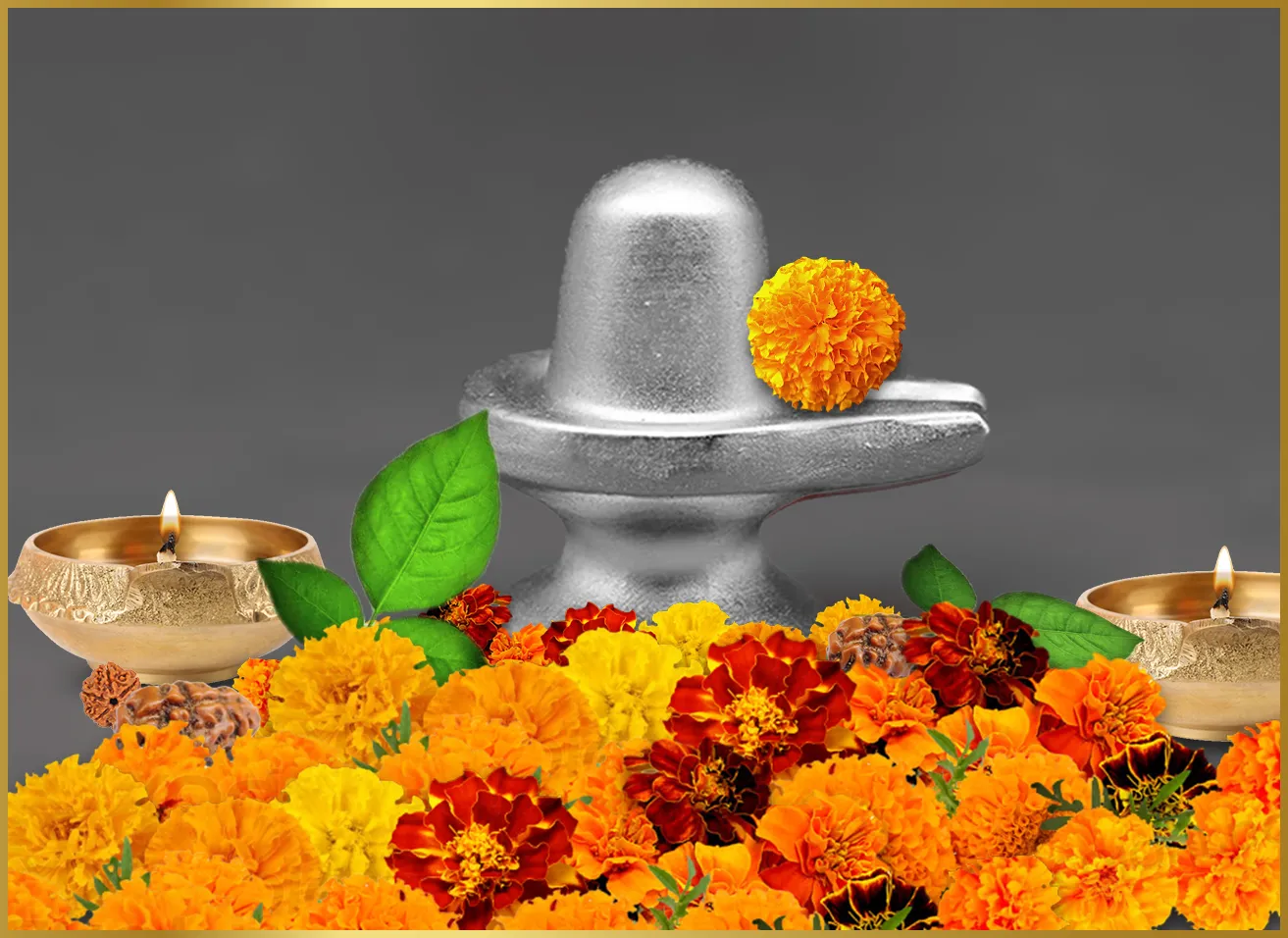
In the vast ocean of Vedic wisdom, there are certain symbols that are not merely objects of worship but living embodiments of cosmic energy. Among them, the Parad Shivling holds a place that is both mysterious and deeply revered. For centuries, spiritual seekers, sages, and practitioners of higher knowledge have turned toward this sacred form, believing it to be a gateway between the material and the divine.
The word "Parad" refers to mercury, a substance that has fascinated not only spiritual practitioners but also scientists across civilizations. In ancient Indian texts, mercury is not treated as an ordinary metal. It is described as a living element, carrying within it the essence of transformation. When shaped into a Shivling through sacred processes, it is believed to become a powerful center of energy capable of influencing the mind, body, and spirit.
At Nabatara, where ancient sciences are not just taught but experienced, the Parad Shivling is seen as more than a ritual object. It is a tool of inner awakening. Students who walk the path of astrology, tantra, and spiritual disciplines often encounter its significance as they begin to understand the deeper layers of existence.
Why Parad Shivling Is Considered So Powerful
To understand the power of Parad Shivling, one must first understand the symbolism of the Shivling itself. In Hindu philosophy, the Shivling represents the infinite nature of the universe, the union of creation and dissolution, and the formless reality that exists beyond human perception. It is not just a representation of Lord Shiva; it is a symbol of pure consciousness.
Now, when this form is created using purified mercury through traditional alchemical processes described in ancient texts like Rasashastra, it is believed to amplify its spiritual potency. The process itself is highly complex and requires deep knowledge, discipline, and spiritual purity. This is why authentic Parad Shivlings are rare and highly valued.
What makes it even more intriguing is that mercury, in its natural state, is fluid and unstable. Transforming it into a solid form is not just a physical process but a symbolic one. It represents the stabilization of the restless human mind, the grounding of scattered energies, and the transformation of raw potential into focused power.
At Nabatara Institute, such concepts are not just theoretical discussions. They are part of a larger journey where students learn how ancient practices align with inner transformation. The Parad Shivling becomes a bridge between knowledge and experience.
The Mythological Roots That Give It Life
Ancient scriptures and Puranic stories often refer to mercury as a substance associated with Lord Shiva himself. It is believed that Parad is connected to the divine energy of Shiva, making the Parad Shivling one of the most potent forms of worship.
One popular belief suggests that worshipping a Parad Shivling is equivalent to worshipping all twelve Jyotirlingas. This is not merely a symbolic statement but reflects the idea that the energy concentrated within it is vast and multidimensional.
In many traditions, it is said that Goddess Parvati herself asked Lord Shiva about the most powerful form of worship in the Kali Yuga. Shiva is believed to have mentioned the Parad Shivling as one of the most effective mediums for spiritual upliftment in an age where distractions are endless and human attention is scattered.
These mythological narratives are not just stories meant to inspire faith. They carry encoded knowledge about energy, consciousness, and the ways in which human beings can align themselves with higher forces. At Nabatara, such interpretations are explored in depth, allowing seekers to move beyond blind belief and into conscious understanding.
The Connection Between Parad Shivling and Meditation
In today's world, where stress, anxiety, and mental clutter have become almost unavoidable, meditation is often recommended as a solution. However, many people struggle to focus, to quiet their minds, or to go beyond surface-level relaxation.
This is where the Parad Shivling is believed to play a unique role.
Spiritual practitioners often describe a subtle yet noticeable shift in the environment when a Parad Shivling is present. It is said to create a field of energy that supports concentration, calms the nervous system, and helps the mind settle into a meditative state more naturally.
Unlike abstract meditation techniques that require years of discipline, the presence of a powerful spiritual object can act as an anchor. The Parad Shivling becomes a focal point, allowing the practitioner to direct their attention and gradually move inward.
At Nabatara, students who are introduced to meditation practices often learn how external tools, when used correctly, can enhance internal experiences. The goal is not dependence but support. The Parad Shivling, in this context, is not a shortcut but a catalyst.
Energy Purification: Beyond the Physical Space
One of the most widely discussed benefits of the Parad Shivling is its role in energy purification. In Vedic traditions, it is believed that every space carries vibrations. These vibrations can be influenced by thoughts, emotions, actions, and even external environments.
Over time, negative energies can accumulate, leading to disturbances not just in the environment but also in the mental and emotional states of the people living within it.
The Parad Shivling is believed to act as a powerful purifier. Its presence is said to neutralize negative vibrations, creating a more harmonious and balanced atmosphere. This is why many people choose to keep it in their homes, meditation spaces, or places of work.
Interestingly, this idea is not entirely disconnected from modern scientific curiosity. Mercury has unique properties that have fascinated researchers for centuries. While the spiritual claims around Parad Shivling go beyond what modern science can currently explain, the intersection between ancient knowledge and scientific inquiry opens up a space for deeper exploration.
At Nabatara, this intersection is taken seriously. The aim is not to dismiss science nor to blindly accept tradition, but to explore where they meet, where they differ, and how they can complement each other in the journey of understanding reality.
A Living Tradition in a Modern World
In a time where spirituality is often reduced to trends and quick fixes, the Parad Shivling stands as a reminder of depth, discipline, and authenticity. It represents a tradition that has been preserved through generations, not because it is easy, but because it is meaningful.
For those who come to Nabatara seeking answers, the journey often begins with curiosity. But as they dive deeper into astrology, tantra, and spiritual sciences, they begin to see patterns, connections, and truths that go beyond surface-level understanding.
The Parad Shivling becomes one of many tools that guide this journey. It is not the destination but a powerful companion along the way.
The Role of Parad Shivling in Meditation, Chakra Activation, and the Science Behind Mercury
When Stillness Meets Energy: A Deeper Meditation Experience
Meditation, in its truest sense, is not about forcing the mind into silence. It is about allowing the mind to settle, like dust particles slowly sinking in still water. Yet for most people today, achieving even a few minutes of uninterrupted stillness feels like a distant goal. Thoughts race, distractions pull attention outward, and the inner space remains noisy.
This is where ancient traditions introduced the use of sacred objects—not as distractions, but as anchors. The Parad Shivling is one such powerful anchor.
When placed in a meditation space, it is believed to influence the subtle energy field around it. Many practitioners describe a sense of grounding when meditating in its presence. The mind, instead of wandering endlessly, begins to find a natural point of focus. This is not about blind belief; it is about experience. Those who consistently meditate near a Parad Shivling often report a gradual shift in their awareness—a movement from restlessness to quiet observation.
At Nabatara, meditation is not taught as a mechanical routine. It is approached as a living practice, where tools like the Parad Shivling are introduced at the right stage of a seeker's journey. The idea is simple yet profound: when the environment supports your inner work, progress becomes more natural.
The Subtle Influence on Human Energy Centers
In yogic science, the human body is not seen as merely physical. It is understood as a complex network of energy channels and centers, often referred to as chakras. These chakras govern not only physical health but also emotional balance, mental clarity, and spiritual awareness.
When these energy centers are balanced, life feels harmonious. When they are blocked or imbalanced, disturbances begin to appear—sometimes as stress, confusion, lack of direction, or even physical discomfort.
The Parad Shivling is traditionally believed to have a harmonizing effect on these energy centers. Its presence is said to create a field that gently aligns the body's natural energy flow. While this may sound abstract to someone new to spiritual practices, those who have spent time in such environments often recognize the shift intuitively.
For instance, during deep meditation sessions at Nabatara, students often experience moments where their breath becomes slower, their thoughts become less intrusive, and their awareness feels more expanded. These are not random occurrences. They are signs that the inner system is moving toward balance.
The Parad Shivling, in this context, acts as a silent facilitator. It does not "do" anything in a mechanical sense. Instead, it creates conditions where the body and mind can return to their natural state of equilibrium.
Aiding Concentration in a Distracted World
Modern life has made attention one of the most fragmented resources. From constant notifications to endless streams of information, the mind rarely gets a chance to rest in one place. Over time, this scattered attention begins to affect productivity, decision-making, and even emotional stability.
Spiritual traditions have long understood the importance of focus. In fact, concentration is considered one of the foundational steps toward higher awareness.
The Parad Shivling is often used as a focal point during meditation and spiritual practices. Its form, simple yet profound, allows the mind to rest upon it without overthinking. Unlike complex symbols that may engage the intellect too much, the Shivling represents formlessness, making it easier for the mind to gradually dissolve its usual patterns.
Students at Nabatara are often guided to use such focal points in the early stages of their practice. Over time, as concentration improves, the need for external anchors reduces. But the role they play in the beginning is invaluable.
This is one of the reasons why the Parad Shivling is not just seen as a ritual object but as a practical tool for mental discipline.
The Curious Case of Mercury: Where Science Meets Spirituality
Mercury, or Parad, has always been a subject of fascination—not only in spiritual traditions but also in the scientific world. It is one of the few metals that exist in liquid form at room temperature. Its reflective, fluid nature has made it a symbol of transformation, adaptability, and mystery.
Ancient Indian alchemy, known as Rasashastra, goes far beyond simple chemical experimentation. It treats mercury as a substance that can be purified, stabilized, and transformed through specific processes. These processes are not merely physical; they are deeply connected with spiritual discipline and intention.
The creation of a Parad Shivling involves multiple stages of purification, each designed to remove impurities and enhance its energetic qualities. While modern science may not fully validate these processes in the same way, it cannot entirely dismiss the depth of knowledge embedded in these traditions.
What makes this even more intriguing is the symbolic parallel. Just as mercury is unstable in its natural state and requires transformation to become solid, the human mind is also restless and requires discipline to become steady.
At Nabatara, such parallels are not treated as coincidences. They are seen as reflections of a deeper understanding of nature—one that connects the external world with inner consciousness.
Energy Fields and Vibrational Influence
The idea that objects can influence energy fields is not entirely foreign to modern science. Concepts like electromagnetic fields, resonance, and frequency are widely studied. While the spiritual explanation of Parad Shivling operates on a different framework, there is an interesting overlap in the way both perspectives view energy.
In Vedic traditions, everything is seen as vibration. Thoughts, emotions, sounds, and even physical objects carry a certain frequency. When these frequencies interact, they can either create harmony or disturbance.
The Parad Shivling is believed to emit a stabilizing vibration. This is why it is often placed in spaces where people meditate, perform rituals, or seek mental clarity. Over time, the environment itself begins to feel different—calmer, more centered, less chaotic.
Students and practitioners associated with Nabatara often share experiences where simply sitting in a space with a Parad Shivling feels different from sitting in an ordinary room. There is a subtle sense of stillness that cannot be easily explained but is deeply felt.
This is where the journey moves beyond intellectual understanding. It becomes experiential.
Bridging Ancient Wisdom with Modern Curiosity
One of the challenges in today's world is the divide between tradition and modern thinking. On one side, there is a tendency to dismiss ancient practices as outdated. On the other, there is blind acceptance without understanding.
The true path lies somewhere in between.
The Parad Shivling offers an opportunity to explore this middle ground. It invites questions. It encourages observation. It allows individuals to engage with tradition in a way that is both respectful and inquisitive.
At Nabatara, this balance is at the core of the learning experience. Students are not asked to simply believe. They are encouraged to explore, to practice, and to observe the changes within themselves.
This approach not only builds deeper trust but also creates a more meaningful connection with the knowledge being shared.
The Beginning of Inner Transformation
For many people, the journey toward spirituality begins with a search for relief—relief from stress, confusion, or a sense of emptiness. But as they move deeper, the journey transforms into something much more profound.
It becomes a path of self-discovery.
The Parad Shivling, with all its symbolism and energy, becomes a part of this journey. It reminds the seeker that transformation is possible. That the restless mind can find stillness. That scattered energy can become focused. That life, no matter how chaotic it seems, can move toward balance.
At Nabatara, this transformation is not presented as a distant goal. It is presented as a living possibility—one that unfolds gradually, with the right guidance, the right practices, and the right environment.
Parad Shivling, Karma, Astrology, and the Deeper Spiritual Benefits That Shape Your Destiny
When Spiritual Practice Begins to Influence Real Life
There comes a point in every seeker's journey where spirituality is no longer just about peace of mind. It begins to touch real-life situations—health, relationships, financial stability, and the overall direction of life. This is where ancient Vedic tools like the Parad Shivling move from being symbolic to deeply functional.
In traditional understanding, life is not random. It is shaped by karma, planetary influences, and the subtle energies we carry within us. When these elements are in harmony, life flows smoothly. When they are disturbed, challenges begin to surface.
The Parad Shivling is often seen as a powerful medium that helps restore this balance. It does not magically erase problems, but it creates conditions where clarity improves, decisions become wiser, and negative patterns begin to dissolve.
At Nabatara, students are taught to see spirituality not as an escape from life, but as a way to engage with it more consciously. The Parad Shivling becomes one of the tools that supports this engagement.
The Connection Between Parad Shivling and Karmic Balance
Karma is often misunderstood as a system of punishment and reward. In reality, it is simply the law of cause and effect operating at a subtle level. Every action, thought, and intention leaves an imprint, and over time, these imprints shape our experiences.
Sometimes, individuals find themselves repeating the same struggles—whether in relationships, careers, or personal growth. These patterns are often karmic in nature.
Spiritual practices aim to bring awareness to these patterns and gradually release them. The Parad Shivling is believed to assist in this process by creating an environment that supports inner clarity. When the mind becomes calmer and more aware, it becomes easier to recognize habitual patterns and consciously move beyond them.
There is also a long-standing belief in Vedic traditions that regular worship or meditation with a Parad Shivling helps reduce the intensity of past karmic burdens. While this may not be measurable in a scientific sense, many practitioners describe a noticeable shift in their life experiences over time.
At Nabatara, such concepts are explored with depth and responsibility. Students are guided to understand that true karmic transformation comes from awareness and disciplined practice, not just external rituals. The Parad Shivling, in this journey, acts as a supportive force rather than a replacement for inner work.
Astrological Significance of Parad Shivling
Astrology, one of the core disciplines taught at Nabatara, offers a framework to understand how planetary positions influence different aspects of life. Each planet carries a specific energy, and when these energies are imbalanced in a person's birth chart, they can create challenges.
For example, the influence of Saturn may bring delays and hardships, while certain placements of Rahu or Ketu can create confusion, instability, or sudden disruptions. These are not punishments but indications of areas that require attention and growth.
The Parad Shivling is often recommended in various astrological remedies because of its association with Lord Shiva, who is considered the ultimate controller of planetary energies. In many traditions, Shiva is seen as the force that transcends all cosmic influences.
Worshipping or meditating with a Parad Shivling is believed to help neutralize negative planetary effects and strengthen positive ones. This is why it is often suggested for individuals going through challenging planetary periods, such as Sade Sati or difficult dasha phases.
At Nabatara, astrology is not reduced to predictions. It is taught as a tool for self-awareness and conscious living. Remedies like the use of Parad Shivling are explained in context, helping students understand not just what to do, but why it works.
Financial Stability and Abundance: A Subtle Shift
One of the commonly discussed benefits of the Parad Shivling is its connection to prosperity and abundance. However, this is often misunderstood as a direct or instant effect.
In reality, abundance is not just about external wealth. It is about clarity, decision-making, discipline, and the ability to recognize opportunities. When the mind is clouded with stress or confusion, even the best opportunities can go unnoticed.
The calming and stabilizing influence of the Parad Shivling is believed to support better mental clarity. Over time, this clarity reflects in the choices a person makes. Better choices lead to better outcomes, and gradually, a sense of stability begins to develop.
There are also traditional beliefs that keeping a Parad Shivling in a home or workspace attracts positive vibrations that support financial growth. While this may sound mystical, it aligns with the broader idea that environment influences mindset, and mindset influences action.
At Nabatara, such topics are discussed with a balanced perspective. Students are encouraged to combine spiritual practices with practical effort. The Parad Shivling is not presented as a shortcut to wealth but as a tool that helps align the inner state with outer goals.
Health, Emotional Stability, and Inner Strength
Health is not just physical. It is a combination of physical well-being, emotional balance, and mental clarity. When any one of these aspects is disturbed, it begins to affect the others.
Many practitioners believe that the Parad Shivling has a positive influence on overall well-being. Its calming energy is said to reduce stress, which in turn supports better physical health. Emotional disturbances, such as anxiety or restlessness, also tend to settle when the mind is exposed to a more stable environment.
While these effects may not replace medical treatment, they can complement it by addressing the underlying stress and imbalance that often contribute to health issues.
At Nabatara, the approach to health is holistic. Yoga, meditation, and spiritual practices are integrated to create a balanced lifestyle. The Parad Shivling, in this context, becomes one of the elements that supports this balance.
Students often find that as they progress in their practice, their resilience improves. Challenges do not disappear, but the way they respond to them changes. This shift in response is one of the most significant signs of inner growth.
The Power of Intention and Ritual
Rituals have been a part of human culture for thousands of years. They are not just repetitive actions but structured ways of focusing intention. When performed with awareness, rituals can create a powerful psychological and energetic impact.
The worship of a Parad Shivling is often accompanied by specific rituals—offering water, chanting mantras, or simply sitting in silent meditation. These actions, when done consistently, begin to shape the mind.
Repetition creates familiarity, and familiarity creates depth. Over time, the mind begins to associate the ritual with a state of calm and focus. This association itself becomes a powerful tool.
At Nabatara, rituals are not taught as rigid rules but as flexible practices that can be adapted to individual needs. The emphasis is always on awareness rather than mechanical repetition.
The Parad Shivling, in this sense, becomes a center around which these practices revolve. It provides a physical point of connection for an otherwise abstract journey.
From Seeking Solutions to Seeking Truth
Many people initially approach spirituality with specific problems in mind. They seek solutions—relief from stress, improvement in finances, and better relationships. While these are valid starting points, the journey often evolves into something deeper.
The focus gradually shifts from solving external problems to understanding the nature of the self. Questions change. Instead of asking, "How do I fix this situation?" The seeker begins to ask, "Who am I beyond these situations?"
This shift marks the beginning of true spiritual growth.
The Parad Shivling, with its representation of formless consciousness, serves as a reminder of this deeper truth. It points beyond the immediate concerns of life toward a more expansive understanding of existence.
At Nabatara, this transition is carefully guided. Students are supported at every stage of their journey, whether they are seeking practical solutions or deeper realization. The goal is not to rush the process but to allow it to unfold naturally.
How to Use Parad Shivling in Daily Life, Ritual Practices, and Why Guidance Matters More Than Ever
Bringing the Sacred into Your Everyday Space
There is a quiet shift that happens when spirituality moves from theory into daily life. It is no longer something you read about or occasionally think about. It becomes something you live with, interact with, and slowly grow into. The Parad Shivling, when brought into one's home or personal space, often marks the beginning of this shift.
Unlike decorative objects, its presence carries intention. It invites awareness. It creates a subtle reminder that life is not just about routine and responsibility but also about connection—with oneself and with something deeper.
Traditionally, the Parad Shivling is placed in a clean and peaceful area of the home. This could be a dedicated puja room or even a small corner where distractions are minimal. The idea is not grandeur but sincerity. A simple, uncluttered space often works best because it allows the mind to settle more easily.
At Nabatara, students are often guided to understand that the environment they create plays a crucial role in their spiritual journey. The Parad Shivling, when placed with awareness, becomes the center of that environment—a silent presence that supports inner work.
The Right Way to Begin: Simplicity Over Complexity
One of the most common misconceptions about spiritual practices is that they require elaborate rituals and strict rules. While traditional methods do exist, the essence of any practice lies in intention and consistency.
For someone beginning their journey with a Parad Shivling, the approach can be simple. Sitting quietly in front of it for a few minutes each day, allowing the breath to settle, and gently focusing the mind is often enough to start experiencing its effects.
Over time, as comfort and understanding grow, one may choose to include additional elements such as offering water, lighting a lamp, or chanting mantras associated with Lord Shiva. These practices are not compulsory, but they can deepen the connection when performed with awareness.
At Nabatara, this simplicity is emphasized repeatedly. Students are encouraged to start where they are, rather than waiting to master complex rituals. The journey is not about perfection but about presence.
Morning and Evening Practices: Creating a Rhythm
Consistency is one of the most important aspects of any spiritual practice. The mind responds to rhythm. When a particular activity is repeated at the same time each day, it begins to settle into that pattern more easily.
Morning is often considered the most conducive time for spiritual practices. The mind is relatively fresh, the environment is quieter, and the energy of the day has not yet become scattered. Sitting in front of the Parad Shivling during this time, even for a short duration, can set the tone for the entire day.
Evening practices, on the other hand, serve as a way to unwind. After a day filled with activity, returning to a quiet space and spending a few moments in stillness helps release accumulated stress. The Parad Shivling, in this context, acts as a stabilizing presence, helping the mind transition from activity to rest.
Students at Nabatara are often guided to observe how these small daily practices begin to influence their overall state of mind. Over time, what starts as a routine becomes a natural part of life.
Dos and Don'ts: Respecting the Energy
While the Parad Shivling does not demand rigid rules, there are certain traditional guidelines that are followed to maintain the sanctity of the practice.
Cleanliness is considered important, not just physically but also mentally. Approaching the Shivling with a calm and respectful state of mind enhances the experience. It is not about fear or strict discipline, but about creating a space where the mind can feel at ease.
It is generally advised to avoid placing the Parad Shivling in areas of high disturbance or where negative activities occur frequently. The idea is to protect the subtle environment that supports its purpose.
At the same time, it is equally important not to become overly rigid. Spirituality loses its essence when it turns into anxiety over doing things "correctly." The balance lies in being mindful without being restrictive.
At Nabatara, this balance is carefully maintained. Students are taught to respect traditions while also understanding their purpose, ensuring that practices remain meaningful rather than mechanical.
The Role of Guidance in Spiritual Practice
In today's world, information is easily available. A simple search can provide countless articles, videos, and opinions on any spiritual topic. While this accessibility is beneficial, it also creates confusion. Contradictory information, incomplete understanding, and lack of context can lead individuals in the wrong direction.
This is where authentic guidance becomes essential.
The Parad Shivling, like many spiritual tools, carries depth that goes beyond surface-level understanding. Without proper guidance, its use may remain limited to basic rituals, missing out on its deeper potential.
At Nabatara, guidance is not just about instruction. It is about mentorship. Students are supported in understanding not only what to do but also how to observe their own experiences. This approach transforms practice into learning and learning into realization.
Under the guidance of experienced teachers and the vision of Gaurav Tribedi, students are able to explore the deeper layers of spiritual science. The Parad Shivling becomes one of many gateways through which this exploration unfolds.
Real-Life Experiences: When Practice Becomes Personal
Every spiritual journey is unique. While principles may be shared, experiences are deeply personal. Some individuals notice changes quickly, while others observe them gradually over time.
There are students at Nabatara who have shared how their practice with the Parad Shivling helped them find clarity during confusing phases of life. Others speak about a sense of calm that was previously missing. Some notice improvements in focus, while others describe a deeper connection with their inner self.
These experiences are not presented as guarantees but as possibilities. They reflect what can happen when consistent practice meets the right environment and guidance.
What stands out in most of these journeys is not dramatic transformation but subtle, steady change. The mind becomes quieter. Reactions become more measured. Decisions become clearer. Life begins to feel less chaotic and more aligned.
From Curiosity to Commitment
Many people begin their journey with simple curiosity. They hear about the Parad Shivling, read about its benefits, and feel a sense of interest. This curiosity is valuable. It is often the first step toward deeper exploration.
However, transformation requires more than curiosity. It requires commitment.
The difference between occasional interest and consistent practice is what determines the depth of experience. The Parad Shivling, like any spiritual tool, reveals its potential gradually. It responds to sincerity, patience, and regular engagement.
At Nabatara, this transition from curiosity to commitment is supported through structured learning. Courses are designed not just to provide information but to create a framework where students can develop discipline and understanding.
This is where the true value of a guided path becomes evident. Instead of navigating alone, individuals become part of a system that nurtures growth at every stage.
Why Nabatara Stands Out in Spiritual Education
In a space where spirituality is often commercialized or simplified, authenticity becomes rare. Nabatara stands out because it maintains a strong connection with traditional knowledge while making it relevant for modern seekers.
The teachings are not diluted, yet they are presented in a way that is accessible. The focus is not on quick results but on genuine transformation. Students are encouraged to question, to explore, and to experience for themselves.
The Parad Shivling, within this ecosystem, is not treated as a standalone solution. It is integrated into a broader framework of learning that includes astrology, tantra, meditation, and other spiritual disciplines.
This holistic approach ensures that students do not just collect knowledge but develop understanding. And it is this understanding that leads to lasting change.
Beyond Rituals: The Deeper Truth of Parad Shivling and Your Spiritual Journey
When Knowledge Turns Into Experience
There is a subtle but powerful difference between knowing something and experiencing it. You can read about spirituality, understand its concepts, and even discuss it at length—but until it becomes a part of your lived reality, it remains incomplete.
The Parad Shivling sits exactly at this intersection.
For some, it begins as an object of curiosity. For others, it becomes part of daily ritual. But for those who stay with the practice long enough, it transforms into something far deeper—a silent companion in their journey inward.
Over time, the focus begins to shift. The external form becomes less important, and the internal experience takes center stage. The stillness you once tried to create begins to arise naturally. The clarity you once searched for begins to unfold on its own.
This is the point where spirituality stops being something you "do" and starts becoming something you "are."
At Nabatara, this transition is not left to chance. It is carefully nurtured through structured learning, disciplined practice, and authentic guidance. The Parad Shivling is one of the many tools that support this journey, but the real transformation happens within you.
The Symbolism That Goes Beyond Form
The Shivling, in its essence, represents the formless—the infinite consciousness that exists beyond name, shape, and identity. When crafted from Parad, this symbolism becomes even more profound.
Mercury, in its natural state, is fluid and constantly shifting. It refuses to stay still. Transforming it into a solid form is not just an alchemical process; it is a metaphor for the human journey.
The mind, like mercury, is restless. It moves from one thought to another, rarely staying in one place. Through discipline, awareness, and practice, this restlessness can gradually settle. The scattered energy can become focused. The fluid can become stable.
The Parad Shivling stands as a reminder of this possibility.
Every time you sit in front of it, you are not just engaging in a ritual. You are aligning yourself with a deeper truth—"that transformation is possible, that stability can be cultivated, and that within the chaos of the mind lies the potential for stillness.
This is the kind of understanding that Nabatara aims to cultivate in every student. Not borrowed knowledge, but lived wisdom.
A Path That Adapts to the Modern Seeker
One of the biggest challenges in today's world is finding a spiritual path that feels both authentic and relevant. Many traditional systems feel distant, while modern interpretations often lack depth.
The strength of Nabatara lies in its ability to bridge this gap.
Ancient sciences like astrology, tantra, and meditation are not presented as outdated practices. They are brought into a modern context, allowing individuals from different backgrounds and cultures to connect with them meaningfully.
The Parad Shivling, within this framework, becomes more than a cultural symbol. It becomes a universal tool—one that speaks to anyone seeking balance, clarity, and deeper understanding.
Whether you are a student exploring spirituality for the first time or someone who has been on this path for years, the journey remains open. There is always more to discover, more to experience, and more to understand.
The Global Relevance of Ancient Wisdom
What was once confined to specific regions and traditions is now reaching a global audience. People from different parts of the world are turning toward ancient Indian knowledge systems, not out of curiosity alone, but out of a genuine need for balance and meaning.
In a fast-paced world driven by constant activity, the need for stillness has never been greater.
The teachings offered by Nabatara, including the understanding and use of the Parad Shivling, resonate with this global need. They provide not just information but direction. Not just techniques, but transformation.
Students from various parts of the world come together with a shared intention—to understand themselves better and to live more consciously. This diversity enriches the learning experience, making it both expansive and deeply personal.
From Learning to Living: The Nabatara Experience
What sets Nabatara apart is not just the knowledge it offers, but the way that knowledge is integrated into life.
Courses are designed to move beyond theory. They encourage practice, observation, and reflection. Students are not just passive learners; they become active participants in their own transformation.
The Parad Shivling, along with other spiritual tools and practices, becomes part of this immersive experience. It is introduced not as an isolated concept, but as a piece of a larger puzzle—one that includes astrology, meditation, energy work, and self-awareness.
Under the guidance of Gaurav Tribedi, whose journey reflects decades of dedicated study and practice, students are exposed to a depth of knowledge that is both rare and authentic. His approach emphasizes transformation over information and experience over assumption.
This is what makes the Nabatara experience unique. It is not about collecting techniques. It is about evolving as an individual.
The Call That Many Feel But Few Follow
At some point in life, many people feel a quiet pull—a sense that there is more to life than what they are currently experiencing. It may come during moments of stress, confusion, or even success. It is not always loud, but it is persistent.
This is the beginning of the spiritual journey.
Some choose to ignore it, getting caught up in the routines of daily life. Others choose to explore it, taking small steps toward understanding themselves and the world around them.
If you are reading this, there is a possibility that you are already on this path.
The Parad Shivling may have caught your attention as a symbol, but its significance goes far beyond that. It represents a doorway—a way to move from outer noise to inner clarity, from scattered energy to focused awareness.
But like any doorway, it needs to be walked through.
A Gentle Invitation to Begin
You do not need to have all the answers to begin. You do not need to be perfect in your practice. All that is required is a willingness to explore.
Nabatara offers a space where this exploration is supported with authenticity and depth. Whether you are interested in astrology, meditation, tantra, or the deeper aspects of spiritual science, there is a structured path waiting for you.
The journey is not about becoming someone else. It is about discovering who you already are beneath layers of conditioning and distraction.
The Parad Shivling, in its silent presence, reminds you of this truth.
And perhaps, this is the right moment to take that first step.
Why You Can Trust This Knowledge on Parad Shivling and Spiritual Practices
In today's digital world, where information is everywhere, finding knowledge that is both authentic and reliable can feel overwhelming. Spiritual topics, in particular, are often surrounded by half-understood ideas, copied content, and surface-level explanations that lack depth and real experience.
This is exactly why it becomes important to understand where your knowledge is coming from.
At Nabatara, the teachings shared around Parad Shivling, astrology, tantra, and spiritual disciplines are not compiled from generic sources or rewritten interpretations. They come from years of dedicated study, practice, and direct guidance under traditional lineages. The foundation of this knowledge is rooted in classical Vedic systems, supported by lived experience rather than assumption.
The guidance provided through Nabatara is shaped under the leadership of Gaurav Tribedi, whose journey in astrology, Tantra Shastra, and spiritual sciences spans more than two decades. As a Tantra Avishikta and a disciple within the lineage of Sri Jagadguru Shankaracharya, his approach reflects both discipline and authenticity. His teachings are not limited to theory—they are built on practice, observation, and transformation.
This distinction matters.
Because when it comes to subjects like Parad Shivling, energy purification, or karmic balance, true understanding cannot come from surface-level reading. It requires context, depth, and the ability to connect ancient knowledge with real-life application.
At Nabatara, this connection is at the heart of everything that is taught.
Students are not encouraged to blindly believe or mechanically follow rituals. Instead, they are guided to explore, question, and experience. Whether it is understanding the role of a Parad Shivling in meditation or learning how planetary influences shape human life, the focus always remains on clarity and conscious practice.
Over the years, learners from different parts of the world have engaged with Nabatara's teachings, not just to gain knowledge but to bring meaningful changes into their lives. This growing global community reflects the trust that has been built through consistent, authentic guidance.
It is also important to note that spiritual practices are deeply personal. The insights shared in this article are meant to educate and guide, not to replace individual judgment, professional advice, or personal belief systems. Every seeker's journey is unique, and the role of authentic knowledge is to support that journey, not control it.
In a space where misinformation is common, choosing the right source makes all the difference.
And that is where Nabatara stands—with a commitment to preserving the depth of ancient wisdom while making it accessible, understandable, and relevant for today's world.