The Forgotten Intelligence Behind Space
There are moments when a place feels instantly comforting, almost as if it welcomes you. And then there are spaces that feel heavy, restless, or strangely unsettling without any visible reason. For centuries, this invisible experience of space has been studied, decoded, and refined within the ancient science of Vastu Shastra. At the heart of this knowledge lies a powerful and deeply symbolic concept—the Vastu Purush.
To understand Vastu in its true depth, one must move beyond the idea of architecture as mere construction. In the Vedic worldview, space is alive. It breathes, absorbs, radiates, and interacts with human consciousness. This is where the concept of Vastu Purush emerges—not as a myth to be dismissed, but as a sophisticated representation of how cosmic energy interacts with physical structures.
At Nabatara, where ancient sciences are not only preserved but also taught in a structured and transformative way, the understanding of Vastu Purush is considered foundational. Without grasping this concept, Vastu remains incomplete, almost mechanical. With it, however, the science becomes deeply intuitive, spiritual, and profoundly practical.
What is Vastu Purush: Beyond Literal Meaning
The term "Vastu Purush" can be loosely translated as the "cosmic being of space." But this translation barely scratches the surface. In essence, Vastu Purush represents the energetic blueprint that governs any physical structure—be it a home, temple, office, or city.
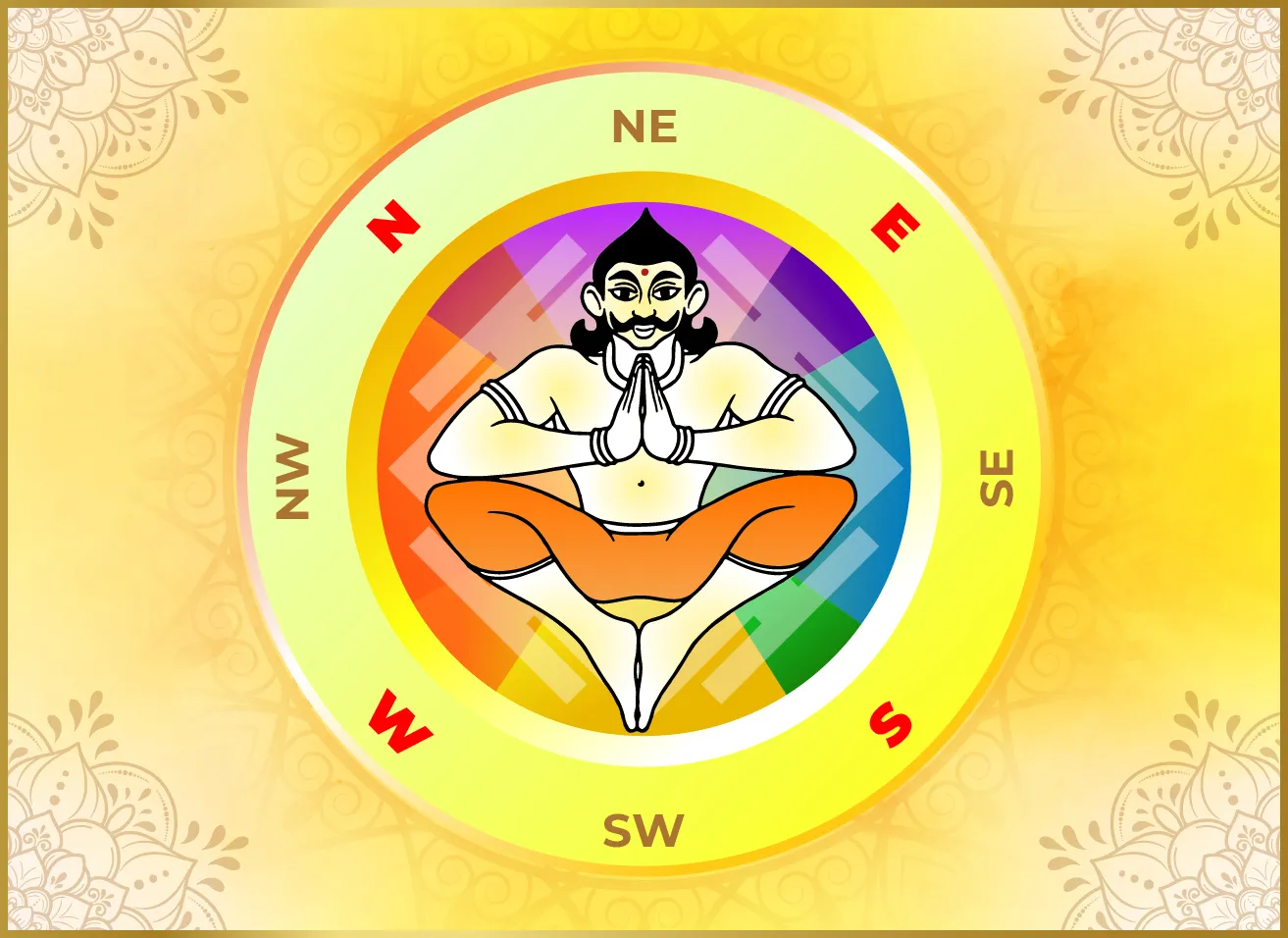
Rather than viewing it as a physical entity, it is more accurate to understand Vastu Purush as a symbolic embodiment of universal forces. It is depicted as a figure lying face down within a geometric grid, with different parts of its body corresponding to different directions and energies.
Each direction in Vastu is associated with specific qualities. The northeast is linked with spiritual growth and clarity, the southeast with fire and transformation, the southwest with stability, and the northwest with movement and change. These directional energies are mapped onto the body of Vastu Purush, turning architecture into a living diagram of cosmic balance.
At Nabatara Institute, students are trained to see beyond rigid rules and instead interpret these energy dynamics with sensitivity. This approach allows them to apply Vastu not just for structural alignment but for deeper life transformation.
The Mythological Origin of Vastu Purush
The story of Vastu Purush originates from ancient texts and carries symbolic depth that reveals more than it narrates. According to traditional accounts, there was once a powerful being born from the sweat of Lord Shiva during a moment of intense cosmic activity. This being grew uncontrollably, threatening to consume everything in existence.
To restore balance, the gods intervened. They pinned the being down, holding him in place by occupying different parts of his body. Each deity took a position corresponding to a direction, thus stabilizing the chaotic force. This subdued entity became known as Vastu Purush.
While this story may appear mythological on the surface, its deeper meaning is profoundly psychological and cosmological. It reflects the transformation of raw, uncontrolled energy into structured, harmonious order. The act of pinning down the Vastu Purush symbolizes the organization of chaos into a system that can support life.
In the teachings at Nabatara, this story is not treated as folklore but as encoded wisdom. It represents how human consciousness can align with universal forces by understanding and respecting spatial energy patterns.
The Vastu Purusha Mandala: A Cosmic Energy Grid
The Vastu Purusha Mandala is where this concept becomes visual, mathematical, and incredibly precise. It is essentially a grid, often divided into 64 or 81 squares, representing different energy zones. Each square is associated with a deity, a function, and a type of energy.
This grid is not arbitrary. It is a carefully designed representation of how cosmic energy flows through space. The central part of the Mandala, known as the Brahmasthan, is considered the most powerful zone. It represents pure consciousness and is ideally kept open, clean, and undisturbed.
Surrounding this center are various zones that correspond to specific aspects of life—health, wealth, relationships, knowledge, and more. When a structure is designed in alignment with this mandala, it becomes a conduit for balanced energy flow.
At Nabatara, students are taught to interpret the Mandala not as a rigid template but as a dynamic system. This allows them to apply its principles across different types of spaces, from modern apartments to traditional temples, ensuring that the essence of Vastu remains intact even in contemporary settings.
Why Vastu Purush Still Matters Today
In a world driven by speed, efficiency, and constant stimulation, the subtle influence of space often goes unnoticed. Yet, the rise in stress, imbalance, and dissatisfaction in modern living suggests that something fundamental is missing.
Vastu Purush offers a way to reconnect with that missing link. It reminds us that our environment is not neutral. It shapes our thoughts, emotions, and even our decisions in ways we may not consciously recognize.
When a space is aligned with the principles of the Vastu Purusha Mandala, it supports clarity, stability, and growth. When it is not, it can create resistance, confusion, and stagnation.
This is why institutions like Nabatara are becoming increasingly relevant. By offering structured education in Vastu and related sciences, they empower individuals to take control of their environments and, by extension, their lives.
The Subtle Science of Direction and Energy
One of the most fascinating aspects of Vastu Purush is how it integrates direction with energy. Each direction is not just a physical orientation but a carrier of specific vibrations.
The east, for instance, is associated with the rising sun and represents new beginnings, vitality, and clarity. The north is linked with prosperity and opportunities. The south, often misunderstood, represents discipline and transformation, while the west is connected with introspection and stability.
These directional energies are mapped onto the body of Vastu Purush, creating a system where every part of a building has a purpose and influence. A bedroom placed in the wrong zone, a kitchen misaligned with fire energy, or a blocked central space can disrupt the natural flow of energy.
At Nabatara, this knowledge is not taught as superstition but as an experiential science. Students learn to observe, analyze, and correct spaces in ways that produce tangible results.
Bridging Ancient Wisdom with Modern Living
One of the challenges in applying Vastu today is adapting ancient principles to modern architecture. Apartments, high-rise buildings, and compact urban spaces often do not allow for perfect alignment with traditional guidelines.
This is where deeper understanding becomes crucial. Instead of blindly following rules, one must understand the underlying principles. The goal is not perfection but balance.
Nabatara emphasizes this adaptive approach. By combining traditional knowledge with modern insights, it ensures that Vastu remains relevant and effective in today's world.
A Living Connection Between Space and Consciousness
Ultimately, the concept of Vastu Purush is about connection. It connects the individual with the environment, the physical with the spiritual, and the human with the cosmic.
It invites us to see our homes and workplaces not just as structures but as living systems that interact with us constantly. When this interaction is harmonious, life flows with ease. When it is not, challenges arise.
Understanding Vastu Purush is the first step toward mastering this interaction. It opens the door to a deeper awareness of how space influences life and how, with the right knowledge, that influence can be shaped for growth, success, and inner peace.
At Nabatara, this journey is guided with authenticity, depth, and a commitment to true transformation. The teachings go beyond theory, offering practical tools that can be applied in everyday life.
Decoding the Geometry of the Vastu Purusha Mandala
The Vastu Purusha Mandala is not merely a symbolic diagram—it is a carefully evolved energy matrix that reflects the interaction between cosmic forces and terrestrial life.
At first glance, the mandala appears as a simple square divided into smaller squares. But this simplicity is deceptive. Each division represents a field of energy, a domain governed by specific forces that influence human experience in subtle yet powerful ways. This grid is not random. It is rooted in deep observation, astronomical alignment, and spiritual insight developed over thousands of years.
At Nabatara, this mandala is not taught as a rigid drawing to memorize. It is approached as a living system—one that can be felt, interpreted, and applied with awareness. This distinction is what transforms a student from a learner into a practitioner.
The Structure of the Mandala: 64 and 81 Grid Systems
Traditionally, the Vastu Purusha Mandala is represented in two primary formats—the 64-square grid and the 81-square grid. While both serve similar purposes, their applications differ slightly based on the scale and complexity of the structure.
The 64-square mandala is often used for temple architecture and sacred constructions. It reflects a slightly more concentrated energy field, suitable for spaces where spiritual intensity is the primary focus. The 81-square Mandala, on the other hand, is more commonly applied in residential and commercial design. It offers a more detailed mapping of energy zones, allowing for finer adjustments and alignments.
Each square within these grids is assigned to a specific deity or energy principle. These are not merely religious symbols but representations of functional energies—forces that influence aspects like growth, protection, transformation, and stability.
Students at Nabatara are guided to understand these grids not as static layouts but as dynamic blueprints. They learn how to superimpose this mandala onto real-world spaces, adjusting for modern constraints while preserving energetic harmony.
The Central Power: Brahmasthan and Its Significance
At the very heart of the Vastu Purusha Mandala lies the Brahmasthan—the center of the grid. This is considered the most sacred and energetically potent area within any structure. It represents pure consciousness, balance, and the unmanifest source of all creation.
In traditional architecture, the Brahmasthan is kept open, free from heavy construction or obstruction. It is often designed as a courtyard or an open space that allows light and air to circulate freely. This openness is not just aesthetic; it serves a critical energetic function. It allows the building to "breathe," maintaining a balanced flow of energy throughout the structure.
In modern settings, especially in urban apartments, maintaining a completely open Brahmasthan may not always be possible. This is where the nuanced teachings of Nabatara become invaluable. Instead of rigidly insisting on traditional layouts, the focus shifts to preserving the essence of the center—keeping it light, uncluttered, and energetically active.
The importance of this central zone cannot be overstated. When the Brahmasthan is disturbed or blocked, it can lead to a sense of heaviness, confusion, or stagnation in life. When it is respected, it becomes a source of clarity, harmony, and inner alignment.
Directional Zones and Their Energetic Influence
Surrounding the Brahmasthan are the directional zones that form the body of the Vastu Purush. Each direction carries a distinct energy, and its placement within the Mandala determines how that energy interacts with the inhabitants of the space.
The northeast, often referred to as the zone of divine connection, is associated with clarity, wisdom, and spiritual growth. It is considered the most subtle and sensitive area of the Mandala. When this zone is open, clean, and activated, it enhances intuition, learning, and mental peace.
The southeast represents the fire element. It governs transformation, digestion, and energy flow. This is why kitchens are traditionally placed in this direction. When aligned properly, it supports health, vitality, and efficient functioning.
The southwest is the zone of stability and grounding. It is associated with strength, security, and long-term growth. Bedrooms or areas of rest are often placed here to create a sense of safety and permanence.
The northwest governs movement, change, and communication. It is linked with air energy and is ideal for spaces that require interaction, such as guest rooms or meeting areas.
These directional zones are not isolated. They interact continuously, creating a complex web of energy flow within the structure. Understanding this interplay is essential for applying Vastu effectively.
At Nabatara, students are trained to read these energy patterns intuitively. They learn to identify imbalances and correct them through thoughtful design, placement, and subtle adjustments.
The Role of Deities: Symbolism Behind the Grid
One of the most intriguing aspects of the Vastu Purusha Mandala is the presence of deities assigned to each square. For many, this can appear purely religious. However, in the context of Vastu, these deities represent specific qualities and functions rather than literal divine beings.
For instance, the presence of Agni in the southeast symbolizes the transformative power of fire. Varuna in the west represents depth, introspection, and fluidity. Kubera in the north is associated with wealth and abundance. Ishana in the northeast signifies spiritual awareness and higher consciousness.
These symbolic associations provide a deeper layer of understanding. They allow practitioners to interpret spaces not just physically but energetically. A disturbance in a particular zone is not just a structural issue; it is an imbalance in the corresponding life aspect.
Nabatara's approach emphasizes this symbolic literacy. Students are encouraged to see beyond labels and connect with the underlying energies these deities represent. This makes their application of Vastu both meaningful and effective.
Energy Flow and Human Experience
The true power of the Vastu Purusha Mandala lies in its ability to influence human experience. Every space we occupy interacts with us constantly, shaping our thoughts, emotions, and actions in subtle ways.
When energy flows smoothly through the mandala, it creates a sense of ease and alignment. Decisions become clearer, relationships more harmonious, and efforts more fruitful. On the other hand, when there are blockages or imbalances, it can lead to confusion, तनाव, and repeated obstacles.
This is not a matter of belief but of observation. Over time, practitioners have noted consistent patterns linking spatial arrangements with life outcomes. These observations form the basis of Vastu as a practical science.
At Nabatara, this connection between space and life is explored in depth. Students are taught to analyze not just the structure but the lived experience within it. This holistic approach ensures that Vastu is applied in a way that truly enhances life.
Adapting the Mandala in Contemporary Spaces
Modern living presents unique challenges. Space constraints, architectural limitations, and lifestyle changes often make it difficult to follow traditional Vastu guidelines in their original form.
However, the essence of the Vastu Purusha Mandala is not about rigid compliance. It is about balance. Even small adjustments—like repositioning furniture, altering usage of spaces, or introducing specific elements—can significantly improve energy flow.
For example, if the northeast is blocked, introducing light, mirrors, or water elements can help activate it. If the southwest lacks stability, using heavier materials or earthy tones can restore balance.
These adaptations require understanding, not guesswork. This is where structured education becomes crucial. Nabatara equips students with the knowledge and tools to make these adjustments with confidence and precision.
The Mandala as a Blueprint for Life
Beyond architecture, the Vastu Purusha Mandala can also be seen as a blueprint for life itself. Each zone corresponds to an aspect of human existence: health, wealth, relationships, knowledge, and spiritual growth.
When these zones are balanced within a space, they tend to reflect in the life of the individual. This mirroring effect is one of the most profound aspects of Vastu. It suggests that by aligning our external environment, we can influence our internal state.
This idea resonates deeply with the teachings at Nabatara, where the focus is not just on external correction but on inner transformation. The mandala becomes a tool for self-awareness, helping individuals understand where they are imbalanced and how they can restore harmony.
From Diagram to Living Experience
It is easy to view the Vastu Purusha Mandala as a diagram on paper. But its true power lies in its application. When translated into real spaces, it becomes a living experience—one that can be felt in the atmosphere, the flow of movement, and the quality of life it supports.
This transition from theory to practice is where many learners struggle. It requires not just knowledge but sensitivity and intuition. This is why guidance from experienced practitioners becomes essential.
At Nabatara, this journey is carefully nurtured. Students are encouraged to observe, experiment, and refine their understanding through real-world application. This hands-on approach ensures that the mandala is not just understood but lived.
When Architecture Was Aligned With the Cosmos
There was a time when buildings were not designed merely for shelter or utility. They were conceived as extensions of the cosmos itself. Every wall, every entrance, every open space carried intention. Ancient Indian architecture did not begin with bricks—it began with alignment. Alignment with the sun, the earth, the directions, and the unseen forces that govern existence.
The Vastu Purusha Mandala was the silent blueprint behind this alignment. It guided not just homes but entire cities, temples, and sacred spaces. These structures were not only aesthetically magnificent but also energetically alive. Even today, when one steps into an ancient temple or a traditionally built space, there is a distinct shift in perception. The mind quiets down, the breath slows, and a sense of presence emerges.
At Nabatara, this connection between architecture and consciousness is deeply emphasized. Students are not only taught the principles but also introduced to the experiential side of Vastu—"how aligned spaces can transform the way one feels, thinks, and lives.
Temples as Living Mandalas
Perhaps the most refined expression of the Vastu Purusha Mandala can be seen in ancient temple architecture. Temples were not just places of worship; they were carefully constructed energy centers designed to elevate human consciousness.
The layout of a traditional temple mirrors the mandala almost perfectly. The sanctum sanctorum, where the main deity resides, is positioned at the Brahmasthan or slightly aligned with it. This is the most powerful zone, representing pure consciousness. As one moves outward from this center, the energy gradually becomes more dynamic, accommodating movement, interaction, and external activity.
The journey through a temple is not accidental. It is designed to guide the individual from the outer world into the inner core, both physically and psychologically. The narrowing pathways, the dimming light, and the gradual quietness—all of it is aligned with the principles of the Mandala.
This is where Vastu transcends architecture and becomes a spiritual experience.
At Nabatara, such examples are studied not just for their structural brilliance but for the deeper wisdom they hold. Students learn how ancient architects used the mandala to create spaces that naturally induce meditation, focus, and inner stillness.
Cities Built on Sacred Geometry
It is not just temples that followed the Vastu Purusha Mandala. Entire cities in ancient India were planned using these principles. The layout of streets, the positioning of gates, and the distribution of residential and commercial areas were all aligned with directional energies and cosmic patterns.
Cities like Jaipur are often cited as examples of Vastu-based planning. The city's grid layout, its division into sectors, and its alignment with cardinal directions reflect a deep understanding of spatial harmony.
This approach ensured that energy flowed smoothly not just within individual buildings but across the entire city. It created an environment where life could thrive in a balanced and harmonious way.
In today's context, where urban planning often prioritizes efficiency over well-being, revisiting these principles becomes increasingly important. The rising stress levels and chaotic environments in modern cities are, in many ways, a reflection of this disconnect.
Nabatara addresses this gap by teaching Vastu not just as a personal tool but as a broader system that can influence communities and societies. The knowledge gained here is not limited to homes—it has the potential to reshape entire environments.
Alignment With Solar and Planetary Forces
One of the most fascinating aspects of Vastu Shastra is its connection with celestial movements. The orientation of structures is not arbitrary; it is deeply linked with the path of the sun, the phases of the moon, and the influence of planetary energies.
The east-facing direction, for instance, is considered highly auspicious because it aligns with the rising sun. This alignment allows the space to receive the first rays of sunlight, which are believed to carry vital energy. Similarly, the positioning of windows, doors, and open spaces is often determined by how light and air move through the structure.
But the connection goes deeper than sunlight. The Vastu Purusha Mandala itself can be seen as a terrestrial reflection of cosmic order. Just as planets move in precise orbits, the energy within a space is expected to flow in a balanced and rhythmic manner.
This is where Vastu intersects with astrology—a domain that Nabatara specializes in with remarkable depth. The placement of a building, its orientation, and its internal arrangement can either support or conflict with an individual's astrological chart.
For example, a person experiencing challenges related to a particular planet may find relief in a space that is aligned to balance that planetary energy. This integration of Vastu and astrology is a powerful tool for transformation.
At Nabatara, students are trained to understand this synergy. They learn how to read both the chart and the space, creating solutions that address not just external conditions but internal patterns as well.
The Science of Proportion and Balance
Ancient architecture was not only about direction—it was also about proportion. The dimensions of rooms, the height of ceilings, and the ratio between open and closed spaces—all followed specific guidelines rooted in the Mandala.
These proportions were not chosen for aesthetic reasons alone. They were designed to maintain energetic balance. A space that is too cramped can restrict energy flow, while one that is too vast can dissipate it. The goal was always to create a sense of harmony, where energy could circulate freely without becoming stagnant or scattered.
This attention to proportion is something that is often overlooked in modern construction. Buildings are designed based on convenience, cost, and visual appeal, with little consideration for how they feel energetically.
Nabatara brings this lost knowledge back into focus. Through detailed training, students learn how to assess and correct proportions, ensuring that spaces are not just functional but also energetically supportive.
Materials and Their Energetic Impact
Another crucial aspect of ancient architecture was the choice of materials. Natural materials like stone, wood, clay, and metals were used not just for their durability but for their energetic properties.
Each material interacts with energy in a unique way. Wood, for instance, carries warmth and quality, making it suitable for living spaces. Stone provides stability and grounding, while metals can amplify or direct energy depending on their type and placement.
In contrast, modern materials like synthetic composites and certain types of concrete can sometimes create energetic imbalances if not used thoughtfully.
Understanding these nuances is essential for applying Vastu effectively in today's world. It is not about rejecting modern materials but about using them with awareness.
At Nabatara, this aspect is explored in detail, allowing students to make informed choices that enhance the overall energy of a space.
The Human Body and the Cosmic Blueprint
One of the most profound insights of the Vastu Purusha Mandala is its resemblance to the human body. Just as the mandala maps energy zones within a structure, the human body has its own energy centers, often referred to as chakras.
This parallel is not coincidental. It reflects a deeper truth—that the same cosmic principles operate at both the macro and micro levels. The alignment of a space can influence the alignment of the individual within it.
For instance, a balanced northeast zone can enhance clarity and intuition, much like an activated third eye chakra. A stable southwest can provide grounding, similar to a strong root chakra.
This connection between space and self is a central theme in the teachings of Nabatara. It reinforces the idea that external harmony and internal balance are deeply interconnected.
Why Ancient Structures Still Feel Powerful
Even after centuries, many ancient temples and structures continue to radiate a sense of power and presence. This is not just due to their historical significance but because they were built in alignment with enduring principles.
The Vastu Purusha Mandala ensures that energy within these structures remains balanced and active. Unlike modern buildings that may deteriorate energetically over time, these ancient spaces continue to support and uplift those who enter them.
This longevity is a testament to the effectiveness of Vastu as a science. It is not dependent on trends or technology. It is rooted in universal laws that remain constant.
Nabatara carries forward this legacy by preserving these principles and making them accessible to a modern audience. The goal is not just to admire ancient wisdom but to apply it in meaningful ways today.
Bringing Cosmic Alignment Into Modern Life
The question that naturally arises is how these ancient principles can be applied in contemporary living. The answer lies in understanding the essence rather than imitating the form.
It is not necessary to build a temple-like structure to benefit from the Mandala. Even small changes—like aligning your workspace with the right direction, maintaining an open center, or balancing elements within a room—can create noticeable shifts.
The key is awareness. Once you begin to see space as an active participant in your life, your approach to it changes. You become more intentional, more observant, and more aligned.
This is exactly what Nabatara aims to cultivate. Through its courses and teachings, it empowers individuals to take control of their environments and use them as tools for growth and transformation.
Bringing Vastu Purush Into Your Everyday Space
Understanding the Vastu Purusha Mandala at a philosophical or architectural level is one thing, but its real value unfolds when it begins to influence everyday living. The true strength of Vastu Shastra lies in its practicality. It is not reserved for temples or grand constructions; it is meant to shape the spaces where people live, work, think, and grow.
In today's world, where most people live in apartments, work in compact offices, and navigate fast-paced routines, the idea of aligning space with cosmic energy may seem distant. But the truth is quite the opposite. The more chaotic life becomes, the more important it is to create environments that restore balance.
At Nabatara, this transition—"from knowledge to application"—is where real transformation begins. The teachings are designed to help individuals not only understand Vastu Purush but also bring its principles into their immediate surroundings in a way that feels natural and effective.
The Home as a Reflection of Inner State
A home is more than a physical structure. It is a reflection of the people living within it. The arrangement of spaces, the flow of movement, and the placement of objects—all of it subtly mirrors the mental and emotional state of its occupants.
When the Vastu Purusha Mandala is respected within a home, it creates a sense of order that goes beyond cleanliness or design. There is a rhythm to the space. Movement feels effortless. Rest feels deeper. Even communication within the household tends to become more harmonious.
On the other hand, when key zones are disturbed, the imbalance often shows up in daily life. A blocked northeast may lead to confusion or lack of direction. A disturbed southwest can create instability in relationships or finances. These are not coincidences but patterns observed over generations.
At Nabatara, students are trained to read these patterns. They learn to see the home not just as a layout but as an energetic map that reveals what is happening in the lives of its occupants.
The Kitchen, Bedroom, and Entrance: Three Powerful Zones
While every part of the Vastu Purusha Mandala has its importance, certain areas within a home carry a more immediate impact. The kitchen, the bedroom, and the main entrance are among the most influential.
The kitchen, associated with the fire element, governs not just physical nourishment but also energy levels and vitality. When placed in alignment with the southeast direction, it supports digestion, health, and overall strength. However, when this zone is misaligned, it can lead to issues ranging from fatigue to frequent disagreements within the family.
The bedroom, particularly the master bedroom, ideally belongs in the southwest zone. This area provides grounding and stability, making it suitable for rest and long-term relationships. When this balance is disturbed, it can affect sleep quality, emotional security, and even decision-making.
The main entrance acts as the gateway through which energy enters the home. Its direction, placement, and condition play a crucial role in determining the overall energy flow. A well-aligned entrance invites opportunities and positivity, while a poorly positioned one can create resistance and stagnation.
These are not abstract ideas but practical observations that form the core of Vastu application. At Nabatara, these concepts are taught with clarity, allowing students to identify and correct such issues in real-life scenarios.
Workspaces and the Flow of Productivity
Just as homes are influenced by Vastu Purush, so are workplaces. In fact, the impact here can be even more immediate, as productivity, decision-making, and financial outcomes are directly linked to the environment.
A workspace aligned with the principles of the Vastu Purusha Mandala tends to support focus, clarity, and efficient communication. The placement of desks, the direction one faces while working, and the positioning of important elements like safes or meeting areas can all influence outcomes.
For instance, sitting in a way that allows you to face east or north is often associated with better concentration and opportunities. The placement of financial documents or cash-related areas in the north can support financial growth.
In contrast, working in a space where energy flow is blocked or directions are misaligned can lead to delays, confusion, and unnecessary stress.
Nabatara's training programs place significant emphasis on such applications. Students are equipped with the ability to analyze both residential and commercial spaces, making their knowledge versatile and highly valuable.
Common Vastu Mistakes People Make
One of the biggest challenges in Vastu today is the abundance of half-knowledge. With information widely available online, many people attempt to apply Vastu principles without fully understanding them. This often leads to confusion and, in some cases, unintended consequences.
A common mistake is focusing only on objects rather than energy flow. Simply placing a symbol or item in a particular direction does not guarantee results if the overall balance of the space is disturbed.
Another frequent issue is overcorrection. In an attempt to fix one area, people sometimes create imbalance in another. Vastu is not about isolated changes; it is about maintaining harmony across the entire mandala.
There is also a tendency to treat Vastu as a superstition or fear-based practice. This approach not only limits its effectiveness but also disconnects it from its true essence as a science of balance and alignment.
At Nabatara, these misconceptions are addressed in detail. Students are guided to move beyond surface-level fixes and develop a deeper understanding of how energy behaves within a space.
Subtle Corrections That Create Powerful Shifts
One of the most encouraging aspects of Vastu is that even small changes can create noticeable shifts. It is not always necessary to reconstruct or redesign an entire space. Often, subtle corrections are enough to restore balance.
Rearranging furniture to allow smoother movement, introducing natural light in a blocked area, or adjusting the usage of a particular room can significantly improve energy flow. Even the choice of colors, textures, and materials can influence how a space feels and functions.
For example, introducing lighter elements in the northeast can enhance clarity, while adding weight and solidity in the southwest can create stability. These adjustments may seem simple, but their impact can be profound when applied with understanding.
This is where structured learning becomes essential. Nabatara ensures that students are not relying on guesswork but are making informed decisions based on well-established principles.
The Emotional and Psychological Impact of Space
While the physical and practical aspects of Vastu are easier to observe, its emotional and psychological effects are equally important. The way a space feels can influence mood, behavior, and even long-term mental patterns.
A balanced space tends to create a sense of calm and सà¥à¤°à¤•à¥à¤·à¤¾. It supports clear thinking and emotional stability. On the other hand, an imbalanced environment can lead to restlessness, irritability, and a constant feeling of discomfort.
These effects are often subtle and gradual, making them difficult to trace back to their source. However, once the space is corrected, the change becomes noticeable.
At Nabatara, this connection between space and mind is explored in depth. The goal is not just to create functional environments but to support overall well-being.
Vastu as a Tool for Life Transformation
When understood deeply, Vastu Purush is not just about buildings—it is about life itself. The mandala becomes a mirror through which one can understand patterns, challenges, and opportunities.
By aligning space, one begins to align life. This does not mean that Vastu replaces effort or decision-making, but it creates a supportive environment where efforts are more likely to succeed.
This perspective is central to the teachings at Nabatara. The focus is always on empowerment—giving individuals the knowledge and tools to create harmony in their surroundings and, by extension, in their lives.
Learning Vastu the Right Way
With the growing interest in Vastu, the need for authentic and structured education has become more important than ever. Learning from scattered sources can only take one so far. To truly understand and apply Vastu Purusha Mandala, guided learning is essential.
Nabatara stands out in this space by offering comprehensive courses that combine traditional knowledge with modern application. The teachings are rooted in authenticity, yet adapted for contemporary living.
Students are not just taught what to do but why it works. This clarity allows them to apply the principles with confidence and adapt them to different situations.
For those who wish to go deeper—whether for personal growth or professional practice—Nabatara provides a pathway that is both grounded and expansive.
From Awareness to Mastery
The journey with Vastu begins with awareness. It starts with noticing how space affects you, how certain areas feel different, and how small changes can shift your experience.
From there, it moves into understanding "the ability to interpret these patterns and connect them with the principles of the Vastu Purusha Mandala." And finally, it leads to mastery, where one can consciously design and influence spaces to support desired outcomes.
This journey is not rushed. It unfolds gradually, with each insight building upon the previous one.
At Nabatara, this process is carefully guided, ensuring that students not only learn but also evolve through the knowledge.
The Deeper Symbolism of Vastu Purush
As we reach the final layer of understanding, the concept of Vastu Purush begins to reveal itself in a more subtle and profound way. What initially appears as a structural or architectural principle slowly unfolds into something far more intimate—it becomes a reflection of human consciousness itself.
The image of Vastu Purush lying across the Mandala is not just a depiction of energy within space. It is also a representation of how life itself is structured. The head placed in the northeast, the feet extending toward the southwest, and the body spread across the directions is symbolic of awareness moving through different dimensions of existence.
The northeast, where the head rests, is associated with clarity, wisdom, and spiritual awakening. This is not accidental. It represents the direction of higher consciousness, where thought becomes still and perception becomes deeper. The southwest, where the weight of the body rests, signifies grounding, stability, and material reality.
Between these two extremes lies the entire journey of life—movement, transformation, interaction, and growth.
This is why Vastu is never limited to walls and rooms. It is a map of existence. It shows how energy moves, how it stabilizes, and how it influences every aspect of living.
At Nabatara, this symbolic depth is not overlooked. It is explored with care, allowing students to connect Vastu not just with buildings but with their own inner journey.
The Mandala as a Bridge Between Inner and Outer Worlds
One of the most powerful insights that emerges from the study of the Vastu Purusha Mandala is the realization that there is no separation between the inner and outer worlds. The space you live in and the state you live in are deeply connected.
When the external environment is aligned, the internal state naturally follows. There is less resistance, less confusion, and a greater sense of direction. On the other hand, when the space is chaotic or imbalanced, it often reflects as mental clutter, emotional instability, or a lack of clarity.
This mirroring effect is not a coincidence. It is the very foundation of Vastu.
The Mandala acts as a bridge. It translates cosmic order into physical form, and through that form, it influences human experience. It is a silent guide, constantly shaping the way energy moves within and around us.
At Nabatara, this understanding becomes a turning point for many students. What begins as curiosity about Vastu gradually transforms into a deeper awareness of life itself.
Aligning With Universal Intelligence
Modern life often pulls attention outward—toward goals, achievements, and constant activity. In this process, the connection with natural rhythms and universal intelligence tends to weaken.
Vastu Purush brings that connection back into focus. It reminds us that we are not separate from the environment we inhabit. We are part of a larger system, one that operates with precision and balance.
When a space is aligned with the Vastu Purusha Mandala, it supports this connection. It creates an environment where actions feel more natural, decisions more intuitive, and outcomes more aligned.
This does not mean that challenges disappear. But it does mean that the path becomes clearer. There is a sense of flow, a reduction in unnecessary struggle.
At Nabatara, this alignment is not presented as a mystical idea but as a practical reality. Through structured learning, individuals are guided to create spaces that support their growth, both materially and spiritually.
Why Vastu Knowledge Is Becoming Essential Today
In earlier times, Vastu was an integral part of life. It was naturally incorporated into architecture and planning. Today, however, much of this knowledge has been fragmented or diluted.
At the same time, the need for balance has never been greater. Fast-paced lifestyles, increasing stress, and disconnection from natural rhythms have created a demand for systems that restore harmony.
This is why Vastu is gaining renewed attention—not as a trend, but as a necessity.
People are beginning to realize that success is not just about effort. It is also about the environment. The space you live and work in can either support your journey or create invisible resistance.
This realization often becomes the starting point for deeper exploration.
Nabatara has positioned itself at the forefront of this movement by offering authentic, well-structured education in Vastu and related sciences. The focus is not on superficial fixes but on building a strong foundation of understanding.
Learning Vastu at Nabatara: A Transformational Journey
What sets Nabatara apart is not just the depth of knowledge but the way it is shared. The teachings are rooted in tradition, yet presented in a way that is relevant to modern life.
Under the guidance of Gaurav Tribedi, students are introduced to Vastu as a living science. His decades of experience in astrology, tantra shastra, and spiritual disciplines bring a unique perspective that goes beyond textbook knowledge.
The integration of Vastu with astrology, numerology, and spiritual practices creates a holistic learning experience. Students are not just learning how to arrange spaces; they are learning how to understand life patterns, energy dynamics, and personal alignment.
This makes the journey deeply transformative.
For those who wish to pursue Vastu professionally, Nabatara provides the tools and clarity needed to build a meaningful career. For those seeking personal growth, it offers insights that can reshape everyday living.
From Curiosity to Clarity
Many people begin their journey with simple questions. Why does a particular space feel uncomfortable? Why do certain efforts not yield results despite hard work? Why does one environment feel supportive while another feels draining?
Vastu Purush provides a framework to explore these questions. It shifts the perspective from randomness to pattern, from confusion to clarity.
As understanding deepens, these questions begin to find answers. Patterns become visible. Solutions become practical.
This shift—from not knowing to understanding—is where real change begins.
At Nabatara, this transition is supported with structured guidance, ensuring that students do not feel overwhelmed but instead move steadily toward clarity.
The Future of Vastu and Conscious Living
As awareness grows, the role of Vastu is likely to expand beyond individual homes and workplaces. It has the potential to influence how communities are designed, how cities are planned, and how spaces are experienced on a larger scale.
The principles of the Vastu Purusha Mandala offer a blueprint for balanced living—one that integrates functionality with well-being, structure with flow, and material success with inner peace.
This is not about returning to the past but about bringing timeless wisdom into the present.
Nabatara is playing a significant role in this evolution by making authentic knowledge accessible to a global audience. Through its courses and teachings, it is helping individuals reconnect with principles that have guided human life for centuries.
A Space That Supports Your Purpose
Ultimately, the goal of understanding Vastu Purush is not perfection. It is alignment.
It is about creating a space that supports who you are and where you are going. A space that reduces resistance and enhances possibility. A space that feels right—not just visually, but energetically.
When this alignment is achieved, life begins to move differently. Efforts feel more effective. Decisions feel clearer. Growth feels natural.
This is the quiet power of Vastu.
And this is what Nabatara aims to bring into people's lives—not just knowledge, but transformation.
Conclusion: The Silent Force That Shapes Everything
Vastu Purush may not be visible, but its influence is constant. It exists in every structure, every room, every space we occupy. Understanding it is like learning a language—a language through which space communicates with life.
The Vastu Purusha Mandala is its script. It shows how energy moves, where it gathers, and how it can be balanced.
When this script is understood and respected, space becomes an ally. It begins to support rather than resist. It aligns rather than confuses.
In a world that often feels unpredictable, this alignment offers something invaluable—a sense of stability, clarity, and direction.
For those who are ready to explore this deeper dimension of life, Nabatara provides not just information but a path. A path that begins with space but ultimately leads inward.
And perhaps that is the true meaning of Vastu Purusha—not just the energy within a structure, but the awakening within oneself.
Why You Can Trust This Knowledge on Vastu Purush
In a space where ancient wisdom is often diluted, misinterpreted, or reduced to surface-level tips, the importance of authentic knowledge becomes undeniable. Vastu Shastra is not merely a set of directions or quick fixes—it is a deeply rooted science that demands proper understanding, lineage-based learning, and real-world application.
This article is crafted with insights drawn from the teachings and methodologies followed at Nabatara Foundation, a registered not-for-profit organization under the Government of India, dedicated to preserving and sharing authentic Vedic sciences with a global audience. The knowledge presented here is not compiled from fragmented sources but is aligned with traditional principles that have been studied, practiced, and refined over generations.
At the core of Nabatara's teachings is the guidance of Gaurav Tribedi, whose journey in astrology, tantra shastra, and spiritual disciplines spans over two decades. His approach is not limited to theoretical understanding. It is grounded in lived experience, deep spiritual practice, and a commitment to helping individuals achieve real transformation through structured learning.
What makes this perspective different is the integration. Vastu is not treated in isolation. It is understood in connection with astrology, energy dynamics, and human consciousness. This holistic view ensures that the application of the Vastu Purusha Mandala is not mechanical but meaningful, not rigid but adaptive to modern living.
Thousands of learners, seekers, and practitioners have engaged with Nabatara's teachings to bring clarity into their spaces and lives. The focus has always remained on empowering individuals with knowledge that works—not just conceptually, but practically.
In a time where information is abundant but depth is rare, this commitment to authenticity, structured education, and real-life impact is what sets Nabatara apart as a trusted source for learning Vastu and other ancient sciences.