Understanding the Spiritual Significance of Lord Shiva in a Home
In the spiritual fabric of India, Lord Shiva is not merely a deity; he is consciousness itself, the silent observer, the destroyer of illusion, and the ultimate source of transformation. Bringing Shiva into one's home, whether through a murti, a Shivling, or even a symbolic representation, is often seen as an invitation to higher awareness. Yet, what many people fail to understand is that Shiva is not a "decorative presence." His energy is profound, intense, and deeply transformative. It does not simply bless—it changes.
This is where the question begins to take shape. When someone considers placing a white Shiva idol at home, they are not just making a design choice. They are making a spiritual decision. And every spiritual decision carries consequences, both visible and subtle.
At Nabatara Institute, where ancient wisdom is not just taught but experienced, one principle is repeatedly emphasized: not every divine energy suits every environment. The home, unlike a temple, is a space of mixed vibrations. It holds emotions, stress, desires, ambitions, and sometimes unresolved conflicts. When Shiva's energy enters such a space, it interacts with all of these layers.
This is why understanding the nature of Shiva becomes essential before deciding whether a white Shiva idol is appropriate for your home.
Why White Shiva Idols Are So Popular Today
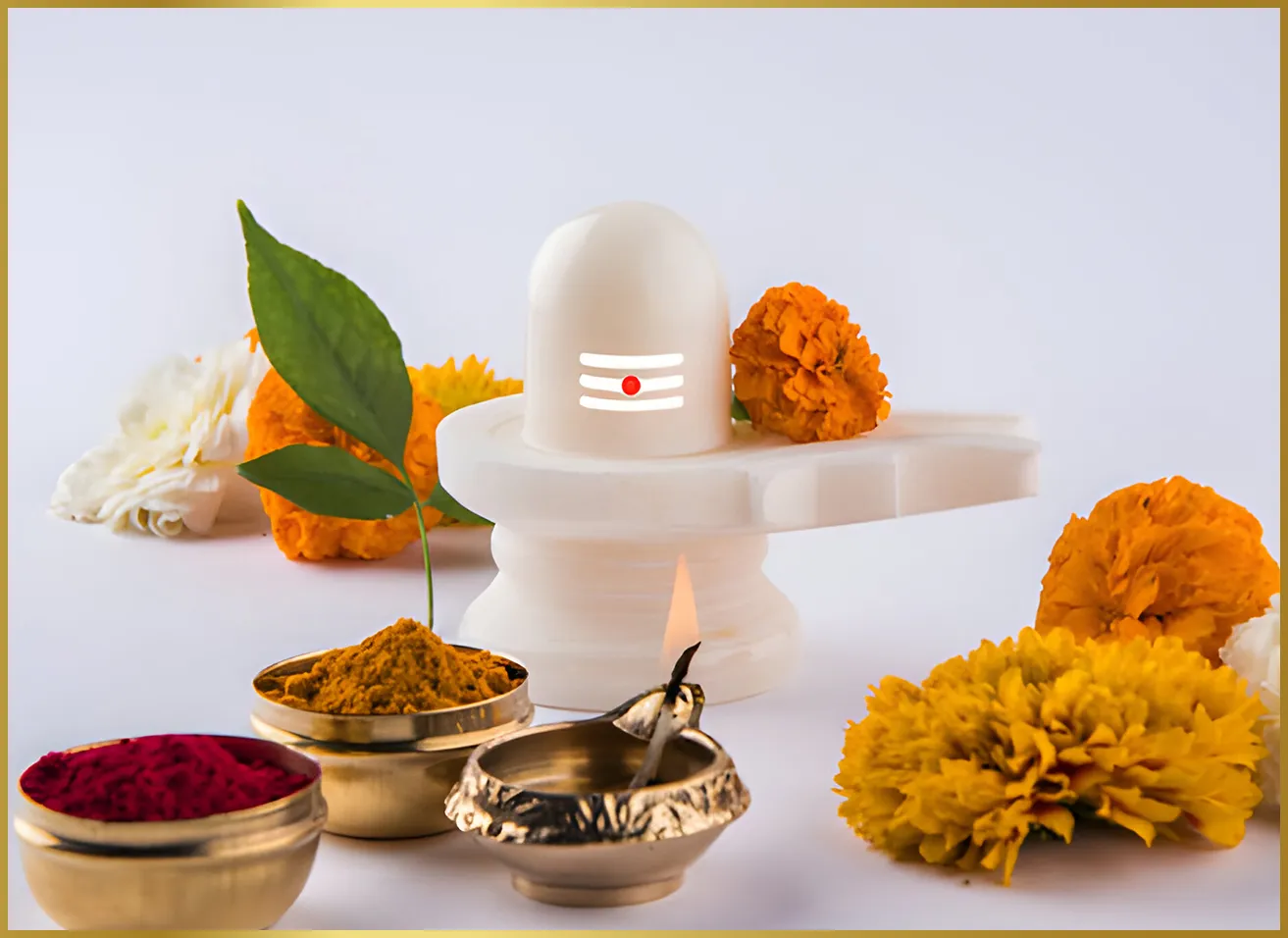
In modern homes, especially across urban India, white marble idols of Lord Shiva have become increasingly popular. Their aesthetic appeal is undeniable. The calm expression, the serene posture, and the purity associated with the color white create a sense of peace that instantly transforms the atmosphere of a room.
But this growing popularity is not purely spiritual. It is also influenced by trends. Interior design preferences, social media visuals, and online marketplaces have made white Shiva idols more accessible than ever before. Many people bring them home without fully understanding the deeper implications.
White, in spiritual symbolism, represents purity, sattva, peace, and detachment. A white Shiva idol, therefore, amplifies these qualities. But here lies the subtle truth—"purity is not always comfortable. Detachment is not always easy. When these energies intensify in a household that is not prepared for them, they can create imbalance instead of harmony.
At Nabatara, students are often guided to look beyond the surface. A spiritual object is not just about what it looks like. It is about what it does to your energy field, your mind, and your life patterns.
The Core Question: Good or Bad?
The question "Is it good or bad to keep a white Shiva idol at home?" does not have a simple yes or no answer. And that is exactly where most online content fails. It gives oversimplified answers to deeply complex spiritual questions.
The truth is more nuanced.
A white Shiva idol can be extremely auspicious if placed correctly, worshipped properly, and aligned with the spiritual readiness of the household. At the same time, it can also create subtle disturbances if these factors are ignored.
This dual nature is not because Shiva is unpredictable. It is because Shiva represents truth. And truth has a way of revealing what is hidden.
In many cases observed by practitioners and spiritual guides at Nabatara Institute, individuals who brought Shiva idols home without proper understanding experienced unexpected shifts. Some reported increased introspection, others faced emotional turbulence, and some felt a sudden urge to withdraw from worldly distractions. These are not negative effects in themselves, but they can feel unsettling if one is not prepared.
Vastu Shastra and the Energy of Deities
To truly understand whether a white Shiva idol is suitable for your home, we must bring Vastu Shastra into the conversation. Vastu is not just about directions and placements. It is about energy alignment.
Every deity carries a specific frequency. Vastu helps determine whether your space can hold that frequency comfortably.
Lord Shiva's energy is often associated with transformation, dissolution, and transcendence. Unlike deities associated with wealth or prosperity, Shiva's presence is not about material growth. It is about inner evolution.
This is why traditional Vastu guidelines often advise caution when placing Shiva idols or Shivlings in a home. The concern is not that it is "bad," but that it is powerful.
A white Shiva idol, due to its color and material, further enhances the sattvic quality. While this can bring peace and clarity, it can also reduce attachment to worldly pursuits. For a family deeply engaged in material responsibilities, this shift can sometimes feel conflicting.
At Nabatara, the approach is always balanced. The aim is not to discourage devotion but to align it with wisdom. When devotion is guided by knowledge, it becomes a path of growth rather than confusion.
The Difference Between Temple Energy and Home Energy
One of the most overlooked aspects of this topic is the difference between temple energy and home energy. Temples are designed to hold intense spiritual vibrations. They are built following precise Vastu principles, energized through rituals, and maintained with disciplined practices.
Homes, on the other hand, are dynamic spaces. They carry a mix of energies that change daily. Joy, stress, arguments, celebrations, and routines all coexist within the same environment.
When a powerful deity like Shiva is introduced into such a space, the interaction can be unpredictable if not managed properly.
This is why, traditionally, many spiritual lineages advised that Shiva is best worshipped in temples or dedicated spaces rather than casually placed in living areas.
However, this does not mean that you cannot keep a white Shiva idol at home. It simply means that you must do so with awareness.
The Hidden Psychological Impact
Beyond Vastu and spiritual beliefs, there is also a psychological dimension to consider. Objects of worship influence the mind in subtle ways. A white Shiva idol, with its calm and detached expression, can subconsciously encourage introspection.
For someone seeking inner peace, this is a blessing. For someone struggling with emotional balance, it can sometimes amplify inner conflicts.
At Nabatara Institute, where the connection between mind and spirituality is deeply studied, this aspect is given significant importance. Spiritual tools are not one-size-fits-all. They must be chosen based on the individual's mental and emotional state.
This is why guidance matters.
How Nabatara Bridges Ancient Wisdom with Modern Life
In today's fast-paced world, people are searching for quick answers. But spirituality does not work on shortcuts. It requires understanding, patience, and proper guidance.
Nabatara stands as a bridge between ancient Vedic knowledge and modern-day living. Instead of blindly following trends, it encourages individuals to ask deeper questions. Why are you bringing this idol home? What do you seek from it? Are you ready for the changes it may bring?
These are not questions meant to discourage devotion. They are meant to refine it.
When you approach spirituality with clarity, every practice becomes meaningful. Whether it is placing a white Shiva idol, learning astrology, or practicing meditation, the outcome depends on your awareness.
White Shiva Idol at Home: Vastu Rules, Placement & Common Mistakes You Must Avoid
The Direction Matters More Than the Idol Itself
When people search for whether keeping a white Shiva idol at home is good or bad, what they are really asking—without realizing it—is whether their home can hold that energy in the right direction. In Vastu Shastra, direction is not just geography; it is energy flow. Every direction carries a different vibration, and when a deity is placed incorrectly, the energy does not settle—it disturbs.
The most recommended direction for placing a Shiva idol is the northeast corner, also known as the Ishaan Kona. This direction is considered the seat of divine energy, a space where spiritual vibrations naturally flow with ease. When a white Shiva idol is placed here, the energy aligns harmoniously, allowing the presence of Shiva to bring clarity, peace, and subtle transformation without creating imbalance.
At Nabatara, students are often taught that the northeast is not just a direction—it is a gateway. When activated correctly, it becomes a channel for higher consciousness. But when misused, it can block spiritual growth instead of enhancing it.
Many households unknowingly place idols in the living room, bedrooms, or even decorative shelves without considering direction. This is where the problem begins. The idol itself is not harmful, but its placement disrupts the intended energy flow.
Can You Keep a White Shiva Idol in the Bedroom?
This is one of the most searched yet most misunderstood questions. The answer requires clarity, not fear.
Keeping a white Shiva idol in the bedroom is generally not recommended. The bedroom is a space of rest, intimacy, and personal emotions. Shiva's energy, on the other hand, is deeply spiritual and transformative. When these two energies mix, it can create subtle discomfort.
Some people report disturbed sleep, increased overthinking, or a strange sense of restlessness. These are not punishments or negative effects; they are simply signs of energy mismatch.
At Nabatara Institute, this concept is explained in a very grounded way. Every space in your home has a purpose. When spiritual intensity enters a space meant for relaxation, it can shift the natural rhythm of that environment.
If someone already has a Shiva idol in their bedroom, there is no need to panic. The solution is simple: move it to a dedicated पूजा space or the northeast corner where it can function as intended.
Living Room Placement: Aesthetic vs. Spiritual Reality
In modern homes, especially in cities, many people place white marble Shiva idols in the living room as a centerpiece. It looks elegant, calming, and spiritually uplifting. But Vastu does not operate on aesthetics alone.
The living room is a space of interaction. Guests come and go, conversations happen, and energies fluctuate constantly. When a powerful deity like Shiva is placed here, the energy becomes exposed to constant disturbance.
This does not mean it is strictly forbidden. But it does mean that the idol should not be treated as decoration. If placed in the living room, it must be positioned in a clean, elevated, and respectful area, ideally facing east or west, and should not be surrounded by clutter or distractions.
Nabatara emphasizes that intention matters. If the idol is placed with awareness and respect, the energy remains stable. But if it becomes just another decorative object, its spiritual significance weakens.
Shivling vs Shiva Idol: Are the Rules the Same?
This is a critical distinction that many blogs fail to address properly.
A Shivling is considered a more intense and concentrated form of Shiva's energy compared to an idol. It represents the formless aspect of the divine, the union of creation and dissolution. Because of this, the rules for keeping a Shivling at home are stricter.
A white Shiva idol, especially in a calm meditative posture, is comparatively gentler in energy. This is why many households prefer idols over Shivlings.
However, this does not mean that idols can be placed casually. The energy is still powerful, just more accessible.
At Nabatara, this difference is explained through experience rather than theory. Students are guided to feel the energy rather than just follow rules. Once you understand the vibration of a Shivling versus an idol, the guidelines start making sense naturally.
Height, Placement, and Positioning Details
Vastu is very specific when it comes to how an idol is placed. These details may seem small, but they create a significant difference in how the energy behaves.
A white Shiva idol should never be placed directly on the floor. It should always be elevated on a clean platform or altar. The height symbolizes respect and also ensures that the energy radiates properly.
The idol should not be placed under a staircase or in a cramped corner. These areas restrict energy flow and create stagnation.
Another important aspect is facing direction. Ideally, the idol should face east, allowing the person worshipping to face west, or it can face west so that the devotee faces east. This alignment enhances the flow of spiritual energy during prayer or meditation.
At Nabatara Institute, such details are not taught as rigid rules but as energy principles. When you understand why something works, you naturally avoid what doesn't.
Common Mistakes People Make Without Realizing
One of the biggest reasons why people experience confusion around this topic is because they unknowingly make mistakes that disturb the energy balance.
A very common mistake is placing multiple Shiva idols in the same space. While it may seem like increasing devotion, it actually creates energy overlap. Spiritual energy is not about quantity; it is about alignment.
Another mistake is neglecting the idol after placing it. A white Shiva idol requires cleanliness and respect. Dust, clutter, or neglect can weaken the energy and create a sense of imbalance in the environment.
Some people also place broken or chipped idols, thinking it does not matter. In spiritual practice, this is considered inauspicious because it represents disrupted energy.
Nabatara consistently emphasizes that spirituality is not about fear but about awareness. When you treat a sacred object with respect, it naturally supports your growth.
Can Anyone Keep a White Shiva Idol at Home?
This is where the conversation becomes deeper.
Technically, anyone can keep a white Shiva idol at home. But the real question is whether everyone should.
Shiva's energy is not about comfort; it is about truth. It dissolves illusions, challenges attachments, and pushes you toward inner clarity. For someone actively seeking spiritual growth, this is a blessing. For someone deeply attached to material stability, it can feel unsettling.
This is why at Nabatara, guidance is always personalized. There is no one-size-fits-all answer. Your lifestyle, mindset, and spiritual inclination all play a role in determining whether a white Shiva idol is right for you.
The Role of Daily Rituals and Discipline
Placing a white Shiva idol is not the end of the process. It is the beginning.
To maintain balance, simple daily practices are recommended. This does not mean elaborate rituals. Even lighting a diya, offering water, or sitting quietly for a few minutes can help stabilize the energy.
Consistency matters more than complexity.
At Nabatara Institute, students are taught that spirituality should integrate into daily life naturally. It should not feel like a burden or obligation. When practices are simple and consistent, the energy remains balanced and supportive.
The Subtle Shift People Often Experience
Many individuals who place a white Shiva idol at home report subtle changes over time. These changes are not always dramatic, but they are noticeable.
There is often an increase in introspection. People start questioning patterns, habits, and decisions. There may be a natural inclination toward meditation or silence. In some cases, individuals feel less drawn to distractions and more aligned with purpose.
These shifts are not coincidences. They are reflections of the energy interacting with the individual's consciousness.
At Nabatara, such experiences are seen as signs of alignment rather than disturbance. When understood correctly, they become stepping stones toward growth.
The Deeper Spiritual Meaning of a White Shiva Idol at Home: Symbolism, Beliefs & Hidden Truths
Why the Color White Changes Everything in Shiva Worship
When people bring a white Shiva idol into their home, they often assume that the color is just an aesthetic choice. A calm, peaceful, marble-white figure naturally feels soothing to the eyes. But in spiritual science, color is never just visual—it is vibrational.
White is not merely a color. It is the absence of all disturbances and the presence of pure potential. It represents sattva, the highest quality of balance, clarity, and stillness. When this quality is associated with Lord Shiva, it amplifies a very specific aspect of his energy—the silent, detached, meditative consciousness.
This is not the fierce, transformative Shiva of destruction. This is the still Shiva, the one seated in deep meditation, untouched by the chaos of the world.
At Nabatara Institute, this distinction is extremely important. Students are taught that every form of a deity carries a different vibration. A dancing Shiva, a meditating Shiva, and a Shivling each express different aspects of the same cosmic force. A white Shiva idol specifically enhances the meditative and detached dimension.
And here lies the subtle truth that most people overlook: detachment, while spiritually powerful, is not always comfortable in everyday life.
The Energy of Detachment and Its Real-Life Impact
Detachment does not mean neglect or indifference. It means seeing life clearly without emotional over-attachment. When a white Shiva idol is placed in a home, especially without awareness, it can slowly begin to influence the mental space of the individuals living there.
People often start noticing changes they cannot immediately explain. There may be a reduced interest in unnecessary social interactions. Material desires may feel less intense. There can be a growing pull toward silence, introspection, or even solitude.
For a spiritual seeker, this is a gift. It creates the perfect environment for inner growth.
But for someone deeply engaged in worldly responsibilities, this shift can feel confusing. It may create a sense of emotional distance or lack of motivation toward external achievements.
At Nabatara, this is explained with clarity. Shiva does not take anything away from you. He simply reveals what is real and what is temporary. When illusions begin to fade, the mind reacts—and that reaction is often misunderstood as a negative effect.
What Ancient Beliefs Say About Keeping Shiva at Home
Across different traditions in India, there have always been mixed opinions about keeping Shiva idols at home. Some lineages encourage it with proper rituals, while others advise caution, especially for householders who are not actively engaged in spiritual practices.
The reason behind this is not superstition—it is understanding of energy.
In many traditional teachings, Shiva is associated with the energy of dissolution. This does not mean destruction in a negative sense. It means the ending of cycles, the breaking of attachments, and the clearing of illusions.
In a temple environment, this energy is contained and directed. In a home environment, it interacts with daily life.
At Nabatara Institute, this is where knowledge becomes essential. When you understand the nature of the energy you are inviting, you can align with it rather than resist it.
When a White Shiva Idol Can Feel Inauspicious
It is important to address this directly, because many people experience discomfort but do not know how to interpret it.
A white Shiva idol may feel inauspicious in certain situations, not because it is negative, but because it is misaligned with the environment or the individual's current state.
If a household is going through intense emotional conflict, constant stress, or instability, introducing a strong spiritual energy without preparation can amplify the underlying imbalance. It does not create the problem—it reveals it more clearly.
Some people report increased arguments, emotional sensitivity, or sudden life changes after placing a Shiva idol. These experiences can feel unsettling, but they are often part of a deeper process of realignment.
At Nabatara, such situations are handled with guidance, not fear. The focus is always on understanding what is happening rather than labeling it as good or bad.
The Psychological Mirror Effect of Shiva Energy
One of the most fascinating aspects of Shiva's presence is what can be called the mirror effect. Unlike deities associated with external blessings, Shiva reflects the inner state of the individual.
If there is clarity, it deepens. If there is confusion, it surfaces. If there are unresolved emotions, they come into awareness.
A white Shiva idol, with its calm and silent presence, becomes a constant reminder of stillness. But stillness can be uncomfortable when the mind is restless.
This is why some people feel drawn to the idol, while others feel uneasy around it. The idol itself does not change. The response comes from within.
At Nabatara Institute, this concept is explored deeply through practices like meditation and self-observation. When students begin to understand their own mental patterns, the presence of Shiva becomes supportive rather than challenging.
Does Shiva Bring Peace or Disruption?
This is one of the most important questions, and the answer depends entirely on perspective.
From a surface level, Shiva may appear to disrupt. He removes what is unnecessary, breaks patterns that no longer serve, and pushes the individual toward truth.
But from a deeper perspective, this is the highest form of peace.
Peace is not the absence of disturbance. It is the presence of clarity. When clarity increases, temporary discomfort may arise, but it leads to long-term stability.
A white Shiva idol, therefore, does not simply "bring peace" in the conventional sense. It creates the conditions for real peace to emerge.
At Nabatara, this understanding is central to all teachings. Spiritual growth is not about avoiding discomfort. It is about moving through it with awareness.
Real-Life Observations from Spiritual Practitioners
Over the years, many spiritual practitioners and students have shared their experiences after bringing a white Shiva idol into their homes. While each experience is unique, certain patterns often emerge.
There is usually an initial phase of adjustment. During this time, individuals may feel more aware of their thoughts and emotions. Old habits may feel less satisfying. There can be a natural shift toward simplicity.
As time progresses, if the individual aligns with this energy through small practices like meditation or prayer, a deeper sense of stability begins to develop. The mind becomes quieter, decisions become clearer, and there is a subtle sense of inner strength.
At Nabatara Institute, these experiences are not seen as coincidences. They are understood as natural responses to a higher vibrational presence.
The Role of Intention: Why You Bring the Idol Matters
Perhaps the most overlooked aspect of this entire discussion is intention.
Why are you bringing a white Shiva idol into your home? Is it for decoration, social influence, or genuine spiritual connection?
The energy responds differently based on this intention.
If the idol is brought with respect, awareness, and a willingness to grow, it becomes a powerful support system. If it is brought casually, without understanding, it may not create harm, but it will not offer its full potential either.
At Nabatara, intention is always the starting point. Before any practice, students are encouraged to reflect on their purpose. When intention is clear, the path becomes smoother.
The Silent Presence That Changes Everything
A white Shiva idol does not demand attention. It does not create noise or seek validation. Its presence is silent but deeply influential.
Over time, this silence begins to affect the environment. The home may feel calmer. Conversations may become more thoughtful. Even daily routines may shift toward more mindful patterns.
These changes are often subtle, but they are powerful.
This is why the question of whether it is good or bad cannot be answered in isolation. It depends on how you interact with that presence.
At Nabatara Institute, this interaction is what transforms spirituality from a concept into a lived experience.
White Shiva Idol at Home: Practical Do's, Don'ts, Remedies & Who Should Keep It
The Right Way to Keep a White Shiva Idol at Home
By now, it is clear that keeping a white Shiva idol at home is neither purely good nor bad. It is about alignment. When aligned properly, it becomes a powerful source of clarity and inner strength. When ignored or misunderstood, it can create subtle imbalance.
The first and most important aspect is respect—not in a ritualistic or rigid sense, but in awareness. A Shiva idol should never feel like an object placed randomly in a corner. It should feel like a conscious presence in the home.
At Nabatara, this is always the starting point. Before teaching rituals or techniques, there is an emphasis on awareness. Because without awareness, even the most perfect ritual loses its meaning.
A white Shiva idol should ideally be placed in a clean, dedicated space. It does not have to be a large temple room. Even a small, शांत and uncluttered corner can hold powerful energy if maintained properly. The north-east direction remains the most supportive, as it naturally enhances spiritual flow.
Lighting a diya regularly, keeping the space clean, and maintaining a sense of calm around the idol are simple yet powerful practices. There is no need for complexity. Consistency is what stabilizes the energy.
What You Should Avoid Without Exception
While many guidelines are flexible, there are certain mistakes that should be avoided completely because they directly disturb the energy balance.
Placing the idol in areas of high disturbance, such as near bathrooms or under staircases, creates a constant clash of energies. These spaces are not designed to hold spiritual vibration, and over time, this misplacement can lead to discomfort in the environment.
Another critical mistake is treating the idol as décor. When a white Shiva idol is placed among showpieces, surrounded by unrelated objects, its energy becomes diluted. It loses its spiritual focus and becomes visually present but energetically inactive.
Broken, chipped, or damaged idols should never be kept. In spiritual understanding, such forms represent disrupted energy. If an idol is damaged, it should be respectfully immersed or replaced.
At Nabatara Institute, these are not taught as superstitions but as energetic realities. When energy is respected, it supports. When ignored, it simply reflects that neglect.
Who Should Definitely Keep a White Shiva Idol
There are certain individuals for whom a white Shiva idol can be deeply beneficial, even life-changing.
People who are naturally inclined toward spirituality, meditation, or self-discovery often find that Shiva's presence accelerates their growth. The calm and detached energy helps them go deeper into their practice and brings clarity to their path.
Individuals going through phases of confusion or transition may also benefit, provided they are open to introspection. Shiva's energy does not solve problems externally—it helps you see them clearly so you can resolve them consciously.
Students of astrology, tantra, and occult sciences—like those studying at Nabatara—often resonate strongly with Shiva energy. It sharpens intuition, enhances focus, and deepens understanding of subtle energies.
For such individuals, a white Shiva idol is not just appropriate; it becomes a powerful ally.
Who Should Be Careful Before Bringing It Home
At the same time, there are situations where caution is necessary.
Households that are already dealing with high emotional stress, constant arguments, or instability may need to stabilize their environment before introducing strong spiritual energy. Shiva does not suppress chaos—he reveals it. And if the foundation is already shaky, this revelation can feel overwhelming.
People who are extremely material-focused, with no interest in introspection or spiritual growth, may not resonate with this energy. It does not harm them, but it may create a subtle disconnect, as their priorities and the energy's nature do not align.
This is why at Nabatara, guidance is always individualized. Spiritual tools are most effective when they match the readiness of the person using them.
Simple Daily Practices That Make a Big Difference
One of the biggest misconceptions is that keeping a Shiva idol requires elaborate rituals. This belief often discourages people or creates unnecessary pressure.
In reality, simple practices are more than enough.
Offering clean water, lighting a diya, or even sitting silently for a few minutes near the idol can create a strong connection. The key is not the action itself, but the presence you bring to it.
Even a brief moment of stillness can align your energy with the calm presence of Shiva.
At Nabatara Institute, this simplicity is deeply valued. Spirituality is not about performance—it is about connection.
What to Do If You Feel Discomfort After Placing the Idol
This is a question many people hesitate to ask, but it is important.
If you feel discomfort after placing a white Shiva idol at home, it does not mean you have made a mistake that cannot be corrected. It simply means that some adjustment is needed.
The first step is to observe. What exactly are you feeling? Restlessness, overthinking, emotional sensitivity? These are often signs of increased awareness rather than negativity.
The next step is to check placement. Is the idol in the right direction? Is the space clean and undisturbed? Small corrections can create significant changes.
If the discomfort continues, you can reduce the intensity by limiting interaction for a few days or by balancing the space with calming elements like soft lighting or peaceful sounds.
At Nabatara, such situations are handled with calm understanding. There is never fear-based guidance. The focus is always on restoring balance.
Can You Remove the Idol If Needed?
Yes, you can. And this is important to clarify.
There is a common fear that once a Shiva idol is placed, it cannot be removed. This belief creates unnecessary anxiety.
If you feel that the energy is not aligning with your current phase of life, the idol can be respectfully relocated, donated, or immersed according to traditional practices.
Spirituality should never feel like a burden. It should feel like support.
At Nabatara Institute, this flexibility is always emphasized. The goal is not to bind you to practices but to guide you toward what truly serves your growth.
How to Strengthen Positive Energy Around the Idol
If you wish to enhance the positive effects of a white Shiva idol, the approach is simple: create harmony in the environment.
Keep the space clean and शांत. Avoid clutter. Maintain a sense of order and calm around the idol.
You may also incorporate practices like meditation, soft chanting, or even mindful breathing in that space. These are not rituals in the traditional sense, but they help align your energy with the presence of Shiva.
Over time, this space becomes a center of balance in your home—a place where you naturally feel grounded.
At Nabatara, this transformation is often observed in students who begin integrating small practices into their daily routine. The change is gradual but deeply impactful.
The Balance Between Devotion and Understanding
Perhaps the most important takeaway from this entire discussion is balance.
Devotion without understanding can lead to confusion. Understanding without devotion can feel dry and disconnected. When both come together, spirituality becomes meaningful and effective.
A white Shiva idol at home is not just about belief. It is about how that belief is expressed in daily life.
At Nabatara Institute, this balance is at the heart of every teaching. Whether it is astrology, tantra, or meditation, the aim is always to create a grounded, practical, and transformative approach to spirituality.
Final Truth: Is Keeping a White Shiva Idol at Home Good or Bad?
The Answer Most People Miss
After exploring vastu principles, spiritual meaning, real-life experiences, and practical guidance, one thing becomes very clear—the question itself is slightly incomplete.
It is not really about whether keeping a white Shiva idol at home is good or bad.
The real question is whether you are ready to receive and align with the energy it brings.
Because Shiva is not an energy that simply blesses from a distance. It is an energy that transforms from within. It does not operate on surface-level comfort. It works at the level of truth, awareness, and inner clarity.
For someone seeking peace in the form of silence, stillness, and deeper understanding, a white Shiva idol can become one of the most powerful spiritual anchors in their home.
For someone expecting instant material benefits or quick external changes, the experience may feel confusing, because Shiva's way is different. It does not add more noise to life—it removes what is unnecessary.
This is where most misunderstandings begin.
The Balanced Perspective You Should Follow
If you look at traditional wisdom, modern interpretations, and lived experiences together, a balanced understanding naturally emerges.
A white Shiva idol at home is auspicious when placed with awareness, respect, and correct vastu alignment. It supports mental clarity, emotional stability, and spiritual growth.
At the same time, it requires a certain level of readiness. Not perfection, but openness. A willingness to observe yourself, to sit with silence, and to allow gradual transformation.
When this balance is present, the idol does not just sit in your home—it becomes a silent guide.
At Nabatara, this is exactly how spiritual tools are approached. They are not treated as objects of blind faith but as living energies that interact with your consciousness.
Why This Topic Matters More Today Than Ever
In today's fast-moving world, people are surrounded by constant noise—digital distractions, emotional stress, and endless external pressures. In such an environment, the idea of bringing a white Shiva idol into the home often comes from a genuine desire for peace.
But peace cannot be created just by placing an object. It comes from alignment.
This is why knowledge becomes essential. Without understanding, even the most powerful spiritual practices lose their direction.
At Nabatara Institute, this gap between intention and understanding is what we aim to bridge. People are no longer satisfied with surface-level answers. They want clarity, depth, and practical wisdom that fits into their daily lives.
And that is exactly what authentic Vedic knowledge provides.
The Deeper Connection Between Vastu, Astrology, and Spiritual Growth
What makes this topic even more interesting is how it connects with other ancient sciences.
The placement of a Shiva idol is not just about vastu. It also interacts with your personal energy, which can be understood through astrology. Your planetary positions, your mental tendencies, and your life phase all influence how you experience spiritual energy.
This is why two people can have completely different experiences with the same idol.
At Nabatara, this integrated approach is what sets the learning apart. Astrology, vastu, tantra, and meditation are not taught as separate subjects. They are woven together to create a complete understanding of life and energy.
When you begin to see these connections, decisions like placing a white Shiva idol at home are no longer confusing. They become conscious choices.
From Curiosity to Transformation
Many people start their journey with simple questions. Is this good? Is this bad? Should I do this or not?
These questions are natural. But they are only the beginning.
True spirituality begins when the question changes from "What should I do?" to "What do I need to understand?"
A white Shiva idol, in many ways, becomes a doorway to that deeper inquiry. It invites you to slow down, to observe, and to connect with something beyond the surface.
At Nabatara Institute, this shift from curiosity to transformation is at the heart of every course and practice. Whether someone joins to learn astrology, explore tantra, or simply find inner balance, the journey always leads inward.
Why Guidance Matters on This Path
One of the biggest challenges people face today is information overload. There are countless blogs, videos, and opinions, often contradicting each other.
Some say keeping a Shiva idol is शà¥à¤. Others say it is अशà¥à¤. Some insist on strict rules, while others dismiss them completely.
This confusion does not come from the subject itself. It comes from incomplete understanding.
Guidance brings clarity. It helps you see not just the rule, but the reason behind it.
At Nabatara, this clarity is what we strive to offer. Not rigid instructions, but deep understanding that allows you to make your own decisions with confidence.
Because spirituality should empower you, not confuse you.
The Role of Authentic Learning in Modern Life
As interest in spirituality continues to grow globally, the need for authentic education becomes more important than ever.
Learning astrology is no longer just about predicting events. It is about understanding patterns. Learning vastu is not just about directions. It is about energy alignment. Learning tantra is not about mystery. It is about transformation.
Nabatara Institute brings all of these disciplines together in a way that is practical, accessible, and deeply rooted in tradition.
For someone reading this blog, this is not just information. It is an invitation.
An invitation to go beyond surface-level knowledge and explore the deeper dimensions of life.
Your Next Step: Moving Beyond Doubt
If you have read this far, it means the question of keeping a white Shiva idol at home is not just casual curiosity for you. There is a genuine interest in understanding.
And that is the perfect place to begin.
Instead of worrying about whether it is good or bad, take a moment to reflect. What are you seeking? Peace, clarity, growth, direction?
Once that intention becomes clear, the right decisions follow naturally.
Whether you choose to keep a white Shiva idol or not, the real transformation comes from awareness.
And if you wish to deepen that awareness, structured guidance can make a significant difference.
Why Nabatara is the Right Place to Begin
In a world where spirituality is often simplified or commercialized, Nabatara stands apart by staying rooted in authenticity.
With decades of experience, deep lineage-based knowledge, and a practical approach to ancient sciences, Nabatara Institute has become a trusted space for seekers across the world.
Under the guidance of Gaurav Tribedi, students are not just taught concepts—they are guided through real transformation. The focus is not on blind belief but on experiential understanding.
Whether you are a beginner or someone already on a spiritual path, the teachings are designed to meet you where you are and take you forward.
This is what makes Nabatara more than an institute. It becomes a space for growth, clarity, and inner alignment.
Closing Thought: The Silent Presence of Shiva
A white Shiva idol does not speak. It does not instruct. It simply exists.
And in that silent presence, it offers something rare in today's world—a moment of stillness.
Whether you see it as a symbol, a source of energy, or a doorway to deeper understanding, its impact depends on how you engage with it.
When approached with awareness, it becomes a powerful companion on your journey.
When approached casually, it remains just an object.
The choice, as always, is yours.
About Nabatara Institute: A Trusted Authority in Astrology, Vastu & Spiritual Sciences
When it comes to subjects like Vastu, astrology, and spiritual practices, information alone is not enough—authenticity, lineage, and real-world experience are what truly matter. In an age where countless opinions are available online, distinguishing between surface-level content and deeply rooted knowledge becomes essential. This is where Nabatara Institute establishes its authority.
Nabatara Foundation is a Government of India-registered Section 8 not-for-profit organization, operating with a clear mission: "to preserve, practice, and share the timeless wisdom of ancient Vedic sciences in a way that is relevant to modern life." Unlike generic platforms that recycle information, Nabatara is built on structured learning, disciplined practice, and experiential understanding.
At the heart of Nabatara is Gaurav Tribedi, a practitioner and teacher with over two decades of dedicated study in astrology, Tantra Shastra, and spiritual disciplines. As a Tantra Avishikta and a disciple in the lineage of Jagadguru Shankaracharya, his approach is not theoretical—it is rooted in tradition, practice, and transformation. His teachings emphasize a simple yet powerful principle: true knowledge must lead to inner change, not just intellectual understanding.
This depth of knowledge is directly reflected in how topics like keeping a white Shiva idol at home are approached. Instead of offering rigid yes-or-no answers, Nabatara focuses on context, energy alignment, and individual readiness. Every concept—whether it is Vastu placement, spiritual symbolism, or ritual practice—is explained with clarity, responsibility, and respect for traditional wisdom.
Over the years, Nabatara Institute has guided students and seekers from across the globe through its programs in astrology, numerology, vastu shastra, tantra, yoga, and meditation. The institute is widely recognized for delivering authentic teachings that balance ancient principles with practical application, making it accessible for both beginners and advanced learners.
What sets Nabatara apart is its commitment to ethical guidance and accurate knowledge. There is no fear-based advice, no exaggerated claims—only well-grounded insights that empower individuals to make informed spiritual decisions. This approach builds not just knowledge but trust.
For readers exploring questions like whether a white Shiva idol is auspicious or not, this level of credibility becomes crucial. Because the answer is not just about belief—it is about understanding energy, environment, and personal alignment.
Nabatara continues to serve as a reliable source for those seeking clarity in spiritual matters, offering not just answers but a pathway toward deeper awareness, balance, and transformation.