

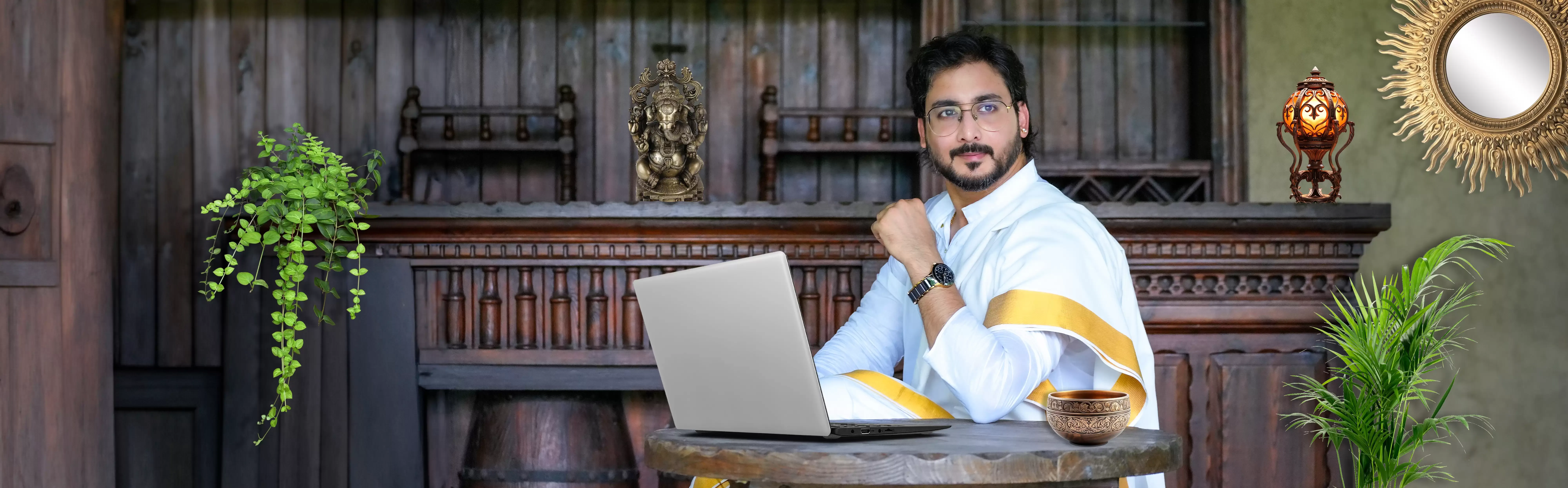
Ganesha Japa For Devoted Shiva Bhakts
D iscover if performing Ganesha japa aligns perfectly with your profound devotion as a dedicated Shiva bhakt. Learn authentic Vedic wisdom, beautiful spiritual integration, and transformative sadhana practices with Nabatara Institute to unlock deep inner peace, divine harmony, and lasting holistic well-being for your sacred spiritual journey today.
Published Date: 24 May 2026

Frequently Asked Questions
Why we are India's Best Astrology & Tantra Sadhna Institute
At Nabatara, we are committed to providing the best possible education and training in astrology, numerology, and related fields. Our team of experienced professionals is dedicated to helping you achieve your goals and improve your life.

Yes, a devotee of Lord Shiva can chant the Ganesha mantra without compromising their devotion to Shiva. In many Hindu traditions, Lord Ganesha is revered as the son of Shiva and Parvati, and worship of Ganesha is understood as complementary to devotion to Shiva. A person whose Ishta Devata, or chosen form of the Divine, is Shiva may also offer prayers to Ganesha as part of a broader devotional practice. The two forms are not generally treated as competing objects of worship. Ganesha is associated with auspicious beginnings, discernment, and the removal of obstacles, while Shiva is revered in many traditions as the supreme consciousness and the source of liberation. Their relationship is expressed through stories, scriptures, festivals, and household worship. Customs differ across sampradayas, or religious lineages, so individual practices may vary. If you already follow a specific family or guru tradition, you can ask how Ganesha worship is incorporated into it. For most devotees, respectful remembrance of both deities can sit naturally within a sincere Hindu spiritual life.
Om Gam Ganapataye Namah is a widely used devotional mantra for Lord Ganesha and is a familiar choice for many worshippers, including devotees whose primary focus is Lord Shiva. The phrase is commonly understood as an invocation offering reverence to Ganapati. “Gam” is a bija, or seed syllable, associated with Ganesha in mantra traditions; it is not simply an ordinary word with a direct English translation. A Shiva devotee may chant this mantra before continuing with a familiar Shiva prayer such as Om Namah Shivaya, if that sequence is consistent with their tradition. The mantra can be recited aloud or quietly, with attention to pronunciation and meaning. However, not every Ganesha mantra has the same ritual status. Some specialized Tantric mantras may require initiation and instructions from a teacher. A general devotional mantra should not be treated as a guaranteed remedy for difficulties, illness, or financial concerns. If you are unsure which form of japa is appropriate, begin with basic devotional learning and seek guidance from a knowledgeable practitioner.
Many Hindu devotees choose to chant a Ganesha mantra before Om Namah Shivaya, particularly when following a puja sequence that begins by invoking Ganesha. Ganesha is traditionally honored as Vighnaharta, the remover of obstacles, and as the deity associated with auspicious beginnings. In this devotional arrangement, a person may first offer a short prayer to Ganesha and then continue with their regular Shiva japa. This is a customary approach in many Puranic and contemporary household worship settings, but it is not a compulsory sequence for every Shiva devotee or every form of ritual. Practices can differ according to scripture, sampradaya, family custom, and the instructions of a guru. The important point is to avoid treating the order as a test of loyalty or as a guarantee that a prayer will succeed. If your family or lineage follows a particular method, respect that guidance. Otherwise, a simple and sincere invocation to Ganesha followed by your established Shiva prayer can be a practical devotional routine.
No, chanting for Ganesha does not inherently reduce devotion to Lord Shiva. In many Hindu traditions, Ganesha is understood as Shiva and Parvati’s son, and honoring him is part of reverence for the divine family rather than a rejection of one’s chosen deity. The idea of an Ishta Devata refers to the form of the Divine toward which a devotee feels a particular devotional connection. It does not necessarily mean that other deities must be excluded from prayer. A Shiva bhakt can continue daily worship of Shiva while also remembering Ganesha, Parvati, or other forms according to personal faith and tradition. The relationship between deities is explained differently in different schools of Hindu philosophy, so no single theological interpretation should be imposed on every worshipper. If the concern comes from a family custom or a specific initiation, ask the relevant teacher for clarification. Devotion is not a competition measured by the number of names chanted. A balanced practice should deepen sincerity and understanding rather than create guilt, anxiety, or fear of offending a deity.
Ishta Devata means the chosen or personally cherished form of the Divine, while Kuladevata refers to the deity traditionally worshipped by a family or lineage. A Shiva devotee may regard Shiva as their Ishta Devata because that form inspires their deepest personal devotion. Their Kuladevata, however, may be a different deity whose worship has been maintained across generations. These roles are related but not interchangeable. Family customs may include specific festivals, prayers, offerings, or ceremonies connected with the Kuladevata, while personal daily japa may center on the Ishta Devata. Lord Ganesha is also widely invoked in many Hindu puja traditions, regardless of a devotee’s chosen deity, although the details vary. It is useful to ask older family members or consult a knowledgeable priest if you are uncertain about your family deity or inherited practices. Avoid assuming that a birth chart or a generic online list can definitively identify your Kuladevata. Understanding these concepts can help a devotee organize their worship respectfully without feeling that personal devotion and family tradition must compete.
Lord Ganesha is commonly invoked at the beginning of many Hindu pujas and important undertakings because he is revered as Vighnaharta, meaning the remover of obstacles, and as the guardian of auspicious beginnings. Devotees traditionally seek his blessings before ceremonies, journeys, studies, weddings, and new ventures. This custom expresses the belief that beginning with Ganesha helps establish a favorable and focused intention. The practice is especially familiar in Puranic and many contemporary household worship traditions. It is important, however, to distinguish these forms of puja from a formal Vedic yajna, in which Agni has a central and foundational role as the sacred fire receiving offerings. Different ritual systems have their own prescribed sequences, so the statement that Ganesha must always be worshipped first in every Vedic rite is too broad. Understanding the type of worship being performed helps resolve apparent contradictions. For an ordinary household puja, a short Ganesha invocation is a widely followed custom, but families should follow their own established ritual instructions where these differ.
There is no single repetition count of Om Gam Ganapataye Namah that every devotee must follow. Many people use a mala of 108 beads to count one round of japa, while others choose a shorter count that fits their daily routine. The appropriate number may depend on personal capacity, the purpose of the practice, and any instructions received from a teacher or family tradition. For a beginner, a modest and consistent routine is usually more manageable than committing to a large number of repetitions immediately. Chant at a comfortable pace, pronounce the mantra carefully, and allow attention to remain on the prayer rather than rushing to finish the count. A mala is simply a traditional counting aid; completing a particular number does not guarantee wealth, success, protection, or the removal of every difficulty. If the mantra is part of a formal Tantric sadhana, follow the specific guidance of the relevant lineage. For ordinary devotional remembrance, sincerity, steadiness, and understanding are more meaningful than treating japa as a numerical competition.
Ganesha Japa is the repetition of a mantra dedicated to Lord Ganesha, while Shiva Japa is the repetition of a mantra dedicated to Lord Shiva. A commonly used Ganesha mantra is Om Gam Ganapataye Namah, and a widely known Shiva mantra is Om Namah Shivaya. Their devotional focus and traditional symbolism differ. Ganesha is associated with auspicious beginnings, wisdom, and the removal of obstacles, while Shiva is revered in many traditions as the lord of transformation, meditation, and liberation. Some devotees use Ganesha japa to begin a worship session before continuing with Shiva japa; others keep the practices separate or follow a sequence taught by their guru. Neither mantra should be described as scientifically proven to change a person's energy centers or guarantee a particular outcome. The spiritual meanings belong to religious traditions and devotional experience. A practitioner can learn the pronunciation, significance, and customary use of both mantras through reliable sources. If a mantra is being used within an initiated ritual system, its method should be learned from an appropriate teacher.
Whether you can use the same mala for Ganesha and Shiva japa depends on the custom you follow and whether the mala has been assigned to a particular mantra or ritual practice. In many households, devotees use a general prayer mala for more than one devotional mantra, while some traditions recommend keeping separate malas for different deities or specific forms of sadhana. Rudraksha beads are strongly associated with Shiva worship, whereas sandalwood and other materials are also used in different devotional settings. These associations are customary and vary; they should not be treated as universal rules. If a guru has consecrated or prescribed a mala for a particular mantra, follow that instruction rather than changing its use casually. For an ordinary, non-initiated devotional routine, cleanliness, respectful handling, and consistency are practical considerations. A mala is a tool for counting repetitions and supporting concentration, not an object that guarantees spiritual attainment. When in doubt, ask a knowledgeable teacher from your own tradition about the appropriate handling and use of prayer beads.
A simple routine can begin with a short prayer to Lord Ganesha, followed by your regular Shiva mantra, provided this sequence is suitable for your family or devotional tradition. Choose a quiet and clean place where you can sit comfortably without interruption. You may begin with a moment of silence, offer a respectful salutation to Ganesha and recite Om Gam Ganapataye Namah at a manageable pace. After completing your chosen count, pause briefly and continue with Om Namah Shivaya or another Shiva prayer that you already practice. End with a few moments of quiet reflection and a closing prayer. The article describes a longer sequence involving separate malas and a period of silent meditation, but beginners do not need to copy every detail or adopt a fixed count. Keep the practice sustainable and avoid allowing it to interfere with sleep, work, or family responsibilities. Ritual arrangements, directions, and offerings vary between traditions. If you have received formal mantra instructions, those should take priority over a general routine found online.
Common offerings to Lord Ganesha include fresh flowers, durva grass, water, fruit, and modak, although the specific items vary by region, occasion, and family tradition. A simple daily japa does not necessarily require an elaborate puja or a large collection of offerings. Some devotees place a picture or murti of Ganesha in a clean worship area, light a diya where it is safe to do so, and offer a flower or a small amount of water before chanting. Modak and other sweets are especially associated with Ganesha in many devotional stories and festival customs. If fresh offerings are unavailable, a sincere prayer can still be part of a meaningful devotional routine. Do not assume that a particular ingredient is compulsory for every form of worship or that offering it guarantees the fulfilment of a wish. Follow the customs of your household or teacher, and keep food offerings clean and appropriate. Avoid lighting lamps or incense in places where flames, smoke, or ventilation could create a safety concern.
In some Tantric and yogic traditions, Lord Ganesha is associated with the Muladhara chakra, often described as the foundational energy center located at the base of the subtle body. The term "Muladhara" is commonly translated as “root support,” and it is symbolically connected with stability, grounding, and the foundation of spiritual practice. Ganesha’s association with this center is used in certain interpretive systems to express his role as guardian of beginnings and remover of obstacles. These chakra concepts belong to traditional spiritual frameworks; they are not anatomical structures recognized in modern medicine, and claims that Ganesha japa physically activates or repairs a chakra should not be presented as established science. A devotee may reflect on the symbolism of steadiness and wise action while chanting a Ganesha mantra. There is no need to attempt forceful visualization, intense breathwork, or advanced energy practices to understand this association. If you are studying the chakra system in depth, use reliable traditional sources and seek guidance from a teacher familiar with the specific yogic or Tantric lineage.
If you feel distracted or spiritually stuck during japa, reduce the pressure on yourself and return gently to the mantra rather than assuming that your practice has failed. Distraction is common, especially when you are tired, stressed, or adjusting to a new routine. You can try a shorter session, slower pronunciation, or a few moments of quiet before beginning. Reflecting on the meaning of the mantra and the relationship between Ganesha and Shiva may also help the practice feel less mechanical. The article describes periods of doubt as part of a seeker's journey, but there is no need to interpret every difficult session as a hidden spiritual test or sign of blocked energy. Avoid increasing repetitions dramatically in an attempt to force an experience. If the routine becomes burdensome, take a break or simplify it. Talking with a trusted teacher or participating in a respectful satsang may provide useful perspective. If persistent anxiety, low mood, or other distress is affecting daily life, seek appropriate healthcare or mental health support alongside any devotional practice.
Yes, devotional chanting can be included in a broader routine with gentle yoga and meditation, as long as the practices are comfortable and appropriate for your experience. Some people prefer a few simple stretches before sitting for japa, while others use a short period of silent reflection after chanting. This can create a clear beginning and end to a personal spiritual routine. The article discusses yoga and meditation as complementary disciplines, but it is not necessary to practice advanced postures or breathing techniques to chant Ganesha and Shiva mantras. Claims that particular movements activate divine energy or produce guaranteed physiological changes should be understood as traditional interpretations, not established medical facts. Beginners should learn physical yoga from a suitably qualified instructor and avoid forceful breath retention or intensive pranayama without appropriate supervision. If a posture causes pain, stop and adapt it. Meditation should also be approached gently; if it increases distress or disorientation, pause and seek suitable support. The purpose of combining these practices is to create a sustainable devotional rhythm, not to pursue extraordinary experiences or measurable spiritual results.
You can learn about Ganesha Japa and Shiva Sadhana through reliable translations of Hindu scriptures, respected teachers, and study of the devotional or Tantric lineage relevant to the practice. Begin by understanding the meaning of the mantras, the place of Ganesha and Shiva in the tradition, and the difference between general devotional chanting and formal sadhana. A short online guide can introduce basic concepts, but it cannot replace personalized instruction for specialized rituals or initiated mantras. Nabatara Institute's article discusses the relationship between Ganesha and Shiva worship and places the subject within its wider focus on traditional spiritual sadhana and puja practices. The institute also describes educational offerings in related areas of Vedic and spiritual study. Anyone considering formal learning should check the current syllabus, teaching format, instructor details, and whether a particular practice requires initiation before making a decision. A responsible teacher should explain the tradition's boundaries clearly and avoid promises of guaranteed healing, prosperity, or success. Choose a learning environment that encourages informed questions, respects your existing devotional commitments, and does not use fear or pressure to secure participation.