


Ten Mahavidyas In Tantra Shastra Guide
D iscover the profound wisdom of the ten Mahavidyas in Tantra Shastra. Learn authentic practices for spiritual growth, inner peace, and holistic well-being. Join Nabatara Institute today to unlock transformative knowledge and begin your sacred journey toward lasting spiritual enlightenment and deep personal empowerment for life.
Published Date: 21 May 2026
Frequently Asked Questions
Why we are India's Best Astrology & Tantra Sadhna Institute
At Nabatara, we are committed to providing the best possible education and training in astrology, numerology, and related fields. Our team of experienced professionals is dedicated to helping you achieve your goals and improve your life.

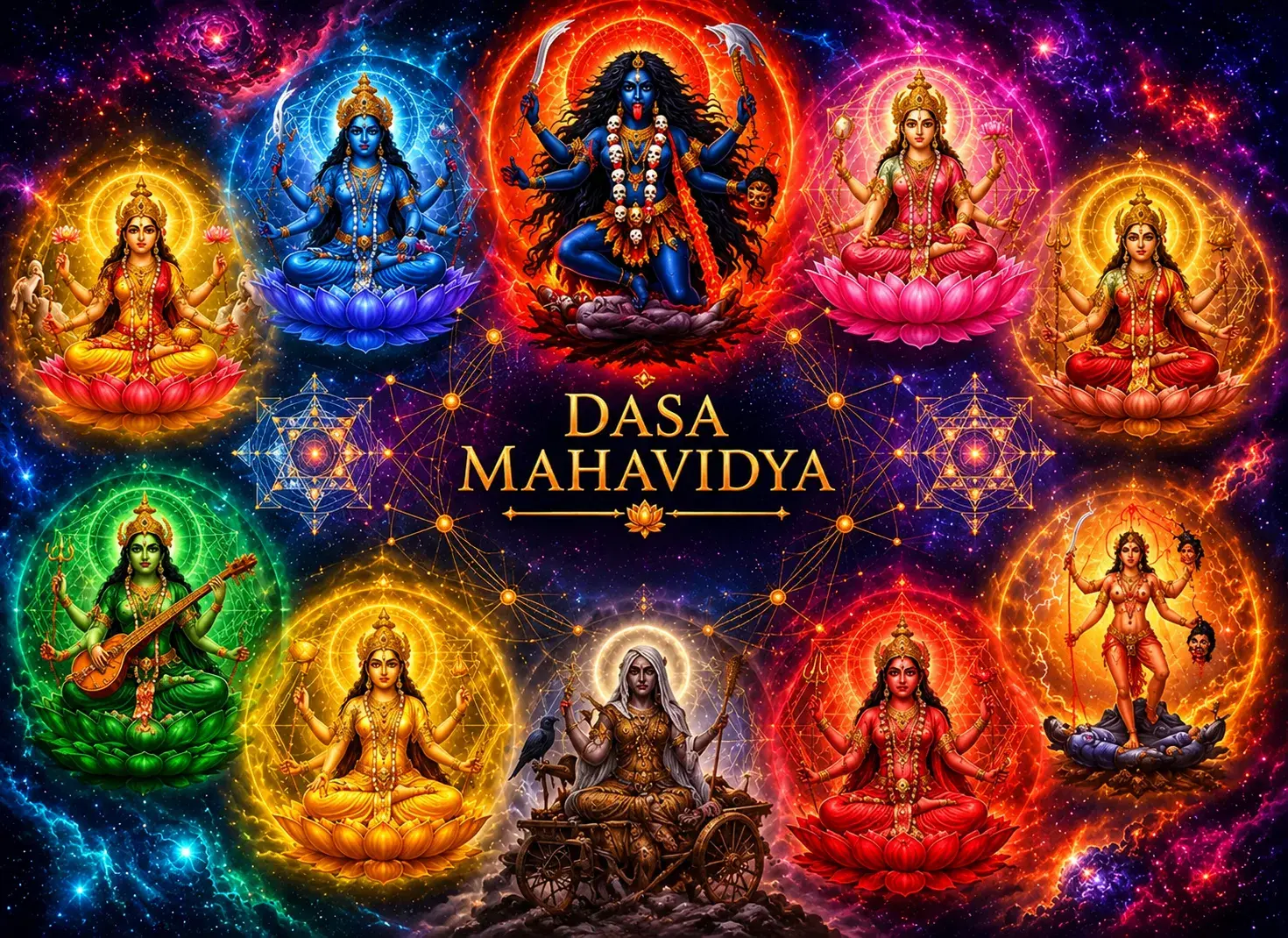
The Ten Mahavidyas are ten significant manifestations of the Divine Mother worshipped within Shakta traditions of Hindu Tantra. The Sanskrit term Dasha Mahavidya combines Dasha, meaning ten, and Mahavidya, meaning great wisdom or knowledge. These goddesses represent different dimensions of divine feminine power, consciousness, and spiritual understanding. The commonly recognized ten are Kali, Tara, Tripura Sundari, Bhuvaneshwari, Chhinnamasta, Bhairavi, Dhumavati, Bagalamukhi, Matangi, and Kamala. Each has distinct iconography, symbolism, and theological associations. Within Tantra Shastra, they are not simply ten separate deities but can also be understood as interconnected expressions of Mahadevi, the supreme Goddess. Their worship and interpretation vary across scriptures, regions, and spiritual lineages. Some traditions emphasize their protective aspects, while others explore their relationship with liberation, transformation, and the nature of consciousness. Studying the Ten Mahavidyas therefore involves understanding their individual identities as well as the broader philosophy of Shaktism. Their significance extends beyond ritual worship into discussions of divine feminine wisdom and the relationship between the material and spiritual dimensions of existence.
The Ten Mahavidyas are Kali, Tara, Tripura Sundari, Bhuvaneshwari, Chhinnamasta, Bhairavi, Dhumavati, Bagalamukhi, Matangi, and Kamala. Each goddess carries a distinct symbolic and spiritual significance within Shakta Tantra. Kali is associated with time, transformation, and the destruction of ignorance. Tara represents guidance and compassionate protection. Tripura Sundari is connected with beauty, harmony, and supreme consciousness, while Bhuvaneshwari symbolizes the cosmic space and the universe. Chhinnamasta is associated with self-sacrifice and the relationship between life and consciousness. Bhairavi represents fierce spiritual discipline and transformative power. Dhumavati is traditionally connected with impermanence, renunciation, and wisdom arising from difficult experiences. Bagalamukhi is associated with stillness and the restraint of opposing forces. Matangi represents knowledge, artistic expression, and unconventional wisdom, while Kamala is associated with abundance, auspiciousness, and prosperity. These interpretations are broad introductions rather than universal definitions. Different Tantric texts and lineages may explain the goddesses differently, and their iconography contains additional layers of meaning. Understanding these distinctions helps readers appreciate the richness of the Mahavidya tradition.
The origin of the Dasha Mahavidyas is traditionally explained through a story involving Goddess Sati and Lord Shiva. According to a well-known account in Shakta religious literature, Sati wished to attend a grand yajna, or sacrificial ceremony, organized by her father, King Daksha, despite Shiva advising her against going. When Shiva attempted to prevent her departure, Sati revealed ten extraordinary manifestations of her divine power, surrounding him in all ten directions. These manifestations became known as the Dasha Mahavidyas. The story symbolically communicates that the Divine Mother encompasses multiple dimensions of existence, including compassion, creation, destruction, wisdom, and transformation. Each manifestation reveals a different aspect of Shakti, the primordial feminine divine power. Interpretations of this narrative differ across religious texts and traditions, so it should not be treated as a single universally identical account. Within Tantra Shastra, the story provides an important foundation for understanding the relationship between the ten goddesses. It also highlights a central Shakta principle: the different forms of the Goddess are understood as expressions of one supreme divine reality.
Goddess Kali occupies a particularly prominent position among the Ten Mahavidyas and traditionally represents time, transformation, and freedom from ignorance. Her dark complexion symbolizes the vastness of existence, while her fierce appearance communicates the destruction of ego, attachment, and false identification. Her garland of severed heads is sometimes interpreted as representing the Sanskrit alphabet and the power of sound, while other interpretations associate it with the impermanence of individual identities. Her image standing upon Lord Shiva expresses the relationship between dynamic Shakti and pure consciousness. Within Shakta Tantra, Kali is therefore not understood simply as a frightening deity but as a powerful expression of the Divine Mother. Devotees approach her worship with reverence, seeking spiritual courage, discipline, and deeper self-understanding. Her symbolism encourages individuals to recognize that worldly identities and circumstances are temporary. Kali sadhana can include devotional prayer, mantra, meditation, and philosophical reflection, depending on the tradition. Formal tantric practices may require initiation and appropriate guidance. These spiritual interpretations should not be confused with scientifically established methods for treating emotional difficulties or guaranteeing personal transformation.
Goddess Kali and Goddess Tara are both important Mahavidyas, but their traditional symbolism highlights different dimensions of divine wisdom. Kali is primarily associated with time, transformation, the destruction of ignorance, and freedom from ego-based attachments. Her fierce appearance communicates the unavoidable reality of change and the power required to confront spiritual limitations. Tara, whose name is often interpreted as the one who carries devotees across difficulties, represents compassionate guidance, protection, and liberating wisdom. She is frequently understood as a divine guide through the uncertainties of worldly existence. While Kali's symbolism emphasizes confronting and transforming limitations, Tara's symbolism highlights guidance and discernment when navigating difficult circumstances. Both goddesses are manifestations of Mahadevi within Shakta traditions, and neither should be reduced to a simplistic distinction between destruction and kindness. Their iconography, mantras, and worship procedures vary across lineages. Some traditions also associate Tara with specific tantric teachings that differ from ordinary devotional worship. Studying both goddesses together helps learners understand how the Mahavidya tradition explores different aspects of spiritual development through interconnected expressions of divine feminine consciousness.
Tripura Sundari is the Mahavidya associated with divine beauty, harmony, and the supreme consciousness underlying existence. She is also known as Lalita and Shodashi in particular Hindu traditions. The name Tripura Sundari is commonly interpreted as the beautiful one of the three worlds or realms. Her worship is closely connected with Sri Vidya, an important tradition within Shakta Tantra. The Sri Yantra, also called the Sri Chakra, is a sacred geometric diagram associated with her worship and represents the interrelationship of the divine masculine and feminine principles. Its interlocking triangles, central point, and surrounding enclosures carry elaborate philosophical and ritual meanings. Within Sri Vidya traditions, meditation on the Sri Yantra can form part of a structured spiritual discipline. It is not merely a decorative symbol or a tool for attracting material benefits. Understanding its significance requires familiarity with the associated symbolism and traditional interpretations. Beginners can start by studying the geometry and philosophy of the Sri Yantra before attempting formal worship or specialized meditation. Certain Sri Vidya practices involve initiation and lineage-specific instructions, making qualified guidance important for deeper study.
Goddess Bhuvaneshwari represents the cosmic space in which the universe and all forms of existence appear. Her name is derived from Bhuvana, meaning "world" or "universe," and Ishwari, meaning "sovereign goddess." Within Shakta Tantra, she is revered as a manifestation of the Divine Mother who encompasses and sustains the entire cosmos. Her symbolism is associated with spaciousness, sovereignty, creation, and the interconnectedness of existence. Unlike some of the more fierce Mahavidyas, Bhuvaneshwari is commonly depicted with a benevolent appearance, although her iconography and interpretations vary across traditions. Her teachings are often understood as an invitation to develop a broader perspective on life, recognize personal responsibility, and appreciate the sacred dimension of the world around us. In spiritual study, she also represents the idea that consciousness is not restricted to a narrow individual identity. Devotional worship and meditation on her form can be explored through traditional Shakta literature. However, claims that invoking Bhuvaneshwari automatically changes circumstances or grants control over external events should be treated cautiously. Her deeper significance lies in the philosophical understanding of divine sovereignty and universal consciousness.
Goddess Chhinnamasta is depicted holding her own severed head, an unusual and powerful image that carries deep symbolic significance in Tantric traditions. Her iconography is traditionally interpreted through themes of self-sacrifice, the relationship between life and death, the circulation of life force, and the transcendence of ego. Three streams of blood are commonly shown emerging from her neck and nourishing her own head and two attendants. These streams are understood symbolically in different traditions and are sometimes associated with the movement of vital energy. Her image challenges conventional expectations and encourages reflection on the relationship between individual identity and universal existence. Chhinnamasta is therefore not simply a representation of violence or destruction. Her form communicates complex philosophical ideas about sacrifice, interdependence, and the limitations of ordinary perception. Within the Ten Mahavidyas, she represents a particularly intense dimension of divine feminine power. Her worship and specialised mantra practices belong to particular tantric contexts and should not be approached through sensational online interpretations. Beginners can appreciate her significance by studying traditional iconography and philosophy before considering any formal ritual practice. Advanced sadhana should be undertaken only with appropriate traditional guidance.
Goddess Bhairavi represents fierce spiritual determination, transformative discipline, and the inner intensity required for sincere spiritual practice. Her name is associated with the Sanskrit term Bhairava, which carries connotations of fierceness and formidable divine power. Within Shakta Tantra, Bhairavi is revered as a manifestation of the Divine Mother whose symbolism emphasizes tapas, meaning disciplined spiritual effort or austerity. Her red complexion and powerful appearance are traditionally associated with intensity, devotion, and the capacity to confront ignorance. Bhairavi's significance can also be understood through the importance of consistency in spiritual life. Reading philosophical texts or expressing an interest in meditation does not automatically create a meaningful practice; discipline and thoughtful application are equally important. Her symbolism encourages practitioners to approach their spiritual commitments with sincerity rather than depending on temporary enthusiasm. Different tantric lineages may describe her attributes, mantras, and ritual worship in different ways. Formal Bhairavi sadhana may involve specialized instructions and should not be improvised from incomplete online information. Studying her place among the Mahavidyas offers insight into the relationship between devotion, determination, self-discipline, and spiritual understanding.
Goddess Dhumavati is traditionally associated with impermanence, solitude, loss, and the wisdom that can emerge through difficult experiences. She is often depicted as an elderly widow surrounded by smoke and riding a distinctive chariot. Unlike Mahavidyas associated with beauty, abundance, or protection, her iconography explores aspects of existence that people may find uncomfortable or difficult to accept. Within Shakta Tantra, Dhumavati symbolizes the reality that relationships, possessions, physical appearances, and worldly circumstances are temporary. Her presence encourages reflection on attachment and the possibility of developing inner understanding even when familiar sources of security disappear. This does not mean that suffering should be deliberately sought or that grief and hardship are necessary conditions for spiritual development. Rather, her symbolism provides a philosophical way of contemplating life's uncertainties without becoming completely dependent on external circumstances. Traditional interpretations of Dhumavati differ, and her worship has particular ritual associations in some lineages. People interested in her place within the Ten Mahavidyas can begin with textual study and an understanding of her iconography. Her significance is ultimately connected with discernment, renunciation, and the deeper meaning of impermanence.
Goddess Bagalamukhi is traditionally associated with stambhana, a Sanskrit term referring to the power of stilling, restraining, or bringing opposing forces to a halt. Within the Ten Mahavidyas, she represents a particular expression of divine power connected with speech, restraint, and the control of disruptive influences. Her iconography commonly depicts her holding the tongue of a demon, symbolizing the restraint of harmful speech and destructive activity. Devotees traditionally approach her worship with the intention of cultivating protection, concentration, and the ability to remain composed during conflict. Her symbolism can also encourage reflection on the responsible use of language and the importance of controlling impulsive reactions. Bagalamukhi is sometimes associated with legal disputes, competition, and overcoming opponents in popular devotional interpretations. However, worship should not be presented as a guaranteed way to win court cases, silence critics, or control another person's behavior. Some Bagalamukhi mantras and ritual procedures belong to specialized tantric traditions and may require initiation. Anyone interested in her worship should distinguish ordinary devotional learning from formal sadhana. Understanding her philosophical symbolism provides a more balanced introduction to this powerful Mahavidya.
Goddess Matangi is associated with knowledge, speech, music, artistic expression, and forms of wisdom that challenge conventional social boundaries. Within the Ten Mahavidyas, she represents the creative and expressive dimensions of divine feminine consciousness. Her symbolism is particularly connected with vak, meaning speech or the power of expression, and with the ability to communicate knowledge through language and the arts. She is sometimes depicted holding a veena, a traditional Indian musical instrument, highlighting her association with music and creativity. Matangi's connection with marginalized or unconventional spaces is also significant in particular tantric interpretations, where her identity challenges rigid ideas of purity and social status. Devotees may understand her worship as an invitation to develop authentic expression, refined communication, and respect for different forms of knowledge. However, these spiritual associations should not be interpreted as guaranteed methods for achieving professional success, artistic recognition, or exceptional intellectual abilities. Her traditional worship has specific ritual and mantra contexts that differ between lineages. Studying Matangi through her iconography, religious texts, and philosophical significance offers a meaningful introduction to the creative wisdom represented within Tantra Shastra.
Goddess Kamala is the tenth Mahavidya and is closely associated with Goddess Lakshmi, particularly through symbolism involving prosperity, beauty, auspiciousness, and abundance. Her name is connected with the lotus, a flower that represents purity, beauty, and spiritual unfolding in Hindu religious traditions. She is commonly depicted seated upon a lotus, with elephants pouring water over her, an image associated with abundance and royal auspiciousness. Within the Mahavidya tradition, Kamala represents the understanding that material existence and spiritual life do not necessarily have to be treated as opposing realities. Her symbolism encourages a balanced relationship with prosperity, worldly responsibilities, and spiritual values. This interpretation does not mean that wealth is proof of spiritual advancement or that worship guarantees financial improvement. Rather, devotees understand her form as expressing the presence of divine grace within the material dimension of existence. Although Kamala shares important associations with Lakshmi, her place within the Mahavidyas gives her a specific Tantric context. Studying both similarities and distinctions helps readers appreciate the richness of Hindu goddess traditions without treating every manifestation as identical.
Yes, beginners can study the Ten Mahavidyas through religious history, philosophy, traditional iconography, and introductory explanations without undertaking advanced tantric rituals. In fact, developing a clear understanding of the goddesses is a useful foundation before exploring specialized practices. A beginner can start by learning the names and traditional attributes of each Mahavidya, reading accessible explanations of Shakta philosophy, and understanding the symbolic meaning of their images. Studying the relationship between Mahadevi, Shakti, mantra, and consciousness also helps place the ten goddesses within their broader religious context. It is important to distinguish educational study and ordinary devotional prayer from formal tantric sadhana. Certain mantras, initiatory practices, and ritual procedures are traditionally transmitted through a Guru within a particular lineage. They should not be attempted solely on the basis of incomplete online instructions. Nabatara Institute covers Tantra Shastra and ancient spiritual sadhana as part of its educational focus, providing a relevant avenue for people interested in structured learning. Prospective students should review the actual course syllabus and teaching arrangements to determine whether the available instruction matches their level and interests.
You can learn about the Ten Mahavidyas and Tantra Shastra through credible educational institutions, traditional religious literature, and teachers familiar with Shakta philosophy and tantric traditions. When choosing a learning platform, consider whether it explains the historical background, symbolism, Sanskrit terminology, and philosophical significance of the goddesses rather than focusing exclusively on miraculous claims or sensational rituals. It is also important to distinguish introductory education from advanced mantra and ritual training, which may involve lineage-specific initiation and guidance. Nabatara Institute, founded by Gaurav Tribedi, includes Tantra Shastra, ancient spiritual sadhana, and related traditional knowledge within its educational focus. Its website provides information about the institute's courses and spiritual learning programs for interested students. Those considering enrollment should independently review the syllabus, teaching format, eligibility requirements, and the specific practices covered before making a decision. Students in Kolkata, West Bengal, and elsewhere in India can explore the institute's official website to understand the available learning options. A meaningful study of the Dasha Mahavidyas requires patience, cultural sensitivity, and respect for the diversity of Hindu traditions. The objective should be informed understanding rather than promises of supernatural abilities or guaranteed personal outcomes.