

Profound Benefits of Chanting Kali Mantra
D iscover the profound benefits of chanting the sacred Kali mantra for deep spiritual growth, complete fear removal, and lasting inner peace. Join Nabatara Institute to learn authentic Vedic practices, transform your daily life, and unlock true spiritual enlightenment with expert, compassionate guidance for your journey today.
Published Date: 21 May 2026
Frequently Asked Questions
Why we are India's Best Astrology & Tantra Sadhna Institute
At Nabatara, we are committed to providing the best possible education and training in astrology, numerology, and related fields. Our team of experienced professionals is dedicated to helping you achieve your goals and improve your life.

The main benefits traditionally associated with chanting the Kali mantra include developing inner courage, strengthening devotion, cultivating mental focus, and encouraging spiritual growth. Goddess Kali represents the transformative power of the Divine Mother in Shakta traditions, where she is revered as the destroyer of ignorance, ego, and fear. Devotees believe that regularly chanting her mantra helps them develop the strength to face personal challenges with greater confidence and surrender. The practice, known as japa, involves repeating a sacred mantra with concentration and sincere intention. It can also become a form of meditation, allowing practitioners to step away from everyday distractions and focus their attention inward. Some people find the rhythmic repetition calming and use it to establish a consistent spiritual routine. However, these benefits are understood primarily through religious and spiritual traditions rather than guaranteed physical or psychological outcomes. Chanting does not automatically remove external problems or ensure success. Its deeper purpose is to cultivate devotion, self-awareness, discipline, and a more conscious relationship with oneself and the Divine.
Om Kreem Kalikaye Namah is a Sanskrit devotional mantra dedicated to Goddess Kali, expressing reverence and surrender to the Divine Mother. The mantra is commonly written as Om Kreem Kalikayai Namah, although transliterations and pronunciations can vary between traditions. Om is regarded as a sacred primordial syllable in Hindu spiritual philosophy. Kreem, also written as Krim, is a bija or seed syllable traditionally associated with Goddess Kali and her transformative aspect. Kalikayai means to or for Kalika, another name for the Goddess, while Namah expresses salutation, reverence, or respectful surrender. Together, the mantra can be understood broadly as an invocation offering salutations to Goddess Kali. Within Shakta traditions, practitioners associate this invocation with overcoming ignorance, cultivating courage, and developing spiritual awareness. The bija syllable does not have a simple literal English translation like an ordinary word. Its significance comes from its traditional spiritual interpretation and use in devotional practice. Understanding the meaning helps practitioners approach the mantra with greater awareness rather than treating it as a repetition of unfamiliar sounds.
Chanting the Kali mantra can support spiritual growth by encouraging devotion, self-reflection, concentration, and a deeper understanding of personal attachments. Within Shakta philosophy, Goddess Kali represents the power that destroys ignorance and helps devotees move beyond limiting perceptions of themselves and the world. Repeating her mantra as part of a regular spiritual discipline encourages practitioners to direct their attention towards these deeper values. The process of japa can also create a natural transition into meditation because focusing on repeated sounds gives the mind a consistent point of attention. Over time, practitioners may become more conscious of their thoughts, reactions, and emotional patterns. This awareness can encourage patience, humility, and greater responsibility in everyday decisions. Spiritual development, however, is not measured simply by the number of repetitions or unusual experiences during meditation. It involves gradual changes in understanding, conduct, and devotion. At Nabatara Institute, the article explores mantra practice alongside meditation and traditional spiritual learning. Such an approach highlights the importance of understanding the philosophy behind a practice rather than concentrating exclusively on its ritual form.
Yes, many devotees believe that chanting the Kali mantra helps cultivate courage and reduce the influence of fear in their spiritual lives. Goddess Kali is traditionally associated with fearlessness, strength, protection, and the destruction of ignorance. Her fierce appearance symbolizes the power to confront forces that prevent spiritual understanding, rather than simply representing anger or destruction. When devotees repeat her mantra with sincerity, they often use the practice as an expression of faith and a reminder to face difficulties with determination. Regular chanting can also provide a structured moment for reflection, helping practitioners pause before reacting to challenging situations. The sense of devotion associated with worship may offer personal comfort and encouragement during uncertain periods. However, the mantra should not be considered a guaranteed way to eliminate anxiety, traumatic experiences, or external dangers. Persistent fear, panic, or emotional distress deserves appropriate professional support. Spiritual practice can complement healthy coping habits, but it should never replace qualified mental healthcare. The traditional significance of Kali worship ultimately encourages devotees to develop inner strength, awareness, and the courage to confront life's uncertainties.
Beginners can approach Kali mantra chanting by learning the mantra's meaning, choosing a quiet place, and practicing with sincere attention rather than rushing through repetitions. A commonly recited form is Om Kreem Kalikaye Namah, although the precise Sanskrit form and pronunciation may differ across traditions. Start by sitting comfortably with your back naturally upright and allowing yourself a few moments to settle. Recite the mantra slowly, giving attention to each syllable and maintaining a respectful devotional attitude. You may chant aloud or softly, depending on your comfort and the tradition you follow. There is no need to force a particular breathing pattern or attempt complicated tantric techniques when starting. A short, manageable practice can help establish consistency without making the routine burdensome. A mala may be used to count repetitions, but it is not essential for every devotional practice. If you intend to undertake formal tantric japa, bija mantra sadhana, or an intensive ritual observance, seek guidance from a knowledgeable teacher familiar with the relevant lineage. Understanding the practice is more valuable than mechanically completing a large number of repetitions.
There is no single daily repetition count that applies to every person chanting the Kali mantra because practices vary across devotional and tantric traditions. Some practitioners use a mala containing 108 beads and complete one round of mantra repetition as part of their daily worship. Others prefer a shorter session that fits comfortably into their routine. The number 108 has an important place in several Hindu spiritual practices and is traditionally associated with completeness and sacred symbolism. However, chanting 108 times should not be treated as a universal requirement or a guarantee of particular results. Beginners can start with a modest number of repetitions while learning the pronunciation and meaning of the mantra. Consistency, attention, and sincere intention are generally more useful foundations than increasing the count unnecessarily. Formal mantra anushthana, which involves a prescribed spiritual observance, may have specific requirements established by a particular tradition or teacher. Anyone undertaking such a practice should understand its instructions beforehand. Ultimately, the appropriate daily count depends on personal circumstances, the form of worship, and the guidance of the tradition being followed.
The best time to chant the Kali mantra depends on the devotional tradition and the practitioner's personal routine. Many Hindu spiritual practices favor Brahma Muhurta, the early morning period before sunrise, because it is traditionally considered suitable for prayer, meditation, and quiet reflection. Other devotees include Kali mantra chanting in their evening worship, when they can give their attention to the practice without interruption. Kali Puja and other occasions dedicated to Goddess Kali are also significant periods for devotional chanting, particularly in Bengal and other regions where her worship has a strong cultural presence. However, there is no universally compulsory time for every form of Kali mantra recitation. Beginners can choose a consistent, peaceful period that allows them to practice comfortably. Formal tantric observances may follow specific timings prescribed by their lineage or teacher, so these should not be confused with ordinary devotional chanting. Rather than becoming anxious about selecting a supposedly perfect hour, focus on understanding the mantra and maintaining a respectful routine. A regular practice that fits naturally into everyday life can be more sustainable than an elaborate schedule that becomes difficult to follow.
Whether someone can chant the Kali mantra without Guru Diksha depends on the particular mantra and the spiritual tradition they wish to follow. Simple devotional repetition of Goddess Kali's name or a commonly shared prayer is generally approached differently from formal tantric mantra sadhana. In many Shakta traditions, certain bija mantras and specialized tantric practices are traditionally taught through initiation, known as diksha, by a qualified guru. Initiation provides an opportunity to understand the mantra's context, pronunciation, associated discipline, and place within a particular lineage. However, this does not mean that a beginner must avoid all devotional remembrance of Goddess Kali until receiving initiation. A person can begin by learning about the goddess, understanding accessible devotional prayers, and developing a respectful approach to worship. Those interested in advanced mantra practices should consult a knowledgeable teacher rather than relying entirely on random online instructions. It is also important to be cautious of anyone demanding money in exchange for guaranteed spiritual powers, protection, or miraculous outcomes. The purpose of genuine guidance is to develop understanding, discipline, and responsible practice, not fear or dependence.
Simple devotional chanting of a commonly shared Kali mantra can be approached as a gentle spiritual practice by beginners, provided they understand what they are reciting and practice without unnecessary pressure. A beginner can start with a comfortable seated position, a quiet environment, and a manageable number of repetitions. There is no need to experiment with intensive breath control, prolonged fasting, elaborate rituals, or advanced tantric techniques. Some traditions prescribe additional disciplines for particular mantras, especially seed syllables used in formal tantric sadhana. These practices should be learned from an appropriately knowledgeable teacher rather than copied from unverified online instructions. It is also important not to interpret every unusual dream, emotional reaction, or physical sensation during chanting as proof of spiritual transformation. People experiencing persistent distress, panic, sleep disruption, or other concerning symptoms should pause any practice that seems to aggravate their difficulties and seek qualified healthcare advice when appropriate. Devotional chanting is not a substitute for medical treatment or psychological support. A balanced approach respects the religious significance of the mantra while recognizing personal boundaries and the importance of physical and emotional well-being.
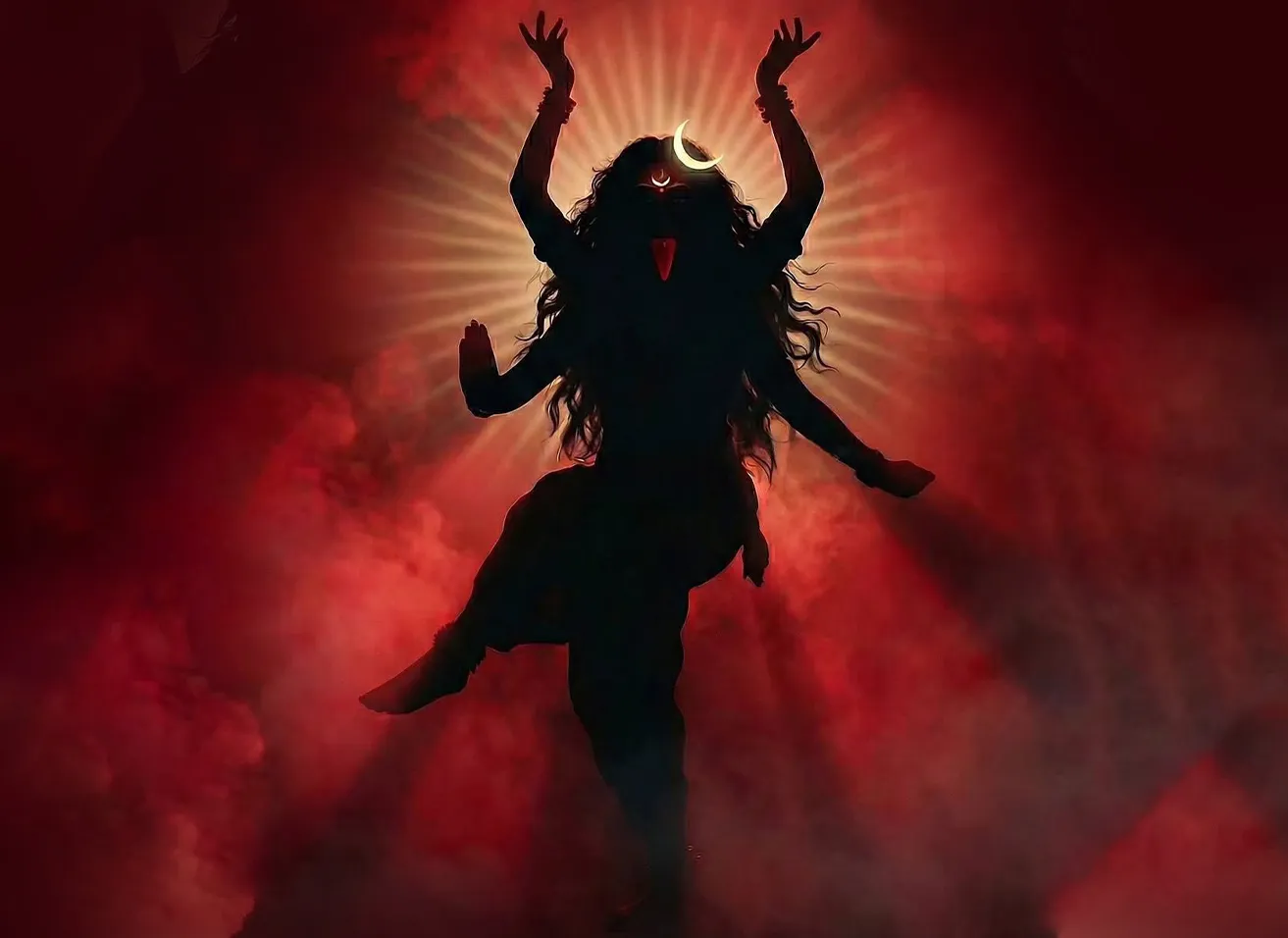
Goddess Kali holds an important position in Hinduism, particularly within Shaktism, where she represents the powerful and transformative nature of the Divine Mother. Her name is commonly associated with Kaal, meaning time, and her symbolism reflects the reality that all temporary forms and attachments eventually change or dissolve. Although her appearance can seem fierce, devotees understand Kali as a compassionate maternal presence who destroys ignorance and protects the spiritual seeker. Her dark complexion, garland, and other traditional iconographic features carry layers of philosophical and religious symbolism. They are not simply intended to inspire fear. In several Shakta traditions, Kali represents freedom from ego, attachment, and the illusion of permanence. Her worship is especially prominent in Bengal, where Kali Puja has deep cultural and devotional significance. The teachings associated with her encourage practitioners to recognize the temporary nature of worldly experiences and cultivate a deeper relationship with spiritual truth. Understanding this symbolism also provides important context for chanting her mantra. Rather than viewing Kali as a deity approached only for material benefits, devotees often regard her worship as a path towards surrender, courage, wisdom, and liberation.
Within traditional Shakta beliefs, chanting the Kali mantra is associated with overcoming negativity, ignorance, fear, and obstacles on the spiritual path. Devotees regard Goddess Kali as a powerful expression of the Divine Mother who destroys forces that obstruct spiritual understanding. Repeating her mantra can therefore become an expression of faith, helping practitioners develop a more courageous and disciplined attitude towards difficulties. Some people also find that setting aside time for prayer and meditation encourages reflection before making important decisions. However, the phrase "negative energy" can have different meanings in spiritual conversations and should not automatically be interpreted as black magic, curses, or supernatural interference. Personal difficulties, financial setbacks, relationship problems, and health concerns do not prove that someone has been spiritually attacked. Chanting should not become a reason to fear ordinary experiences or pay for expensive remedies promising guaranteed protection. Practical decisions, communication, appropriate professional advice, and responsible action remain important when addressing real-life problems. The spiritual significance of Kali mantra practice is better understood as an invitation to develop courage, awareness, devotion, and resilience rather than an automatic solution to every external obstacle.
Chanting the Kali mantra can support concentration and meditation by giving the mind a repeated sound on which to focus. In Hindu spiritual traditions, this practice is known as japa, and it is used as a method of cultivating attention and devotion. When practitioners repeat a mantra slowly and consciously, they have an opportunity to notice distractions and gently return their awareness to the sound. This repeated process can make it easier to establish a regular meditation routine. Some people also find that chanting aloud helps them remain attentive before gradually moving towards silent repetition. The transition from vocal chanting to quiet observation can be a useful part of personal spiritual practice. However, the experience differs between individuals, and there is no guarantee that chanting will produce a particular brainwave pattern, extraordinary intuition, or a specific meditative state. It is better to approach the practice without expectations of unusual experiences. At Nabatara Institute, the article discusses integrating mantra chanting with meditation and yoga as complementary disciplines. Learning how these practices fit together can help spiritual seekers develop a more structured and thoughtful approach to meditation.
Yes, devotees commonly chant prayers and mantras dedicated to Goddess Kali during Kali Puja and other occasions associated with her worship. Kali Puja holds particular significance in Bengal and several eastern Indian communities, where devotees honor the Goddess through prayers, devotional songs, offerings, and traditional rituals. The festival is especially associated with the new moon night of the Hindu month of Kartik, although calendar dates vary each year. Chanting a Kali mantra during this occasion allows devotees to express reverence, remember the Goddess's symbolism, and participate in a meaningful devotional atmosphere. Some practitioners also include Kali prayers in their regular worship throughout the year rather than limiting them to festivals. Different families, temples, and spiritual lineages may follow distinct rituals and mantra traditions. Therefore, it is useful to understand the particular customs associated with the form of worship being followed. People who are new to Kali Puja can begin by learning about its religious significance and participating respectfully in public or family observances. There is no requirement to undertake advanced tantric rituals simply because the festival is taking place. Sincere devotion and cultural understanding remain central to meaningful participation.
Kali mantra chanting and Kali Tantra Sadhana are related spiritual practices, but they are not exactly the same. Mantra chanting generally involves repeating a sacred name, prayer, or invocation dedicated to Goddess Kali as an expression of devotion and concentration. It can form part of everyday worship or meditation. Tantra Sadhana, on the other hand, refers to a broader and more structured spiritual discipline within particular tantric traditions. Depending on the lineage, it may involve mantra, meditation, visualization, ritual worship, prescribed observances, and philosophical study. Certain tantric practices require formal initiation and specific instructions from a qualified Guru. This distinction matters because not every mantra found online is intended to be used in the same way, and a simple devotional practice should not be confused with an advanced ritual undertaking. Tantra is also frequently misunderstood as being exclusively concerned with mysterious powers or sensational rituals. Its traditional systems contain philosophical and spiritual methods that require serious study. Nabatara Institute's coverage of Tantra Shastra and ancient spiritual sadhana provides a relevant educational context for readers who wish to understand the broader traditions behind Kali worship.
Beginners can learn about Kali mantra chanting through reliable religious literature, established spiritual traditions, and teachers who can explain the meaning and appropriate context of devotional practices. Understanding the Sanskrit words, the symbolism of Goddess Kali, and the difference between ordinary chanting and formal tantric sadhana provides a useful starting point. It is important to choose educational resources that explain traditional concepts without promising miraculous results or using fear to encourage participation. Nabatara Institute, founded by Gaurav Tribedi, offers educational coverage of spiritual subjects, including Tantra Shastra, ancient spiritual sadhana, yoga, and meditation. Its broader approach provides an opportunity for interested learners to explore traditional Indian spiritual knowledge and understand how different disciplines relate to personal development. Readers considering structured learning should review the relevant course information and confirm the teaching format, syllabus, eligibility, and guidance available before enrolling. They should also distinguish introductory devotional education from specialized tantric instruction, which may require lineage-specific preparation. A genuine learning journey involves curiosity, patience, ethical conduct, and respect for tradition. The aim should be to develop informed spiritual understanding rather than pursue quick results or guaranteed supernatural experiences.