

Sacred Goddess Kali Mantra Chanting Guide
D iscover the sacred Goddess Kali mantra and learn the authentic, step-by-step methods to chant it properly every single day of your life. Transform your spiritual journey, awaken your dormant inner strength, and find profound, lasting peace with the expert, compassionate guidance of Nabatara Institute today.
Published Date: 18 May 2026
Frequently Asked Questions
Why we are India's Best Astrology & Tantra Sadhna Institute
At Nabatara, we are committed to providing the best possible education and training in astrology, numerology, and related fields. Our team of experienced professionals is dedicated to helping you achieve your goals and improve your life.

Goddess Kali mantra chanting is a devotional practice in Shakta traditions in which a mantra dedicated to Maa Kali is repeated with attention and reverence. A commonly circulated short form is “Om Krim Kalikayai Namah,” although spelling and pronunciation can vary across sources and traditions. Before beginning, understand that Kali worship is not simply about repeating sounds: devotees may approach the goddess as Divine Mother, a symbol of time and transformation, or an expression of Shakti, depending on their tradition. Beginners can start by learning the meaning and context of a publicly shared devotional prayer rather than attempting advanced tantric formulas found online. Choose a quiet, comfortable place, sit in a posture you can maintain, and chant at a natural pace without straining your voice or breath. The practice may support devotion and personal reflection for those who value it, but no particular spiritual or material result is guaranteed. If you wish to undertake formal tantric sadhana, seek guidance from a responsible teacher within the relevant tradition.
The mantra “Om Krim Kalikayai Namah” is commonly understood as a respectful salutation to Goddess Kalika, though its deeper interpretation belongs to particular Shakta and tantric traditions. “Om” is a sacred syllable used at the beginning of many prayers. “Krim” (also written “Kreem” in English) is regarded as a bija, or seed syllable, associated with Kali; it does not have a straightforward dictionary translation. “Kalikayai” is a Sanskrit form referring to Kalika, and “Namah” expresses homage or reverence. Together, the mantra is often rendered in simple English as “Salutations to Goddess Kali.” Transliteration can differ because Sanskrit sounds do not always map neatly onto English letters. Some sources write “Kalikaye,” while others use “Kalikayai.” For accurate pronunciation, listen to a reliable Sanskrit recitation or learn from a knowledgeable teacher. Avoid assuming that every syllable has a literal meaning or that chanting it guarantees protection, healing, or a specific life outcome.
A beginner can approach Kali mantra chanting by first learning a simple, publicly shared devotional prayer and understanding its meaning. One widely circulated form is “Om Krim Kalikayai Namah,” but mantra forms and their use vary among Shakta traditions. Start by choosing a quiet place where you can sit comfortably for a few minutes. Take a moment to settle, set a sincere intention such as devotion or remembrance, and repeat the prayer slowly at a natural volume. You may chant aloud, softly, or mentally, depending on what feels comfortable and what your tradition recommends. If you lose concentration, gently return your attention to the words rather than criticizing yourself. There is no need to force a particular sensation, visualization, or emotional experience. Keep the first sessions modest and sustainable instead of committing to an intense routine. This simple devotional approach is different from formal tantric sadhana, which may involve specific procedures or initiation. For lineage-specific practices, consult an appropriate teacher rather than relying on internet instructions alone.
There is no single universally required time for chanting a Kali mantra; the suitable time depends on your devotional tradition, personal routine, and the instructions you have received. Some devotees prefer early morning because the household may be quieter and it is easier to establish a regular practice. Others pray in the evening or at a time connected with their family or temple customs. Certain tantric traditions associate particular forms of Kali worship with specific times and ritual conditions, but these should not be generalized to every devotee. For a simple devotional prayer, consistency and a calm, respectful approach may matter more to your routine than choosing an allegedly powerful hour. If you have received a mantra through a teacher or initiation, follow the guidance of that tradition. Do not stay awake excessively, disrupt necessary sleep, or feel anxious that missing a particular time will bring harm. Devotional practice should fit responsibly into everyday life rather than becoming a source of fear or pressure.
A mala is a string of prayer beads used by many practitioners to keep count during mantra repetition. A commonly used mala has 108 beads, and completing one round can help structure a devotional session. In some traditions, practitioners use a rudraksha mala; other materials may be preferred for different forms of worship. The choice and handling of a mala can vary, so it is best to follow the custom of the tradition you are practicing rather than assuming one rule applies everywhere. For a simple devotional routine, a mala is optional: you can chant without counting, use a smaller number of repetitions, or sit quietly with the prayer for a few minutes. If you use beads, move them gently and avoid turning the practice into a competition to reach a large number. A higher count does not guarantee a stronger spiritual result. If a teacher has given you specific instructions as part of formal sadhana, ask them to explain the method and its purpose.
You do not need an elaborate altar to chant a Kali mantra at home. A clean, quiet, comfortable place can be enough for a simple devotional practice. Some devotees choose to place an image of Maa Kali, light a diya, or offer flowers or water as expressions of reverence. These customs differ across families, regions, and traditions, so follow the practices that are meaningful and appropriate to your circumstances. Keep any flame on a stable, heat-resistant surface, away from curtains, children, and pets, and never leave it unattended. Incense is optional; avoid it if smoke affects your breathing or bothers anyone sharing the space. The purpose of preparing a place is to create a respectful setting and reduce distractions, not to suggest that a room contains harmful forces that must be removed. You can also pray without an image or offerings. What matters is that the practice remains voluntary, safe, and compatible with your household responsibilities and beliefs.
You can chant a Kali mantra while sitting on the floor or on a chair; the most suitable posture is one that allows you to remain comfortable and attentive. Some traditional practices use seated postures such as Sukhasana, but beginners do not need to force themselves into a difficult position. If sitting cross-legged causes discomfort in the knees, hips, or back, use a cushion or sit with your feet supported on the floor. Keep your body relaxed and your breathing natural. A straight but unstrained posture may help you stay alert, while rigidly holding the spine or forcing a pose can create unnecessary tension. The purpose of posture is to support a steady devotional session, not to prove physical ability or produce a special energy experience. If pain develops, change position or stop. People with mobility limitations can adapt the practice to their needs. In a formal lineage-based ritual, posture instructions may be more specific, so ask a qualified teacher to explain them rather than copying advanced procedures without context.
Pronunciation matters in Sanskrit mantra recitation because the language contains sounds and distinctions that may not be obvious from English spelling. The Kali mantra is often written in Roman letters as “Om Krim Kalikayai Namah,” but variations such as “Kreem” or “Kalikaye” appear in contemporary sources. The seed syllable “Krim” is commonly represented in Devanagari as ?????. English transliteration is an approximation, so reading the letters alone may not teach the exact vowel length, consonant placement, or nasal resonance. Beginners can listen to a careful recitation from a credible source and repeat slowly without straining their voice. If pronunciation is important to a specific ritual or lineage practice, learn directly from a knowledgeable Sanskrit teacher or the instructor who gave you the mantra. Do not assume that a single online spelling settles every traditional variation. For ordinary devotional remembrance, approach the prayer respectfully and continue learning. Formal tantric mantra practice may have additional requirements beyond pronunciation, including instruction about its context and method.
People chant the Kali mantra for devotional reasons, and many devotees associate Goddess Kali with courage, transformation, and the removal of ignorance. Within Shakta traditions, Kali may be revered as the Divine Mother, a form of Shakti, or the power associated with time and dissolution. Repeating her name or a prayer can provide a meaningful focus for worship, remembrance, and reflection. Some practitioners describe feeling calmer or more centered during a regular chanting routine, but personal experiences differ and should not be treated as guaranteed outcomes. There is not sufficient scientific evidence to claim that a particular Kali mantra creates supernatural protection, removes negative energies, cures illness, or ensures success. A respectful explanation should distinguish traditional belief from established evidence. If chanting helps you create a moment of quiet in your day, you may value that experience without needing to prove a supernatural effect. Avoid teachers or sellers who promise dramatic results in exchange for money or use fear to persuade you to perform rituals or purchase objects.
It is normal for the mind to wander during Kali mantra chanting, especially when you are new to a regular devotional routine. Thoughts about work, family, unfinished tasks, or everyday worries may appear as soon as you sit quietly. When you notice your attention has moved away from the mantra, acknowledge the distraction and gently return to the words. You do not need to suppress thoughts or become frustrated with yourself. Some practitioners find it helpful to chant aloud at a comfortable volume, while others prefer a soft or mental repetition. You can also shorten the session if you are tired or pressed for time. The aim is not to force an unusual mental state but to practice attention and devotion in a way that feels sustainable. If sitting quietly increases distress or brings up difficult memories, pause and choose a more suitable form of prayer or seek guidance. Persistent anxiety or emotional symptoms deserve support from a qualified healthcare professional; mantra practice should not replace appropriate care.
A simple devotional Kali mantra and an initiated tantric mantra practice are not necessarily the same thing. Short prayers to Goddess Kali are widely printed and used in public devotional settings, while some mantras and ritual procedures belong to particular Shakta or tantric lineages. In those traditions, diksha, or initiation, may involve receiving a mantra and instructions from a teacher who explains its meaning, method, and responsibilities. The requirements differ between lineages, so it would be inaccurate to say that every prayer to Kali requires initiation or that every mantra found online is suitable for formal practice. Beginners can learn about Kali's symbolism, read accessible devotional material, and practice a simple public prayer if it is appropriate to their beliefs. Avoid experimenting with complex bija combinations, ritual sequences, or claims of mantra siddhi based on unverified posts. If you want to undertake a specific tantric sadhana, identify the tradition and seek a responsible teacher who explains expectations clearly and respects your consent and personal boundaries.
Kali mantra chanting should be approached as a devotional or contemplative practice, not as a medical treatment for anxiety, depression, trauma, or physical illness. Some people find that repeating a prayer gives them a quiet routine or a sense of spiritual connection, but experiences vary and the practice is not a proven cure. If you are experiencing persistent anxiety, low mood, panic, sleep problems, or physical symptoms, speak with a qualified healthcare professional. Continue prescribed medication or therapy unless your clinician advises otherwise. You can include prayer alongside appropriate care if it is personally meaningful and does not delay treatment or increase distress. Keep chanting sessions comfortable; there is no need for prolonged repetition, forceful breathing, fasting, or attempts to induce intense experiences. If the practice makes you feel frightened, overwhelmed, or disconnected from your surroundings, stop and seek appropriate support. Be cautious of anyone who claims that illness is caused by negative spiritual forces and offers a paid ritual as a guaranteed cure. Compassionate spiritual guidance should respect medical care and personal well-being.
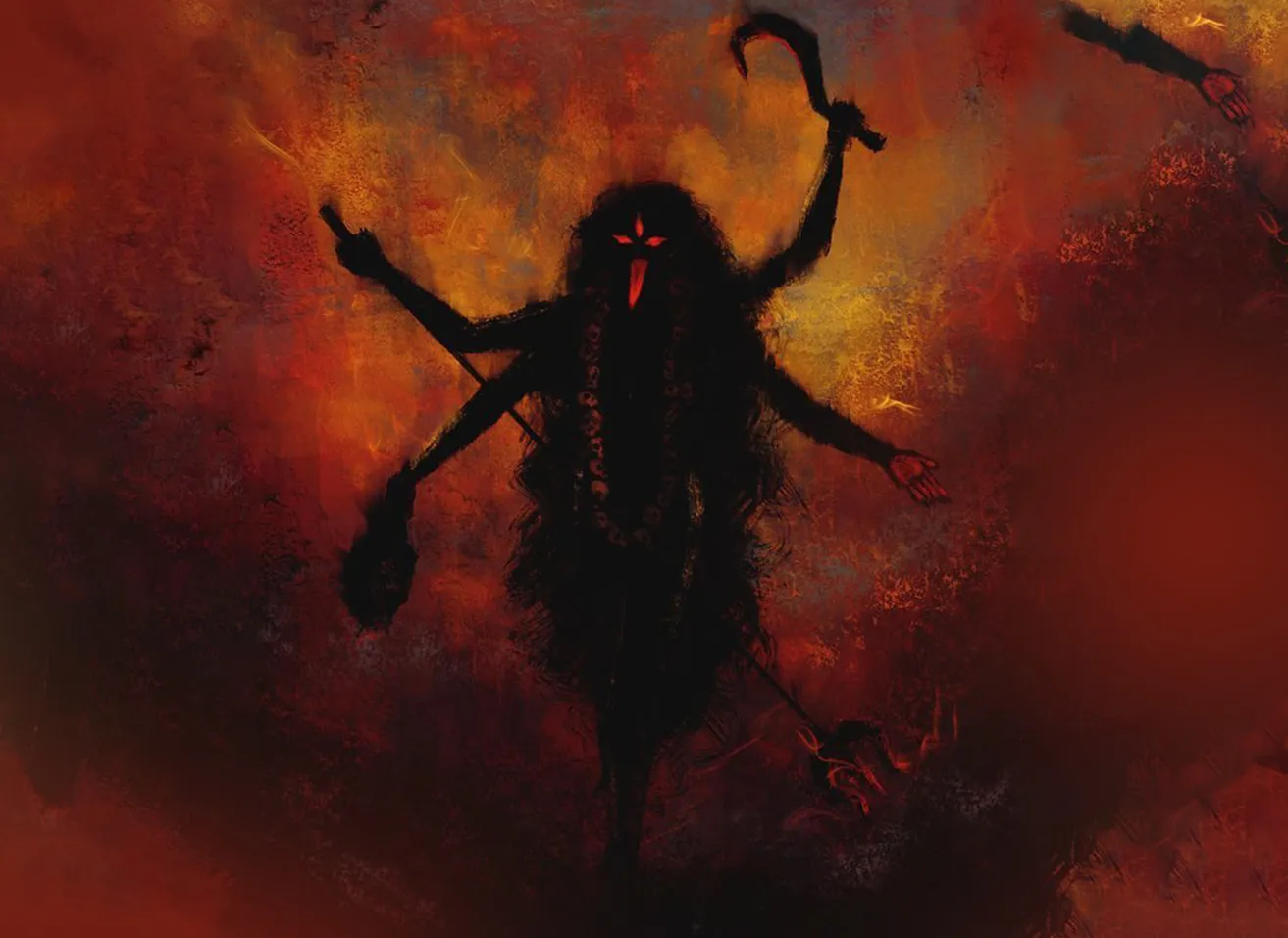
Kali is revered in Shakta traditions as a powerful form of the Divine Mother, and her imagery carries layered religious and philosophical meanings. Her dark complexion is interpreted in some traditions as representing the boundless or all-encompassing nature of reality. Her association with time and dissolution points to the transience of worldly forms, while devotees may also understand her as compassionate and protective. The garland of heads, weapons, and other features in her iconography have symbolic interpretations that vary across texts and schools. These images should not be reduced to a frightening or violent stereotype. In Bengal, Kali worship has a strong devotional presence, and many devotees relate to her as Maa, or Mother. When chanting her mantra, understanding this cultural and theological context can make the prayer more meaningful than repeating syllables without reflection. Interpretations are part of religious traditions and should be described as such, rather than presented as scientifically measurable claims about energy or supernatural effects.
Kali mantra chanting can be included in a simple home puja, but the form of worship depends on the devotee's family customs and religious tradition. A basic devotional observance may involve preparing a clean place, offering a prayer, repeating a publicly shared mantra, and concluding with a moment of gratitude. Some households also offer flowers, water, or a lamp, while others prefer silent remembrance or devotional songs. There is no need to purchase elaborate objects or perform unfamiliar rites to show sincerity. If you are following a specific temple or lineage procedure, learn its details from a reliable source or qualified instructor, because ritual steps and mantras can vary. Advanced tantric puja may involve requirements that should not be improvised from short online instructions. Keep fire, incense, and offerings safe, and respect the beliefs of others in your household. A home puja is a religious practice, not a guaranteed method for obtaining wealth, protection, or control over events. Let the observance remain respectful, voluntary, and safe.
If you want to study Kali mantra chanting more deeply, look for instruction that explains the devotional, philosophical, and ritual context rather than teaching repetition alone. A useful learning pathway may cover Goddess Kali's place in Shakta traditions, the meaning of commonly shared prayers, Sanskrit pronunciation, the role of mantra in worship, and the distinction between public devotional practice and lineage-specific tantric sadhana. Ask how the teacher handles questions, whether the syllabus identifies its sources, and which practices are suitable for beginners. Be cautious of claims that a course guarantees supernatural protection, healing, spiritual awakening, or rapid transformation. Nabatara Institute's blog discusses Kali mantra chanting alongside spiritual sadhana, puja, yoga, and meditation; prospective learners should confirm current course details directly before making a decision. Check the actual curriculum, teaching format, instructor information, and fees rather than assuming that every topic is included. A responsible learning environment should encourage cultural respect, clear explanations, personal boundaries, and informed choice. The aim should be understanding and thoughtful practice, not dependence on promises or fear.