

Begin Your Authentic Hindu Tantra Journey
D iscover the sacred path of authentic Hindu tantra practice designed specifically for sincere beginners. This compassionate guide reveals foundational steps, dispels common myths, and gently invites you to embrace daily sadhana, leading to profound spiritual awakening, inner peace, and holistic well-being under expert, loving guidance.
Published Date: 06 May 2026
Frequently Asked Questions
Why we are India's Best Astrology & Tantra Sadhna Institute
At Nabatara, we are committed to providing the best possible education and training in astrology, numerology, and related fields. Our team of experienced professionals is dedicated to helping you achieve your goals and improve your life.

A beginner should start Hindu Tantra practice by learning its basic philosophy, building a modest daily routine, and seeking reliable guidance before attempting advanced rituals. Tantra is a diverse family of Indian spiritual traditions, not one single technique or a shortcut to supernatural results. A sensible first step is to understand terms such as sadhana, mantra, yantra, and guru, then explore gentle activities such as quiet reflection, natural breath awareness, or a simple prayer. The article also recommends developing a steady daily rhythm, known in some Indian traditions as dinacharya. You do not need to abandon work, family life, or ordinary responsibilities to begin studying. Keep expectations realistic: consistency and understanding matter more than dramatic experiences. Some practices differ by lineage and may require instruction or initiation, so do not copy advanced procedures from videos or social media. If you are considering a structured course, review its syllabus, teacher information, and ethical standards. Treat traditional descriptions of energy and spiritual awakening as religious or philosophical concepts, not scientifically guaranteed outcomes.
Hindu Tantra is a broad collection of Indian spiritual traditions involving philosophy, ritual, mantra, meditation, deity worship, and other disciplines. Popular media often presents Tantra as mainly sexual, mysterious, or focused on occult powers, but those portrayals do not represent the full range of Tantric traditions. Many Hindu Tantra lineages are rooted in devotional and philosophical teachings, including traditions centered on Shiva, Shakti, and the relationship between consciousness and the manifest world. Their practices and interpretations vary, so it is misleading to describe all Tantra through one simplified definition. The article emphasizes that householders can study spiritual ideas while continuing their everyday responsibilities. That does not mean every practice is suitable for independent experimentation; some methods have specific prerequisites or are taught within a teacher-student lineage. When evaluating a course or book, look for clear explanations of the tradition, its historical context, and its actual methods. Be cautious of sensational claims about instant powers, guaranteed protection, or miraculous results. A thoughtful introduction prioritizes learning, discernment, and ethical conduct.
Sadhana means disciplined spiritual practice undertaken with a particular intention, method, or devotional focus. In Hindu Tantra, it can include mantra recitation, meditation, worship, contemplation, and other practices defined by a specific tradition or teacher. The word does not refer to one universal routine: the details depend on the deity, lineage, text, and level of the practitioner. For a beginner, understanding the purpose and context of a practice is more important than collecting many techniques. A simple routine might involve a quiet moment of reflection or a short prayer, while formal Tantric sadhana may have rules about preparation, mantra, timing, or initiation. Do not assume that instructions intended for an advanced practitioner are suitable for everyone. Ask a knowledgeable teacher what a practice involves and whether it is appropriate for your experience. Traditional accounts describe sadhana as a path of spiritual development, but no routine can guarantee awakening, healing, or success in worldly matters. Approach it with patience and avoid judging progress by unusual sensations or dramatic experiences.
"Dinacharya" means a daily routine, and in traditional Indian wellness and spiritual contexts it refers to organizing everyday habits in a steady and considered way. The article presents dinacharya as a foundation for beginning Tantra practice, with attention to waking, personal hygiene, meals, quiet reflection, and a regular time for spiritual study. A predictable routine can make it easier to protect a few minutes for prayer, meditation, or reading without turning practice into an additional source of pressure. You do not need to follow every traditional recommendation or adopt a rigid schedule. Choose habits that are practical, safe, and compatible with your health, work, and family responsibilities. For example, you might begin the day by sitting quietly and noticing your natural breathing before checking your phone. Traditional explanations may describe daily rhythms in terms of elements or prana, but these are spiritual frameworks rather than established medical mechanisms. Avoid claims that a particular morning ritual detoxifies the body or cures digestive problems. Consistency, adequate sleep, balanced meals, and realistic expectations provide a more grounded foundation.
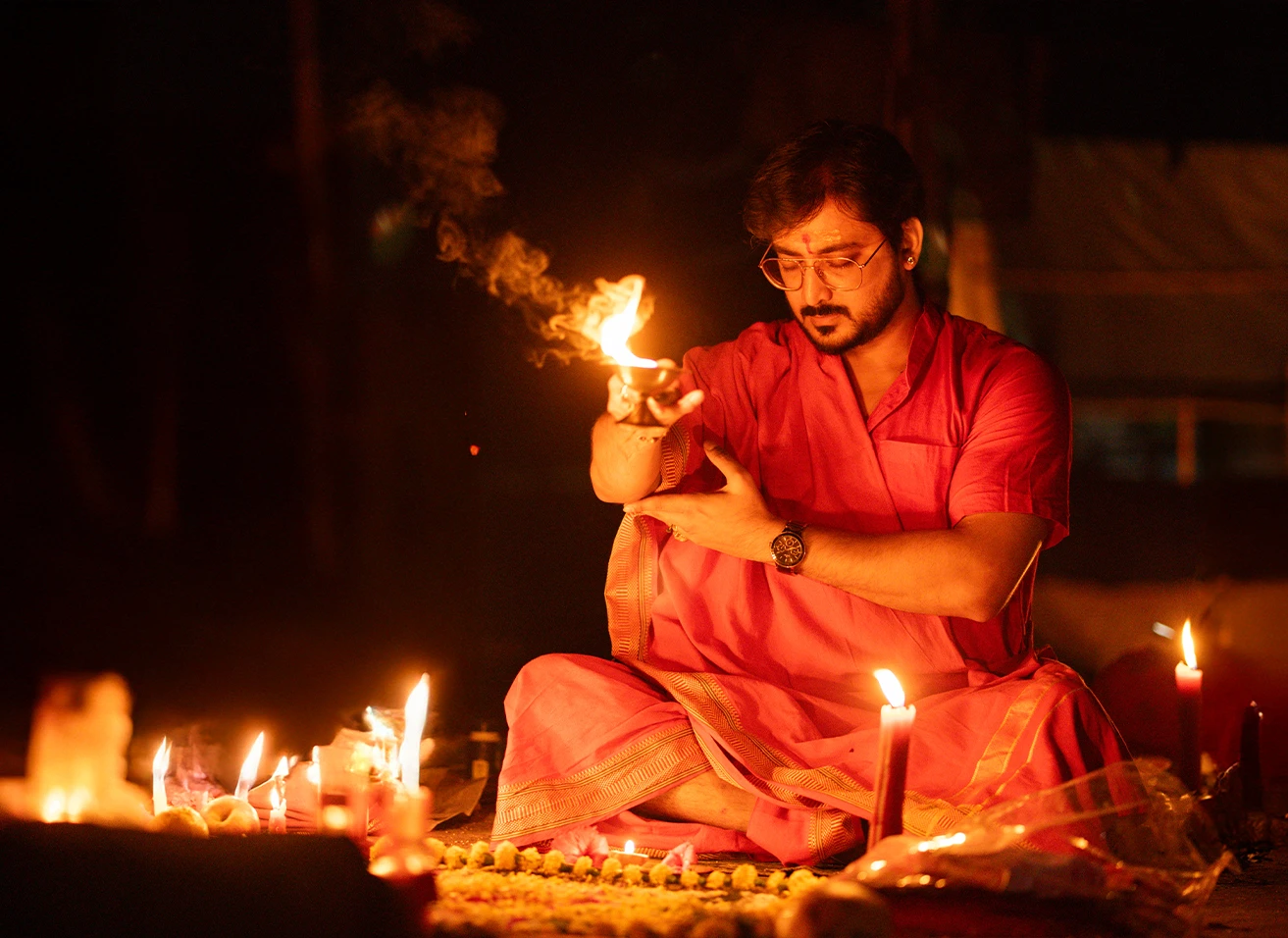
You can create a simple sacred space at home by choosing a quiet, clean, and comfortable place where you can sit without frequent interruption. It does not need to be a separate room, an elaborate altar, or an expensive collection of ritual objects. The article suggests using a clean cloth, a devotional image or symbol, and, if appropriate, a diya or incense to mark the time set aside for practice. These objects can serve as reminders of your intention and help establish a familiar routine. Choose items that are meaningful within the tradition you are studying, and learn their significance rather than treating them as decorative tools with guaranteed powers. If you use a flame or incense, follow ordinary fire safety and ventilation precautions, especially around children, pets, or anyone sensitive to smoke. You can begin by sitting comfortably, offering a short prayer or simply taking a quiet moment before reading. A sacred space should support calm attention, not create anxiety about directions, costly objects, or perfect arrangements. The practice is shaped by understanding and conduct, not the price of the altar.
Mantra japa is the repeated recitation or remembrance of a sacred mantra, and it is one of the practices found in several Hindu spiritual traditions. Japa may be spoken aloud, whispered, or repeated silently, depending on the mantra and the instructions of the tradition. For beginners, the important first step is understanding what a mantra means, where it comes from, and whether it is appropriate for independent practice. Some widely shared devotional prayers are intended for general worship, while other mantras may be connected with initiation or specific ritual requirements. Do not assume that every mantra found online is suitable for everyone. A knowledgeable teacher can help explain pronunciation, context, and customary practice. You may use a mala, or string of prayer beads, if that is part of the method you are learning, but it is not universally required. Practitioners regard mantras as spiritually meaningful; claims that chanting guarantees healing, removes every obstacle, or produces supernatural powers are not established scientific facts. Begin gently, avoid straining your voice, and let understanding guide repetition.
A yantra is a geometric diagram used in certain Hindu spiritual traditions as a representation of a deity, sacred principle, or cosmic order. Its shapes, proportions, and central point can carry symbolic meanings that are explained through the relevant tradition. The Sri Yantra is a well-known example, but it is not the only yantra, and different diagrams have distinct contexts. In some practices, a yantra serves as a focus for worship, contemplation, or meditation. The article introduces yantra alongside mantra as one of the foundational subjects a beginner may encounter. Before attempting a formal ritual or trataka, which means steady gazing, learn what the particular diagram represents and whether the practice has specific instructions. Avoid prolonged staring or forcing your eyes to remain fixed; stop if you experience eye strain, headache, or discomfort. Traditional descriptions of yantras as expressions of divine energy are religious interpretations, not scientifically verified claims that a diagram can attract wealth, cure illness, or guarantee protection. Respectful study begins with symbolism, history, and appropriate guidance.
Pranayama is a group of traditional yogic breathing practices, while prana is understood in Indian spiritual philosophy as a vital life force. Some Tantric and yogic systems include breath-related disciplines, but beginners should not assume that advanced breath control is necessary for starting spiritual study. A gentle alternative is to sit comfortably and notice the natural movement of the breath without deliberately changing its pace or depth. The article discusses Nadi Shodhana, commonly translated as alternate nostril breathing, as an introductory technique. If you want to learn a formal pranayama method, ask a qualified instructor to explain its suitability and demonstrate it correctly rather than relying only on written directions. Avoid forceful breathing, rapid breathing, or prolonged breath retention without appropriate supervision. Stop if you feel dizzy, breathless, panicked, or unwell. People with respiratory, cardiovascular, or other relevant health conditions should consult a healthcare professional before beginning structured breathwork. Traditional explanations of prana should not be confused with medical anatomy or claims that breathing exercises cure psychological or physical conditions.
You do not need to commit to a guru before you begin learning about Hindu Tantra, but personal guidance may be important for particular practices. Reading introductory material, studying basic philosophy, and reflecting on the cultural context can help you understand the subject before choosing a teacher. In many Tantric lineages, diksha means formal initiation, which may involve the transmission of a mantra and instructions for a particular practice. Whether initiation is required depends on the tradition and the method; it is not appropriate to make one rule for every form of Hindu worship or meditation. Ask a teacher to explain why a practice requires initiation, what the process involves, and whether there are alternatives for beginners. A genuine teacher should respect questions and personal boundaries, not demand blind obedience or secrecy about misconduct or large payments under pressure. Nabatara Institute’s article emphasizes guru-guided learning, but prospective students should evaluate the actual teaching approach and support available. Guidance should strengthen your understanding and autonomy, not make you dependent or fearful.
A trustworthy Tantra teacher or course should be transparent about its tradition, curriculum, instructor background, fees, and expectations. Ask what you will study, whether the course is introductory or advanced, which practices require initiation, and how students can raise questions or concerns. A teacher should explain the purpose and limits of a practice without claiming exclusive supernatural authority. Ethical conduct is essential: no student should be pressured into sexual activity, financial dependence, or secrecy about abuse or obedience that overrides personal judgment. Be cautious of anyone who threatens curses, black magic, or spiritual harm to persuade you to buy a ritual or course. Nabatara Institute’s article presents its programs as structured and guided by Gaurav Tribedi; these are the institute’s own descriptions, so review its syllabus and speak with the institute before enrolling. Legal registration of an organization does not independently prove the authenticity of a spiritual lineage or the professional recognition of a course. Compare the information available, take time to decide, and leave any learning environment where you feel unsafe or coerced.
Hindu Tantra is not synonymous with black magic or harmful rituals, although popular accounts sometimes blur different practices and traditions. Tantra Shastra includes diverse philosophical, devotional, and ritual systems, many of which focus on worship, mantra, meditation, and spiritual liberation. Some historical practices may be unfamiliar or complex to modern readers, and traditions differ in how they understand and approach them. It is therefore inaccurate to label the entire subject as harmful or to assume that personal difficulties are evidence of a curse or occult attack. The article distinguishes devotional approaches from practices associated with manipulation or harm. A useful ethical principle is to avoid any ritual or teacher that encourages injury, coercion, revenge, or exploitation. Be especially wary of people who frighten you with claims of black magic and then demand money for urgent remedies. If you are curious about a particular ritual, learn its cultural and textual context from a responsible source rather than attempting it from sensational online instructions. Spiritual study should encourage discernment and respect for others, not fear or harmful behavior.
Yes, many Hindu spiritual traditions include paths for householders, so studying Tantra does not automatically require leaving employment, family, or ordinary responsibilities. The article presents Tantra as a way of bringing awareness and intention into daily life, not simply as a retreat from society. A beginner might reserve a short period for reading, prayer, or a teacher-approved practice, then carry the same attentiveness into work, meals, and conversations. For example, listening carefully to a family member or approaching a difficult task without reacting impulsively can express values such as patience and awareness. These everyday actions are not a replacement for formal Tantric sadhana, but they can help connect spiritual study with conduct. The amount of time available will differ from person to person, so choose a routine that does not compromise sleep, health, or family commitments. Some formal rituals have specific requirements and should not be shortened or altered without guidance. A balanced approach allows spiritual learning to support responsible participation in everyday life rather than become another source of pressure.
You can bring Tantra-inspired mindfulness into everyday situations by practicing attentive awareness, thoughtful speech, and respect for the people around you. The article suggests applying presence to ordinary activities rather than limiting spiritual reflection to a meditation session. At work, you might pause before responding to a stressful message, notice your reaction, and choose a considered response. In a conversation, listen without interrupting or preparing an immediate reply. During a household task, give your attention to what you are doing instead of rushing through it while distracted. These are practical forms of mindfulness and ethical attention; they do not require claiming that every activity is a formal Tantric ritual. Within some Tantric philosophies, ordinary life is not necessarily separate from spiritual life, although interpretations vary across traditions. Mindful habits may help some people approach daily responsibilities more deliberately, but they cannot guarantee conflict-free relationships, career success, or freedom from stress. If a relationship involves intimidation or abuse, spiritual ideas about patience should never be used to excuse harmful behavior. Personal safety and appropriate support come first.
No. Hindu Tantra practice should not be presented as a proven cure for anxiety, illness, trauma, or other psychological or medical conditions. Some practitioners find prayer, mantra, meditation, or gentle breath awareness personally meaningful, but individual experiences do not establish that these practices treat a health condition. Traditional concepts such as prana, nadis, chakras, and spiritual purification belong to particular philosophical and religious frameworks; they are not medical diagnoses. The article discusses inner peace and emotional steadiness but claims that chanting directly heals the nervous system or that a ritual resolves deep psychological problems and should be treated cautiously. If you experience persistent anxiety, depression, panic, sleep difficulties, physical symptoms, or distress that affects daily life, consult a qualified healthcare or mental health professional. Continue prescribed medication or therapy unless your clinician advises otherwise. Avoid teachers who tell you to stop treatment, attribute illness to black magic, or sell expensive rituals as urgent cures. Spiritual practice may form part of a person's personal or religious life, but it should complement—not replace—appropriate professional care.
Yes, Nabatara Institute describes online learning as one of the ways students can study Tantra Shastra without travelling to a physical classroom. Its published course information refers to structured study of traditional Tantra philosophy, mantra practice, meditation, and Tantra Sadhana, with online and offline learning options. The institute also lists areas such as foundational Tantra Vidya, Kundalini-related study, and Mahavidya Sadhana. These details reflect the institute’s own published descriptions, so check the current syllabus before deciding which program suits a beginner. Ask whether lessons are live or recorded, what languages are available, how students interact with instructors, and which practices require individual guidance or initiation. Online lessons can help explain concepts and provide access to teaching, but a video alone may not be sufficient for every formal ritual or advanced method. Confirm fees, course duration, eligibility, certificate terms, and support arrangements directly rather than relying on assumptions. A useful online course should explain its limitations, welcome questions, and encourage safe, ethical learning at a pace appropriate to the student.