Vastu for Griha Pravesh: Essential Rituals You Shouldn't Skip
Stepping into a new home is far more than a physical relocation; it is a profound spiritual threshold where the energy of your past meets the potential of your future. In the ancient wisdom of Sanatan Dharma, a house is not merely brick and mortar but a living entity that breathes, absorbs, and reflects the consciousness of its inhabitants. This comprehensive guide to Vastu for Griha Pravesh reveals the essential rituals that transform a building into a sanctuary of peace, prosperity, and divine protection. From the purifying power of Havan to the precise alignment of Navagraha energies, we explore how these time-tested practices clear karmic residues and invite auspicious vibrations into your life. Guided by the teachings of Tantra Avishikta Gaurav Tribedi and the Nabatara lineage, you will discover why selecting the right Muhurta and performing ceremonies with devotion are not superstitions but scientific methods of energy management. Whether you are a modern professional seeking harmony or a devout seeker honoring tradition, this article provides the spiritual depth and practical clarity needed to ensure your new beginning is blessed by the cosmos itself.
There is a moment in every seeker's life when the external world shifts, and with it, the internal landscape demands realignment. Imagine standing before the heavy wooden door of a new home. The keys are cold in your hand, the paint is fresh, and the air smells of possibility mixed with the faint, lingering dust of construction. For many, this moment is filled with excitement, a rush of adrenaline as they envision furniture arrangements, family gatherings, and quiet mornings by the window. Yet, beneath this surface-level anticipation, there often lies a subtle, unspoken anxiety. It is a whisper from the deep self that asks: Will this space hold me? Will it protect my family? Will the energies here support my growth, or will they drain my vitality?
In the hustle of modern real estate transactions, this spiritual dimension is frequently overlooked. We sign papers, transfer funds, and move boxes, treating the home as a commodity rather than a sacred vessel. However, those who walk the path of Sanatan Dharma understand that a home is a microcosm of the universe, a yantra in three dimensions that interacts with the cosmic forces surrounding it. This is where the profound significance of Vastu for Griha Pravesh emerges, not as a mere checklist of dos and don'ts, but as a vital spiritual protocol for harmonizing human life with natural law.
The term "Griha Pravesh" literally translates to "entering the home," but in the Vedic context, it signifies much more than physical entry. It is an initiation, a rite of passage that marks the transition from being an outsider to becoming an integral part of the energy field of the dwelling. Without this conscious integration, the home remains inert, or worse, it may retain the residual energies of previous occupants, construction workers, or the chaotic vibrations of the building process itself. These unseen layers can manifest as subtle disturbances in sleep, unexplained tensions among family members, or a general sense of restlessness that no amount of interior design can fix. The rituals of Griha Pravesh are designed to cleanse, consecrate, and activate the space, turning it into a living ally in your spiritual and material journey.
At Nabatara Institute of Astrology, we have witnessed countless seekers who, despite having beautiful homes, felt a persistent lack of peace until they addressed the spiritual vacuum within their walls. It is this gap between modern living and ancient wisdom that we seek to bridge, offering guidance that is both rooted in scripture and relevant to contemporary life. This wisdom flows directly from the lineage of Tantra Avishikta Gaurav Tribedi, a devoted disciple of the Sri Jagadguru Shankaracharya parampara. Guruji has spent over two decades immersed in the study and practice of Vedic sciences, understanding that true well-being arises from the alignment of body, mind, and spirit with the cosmic order.
His teachings emphasize that rituals are not empty gestures performed out of fear or superstition but powerful tools of intention and energy manipulation. When we perform Vastu for Griha Pravesh rituals with awareness and devotion, we are essentially tuning the frequency of our home to match the higher vibrations of peace, prosperity, and health. This process requires a deep understanding of Vastu Shastra, the ancient science of architecture and spatial arrangement, as well as Jyotish, the science of light and time. It is not enough to simply enter the house on a convenient weekend; one must choose a time when the planetary positions support stability and growth, and one must perform the rites with a heart full of gratitude and surrender.
For the modern individual, the concept of ritual can sometimes feel alien or burdensome. We live in an era of efficiency, where speed is valued over depth, and results are expected immediately. Yet, the soul operates on a different timeline. It craves meaning, connection, and sanctity. The anxiety that many feel when moving into a new home is often a signal from the soul that it needs this sacred pause, this moment of consecration. By ignoring this need, we risk starting our new chapter on shaky ground. Conversely, by embracing the traditions of Vastu for Griha Pravesh, we lay a foundation of spiritual strength that supports us through the challenges of life.
It is akin to installing a spiritual operating system in your home, one that filters out negative influences and amplifies positive ones. This is not about rejecting modernity but about enriching it with the timeless insights of our ancestors. At Nabatara, we believe that every home should be a temple, a place where the divine is welcomed and honored. This does not mean that every corner must be filled with idols, but rather that the atmosphere should be charged with reverence and purity. The rituals of Griha Pravesh help to establish this atmosphere. They begin with the cleansing of the space, removing any stagnant or negative energy that may have accumulated. This is followed by the invocation of divine presence, inviting the deities and celestial beings to bless the home and its inhabitants.
The culmination of these rites is the first cooking and eating of food in the new home, symbolizing the sustenance and nourishment that the space will provide. Each step is imbued with symbolic meaning, connecting the physical act of moving with the metaphysical reality of energetic alignment. Through this process, the home becomes a partner in your sadhana, your spiritual practice, supporting your efforts to grow, heal, and evolve. The importance of this topic cannot be overstated in the light of Sanatan Dharma, which views all of creation as interconnected. The home is the primary environment where we spend the majority of our time, where we rest, recharge, and connect with our loved ones. If this environment is out of balance, it affects every aspect of our lives, from our health and relationships to our career and spiritual progress.
Therefore, taking the time to perform Vastu for Griha Pravesh rituals is an investment in our overall well-being. It is a declaration of intent that we value harmony, peace, and divine grace in our daily lives. For those who feel called to deepen their understanding of these principles, Nabatara offers a range of educational programs in Vastu and astrology that explore the intricacies of spatial energy and spiritual practice. These courses are designed to empower individuals with the knowledge and skills to create sacred spaces in their own lives, guided by the authentic transmission of the Guru-Shishya tradition.
The Vedic Foundations: Ancient Knowledge for Today
To truly appreciate the depth of Vastu for Griha Pravesh, one must look beyond the surface rituals and understand the philosophical and scriptural foundations upon which they are built. The Vedas, the oldest scriptures of humanity, describe the universe as a manifestation of consciousness, where every object and space is infused with prana, or life force. Vastu Shastra, often referred to as the "Yoga of Architecture," is derived from these Vedic principles. It is not merely a set of rules for building houses but a holistic science that seeks to align human dwellings with the natural rhythms of the earth and the cosmos. The word "Vastu" comes from the root "vas," meaning to dwell or to reside, implying that the purpose of architecture is to create spaces that support the dweller's highest potential.
In this context, the home is seen as a reflection of the human body, with different parts of the house corresponding to different organs and energy centers. Just as a healthy body requires balance and harmony, a healthy home requires proper orientation, proportion, and energy flow. The practice of Griha Pravesh is deeply rooted in the Grhya Sutras, ancient texts that outline the domestic rituals and ceremonies of Hindu life. These sutras provide detailed instructions on how to consecrate a new home, emphasizing the importance of purification, invocation, and offering. The rituals are designed to remove any doshas, or defects, that may be present in the structure or the land and to invite the blessings of the Devas, or celestial beings.
One of the key concepts in Vastu Shastra is the Vastu Purusha Mandala, a metaphysical plan of the building that depicts the Vastu Purusha, the cosmic being who resides in the plot of land. According to legend, the Vastu Purusha was pinned down by the gods to prevent him from causing chaos, and his body forms the grid of the mandala. Each square of the mandala is governed by a specific deity and planetary influence, and the placement of rooms and activities in the house should align with these energies. For example, the northeast corner, known as the Ishanya Kona, is ruled by Shiva and is considered the most sacred part of the house, ideal for prayer and meditation. The southeast, ruled by Agni, the fire god, is suitable for the kitchen, while the southwest, ruled by Niruti, is best for the master bedroom, providing stability and grounding.
Understanding these principles is crucial for performing Vastu for Griha Pravesh effectively. It is not enough to simply perform the rituals; one must also ensure that the physical structure of the home is in harmony with Vastu principles. If there are major Vastu defects, such as a toilet in the northeast or a kitchen in the northwest, the rituals alone may not be sufficient to correct the imbalance. In such cases, remedial measures, such as the use of specific colors, materials, or yantras, may be required. This is where the expertise of a qualified Vastu consultant becomes invaluable. At Nabatara Institute of Astrology, our students learn to analyze floor plans and identify potential Vastu issues, offering practical solutions that are both effective and aesthetically pleasing. Our Advanced Tantra Sadhana Course includes modules on Vastu Shastra, teaching students how to integrate spiritual practices with architectural principles to create truly sacred spaces.
The role of Jyotish, or Vedic astrology, in Griha Pravesh cannot be overstated. While Vastu Shastra deals with the spatial aspect of the home, Jyotish deals with the temporal aspect. The timing of the entry into the new home is critical, as it sets the tone for the future experiences of the inhabitants. An auspicious Muhurta, or electional chart, is calculated based on the birth charts of the head of the family and the planetary positions at the time of entry. The goal is to choose a time when the benefic planets, such as Jupiter, Venus, and Mercury, are strong and well-placed and when the malefic planets, such as Saturn, Mars, and Rahu, are weak or favorable. The Moon's position is particularly important, as it governs the mind and emotions. A strong and well-placed moon ensures mental peace and emotional stability in the new home.
Gaurav Tribedi emphasizes that the selection of the Muhurta is not a mechanical process but a spiritual art that requires intuition and deep knowledge of the scriptures. He often refers to the Brihat Parashara Hora Shastra, the foundational text of Vedic astrology, which provides detailed guidelines for choosing auspicious times for various activities. Guruji teaches that the planets are not distant celestial bodies but manifestations of divine consciousness that influence our lives in subtle ways. By aligning our actions with their rhythms, we can harness their positive energies and mitigate their negative effects. This is the essence of Graha Shanti, or planetary peace, which is a key component of Vastu for Griha Pravesh. The rituals often include prayers to the Navagrahas, the nine planets, seeking their blessings and protection.
The integration of Vastu and Jyotish creates a powerful synergy that enhances the effectiveness of the Griha Pravesh rituals. When the spatial arrangement of the home is in harmony with Vastu principles, and the timing of the entry is aligned with favorable planetary positions, the result is a home that is deeply connected to the cosmic order. This connection brings a sense of ease and flow to the lives of the inhabitants, supporting their goals and aspirations. At Nabatara, we teach our students to view Vastu and Jyotish as complementary disciplines that work together to create holistic well-being. Our Jyotish Foundation Program provides a solid grounding in the principles of astrology, enabling students to calculate Muhurtas and understand planetary influences. This knowledge is then applied to Vastu consultations, allowing for a comprehensive approach to home harmony.
Furthermore, the Vedic foundations of Vastu for Griha Pravesh extend beyond the physical and temporal realms into the psychological and spiritual dimensions. The rituals are designed to purify the mind and heart of the inhabitants, preparing them to receive the blessings of the new home. The act of performing the rituals with devotion and sincerity creates a positive mental state, reducing anxiety and increasing feelings of gratitude and hope. This psychological shift is crucial for a successful transition into the new space. The home becomes a mirror of the inner state of the inhabitants, reflecting their values, beliefs, and aspirations. By infusing the home with positive intentions through the rituals, we create a feedback loop that reinforces these qualities in our daily lives. This is the true power of Vastu for Griha Pravesh: it is not just about arranging furniture or choosing colors but about cultivating a sacred atmosphere that nurtures the soul.
The Hidden Dimensions: Secrets Only the Sadhaka Knows
While many people approach Vastu for Griha Pravesh as a cultural tradition or a superstitious requirement, those who have walked the path of sadhana understand that these rituals operate on subtle energetic levels that are often invisible to the naked eye. There are hidden dimensions to these practices that go far beyond the visible acts of lighting a lamp or breaking a coconut. These secrets are not meant to be kept hidden out of exclusivity but rather because they require a certain level of spiritual maturity and awareness to be understood and utilized effectively. For the serious seeker, the home is not just a shelter but a yantra, a geometric instrument that can amplify or dampen specific frequencies of consciousness. The rituals of Griha Pravesh are the key to activating this yantra, turning it into a powerful tool for spiritual growth and manifestation.
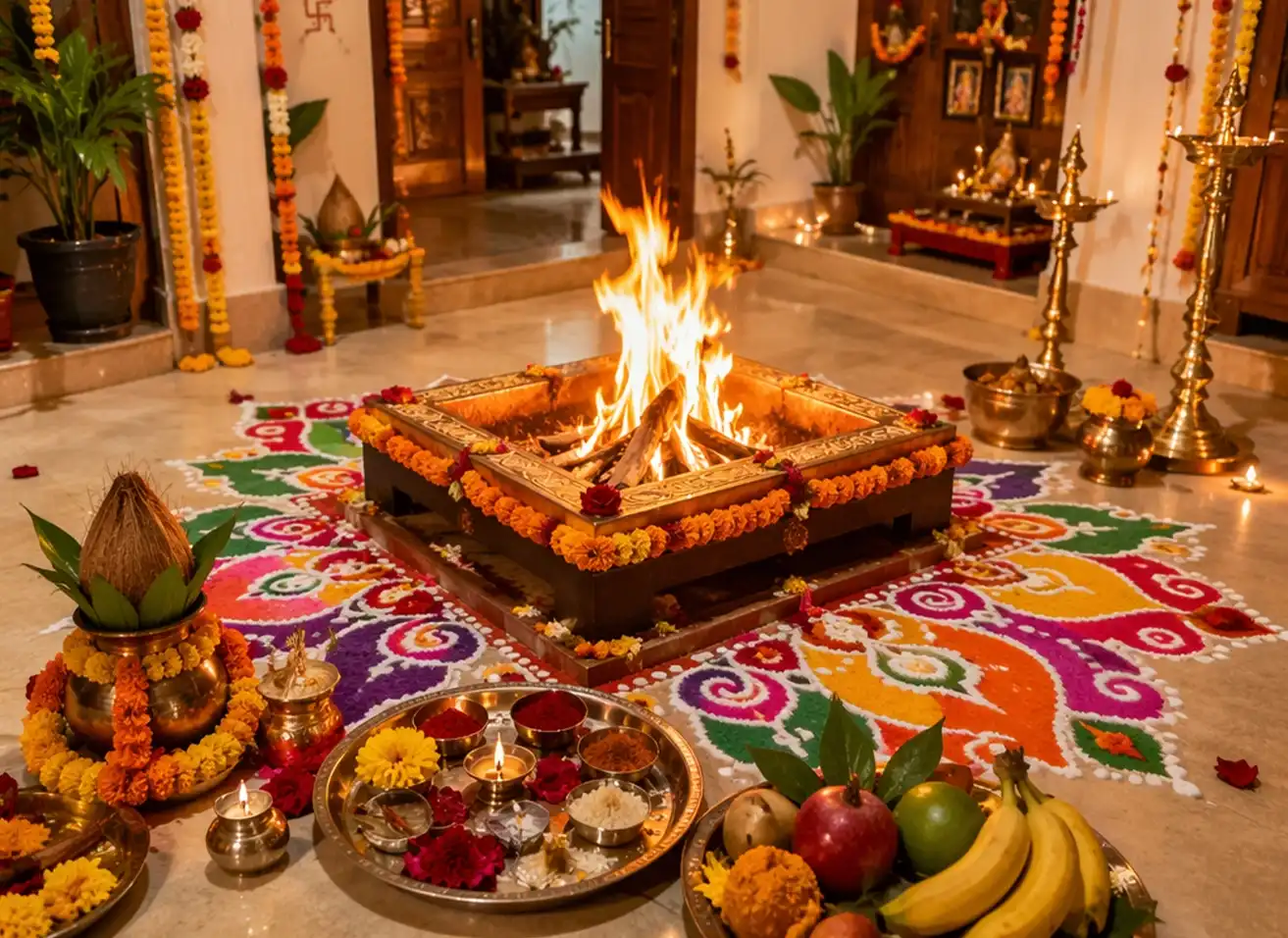
One of the most profound aspects of Griha Pravesh is the concept of Prana Pratishtha, or the establishment of life force. Just as a deity idol is energized through specific mantras and rituals to become a living presence, the home itself is infused with prana during the Griha Pravesh ceremony. This is achieved through the chanting of Vedic mantras, which are sound vibrations that resonate with specific cosmic frequencies. When chanted with correct pronunciation and intention, these mantras create a shield of positive energy around the home, repelling negative influences and attracting divine blessings. The Havan, or fire ritual, plays a central role in this process. Fire is considered the mouth of the gods, and the offerings made into the fire are transformed into subtle energy that nourishes the celestial beings and the environment.
However, the true secret lies in the state of consciousness of the performers. If the rituals are performed mechanically, without devotion or awareness, their effect is limited. But if they are performed with a heart full of love and a mind focused on the divine, they become powerful catalysts for transformation. This is why Gaurav Tribedi emphasizes the importance of Bhava, or emotional intent, in all spiritual practices. He teaches that the energy of the home is a reflection of the energy of its inhabitants. If the family enters the home with fear, anxiety, or conflict, these energies will be imprinted on the space. But if they enter with joy, gratitude, and unity, the home will resonate with these positive vibrations. The rituals of Vastu for Griha Pravesh provide a structured framework for cultivating these positive states, helping the family to align their energies before stepping into the new space.
Another hidden dimension is the role of the Kalash, the sacred pot that is placed at the entrance of the home during the ceremony. The Kalash is not just a decorative item; it is a symbol of the cosmos, containing the five elements: earth, water, fire, air, and ether. The water inside the Kalash represents the primordial ocean of consciousness, while the mango leaves and coconut on top represent the unfolding of life and the crown of enlightenment. The Kalash acts as a conduit for divine energy, drawing it into the home and distributing it throughout the space. It is believed that the presence of the Kalash invokes the presence of Lakshmi, the goddess of wealth and prosperity, and Ganesha, the remover of obstacles. By honoring the Kalash with prayers and offerings, the family invites these divine energies to reside in their home, bringing abundance and success.
The Navagraha prayers, or prayers to the nine planets, are another crucial element of the Griha Pravesh ritual. Each planet governs specific aspects of life, such as health, wealth, relationships, and career. By offering prayers to the Navagrahas, the family seeks to balance these influences in their lives. For example, praying to Jupiter can enhance wisdom and spiritual growth, while praying to Venus can improve relationships and artistic expression. The specific mantras used for each planet are designed to harmonize the individual's energy with the planetary frequency, reducing conflicts and enhancing cooperation. This is a form of Graha Shanti that works on a deep subconscious level, helping to resolve karmic patterns and create a smoother flow of life events. At Nabatara, we teach our students the precise mantras and rituals for each planet, enabling them to perform these remedies with confidence and efficacy through our spiritual sadhana programs.
Furthermore, the direction of entry into the home is of great significance. According to Vastu Shastra, entering from the east or north is considered auspicious, as these directions are associated with positive energy flows. The east is the direction of the rising sun, symbolizing new beginnings and enlightenment, while the north is the direction of Kubera, the god of wealth. Entering from these directions aligns the family with these beneficial energies, setting a positive tone for their life in the new home. The first step into the home is also significant, with the right foot traditionally entering first to symbolize the activation of positive action and stability. These small details, though seemingly minor, carry profound symbolic weight and contribute to the overall energetic imprint of the ceremony.
The concept of Sankalpa, or solemn vow, is also integral to the success of Vastu for Griha Pravesh. Before beginning the rituals, the head of the family takes a Sankalpa, stating their intention to perform the ceremony for the well-being of their family and the harmony of their home. This act of declaration focuses the mind and aligns the will with the desired outcome. It creates a powerful field of intention that guides the entire process. The Sankalpa is not just a verbal statement but a commitment of the heart, a promise to uphold the values of truth, righteousness, and compassion in the new home. This commitment serves as an anchor for the family, reminding them of their higher purpose and guiding their actions in the days and years to come.
For those who wish to delve deeper into these esoteric practices, Nabatara offers specialized training in Tantra and Mantra Shastra. These courses reveal the hidden mechanics of energy work, teaching students how to use sound, symbol, and intention to transform their reality. Under the guidance of Gaurav Tribedi, students learn to perceive the subtle energies of space and time, developing the sensitivity needed to perform advanced rituals. This knowledge is not just theoretical but practical, empowering individuals to take charge of their spiritual environment and create lives of meaning and purpose. By understanding the hidden dimensions of Vastu for Griha Pravesh, we can move beyond superficial compliance and engage in a deep, transformative dialogue with the cosmos.
Walking with the Master: Gaurav Tribedi's Teachings & Nabatara's Global Mission
At the heart of Nabatara Institute of Astrology is the living presence of Tantra Avishikta Gaurav Tribedi, a master whose life is a testament to the power of dedicated sadhana. With over twenty years of immersive practice in the rigorous traditions of the Sri Jagadguru Shankaracharya lineage, Guruji has distilled centuries of wisdom into a methodology that is both authentic and accessible. His approach to Vastu for Griha Pravesh is not merely academic; it is born from direct experience and intuitive insight. Gaurav Tribedi teaches that a home is a living organism, sensitive to the thoughts, emotions, and actions of its inhabitants. Therefore, the rituals of entry are not just about pleasing deities but about aligning the human psyche with the cosmic rhythm. This alignment is what brings true peace and prosperity, not the mechanical performance of rites.
Guruji's teachings emphasize the importance of the Guru-Shishya parampara, the unbroken chain of transmission from teacher to student. In this tradition, knowledge is not just information but a living energy that is passed down through initiation and personal guidance. At Nabatara, this principle is upheld in every course and consultation. Students are not just taught the rules of Vastu and astrology; they are initiated into the spirit of these sciences, learning to feel the energy of a space and the pulse of the planets. This intuitive ability is what distinguishes a true practitioner from a mere technician. Gaurav Tribedi's own journey, marked by intense austerity and deep devotion, serves as an inspiration to all who walk this path. His life demonstrates that spiritual mastery is possible in the modern world, provided one is willing to commit to the discipline of sadhana.
The Nabatara method of Vastu for Griha Pravesh integrates multiple dimensions of Vedic science. It combines the structural principles of Vastu Shastra with the temporal precision of Jyotish and the energetic power of Tantra. This holistic approach ensures that every aspect of the home and the timing of the entry are optimized for harmony. Guruji often says that Vastu is the body, Jyotish is the mind, and Tantra is the soul of the home. When all three are aligned, the home becomes a powerful instrument for spiritual evolution. This integrated perspective is what sets Nabatara apart from other institutions that may focus on only one aspect of these sciences. Our shishyas from 15+ countries come to Nabatara seeking this comprehensive understanding, recognizing that fragmented knowledge cannot address the complex realities of modern life.
One of the key teachings of Gaurav Tribedi is the concept of conscious living. He encourages his students to bring awareness to every aspect of their lives, from the food they eat to the spaces they inhabit. In the context of Vastu for Griha Pravesh, this means being mindful of the intentions behind the rituals and the energy brought into the home. It means understanding that every object in the house has an energy signature and that clutter and disorganization can block the flow of prana. Guruji teaches simple yet profound practices for maintaining the energy of the home, such as daily cleaning, regular ventilation, and the use of natural materials. These practices, when combined with the initial Griha Pravesh rituals, create a sustained environment of purity and peace.
The global mission of Nabatara Institute of Astrology is to make this ancient wisdom accessible to seekers around the world. In an age where information is abundant but wisdom is scarce, Nabatara stands as a beacon of authenticity. The institute is registered as a Section 8 non-profit organization under the Government of India, a status that underscores its commitment to service and education rather than commercial gain. This purity of intent is reflected in the quality of teaching and the care taken in every interaction. Whether through online courses, residential workshops, or personal consultations, Nabatara strives to empower individuals with the tools they need to create harmonious and spiritually aligned lives.
Gaurav Tribedi's guidance extends beyond the technical aspects of Vastu and astrology. He mentors his students in the art of living, teaching them how to cultivate inner silence, compassion, and resilience. He believes that true Vastu begins within, in the heart and mind of the individual. A peaceful mind creates a peaceful home, regardless of the external circumstances. Therefore, the preparation for Vastu for Griha Pravesh includes inner purification through yoga and meditation classes, prayer, and self-reflection. This inner work is what gives the outer rituals their power and meaning. Without it, the rituals are empty shells; with it, they become vessels of divine grace.
The Institute's environment is designed to accelerate spiritual growth. The campus itself is laid out according to Vastu principles, creating a field of high vibration that supports learning and transformation. Students report feeling a sense of calm and clarity as soon as they enter the premises, a testament to the power of sacred architecture. This experiential learning is a hallmark of the Nabatara approach. Students do not just study Vastu; they live it. They observe how energy moves in space, how planets influence mood, and how rituals affect consciousness. This direct experience is what transforms knowledge into wisdom. For those seeking to deepen their practice, Nabatara offers advanced courses in Tantra and Sadhana. These programs are designed for serious practitioners who wish to master the esoteric arts of energy manipulation and spiritual awakening.
Under the direct supervision of Gaurav Tribedi, students learn advanced mantra techniques, yantra construction, and ritual performance. These skills are not just for personal benefit but for serving others, helping families and communities to create spaces of healing and harmony. The demand for such authentic guidance is growing globally, as more people recognize the limitations of material success and seek deeper fulfillment. The story of Nabatara is one of dedication and service. From its humble beginnings to its current status as a respected center of Vedic learning, the institute has remained true to its mission of preserving and propagating ancient wisdom. Gaurav Tribedi's vision is to create a global community of awakened individuals who live in harmony with themselves, each other, and the planet.
Integration, Real-Life Transformations & Your Next Step
As we draw this exploration of Vastu for Griha Pravesh to a close, it is essential to integrate these teachings into the fabric of daily life. Knowledge without application is like a seed that never germinates. The true value of these rituals lies not in their performance alone but in the lasting change they bring to our consciousness and our environment. When we enter a new home with the right intentions, supported by the correct timing and sacred rites, we set in motion a cycle of positive energy that can sustain us for years. However, this energy must be nurtured. It requires ongoing attention, care, and spiritual discipline. The home is not a static entity; it is dynamic, responding to our thoughts, actions, and emotions. Therefore, the practice of Vastu is a continuous journey, not a one-time event.
Consider the story of Anjali, a software engineer from Bangalore who recently moved into a new apartment. Like many modern professionals, she was skeptical of traditional rituals, viewing them as outdated customs. However, feeling a persistent sense of unease in her new space, she decided to consult with Nabatara. After a detailed analysis of her floor plan and birth chart, Gaurav Tribedi recommended a simplified but authentic Griha Pravesh ceremony, along with specific Vastu corrections. Anjali approached the ritual with an open mind, focusing on the intention of creating a peaceful home. The transformation was immediate. She reported a noticeable shift in the atmosphere, describing it as lighter and more welcoming. Over the following months, she experienced improved sleep, better relationships with her family, and a greater sense of clarity in her work. Anjali's story is not unique; it is a common testimony among those who embrace the wisdom of Vastu for Griha Pravesh with sincerity.
To help you navigate your own journey, we have compiled answers to some of the most frequently asked questions about these rituals. These insights are drawn from years of teaching and consultation at Nabatara Institute of Astrology. Many seekers ask whether it is necessary to perform a full-scale Havan for Griha Pravesh if they live in an apartment where open fire is restricted. The answer lies in understanding the essence of the ritual. While the traditional Havan involves a sacred fire, the core purpose is purification and invocation. In situations where a fire ritual is not feasible, alternative methods such as using camphor, incense, or even a symbolic electric lamp can be employed. The key is the intention and the chanting of mantras. Gaurav Tribedi advises that the sincerity of the devotee is more important than the scale of the ritual. A small, heartfelt ceremony performed with awareness is far more effective than a grand spectacle done without devotion.
Another common question concerns the selection of the auspicious date and time. Many people wonder if they can choose a weekend that is convenient for their schedule rather than following the strict Muhurta calculations. While convenience is important, the timing of Griha Pravesh sets the energetic template for the future. Choosing an inauspicious time can lead to unnecessary obstacles and struggles. It is recommended to book a personalized Vastu consultation with a qualified astrologer who can calculate a Muhurta that balances planetary influences with your personal chart. If a perfect Muhurta is not available, one can choose a generally auspicious day and perform additional remedies, such as chanting specific mantras or donating to charity, to mitigate any negative effects. The goal is to align with the cosmic flow, not to fight against it.
People often inquire about the role of cleanliness and decluttering in Vastu. Is it really necessary to clean the house thoroughly before the ritual? The answer is a resounding yes. Physical cleanliness is a reflection of mental and energetic clarity. Clutter blocks the flow of prana, creating stagnation and confusion. Before performing Vastu for Griha Pravesh, it is essential to clean the house from top to bottom, removing any debris, dust, or unwanted items. This physical act of cleansing prepares the space to receive positive energy. It also helps to clear the mind of the inhabitants, allowing them to approach the ritual with a sense of freshness and renewal. A clean home is a happy home, and a happy home is fertile ground for spiritual growth.
What about those who belong to different faiths or cultures? Can they still benefit from Vastu and Griha Pravesh rituals? Absolutely. The principles of Vastu Shastra are universal, based on natural laws of energy and geometry. They are not exclusive to any particular religion. People of all faiths can apply Vastu principles to create harmonious living spaces. The rituals of Griha Pravesh can be adapted to include prayers and symbols from one's own tradition. The essence is the intention to bless the home and invite positive energy. Gaurav Tribedi emphasizes that spirituality is inclusive, and the language of energy is understood by all. Whether you chant Vedic mantras, Christian prayers, or Islamic supplications, the key is the devotion and sincerity behind them.
How long do the effects of the Griha Pravesh ritual last? This is a question of maintenance. The ritual creates a strong initial imprint of positive energy, but this energy needs to be sustained through daily practices. Regular cleaning, ventilation, and the use of positive affirmations help to maintain the vibrational frequency of the home. Additionally, celebrating festivals and performing small rituals on auspicious days can reinforce the blessings received during Griha Pravesh. Think of the ritual as planting a seed; it needs water and sunlight to grow. Your daily actions and intentions are the water and sunlight that nurture the energy of your home.
Finally, many ask where they can learn more about these practices. Nabatara Institute of Astrology offers a range of courses designed for beginners and advanced practitioners alike. Whether you are interested in learning the basics of Vastu Shastra, mastering the art of Muhurta selection, or deepening your understanding of Tantra and mantra, there is a path for you. You can enroll in our Vedic astrology course, explore our numerology courses, or study occult science with us. We also offer guidance on authentic puja practices to enhance your daily spiritual routine. Our online and offline programs are taught by experienced faculty under the guidance of Gaurav Tribedi. We invite you to visit nabatara.com to explore our offerings and take the next step in your spiritual journey. Join our community of seekers and discover how ancient wisdom can transform your modern life.
The journey of Vastu for Griha Pravesh is a journey inward as much as it is outward. It invites us to examine our relationship with space, with matter, and with the divine. It challenges us to live with awareness, to honor the sacred in the ordinary, and to create environments that reflect our highest aspirations. As you stand on the threshold of your new home, remember that you are not just entering a building; you are stepping into a new chapter of your soul's evolution. May your home be a sanctuary of peace, a fortress of protection, and a temple of light. May the blessings of the ancestors, the deities, and the cosmos be with you always. Let this be the beginning of a life filled with harmony, prosperity, and spiritual fulfillment. Welcome home.