
Discover Who The Goddess Tara Is
D iscover the profound wisdom of Goddess Tara, the compassionate Mahavidya who gently guides spiritual seekers through life's darkest storms. Learn authentic mantra practices, step-by-step sadhana, and transformative spiritual insights with expert guidance from Nabatara Institute to unlock deep inner peace, clarity, and lasting holistic well-being today.
Published Date: 22 May 2026
Frequently Asked Questions
Why we are India's Best Astrology & Tantra Sadhna Institute
At Nabatara, we are committed to providing the best possible education and training in astrology, numerology, and related fields. Our team of experienced professionals is dedicated to helping you achieve your goals and improve your life.

Goddess Tara is a powerful manifestation of the Divine Mother and the second of the Ten Mahavidyas in Shakta Tantra. Her name is commonly interpreted as the one who helps devotees cross difficulties and move towards spiritual liberation. Within Hindu tantric traditions, she is revered as a compassionate yet powerful goddess associated with wisdom, protection, guidance, and transformation. She is also known as Neela Saraswati in certain traditions and is frequently depicted with a blue complexion. Her iconography includes sacred objects such as a lotus, sword, scissors, and skull cup, each carrying particular symbolic meanings. The lotus represents spiritual purity, while the sword is associated with the wisdom that cuts through ignorance. Goddess Tara is worshipped by devotees seeking spiritual understanding, courage, and a deeper connection with the Divine Mother. Her significance extends beyond ordinary devotional worship into the philosophical teachings of Tantra Shastra. Understanding Tara requires appreciating both her fierce and compassionate aspects, which together represent the transformative nature of divine feminine consciousness.
Goddess Tara is considered the second Mahavidya because she occupies the second position in the traditionally recognized group of ten great wisdom goddesses in Shakta Tantra. The Dasha Mahavidyas represent different manifestations of Mahadevi, the supreme Divine Mother, and each expresses a distinct dimension of spiritual knowledge and power. Kali generally appears first, followed by Tara, whose significance is associated with guidance, protection, wisdom, and liberation. A well-known origin narrative describes Goddess Sati manifesting ten divine forms when she and Lord Shiva experienced a disagreement concerning her wish to attend her father Daksha's sacrificial ceremony. Tara emerged as one of these ten manifestations, demonstrating the vastness of Shakti. Her position is not simply an indication of numerical order; it also reflects her important place within tantric philosophy and worship. In several Shakta traditions, Tara is regarded as a powerful expression of liberating wisdom. The precise descriptions of the Mahavidyas and their origin stories differ between religious texts and lineages. Studying these variations provides a deeper understanding of the diversity of Hindu Tantra.
The name Tara is traditionally interpreted as the one who carries across, guides, or helps beings overcome difficulties. It is commonly connected with the Sanskrit root associated with crossing or passing beyond, making the name particularly meaningful within spiritual philosophy. In Hindu Shakta traditions, Goddess Tara is understood as a divine guide who helps devotees move beyond ignorance and the limitations of worldly existence. The ocean of samsara, which represents the continuous cycle of birth, death, and rebirth, is frequently used as a metaphor for the challenges of human existence. Tara symbolically represents the wisdom and divine compassion that guide the spiritual seeker across this ocean. Her name is also associated with the meaning of a star, suggesting light and direction in darkness. These interpretations help explain why she is revered as a protective and guiding manifestation of the Divine Mother. However, the symbolism should be understood within its religious and philosophical context rather than as a promise that worship will eliminate every personal difficulty. Her deeper message concerns discernment, devotion, and the pursuit of spiritual understanding.
Hindu Goddess Tara and Buddhist Goddess Tara belong to different religious traditions, although they share historical connections and associations with compassion, wisdom, and liberation. In Shakta Hinduism, Tara is the second of the Ten Mahavidyas and is worshipped through particular tantric scriptures, devotional practices, and forms of sadhana. Her iconography may depict a fierce blue goddess holding a sword, scissors, lotus, and skull cup. In Tibetan Buddhism, Tara is an important enlightened female figure associated with compassion and the removal of obstacles to spiritual progress. Green Tara and White Tara are among her widely recognized forms, each carrying distinct symbolic associations. The Buddhist mantra Om Tare Tuttare Ture Svaha is particularly associated with her worship. Although the two traditions share the name Tara and have complex historical relationships, their theological identities, rituals, and textual traditions should not be treated as interchangeable. The Hindu Mahavidya Tara and Buddhist Tara therefore require separate contextual study. Understanding this distinction helps readers appreciate both traditions without confusing their mantras, meditation methods, or religious meanings.
Worshipping Goddess Tara is traditionally associated with developing spiritual wisdom, devotion, courage, discernment, and a sense of divine guidance. Within Shakta Tantra, devotees regard her as a compassionate manifestation of the Divine Mother who helps spiritual seekers move beyond ignorance and fear. Her name itself carries the symbolism of helping beings cross difficulties and progress towards liberation. Through prayer, mantra chanting, and meditation, practitioners may cultivate a more focused and reflective approach to their spiritual lives. Tara's symbolism also encourages individuals to recognize the importance of wisdom when navigating uncertainty and making personal decisions. Some devotees associate her worship with protection and overcoming obstacles, although these are religious beliefs rather than scientifically established outcomes. It is important not to approach spiritual worship as a guaranteed solution for financial difficulties, relationship problems, illness, or psychological distress. The deeper significance of Tara sadhana lies in devotion, self-awareness, and understanding the philosophical teachings associated with the Goddess. A balanced practice combines spiritual sincerity with responsible everyday decisions and appropriate professional support whenever necessary.
Om Hreem Streem Hum Phat is a mantra associated with Goddess Tara in certain Hindu tantric traditions. It is regarded as a sacred invocation containing bija mantras, or seed syllables, that carry specific symbolic and spiritual meanings within their respective lineages. Om is a sacred syllable associated with the universal principle of consciousness. Hreem is traditionally connected with divine feminine power and spiritual illumination, while Streem is interpreted through associations with the Goddess and her particular manifestations. Hum is commonly associated with protection and transformative power, and phat is traditionally understood as an expression of cutting through or removing obstacles within tantric symbolism. These syllables should not be treated as ordinary words with universally agreed English translations. Their significance depends on the religious texts and traditions in which they appear. Practitioners approach the mantra with devotion, concentration, and respect for its spiritual context. Those interested in formal Tara mantra sadhana should learn the appropriate pronunciation and practice requirements from a knowledgeable teacher rather than assuming that every tantric mantra is suitable for unrestricted use.
Beginners should start learning the Goddess Tara mantra by understanding its meaning, pronunciation, and devotional context before establishing a simple chanting routine. A commonly discussed invocation in certain Hindu tantric traditions is Om Hreem Streem Hum Phat. Begin by selecting a quiet and comfortable place where you can concentrate without unnecessary interruptions. Sit in a relaxed position, keeping your body comfortable rather than forcing a rigid posture. Take a few natural breaths and bring your attention to the purpose of your practice. Recite the mantra slowly, giving attention to each syllable instead of concentrating only on the number of repetitions. You may chant aloud or softly according to your comfort and the guidance appropriate to your tradition. A mala containing 108 beads can be used for counting, although it is not essential for every form of devotional prayer. Beginners should avoid experimenting with complicated tantric rituals or intensive practices based on random internet instructions. Some formal Tara mantras require initiation and specific guidance. Developing a respectful understanding of the Goddess is a valuable starting point for anyone interested in authentic Tara worship.
Tara Sadhana is a traditional spiritual discipline dedicated to Goddess Tara, while ordinary mantra chanting may simply involve repeating her name or a devotional invocation. The Sanskrit word sadhana refers to a disciplined spiritual practice undertaken with a particular devotional or contemplative purpose. Depending on the tantric lineage, Tara sadhana may involve mantra repetition, meditation on the Goddess's form, prescribed worship, visualization, and the study of relevant philosophical teachings. Ordinary devotional chanting is generally less elaborate and can form part of a person's regular prayer routine. The distinction matters because certain tantric practices have specific requirements that should not be separated from their traditional context. A formal sadhana may require Guru Diksha, meaning initiation from a teacher within an established spiritual lineage. It may also involve instructions concerning pronunciation, ritual observances, and the meaning of particular mantras. Beginners should not assume that reading a ritual description online provides sufficient preparation for advanced practice. Understanding the Goddess, learning the relevant philosophy, and seeking appropriate guidance are important foundations for approaching Tara Sadhana responsibly.
Goddess Tara's blue complexion and four-handed form carry important symbolic meanings within Hindu tantric iconography. Her blue color is traditionally associated with infinity, cosmic consciousness, depth, and the vastness of divine existence. It can also communicate her connection with the transformative and protective dimensions of Shakti. Her four hands hold different sacred objects depending on the particular form and textual tradition. Common depictions include a blue lotus, a sword, scissors, and a skull cup. The lotus represents purity and spiritual unfolding, reminding devotees that wisdom can develop even while living amid worldly difficulties. The sword symbolizes discernment and the ability to cut through ignorance, while the scissors are interpreted as representing freedom from attachments and limiting perceptions. The skull cup carries associations with mortality, transformation, and the deeper philosophical understanding of existence. These objects are not merely decorative features; they communicate teachings through visual symbolism. However, Tara's iconography is not identical in every tradition, and artistic representations may vary. Studying these details through Shakta literature helps readers understand why her appearance has such significance in Tantra Shastra.
The lotus and sword held by Goddess Tara represent two important dimensions of spiritual understanding: purity and discernment. The blue lotus is traditionally associated with spiritual awakening, wisdom, and the ability to remain connected with one's deeper values despite difficult external circumstances. Its growth from muddy water into a beautiful flower provides a meaningful metaphor for spiritual development. The sword, meanwhile, represents the power of knowledge to cut through ignorance, confusion, and false identification. Within Shakta Tantra, these objects communicate the idea that spiritual progress requires both inner purity and clear understanding. Devotion without discernment can become mechanical, while intellectual knowledge without sincerity may lack deeper meaning. Tara's iconography brings these complementary qualities together through her divine form. Her scissors, where present, also carry associations with cutting attachments and overcoming limitations. Different scriptures and artistic traditions may describe her attributes differently, so not every representation contains precisely the same objects. Understanding their symbolic meaning offers a more thoughtful approach to Tara worship than treating the goddess's image simply as an object of ritual or decoration.
The best time to worship Goddess Tara depends on the particular devotional tradition, the form of practice, and the practitioner's daily routine. Many Hindu spiritual traditions consider the early morning period, known as Brahma Muhurta, suitable for prayer, meditation, and mantra chanting because it offers an opportunity for quiet reflection. Some devotees also prefer evening worship when their daily responsibilities have been completed. Certain tantric traditions prescribe specific timings or observances for formal Tara sadhana, and these should be followed only with appropriate guidance. Beginners interested in ordinary devotional prayer do not need to become anxious about finding an allegedly perfect time. Choosing a consistent period when you can practice comfortably and attentively is a sensible approach. The quality of attention and understanding matters more than mechanically following a complicated schedule. Special occasions dedicated to Goddess Tara may also hold religious significance within particular communities and temples. However, festival observances and formal tantric rituals can differ. Anyone wishing to undertake a specialized practice should understand its traditional requirements instead of combining instructions from unrelated sources.
People can learn about Goddess Tara and participate in ordinary devotional worship without necessarily receiving formal Guru Diksha, but specialized tantric practices may have different requirements. Guru Diksha refers to spiritual initiation through which a teacher transmits particular instructions and authorization within a specific religious lineage. In many Shakta tantric traditions, certain bija mantras and formal Tara sadhana are traditionally taught through this process. Initiation may include guidance concerning mantra pronunciation, meditation, ritual discipline, and the philosophical understanding behind the practice. However, learning about Tara's history, reading devotional literature, understanding her iconography, and offering ordinary prayers are distinct from undertaking an advanced tantric discipline. Beginners should recognize this difference instead of assuming that every online mantra or ritual instruction is universally appropriate. It is equally important to evaluate teachers carefully. Genuine spiritual guidance should encourage understanding, ethical conduct, and responsible practice rather than fear, dependency, or promises of miraculous results. If you are interested in formal Tara sadhana, seek a knowledgeable teacher who can explain the relevant tradition and its expectations clearly before you undertake specialized practices.
Goddess Tara and Goddess Kali are closely connected within Shakta Tantra, where both are recognized as powerful manifestations of the supreme Divine Mother. Kali is generally identified as the first Mahavidya, while Tara occupies the second position in the traditional Dasha Mahavidya sequence. Their iconography shares several features, including fierce expressions, dark or blue complexions, and associations with transformation and liberation. However, their symbolic emphasis is not identical. Kali is particularly associated with time, the destruction of ignorance, and the transcendence of ego, while Tara is traditionally connected with guidance, compassionate protection, and helping devotees cross the difficulties of samsara. Certain religious texts and devotional traditions regard the two goddesses as closely related or even expressions of the same ultimate divine reality. Their differences should therefore be understood within the diversity of Shakta theology rather than as a strict separation. Studying both forms together helps explain how the Mahavidya tradition represents different dimensions of Shakti. Their worship, mantras, and specialized tantric procedures may differ, so practitioners should not assume that instructions for one goddess automatically apply to the other.
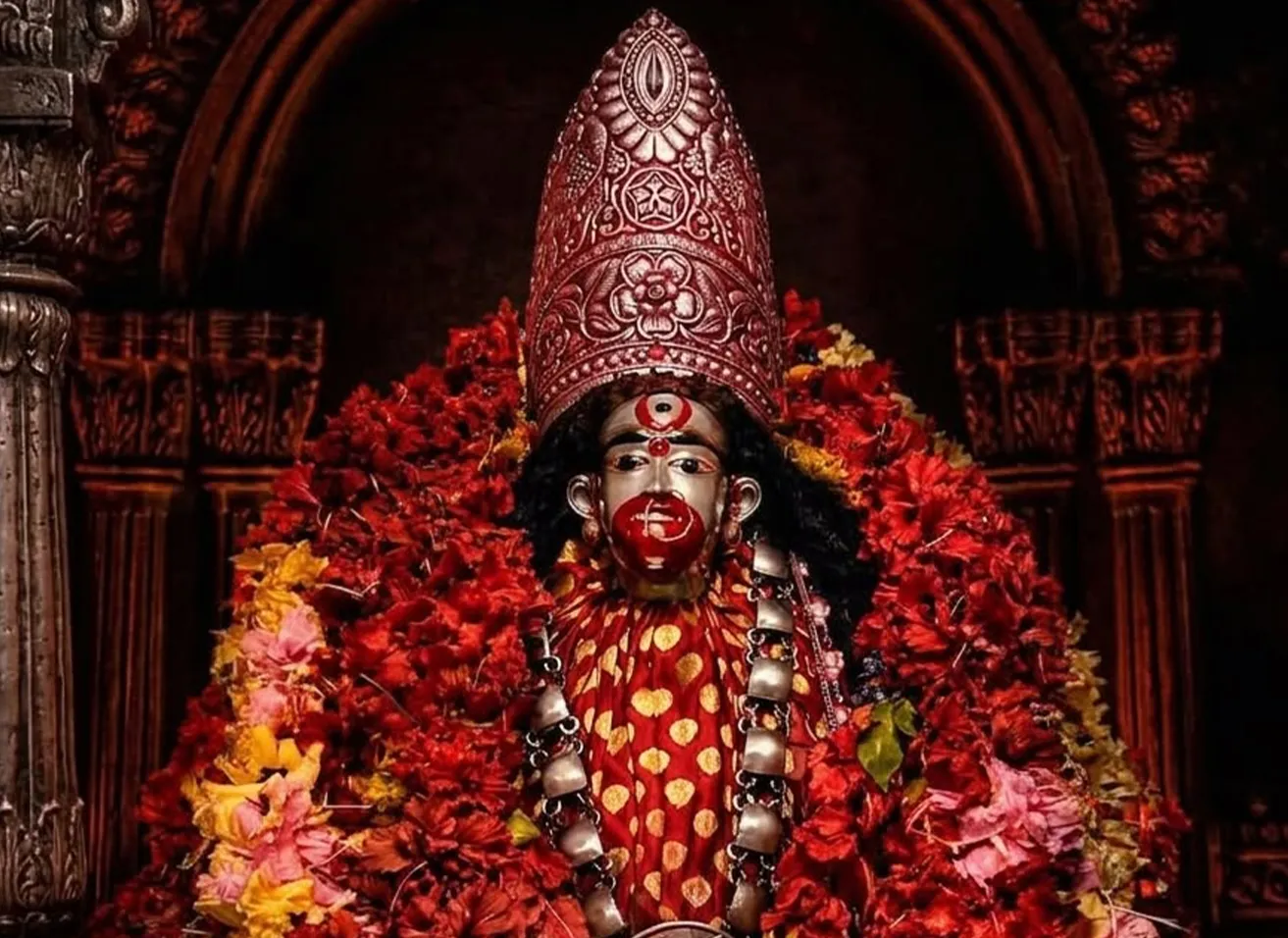
Goddess Tara is worshipped in several parts of India, with Tarapith in Birbhum district of West Bengal being one of the best-known centres of her Hindu devotional tradition. The Tarapith temple is particularly associated with Maa Tara, a revered form of the Divine Mother worshipped by devotees seeking her blessings and guidance. The temple also has a strong association with the tantric spiritual history of Bengal. The nearby cremation-ground setting holds particular significance in local religious traditions and is connected with the region's history of specialized tantric practices. Tarapith is also associated with the spiritual legacy of the saint Bamakhepa, who is an important figure in the temple's devotional history. It is important to understand that the Tara worshipped at Tarapith belongs to the Hindu Shakta tradition and should not automatically be confused with Buddhist forms of Tara. Visitors can learn about the temple's history, observe its devotional atmosphere, and understand its cultural importance. Specific ritual practices, however, should be approached respectfully and in accordance with local customs rather than copied from unverified sources.
You can study Goddess Tara sadhana and Tantra Shastra through educational institutions, traditional scriptures, and knowledgeable teachers who understand the philosophy and practices of Shakta traditions. When selecting a learning platform, look for explanations of the Goddess's history, iconography, mantra significance, and spiritual philosophy rather than sensational claims about supernatural powers or guaranteed outcomes. It is also important to establish whether a program provides introductory theoretical education or specialized practical instruction, since formal tantric practices may involve initiation and lineage-specific guidance. Nabatara Institute, founded by Gaurav Tribedi, includes Tantra Shastra and ancient spiritual sadhana within its broader educational focus. Its website provides information about relevant courses and spiritual learning opportunities for people interested in traditional Indian knowledge systems. Prospective learners should review the actual syllabus, teaching format, eligibility, and guidance arrangements before choosing a program. Students from Kolkata, West Bengal, other parts of India, and international locations can explore the institute's educational offerings. A meaningful study of Goddess Tara requires patience, cultural understanding, and respect for traditional teachings. The objective should be genuine spiritual education and informed practice rather than promises of instant transformation.